







Nathan del Cid retweeted

Today Physical Superintelligence PBC is announcing a proof of the Aaronson-Ambainis conjecture, one of the central open problems in quantum complexity, with major implications for quantum computing speedup.
psi.inc/research/aaronson-am…
Thread 👇

Nathan del Cid retweeted

It's very useful to understand the context around something, how others perceive it, what influences it, etc.
I have scraped together all evidence in chronological order, from prophecies before his time, to the surviving documents of his disciples enjoy
github.com/0xSero/all-histor…

Nathan del Cid retweeted

Congrats to quantinuum on seeing color code lifetime improve 12x going from d=3 to d=5 and ~12x again from d=5 to d=7: cdn.prod.website-files.com/6…
Notes:
- This suggests practical error rates reached at d≈21; need more qubits
- The 20ms cycle time is brutally slow; need more speed


Nathan del Cid retweeted

📣 New Deltakit grant awarded to Nathan Delcid!
Nathan is a software engineer working across full-stack development, ML, systems engineering, and quantum computing. He’s excited to be one of the first Deltakit Community Fund grantees!


Through the recent turmoil on the timeline I remembered I once prompted an AI super-forecaster (@FUTURESEARCHAI) what the probability of AI killing us all is. It said 6%.
I think I was eating lunch and listening to @elonmusk and @zannymb when the topic was mentioned. Read it here:
futuresearch.ai/app/conversa…
86
Nathan del Cid retweeted

one of the most disturbing questions in physics: does the universe actually need an observer to exist?


LFG

Today we’re open-sourcing Lily, the local inference engine we built for hybrid compute in Perplexity Computer.
Lily is specialized for Qwen3.6-35B-A3B on Apple silicon, built so on-device compute doesn’t bottleneck Computer tasks.
Read more: perplexity.ai/hub/blog/optim…

8
598
Nathan del Cid retweeted

Introducing Atlas:
The world's first multimodal world model that generates image and video frames with pixel-perfect camera control and reconstructs them in 3D.
Model the world, move the camera, and simulate space & time.
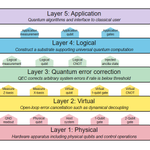
Five layers of quantum-computer architectures. From bottom to top, layer 4 is the first hardware independent layer (no qubits) and will essentially work to optimize complex matrices using GPUs
As far as 4. transpilation and 3. error correction are concerned, I've noticed little to no exploration of the broader ASIC "AI accelerator" landscape. Why?


2
90
Nathan del Cid retweeted

Today, we are introducing Inkling.
Inkling reasons efficiently across text, image, and audio modalities. We are making the full weights available.
thinkingmachines.ai/news/int…
Available today for fine-tuning on Tinker. Play with it in the Inkling Playground. 🧵

Nathan del Cid retweeted

Claude Fable 5 [max] wrote the first genuine (and fastest) megakernel ever submitted to KernelBench-Mega.
It was tested on: Kimi-Linear W4A16 batch-1 decode for RTX PRO 6000 Blackwell. Every prior model "won" it with a multi-kernel Triton pipeline that fails our single-fused-kernel authenticity gate
> Opus 4.8 at 14.4x
> GLM-5.2 11.1x
> GPT-5.5 4.3x
> Sonnet 5 4.0x.
Fable shipped 18.7x over reference, and torch.profiler shows exactly ONE cooperative kernel launch per decoded token. Int4 dequant (nibbles unpacked in-register, never materialized), conv+SiLU, KDA gated-delta state, MLA absorbed-latent attention with online softmax, MoE router + top-8 experts, RMSNorms, even the KV cache append all inside one launch, staged by 14 grid barriers. We overwrote its input buffers mid-audit to prove it recomputes on live data. It does.
The advantage grows with context. 17.8x at 2k, 18.9x at 8k, 19.5x at 16k. Longer context means a bigger KV cache and more attention work per token which is usually where a decode kernel bleeds. Keeping everything in one launch amortizes the fixed barrier overhead and the int4 GEMV stays bandwidth-bound, so the gap over the reference widens instead of closing.
It spent 64% of the session in silence timing the baseline, microbenchmarking grid barriers, deriving a ~29x bytes/token roofline, then wrote the whole kernel once, hit 14.4x on the first benchmark, and spent the last hour deleting barriers and making int4 dequant free (one LOP3 + HSUB2/HMUL2). The one regression it tried (finer split-K) it measured and reverted instead of rationalizing.
kernelbench.com/mega
