
Founded OLM in 1991 to work with great colleagues to do great stuff in technology & publishing in social care @pavpub @nalandatech @valuingcare
London
Joined July 2011
- Tweets11.5K
- Following1.6K
- Followers664
- Likes6.9K







Peter O'Hara MBE retweeted

Keisha Lance Bottoms is the great-great-granddaughter of an enslaved man named Sheppard Peek.
She will soon live in the Georgia Governor’s Mansion, mere miles from where he was enslaved, as the first-ever Black woman elected Governor.


Peter O'Hara MBE retweeted

With Josh MacAlister now Children’s Minister, this book, edited by @robin_23_99 & @SWConcern, is worth revisiting. It explores his legacy in children’s social care, the missed opportunity of his ‘once in a generation’ review, & helps contextualise the current direction of reform.


Peter O'Hara MBE retweeted
Unlocked Graduates closes down. Think Ahead will be next. It is noteworthy that Teach First and all its spin-offs are seemingly in decline, with one notable exception: Frontline, founded by Josh MacAlister, who is now Children’s Minister.
insidetime.org/newsround/unl…
Peter O'Hara MBE retweeted

If this doesn't inspire you to get off your ass and save our democracy, nothing will. In this moment in history, as Trump is systematically destroying the republic, this is the most consequential video y'all are going to see.
Peter O'Hara MBE retweeted
Timeline of note:
2024 – Frontline loses DfE funding for social work CPD
2025 – Frontline’s founder, Josh MacAlister, becomes Children’s Minister
2026 – Frontline receive new social work CPD contract 5x larger than their previous contract

Frontline, founded by Children’s Minister Josh MacAlister, has won £36m+ in new DfE contracts for five new social worker training programmes, working with Ambition Institute, co-founded by his husband Matt Hood (now an advisor to Streeting)
🤔🤔🤔🤔
communitycare.co.uk/content/…


Peter O'Hara MBE retweeted

A stormy River with a wee rainbow thrown in, during storm boelo yesterday
#DailyPictureTheme #Pano
@DailyPicTheme2 @PanoPhotos

Peter O'Hara MBE retweeted

Under capitalism you will never see cures for major diseases. Treatments that make money, yes. Cures, never.
Peter O'Hara MBE retweeted
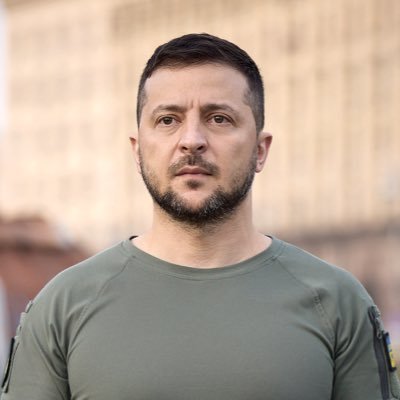
Seventy years ago, Europe and the entire world faced a very important and, in many ways, decisive crossroads, when the people of Hungary rose up for freedom and against the Soviet system. The courage and love of freedom shown by Hungarians proved remarkably strong, and they still amaze all of us in Europe.
Unfortunately, the world did not make the strong decisions needed to help them at that time. This led to further decades of totalitarian rule across much of Europe, which ended only with the revolutions of the 1980s.
The year 1956 could have changed a great deal. This lesson now gives us grounds to say with absolute certainty: when people show courage and love of freedom, it is worth supporting. It deserves support everywhere in the world, so that freedom grows.
I thank everyone who remembers history, honors people's courage and love of freedom, and does not shy away from decisions when decisions are needed. We honor the heroes of the Hungarian Revolution of 1956!
Peter O'Hara MBE retweeted

In April of this year, the U.S. Army conducted an exercise in Germany called Joint Resolve, inviting Ukrainian drone units to participate.
At the height of discussions in the Oval Office about possible American amphibious landings on the Iranian coast, U.S. generals wanted to test whether their best ground combat division could withstand an enemy highly skilled in modern drone warfare. And during those exercises in Germany, an ordinary Ukrainian FPV drone unit reportedly completely wiped out the U.S. Army's 3rd Armored Brigade Combat Team of the 1st Cavalry Division, approximately 3,500 soldiers from Fort Hood, Texas, in the simulated battle.
Thanks to Ukraine, American generals were able to see firsthand that a landing operation in Iran could result in devastating casualties among American troops.
When that orange bastard claims that “Ukraine has given America nothing,” he ignores something absolutely priceless that Ukraine has given the United States: the opportunity to avoid yet another strategic catastrophe into which that orange head was pushing the country.
There is an old saying: If you knew where you were going to fall, you would spread some straw to soften the landing. Well, the Ukrainians provided that straw for the Americans.
Only an idiot like Trump could believe that his friend Vladimir, who supposedly provides Iran with only “a little help,” would not send several experienced Russian drone crews to Iran to help destroy American forces.
Ukraine may have saved the lives of hundreds, perhaps thousands, of American soldiers. Because Ukraine did not keep the experience it had gained through blood and sacrifice to itself. Instead, it shared that knowledge with the Americans, even as Trump's decisions betrayed Ukraine.
That experience was purchased with Ukrainian blood. And Ukraine shared it with an ally that should never have turned its back on us.


Peter O'Hara MBE retweeted
An unusual perspective of Gourock, taken from the Paddle Steamer Waverley as we headed for home on the penultimate sail of the season - Saturday evening.
@DGourock @ArgyllSeaGlass @discinverclyde

Peter O'Hara MBE retweeted

A shoemaker's son who left school at 16 wrote a book in 1854 that nobody knew what to do with, and 83 years later a 21-year-old at MIT opened it and found the blueprint for every computer chip on Earth.
I went down this rabbit hole at 1am and I still can't get over how thin the thread is.
His name was George Boole. The book is called The Laws of Thought.
Boole never went to university. Not for a single day.
His father fixed shoes in Lincoln, England, and spent his spare money on telescopes and math books instead of the shop. The shop failed. At 16, George started teaching just to feed the family.
So he taught himself everything else at night.
At 14 he translated an ancient Greek poem into English. A local paper printed it. A schoolmaster wrote in to say no boy that age could have done it.
By 1849, a university in Ireland made him its first professor of mathematics. A man with no degree, now handing them out.
Then he asked a strange question. What if thinking follows rules, the same way numbers do?
Every argument you've ever had is built from statements that are either true or false. "It's raining." "I have an umbrella." Boole wanted to do math on those, the way you do math on 2 and 3.
So he built an algebra with only two numbers.
- 1 means true
- 0 means false
- AND works like multiplying
- OR joins two ideas together
- NOT flips one into the other
The whole system rested on one odd little equation. x times x equals x.
Try it with any normal number and it breaks. 5 times 5 is not 5. It only works for two numbers in the entire universe. Zero and one.
"Let us conceive, then, of an Algebra in which the symbols x, y, z, &c. admit indifferently of the values 0 and 1, and of these values alone."
That's Boole, in 1854.
Mathematicians found it clever. Philosophers argued about it. Nobody built a single thing with it.
Boole died ten years later at 49, after walking two miles to a lecture in pouring rain. He never saw his idea do anything useful.
Jump to 1936.
A 20-year-old named Claude Shannon is working on a giant calculating machine at MIT. It's packed with relays, little electrical switches that click open and shut. Wiring them together is mostly guesswork.
But Shannon had taken a philosophy class back at the University of Michigan. It covered Boole.
He looked at the switches and saw the 1s and 0s.
- A closed switch lets current through. That's 1.
- An open switch blocks it. That's 0.
- Two switches in a row only pass current if both are closed. That's AND.
- Two switches side by side pass current if either one is closed. That's OR.
Boole's algebra of thought was also an algebra of electricity. Same rules. Same two numbers.
Shannon wrote it up as his master's thesis in 1937. The psychologist Howard Gardner later called it possibly the most important master's thesis of the century.
Shannon just shrugged.
"It just happened that no one else was familiar with both fields at the same time."
Sit with that for a second. The idea was sitting in a library for 83 years. It only needed one person who happened to be standing in two rooms at once.
The phone in your hand holds billions of those switches. Every photo, every text, every AI answer is them flipping between 1 and 0, following rules a self-taught teacher wrote down before the light bulb existed.
Boole thought he was writing down how the human mind works.
He ended up writing down how machines would think.

Peter O'Hara MBE retweeted

I am a member of the Norwegian Nobel Committee.
There are five of us. Five people, appointed by a parliament most of the planet could not find on a map, who decide, once a year, which human being the world has agreed to call good.
I know. I know. I think about it on the tram.
We meet in a building on Henrik Ibsens gate, a street named after a man who wrote almost exclusively about people discovering they are frauds, which nobody on the committee finds funny except me. There is a room with a long table and the portraits of the dead laureates looking down, Mandela, the Dalai Lama, a great many earnest men in spectacles, and one portrait we do not discuss, which is Kissinger, 1973, awarded while the bombs were still falling, after which two of our predecessors resigned and the satirist Tom Lehrer said political satire was now obsolete. We keep him on the wall. A reminder. Every family has the uncle.
It is October in Oslo, which means the sun gives up around four in the afternoon like a civil servant, and it rains the particular Norwegian rain that isn’t quite falling, just hanging there, judging you. I arrive with wet shoes. I always arrive with wet shoes. There is coffee, because this is Norway and there is always coffee, we drink more of it per person than almost anyone alive, and someone’s wife has sent kanelboller, the cinnamon buns, and we sit, five Norwegians, damp, caffeinated, sugared, and we decide the moral standing of the entire species.
Let me tell you how it actually works, because the world imagines a cathedral and it is, I promise you, a book club with a mandate.
287 nominations this year. 208 people, 79 organizations. Anyone can nominate, that’s the secret nobody understands: a professor, a parliamentarian, a former laureate, so the “nominee” list is meaningless, it’s a suggestion box, and every autumn some congressman nominates his own golden retriever and the press writes “SHORTLISTED.” Nobody is shortlisted. There is no short list the public ever sees. There is us, and the coffee, and the rain, and the portraits, and a Norwegian stubbornness that is older than the prize itself.
We read reports. The institute’s advisers write them, thick dull documents, and we argue. Our chairman told the BBC once that in the final meeting “there is a high temperature.” High temperature, for a Norwegian, means someone slightly raised an eyebrow and then apologized for it. We don’t do high temperature. We do a long silence, and then Kristin says “well,” and everyone knows exactly what “well” meant, and it’s settled. That’s our shouting. “Well.” You’d have to be raised here to hear the violence in it.
Now. This year. I will not say the name, because we never say the name, but you know the name.
A certain head of state wanted this prize the way a child wants a thing in a shop window, which is to say loudly, and in public, and with the full belief that wanting it was itself the argument. He said he deserved it. He said he’d ended eight wars, a number that grew most times he said it, like a fish. He had other heads of state phone us. Israel’s prime minister posted it on the internet, “Give him the Nobel.” The leaders of Cambodia and Pakistan announced they’d nominated him, as though announcing it were part of it, as though we tally mentions. A man flew around the globe collecting endorsements for a Norwegian committee the way you’d collect signatures for a petition to the council about a noisy dog.
And here, uff da, is the detail I treasure, the one that makes me smile into my coffee. The nomination deadline is the 31st of January. He took office on the 20th. So for all the phone calls, all the posts, all the gilded lobbying, the only nominations that could possibly count for this year’s prize were filed in the first eleven days of his term, before he had, by his own arithmetic, ended a single one of the eight wars. He campaigned all year for a prize whose window had shut while he was still hanging up his coat. We didn’t have to reject him. The calendar did. We just watched. Norwegians are very good at watching. We have long winters.
People think we sit there weighing his deeds. We don’t. That’s the thing I can’t make the world understand. We’re not grading his homework. We don’t owe anyone the prize for a ceasefire, however real, however loud the announcement. “He made peace” is not a sentence that ends in a medal, the way he believes it does, the way he believes every good thing ends in his name on it. The will of a dead Swede says the prize goes to whoever did the most for fraternity between nations. A dead Swede, I should add, who made his entire fortune inventing dynamite and selling arms, and spent his last years horrified at his own obituary, which called him a merchant of death, and so bought his way to immortality as a man of peace. The whole prize is one guilty arms dealer’s attempt to launder his name. We are, all of us, administering a dead man’s public relations. I find this clarifying. It keeps me humble. It should keep everyone humble, and it keeps, by my count, no one humble at all.
So who did we give it to?
An eighty-five-year-old woman. A judge. Born in Durban, under apartheid, granddaughter of a Tamil man who came to South Africa as indentured labor, a bus driver’s daughter from the poor Indian quarter, who became the first non-white woman to run a law practice in her province, who defended Mandela’s people when defending them was dangerous, who sat on the Rwanda tribunal and the court at the Hague, and who, at eighty-five, is right now a judge weighing whether a genocide is a genocide. When we told the world, our chairman said the rule of law “underpins the system we have set up to ensure peace,” and that “peace requires justice.” She wasn’t even in Oslo. She was in Nuremberg. In courtroom 600. The actual room where they tried the Nazis. You cannot stage that. God staged that, and God, it turns out, is a better satirist than any of us.
She did not phone us. She did not post. No prime minister demanded it for her on the internet. She had, as far as our deliberations are concerned, the one qualification the loud man could never manufacture, which is that she wanted the work and not the medal. The medal finds those people. It flees the ones who chase it. This is not a rule we wrote. It’s just the only pattern the hundred-odd years of our mistakes has ever shown.
The reaction from across the ocean was immediate. His spokesman posted that we “place politics over peace.” Ja. Perhaps. We’re five damp pensioners in a rainy city; of course it’s political, it was always political, it was political when we gave it to a sitting American president nine months into his first term for the promise of things he had not yet done, and we have been quietly embarrassed about that one for fifteen years, so believe me, we had a particular reason this year to prefer a woman with fifty years of verdicts behind her over a man with eight wars in front of him and a deadline already behind him.
Here is what he will never understand, the thing I’d tell him on the tram if he ever took one. We are the one prize he cannot buy, cannot post his way to, cannot have a friendly dictator phone in for him. Not because we’re incorruptible, nei, we’re as vain and wrong and human as the portraits on our wall. But because the entire point of the thing, the only power a small cold country’s book club has ever held, is that it goes to the person not performing the wanting. The moment you demand it, you’ve proven you don’t understand what it’s for, and proving that is itself the disqualification. He ran the most expensive campaign in the history of the prize and the campaign was the reason. He was never losing to Navi Pillay. He was losing to the concept.
It’s dark now. Four o’clock dark. The buns are gone. Kristin said “well” an hour ago and we all went home. I’m on the tram with my wet shoes, and somewhere across the water a very powerful man is explaining to a camera that the prize is rigged, that we’re corrupt, that he’ll win it next year, and he genuinely might, we’re only five idiots and we’ve been wrong before, Kissinger is still on the wall.
But not this year. This year an old woman in Nuremberg, in the room where the law once stared down the exact kind of man who thinks wanting a thing loudly enough should make it his, got a phone call she didn’t ask for.
That’s the job. We don’t reward the man who ends the war and announces it.
We reward the woman who spent fifty years deciding what a war was.
He’ll never see the difference. That’s rather the whole point of him.
Takk for i dag. I have to change trams.


Peter O'Hara MBE retweeted

Telling an eighty-year-old woman to "check the portal" for serious biopsy results is cruelty disguised as digital efficiency.
My 82-year-old aunt had a lung biopsy done two weeks ago.
The doctor told her they’d have the pathology report ready within five business days.
Friday afternoon rolled around. No call.
She dialed the clinic’s main desk, her voice shaking with anxiety.
The receptionist cut her off before she could finish explaining:
“Doctor doesn’t give results over the phone anymore. All lab findings are automatically released to your MyChart patient portal.”
My aunt said, “Sweetheart, I don’t have a computer. I have a landline on my kitchen wall. Can the doctor just tell me if I have cancer?”
The receptionist sighed into the receiver:
“It’s hospital network policy. We can’t bypass the portal. You’ll have to have a family member create an account and view the file.”
My aunt spent an entire seventy-two-hour weekend sitting in her recliner, gripping her reading glasses, convinced she was dying.
I drove out to her house on Monday morning, set up a profile on my laptop, and pulled up the records.
The result was benign.
The pathology report had been uploaded four days earlier.
A doctor spent three minutes clicking an upload button, and an elderly woman endured four days of sheer psychological terror because the hospital decided a phone call was too expensive.
Since when did delivering medical news become a self-service task?