

Building agentic ad-intelligence @Gokwik | Prev Consumer VC @z47_vc | Mostly chilled @AshokaUniv
Bengaluru, India
Joined July 2020
- Tweets150
- Following904
- Followers183
- Likes984



AI is re-shaping travel, but in more ways than meets the eye. Some thoughts on what travel is likely to become, and how incumbents and horizontal assistants are playing the field:

Ad-networks have never been better at matching ads to users. It is easy to write-off most profit pools to the walled gardens.
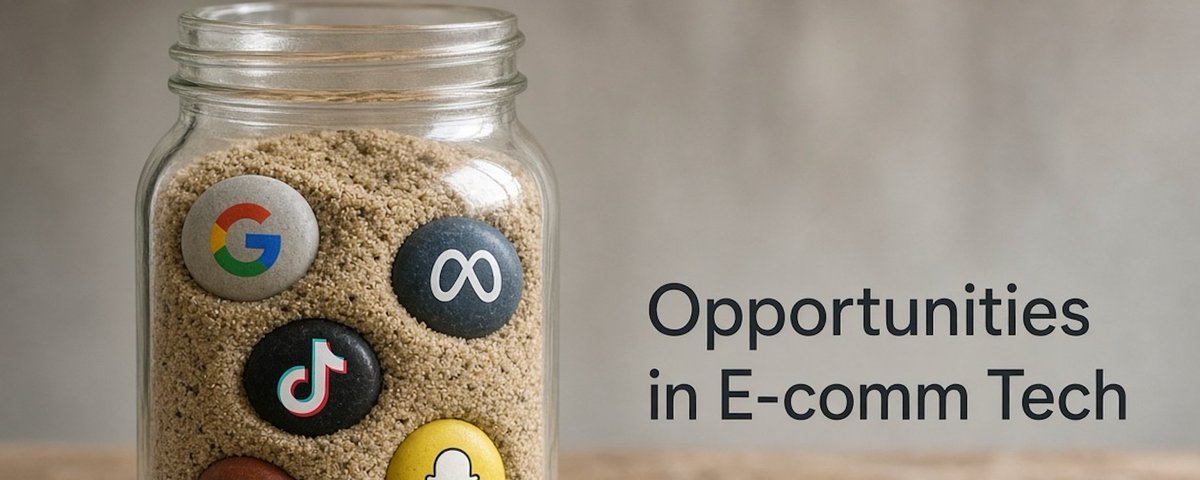
I believe there is a lot of value that continues to be built in e-comm tech. I see four archetypes of platforms being built:
4
3
254
3/ Assistants
Agentic commerce is productising the agency, and the winners already sit on population-level data. Those that use this data to drive CR will see meaningful uptake
17
2/ Intelligence
Ad-networks cannot publish benchmarks without compromising their role as the neutral inventory seller.
Whoever sits across enough accounts gets to organise that gap
11
1/ Analytics
Nobody pays to see their own data drawn up anymore. What's more interesting is a net-new insight, one that joins data across networks and tells the merchant something no single platform can.
1
53
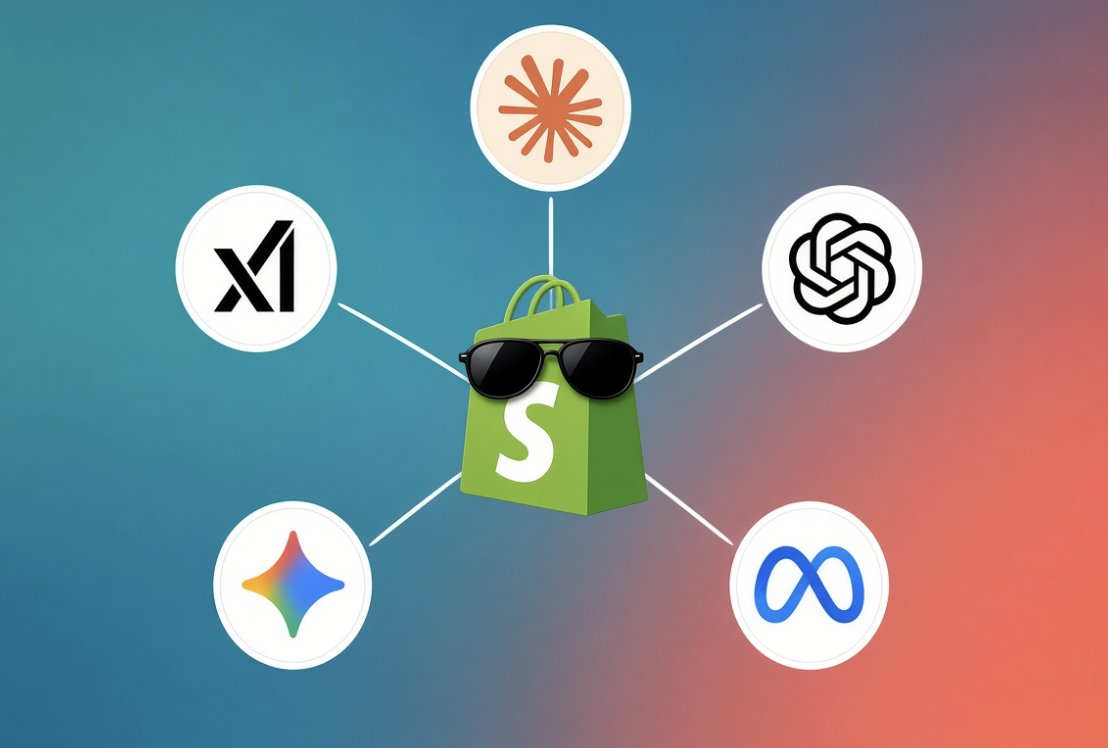
Agentic commerce is here, and it seems to want everyone's lunch money. Marketplaces like Amazon must contend with losing incremental GMV via agentic search to defend their ads business. A similar logic is being applied to Shopify: if shoppers make their purchases off Instinct and Muse, storefronts become redundant.
Regardless of the colour and hues of the future, I believe Shopify will continue gaining market share and leverage over its global merchant base.
1/ Case 1: Nothing changes. Agentic commerce is a fad, buying behaviour does not migrate to chatbots
In that case, Shopify will continue to leverage model capabilities to improve storefront CR. Better intelligence + proprietary user context creates the most durable moats. Meta has been proving this thesis with its systematic shift in media buying on the platform: upload creatives, define an objective, and add your credit card (a far cry from the audience-optimising “growth hacker” era). Meta will find and convert the best-suited audiences.
The same will play out for Shopify's Sidekick, an already highly spoken-of initiative in the company. By leveraging historical user activity and patterns, merchants get custom recommendations on aspects ranging from theme changes to bundling. According to management, "Sidekick's personalized guidance for new merchants during onboarding led to an 8% increase in merchants reaching five orders within 15 days."
Better CR will improve retention and continue to expand the company's subscription solutions business. Despite its relatively lower contribution to topline (24%), it's a high margin biz (80%) and contributes 40% of gross profit. Shopify has already proven it can step up MRR through price hikes without losing merchants, and that will continue to compound.
2/ Case 2: LLMs continue to drive incremental GMV gains for merchants, and over time cannibalize existing search
Shopify's Catalog product is arguably the best placed product to facilitate agentic commerce for brand.com. While LLMs fine-tune recommendations basis user queries, it is Shopify's product taxonomy that substantiates the response. A catalog spanning over 1Bn products can not only signal the right pick for a complex purchase query, it also makes Shopify the hub to multiple LLM spokes that fetch product context from the same source and surface recommendations.
Owning the product data behind the LLM's recommendation opens a very interesting door for Shopify: to build its own ad network. One can imagine a scenario where a query fits products from two competing brands in its entirety; at that point, the one that pays Shopify for visibility gets a sponsored mention. It can potentially unlock a massive revenue stream for the business. Catalog already leads to a 2x better conversion against generic scraping; the bull-case for Shopify-powered recommended results is not hard to envision.
3/ Case 3: We enter a UI-less world and all commerce happens via personal agents
Shopify is the merchant's storefront, but it is also where they manage inventory, analytics and payments. Merchant solutions represent 76% of the company's revenues, and 60% of the gross profit. If UI-less commerce becomes a reality and shoppers learn to buy directly off their Instinct or Muse, Shopify's infrastructure will continue to serve as the rails that enable the transaction.
Shopify Payments already processes 68% of GMV on the platform, up from 47% five years ago. Shop Pay is the default checkout for roughly a third of that GMV, and growing at nearly twice the rate of the platform. It is also integrated onto Muse, meaning any purchase Muse makes from a Shopify merchant runs through Shopify's payment infra.
On the whole, Shopify's architecture is built for scaling in an agentic world. As brand.com grows and e-comm penetration deepens, I believe the company is well positioned to capture disproportionate value in the years to come.
2
275
The last two years of model progress have disproportionately benefited advertisers. From AI-generated content to one-shotted websites, tools enabled D2C brands to sell faster and better.
In the "Instinct" era, we will now witness some of those benefits transfer over to consumers. While Meta's market share of performance spend is unlikely to change anytime soon, the funnel will split: intent creation stays on human-scrolled feeds, while demand capture (research, comparison, checkout) moves to agents. Brands will have to re-think their approach to demand-gen:
1/
A lot of ad content today is bottom-funnel heavy: feature lists, offers, sale window announcements. As agents replace eyeballs, such content will see diminishing returns; your discounts are being stack-ranked by an algorithm that may ding you on the difference of a dime. Discounts will become a commodity.
Storytelling to influence customers will become a lot more powerful. Consequently, content strategies will evolve toward educational videos, product explainers and even long-form breakdowns. Brands will cater to two audiences - the humans they tell stories to, and the agents they feed data to
2/
Content tagged back to real humans will become increasingly important. Agent-verifiable reviews (verified purchases, disclosed creators) will end up influencing its recommendation. Brands investing in "real-world" marketing efforts will find themselves ranked higher in agent recommendations
3/
Attribution will break (further). Agents will strip the purchase consideration journey down considerably. The heavy middle of research and comparison will end up being a conversation with your agent, instead of its current form as a multi-platform endeavor. With last-click attribution more important than ever, platform partnerships with agents will determine where the customer ends up buying – brand.com, Amazon, Blinkit or elsewhere. Which also means that brands won’t have the luxury of choosing channels. Being available everywhere will become more important than ever
4/
Retention marketing will evolve from message blasts to influencing agents. Tracking repeat agentic traffic and recommending products to them will become the equivalent of tracking user activity on website and offering a discount on an abandoned cart
Equally likely, users may end up seeing ad blasts on their WhatsApp based on their agent's crawls through the website
5/
Brands may end up collaborating unintentionally. A customer building a basket doesn't care about individual brands, so long as they are picking the best option in each category. Marketplaces and even Shopify may end up supporting multi-brand purchases. Category leadership beats portfolio breadth: being the best in one SKU is worth more than being decent in five. The basket is assembled by an algorithm, and the algorithm has no loyalty to you
The tools made brands better at selling. Agents make shoppers better at buying. Many opportunities (and unknowns) ahead for founders and performance marketers as they navigate these new realities
Shoppers can go touch grass :)

2
3
353




Rohan Parikh retweeted

How do you fight a price war? Some first hand learnings from the last 3 years which can be relevant for founders of new age brands
Every major brand had their range of BLDC fans by 2019. And by 2022 when everyone realised that BLDC fans are the future, we started facing huge pricing pressure from one of the biggest fan brands. At the entry level, some of the products were priced 15-20 percent lower than Atomberg
Whenever you see any pricing action, the first step is to diagnose the cause and find what is the source of this low price? Is it a structural advantage ( lower costs due to scale or design) or competition giving up short term margins for market share gain
By doing a basic zero based costing analysis, We figured out that there was no big structural cost advantage. The design of our motors were the most efficient and since we manufacture our motors end to end, we had the cost advantage too. And wherever they had some cost advantage, those were trade offs with long term quality
Now, we had 2 options at that point
- Take pricing actions to match it. But it would have meant diluting our margins. And since it was a much bigger brand, there was no guarantee they won’t reduce further. Bldc fans as a percentage of revenue was very low for them so they would have managed it easily. In start up parlance, This is akin to fighting a price war with a competitor who raised 10x more than you
- Take non pricing actions to fight a price war
We decided to go the second route. So this is what we did
- Increased marketing budget by couple of percentage points. Ramped up the awareness building journey. Did marquee impact properties including the BCCI sponsorship
- Premiumized the portfolio at breakneck speed. Launched smart/iot versions of most fans. Launched super premium fans at 6000 Rs price points
- Ramped up after sales service infra to make at home service within 24 hours a reality. And these value additions were communicated by trade
- Communicated more around our quality and longevity of products. At ground level, apple to apple comparisons with cheaper products was done to all retailers
- Ramped up BTL and display at counters
All of this helped us keep growing at very high double digit numbers. And competition pricing intensity also reduced after a point when they realised we haven’t taken the pricing bait
So, while from a cost point of view, we did incur some costs, but those helped bring long term benefits to the brand( better product, better service, more awareness)
Much better than simply matching the price and go into a full blown price war
Pricing pressure by competition will mean a short term hit on your P&L. But you can spend it on things that makes you a stronger business in the long run
Rohan Parikh retweeted

Novak Djokovic saves three Championship points and breaks back to make it 5-5 🤯
#Wimbledon

Rohan Parikh retweeted
A pivotal hold for Novak Djokovic, and look at what it means 💪
#Wimbledon
Rohan Parikh retweeted

If you’re a founder in the footwear industry or work with the same, we would love to hear from you. Read our findings on the category in this extensive research report.
Link to the report: matrixpartners.in/matrixmome…
@chander1987 | @orhanparikh | @KishanKashyap22 | @DivyamDG17
#FoundersFirst #Footwear #Consumer
(2/2)

Rohan Parikh retweeted
The Indian footwear industry is going through a ‘one-time shift in the supply system’ led by ‘consumer demand’. Footwear has evolved from utility to identity, becoming as crucial to one's look as an outfit or makeup. Indians are expected to own 2.1 pairs per capita by FY25.
India is also leaning towards sports and spending on sports gear is on the rise. There is a growing need for high-quality performance footwear which opens up an opportunity for Indian brands to introduce these shoes across price points.
If you’re a founder exploring the footwear sector, you have an opportunity that comes once in decades - do reach out to us.
More in the article penned by @chander1987 and @orhanparikh.
Link to the article: shorturl.at/gt2uF
@avnish | @RajatAgarwal167 | @VikramV23 | @tarun_davda | @KishanKashyap22 | @DivyamDG17 | @sid_agarwal_1
#FoundersFirst #IndianFootwearIndustry #AtmanirbharBharat

Rohan Parikh retweeted
Excited to double down on our investment in the D2C skincare brand @FoxtaleSkin, as they secure Series B funding led by #PantheraGrowthPartners, with participation from existing investor @KaeCapital .
(1/6)

Rohan Parikh retweeted

Finally unveiling our investment in @emversity - founded by @viveksinhaisb & addressing key challenges in employability & skilling. At Matrix, we're committed to building Digital India & propelling our country towards a developed nation by 2047 - Emversity is at the heart of it!

Excited to co-lead our seed investment in #BeyondOddsTechnologies, India's first employability-led platform for the grey-collar workforce, founded by @viveksinhaisb.
(1/7)

Rohan Parikh retweeted

I got this notif today and it is yet another piece of evidence for a pet theory of mine: that quiet, seemingly effortless popularity on the internet is the ultimate echelon of fame in a saturated world & will always be hierarchized over try-hard popularity.
Quick theory thread:

Rohan Parikh retweeted
In the second part of this three-part series “Mental models to imagine a New World Order,” @chander1987 (CV) explores how AI can impact everything from our buying behaviour to what the services platforms can offer us.
For the deep dive: matrixpartners.in/matrixmome……
(3/5)
Rohan Parikh retweeted
Excited to announce our partnership with @inrajatsingh, @manish_inprime, @snehkalro and the team at @InPrime_in, a technology-led NBFC.
(1/6)
