

OSINT on Middle East security, conflict & energy. Military-analytical lens. Independent. No affiliation. No advocacy. What to watch, and why.
Middle East
Joined January 2026
- Tweets3.6K
- Following472
- Followers1.4K
- Likes271
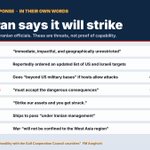







Iran has spent two months telling the region what it says it will do if it’s attacked again. This is the public record, all from named officials, with dates.
Any attack. Supreme Leader Mojtaba Khamenei, 31 Oct: “any level or type of threat must be met with an immediate, impactful, and geographically unrestricted response.”
US and Israel. Iranian state media reported on 1 Nov that he ordered an updated list of US and Israeli targets, covering “all kinds of physical and non-physical assets.”
Host states. Hamidreza Moghadamfar, adviser to the IRGC commander, at a rally in Bandar Abbas on 4 Nov: “Iran will broaden its response beyond US military bases” if Gulf states let Washington attack from their territory.
Anyone who helps. Khatam al-Anbiya HQ spokesman Ebrahim Zolfaghari, 1 Sep: “Any country that cooperates with the aggressor US military must accept the dangerous consequences.”
Energy. Speaker Ghalibaf, 7 Sep: the region’s oil and gas chain is “sprawling, accessible, and exposed.” Then: “Strike our assets and you get struck.”
Hormuz. Mohsen Rezaei, 1 Nov: “everyone passing through this waterway will do so under Iranian management.” He also promised “devastating blows on the aggressor using new weapons.”
Beyond the region. Army spokesman Mohammad Akraminia, 1 Nov: “the geography of the conflict will not be confined to the West Asia region.”
On the other side of the ledger, Foreign Minister Araghchi: “We have no hostility with the Gulf Cooperation Council countries.”
The wording has widened. In September the warnings were aimed at countries that help the US. Now they’re talking about geography with no limits.
Two caveats. The host-states line came from an adviser to the IRGC chief, which isn’t the same thing as government policy. And how much of this Iran could actually deliver after a first wave of strikes is a separate question.

Morning update, Fri 6 Nov. I think a major US strike on Iran could come as early as tonight, once New York closes. Trump met his national security team yesterday and told reporters "Now we will make a decision." Iraq has issued a NOTAM restricting its airspace from tomorrow to 11 Nov, citing military activity.
Washington. Two US officials told Axios it was the first Iran meeting since the midterms. Afterwards Trump asked in the Oval Office: "Do we want to go further?" Then he added, "I would rather not destroy the rest of the country if possible, but maybe I will have to. You'll know soon enough." That isn't the language of a man parking the issue for the lame-duck period.
Iraq. The NOTAM runs 7–11 Nov, 05:00–11:00 UTC daily. Overflights and arrivals at Baghdad, Erbil, Sulaimaniyah and Kirkuk are held to set corridors. It cites military activity, not a named operation. Iraqi airspace sits on the obvious route, and that week is also the darkest stretch of the moon this month.
Markets. Wall Street had its worst day in 19 months on Thursday. The Dow lost 1,833 points, the S&P 500 fell 4.4% and the Nasdaq fell 5.5%, which puts it more than 10% below its 6 October record. That was a chip-led rout, not an Iran trade. Brent has also come off $116 on 23 Oct to the mid-$90s. If you're going to hit Iran, you don't do it into a falling market midweek. You do it Friday night and give everyone two days to absorb it.
Doha. Diplomacy is still live, which is why I'm hedging on timing rather than direction. A senior Iranian official told Reuters Tehran has sent a nuclear proposal to Washington via Qatar. Rezaei, in Moscow, says Hormuz stays shut and there are no talks until Iran's seven demands are met. Trump's answer on the mediators: "They're not doing anything without our approval."
Hormuz. UKMTO logged a tanker hit by two unidentified projectiles in the central Gulf late Wednesday, and no one has claimed it. The IRGC claims more tankers hit by mines, but still hasn't named a ship.
My call: the window opens at the New York close tonight. If nothing has happened by Monday's open, Doha has bought another week. Watch for tankers and bombers moving on the public trackers this afternoon.

Iraq has issued a new NOTAM, and the dates are interesting.
From 7 to 11 November, citing "military activity", Iraq will push airliners crossing its airspace onto a few fixed routes for six hours a day. That clears the rest of the country for military aircraft. Those are exactly the darkest nights of the month, as I flagged yesterday.
One detail cuts the other way. The restriction runs from 09:00 to 15:00 Gulf time, in daylight. That points to tankers, surveillance flights or fighters repositioning rather than a night-time strike itself.
The catch is timing. On 28 February, Iran shut its airspace as the strikes began, and Israel, Iraq, Qatar and Kuwait followed within hours. Syria closed its southern corridors and Jordan scrambled its jets. Full closures come hours ahead at best, often after the first strikes. The earlier signs are the quieter restrictions, such as altitude limits and temporary no-fly blocks.
This is one of those. Someone is making space.

There are two windows for US strikes on Iran, and both are on the calendar.
Window 1 is this weekend. 8 and 9 November are the darkest nights of the month, and two US carriers are already in the region. Israel's new Knesset is sworn in on the 10th, with no majority yet. That leaves a caretaker government running coalition talks, and a strike before those talks settle could be more tempting for some than one after.
Window 2 is early December. The third carrier, Theodore Roosevelt, arrives at the end of November, after Thanksgiving on the 26th, and the next dark period comes around 9 December. That's three carriers and darkness again, enough for a longer campaign rather than a short one.
Then the clock runs out. A new US Congress sits on 3 January. Until then the outgoing Congress is unlikely to challenge the White House. After that, war powers votes and funding fights become real constraints. Anything big is easier to do before January than after.
My read is that Doha decides which window matters. If Qatar's draft dies this week, watch the weekend.

The moon tells you something about potential US strikes in the next week.
Tonight it's 12% lit. Friday 6%, Saturday 2%, and on Sunday and Monday, 8 and 9 November, there's none at all. It stays a thin sliver until about the 11th, and that's the darkest stretch until December.
Darkness isn't the advantage it used to be. Both sides have night vision and radar, and cruise missiles and stealth bombers don't care about the moon. It's still a factor, though. It matters for anything flying low or working close in, and it makes it harder for the other side to spot and film what's coming.
The third carrier, Theodore Roosevelt, isn't due until the end of November. That doesn't rule out this window. An opening wave doesn't need it. Carriers decide how long a campaign can run, not when it starts. A strike now with the Roosevelt arriving as reinforcement is one reading. Waiting for it and the December dark period is the other.

The next sign to look for.

Governments warn their own people before they warn anyone else. That makes travel advisories one of the best public tells there is.
The US has already reached the top step once this month. On 21 October it ordered non-emergency staff and families out of Saudi Arabia, citing Houthi attacks, and said the order covered Saudi Arabia only. Russia has been advising its citizens against travel to Iran for most of the year.
So watch for the next move: the US extending ordered departures to other countries in the region, or the UK, France, Germany, Russia or China doing the same. In June 2025 the US moved staff out of Baghdad a day or two before Israel struck Iran.
If two or three of them move in the same week, someone knows something.
Evening update, Thu 5 Nov. The strike plans are built and briefed. The option on Trump's desk is reportedly a short, intense campaign of about three days, and he told Fox yesterday "we have to do something large". What's missing is the decision. I think Iran's answer to Qatar is what makes it.
Washington. The head of CENTCOM, Adm. Brad Cooper, briefed Trump on Iran options at the White House on 29 Oct (WSJ). The NYT had earlier reported a roughly three-day campaign against missile and drone stocks, energy sites and IRGC command posts. Trump had said there'd be no attack before the midterms. That date has now passed. Vance is openly leading the deal camp, so the split inside the administration is out in the open. The markets are betting on talks: Brent's around $93–94 after Wednesday's near 9% drop. I think that's ahead of the evidence.
Doha. Iran still hasn't given Qatar a formal answer on its draft. The draft reportedly sets out a three-day confidence-building sequence before direct talks. Tehran's price hasn't moved: the blockade lifted and sanctions relief before Hormuz reopens.
Gulf shipping. UKMTO says a tanker was struck by two unidentified projectiles about 50 nautical miles north of Madinat ash Shamal at 23:20 UTC on Wednesday. No ship has been named, there's no claim, and crew status is unconfirmed. Separately, the IRGC claims two tankers and a tug caught fire in the Strait today. Nothing independent backs that up. The confirmed strike is the one that matters, because of where it happened. If it's attributed, this stops being only a Hormuz problem.
Saudi Arabia. The coalition says Saudi air defences intercepted a Houthi ballistic missile fired towards the Madinah region today. No damage was reported. The WSJ reports the Houthis want $51bn and formal recognition from Riyadh to end their war. Firing towards Madinah won't help that case, and I'd expect Riyadh to harden.
Israel. Netanyahu's route back looks narrower after United Torah Judaism withdrew support and an Arab-led party backed Eisenkot (Reuters). Herzog has until 11 Nov to name a nominee. I'd be surprised if Israel moved first this week.
Elsewhere. The US–Russia–Ukraine talks in Abu Dhabi are still on for 10–11 Nov.
Overnight I'm watching for Iran's answer to Doha. If it's a no before the weekend, the dark nights from Friday start to matter.

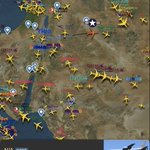
If you want to know whether a US air campaign is coming, watch the tankers.
Big air campaigns need fuel in the sky, so refuelling tankers move first, often in streams across the Atlantic. You can also watch them working out of Israel and Jordan on the free trackers. Heavy bombers reposition to Europe or the Indian Ocean, and cargo airlifters surge east with munitions and spares.
What you see is only part of it. Plenty of military aircraft fly with their transponders off, so a quiet map proves nothing. A sudden busy one tells you a lot.
So far, an Israeli outlet reportedly sees no unusual rise in US arrivals, likely because they are already in theatre. If tanker streams start crossing the Atlantic this weekend, in the darkest nights of the month, the decision has probably been made.


Some other things to watch - aircraft movements.
If you want to know whether a US air campaign is coming, watch the tankers.
Big air campaigns need fuel in the sky, so refuelling tankers move first, often in streams across the Atlantic. You can also watch them working out of Israel and Jordan on the free trackers. Heavy bombers reposition to Europe or the Indian Ocean, and cargo airlifters surge east with munitions and spares.
What you see is only part of it. Plenty of military aircraft fly with their transponders off, so a quiet map proves nothing. A sudden busy one tells you a lot.
So far, an Israeli outlet reportedly sees no unusual rise in US arrivals, likely because they are already in theatre. If tanker streams start crossing the Atlantic this weekend, in the darkest nights of the month, the decision has probably been made.

Morning update, Thu 5 Nov. America's vice-president has now said publicly that the Iran war cost his side the election. Tehran will read that as leverage, and I think it makes Iran slower to answer Qatar, not faster. Why give ground when Washington's number two calls the war a liability?
Washington. Vance posted on X last night: "The reason we lost is the war. The president himself said so last night." A day earlier Trump told the WSJ he'd "do it again", and the strike option is still on the table. Vance has also reportedly written directly to Iran's Mohsen Rezaei, so his words carry extra weight in Tehran.
Doha. Qatar's mediators expected feedback from both sides within about 36 hours of Tuesday. That window's gone and nothing has come out publicly. One Gulf report says Washington signed off on the draft. Iran's security council chief called the US reply "not convincing", and Mojtaba Khamenei warned that the war "will become much wider" if attacks are repeated.
Israel. Ra'am says it'll recommend Gadi Eisenkot for prime minister. That puts him on 56 seats to Netanyahu's 53. Neither has 61, but Herzog will most likely ask Eisenkot first. This matters for Iran. Netanyahu has reportedly been pressing Trump to strike after the midterms, and I'd expect a prime minister fighting to keep his job to carry less weight in Washington.
Hormuz. Quiet overnight as far as I can see. UKMTO hasn't logged anything new since Tuesday's attacks off Oman. The IRGC still hasn't named a single one of the four tankers it claims its mines destroyed. Two days on, that silence is telling us something.
Saudi Arabia. The Houthis claim fresh strikes on Riyadh's King Khalid airport and on border positions in Jizan and Najran. Saudi Civil Defence put out warnings in the south. I've seen no Saudi confirmation of any hit.
Oil. Brent closed Tuesday at $103.60, its lowest since 7 October, and edged up yesterday. The market's still pricing in a deal.
The US–Russia–Ukraine talks in Abu Dhabi are still set for 10–11 Nov, and no change has been announced.
Today I'm watching for Iran's answer to Qatar and whether Trump responds to Vance. My call is that Tehran waits. Tell me where I'm wrong.

Here is a question - could President Trump have been humbled enough by yesterday’s results that he walks away from the Iran war? Or will he double down and commit the US to another 20 year quagmire?
Cyber update, Tue 3 Nov.
Europe. Overnight Sunday into Monday, someone remotely switched supermarket fridges and freezers across several European countries into defrost mode, with temperatures reportedly set to 50°C. Stores in Sweden, Ireland, Belgium and Estonia were hit, with Luxembourg or the Netherlands as well depending on the report. SuperValu says 13 of its Irish stores were affected. Sweden's national cyber security centre says it's responding to "multiple incidents affecting store cooling systems". This is the second wave. On 11 October hundreds of French supermarkets lost cooling in a single night through internet-exposed Danfoss controllers, some of them end-of-life for years.
United States. Since late July, someone has tampered with the controllers at water utilities in around a dozen states. Minnesota said treatment plants serving more than 30 communities were hit, and a county outside Atlanta issued a precautionary boil-water notice. CISA and the FBI had already warned about Iran-affiliated actors targeting internet-facing PLCs. Washington hasn't publicly named anyone, but the Washington Post reported that US intelligence is confident the IRGC is behind it.
The Gulf. This is the part I'd watch most closely. The US strike window reportedly opens tomorrow, and Tehran has been unusually specific about what it would hit if the war resumes. On 13 October Mohsen Rezaei warned that cables, data centres and AI facilities "across the region" could be attacked. On 21 October an IRGC deputy, Yadollah Javani, reportedly pointed to the undersea cables under the Strait of Hormuz. Two Iranian security officials then told Reuters that Tehran has "detailed plans" to hit Gulf cables and would try to block repairs. In March, Iranian outlets listed US-linked cloud and tech firms in the Gulf as targets, and Iran has said it would go after regional banks tied to the US and Israel. This has happened before. Drone strikes in March physically damaged data centres in Bahrain, and some services there still haven't been fully restored. Western banks sent staff home and closed branches in parts of the Gulf in the first weeks of the war.
My read. Nobody has attributed the European fridge attacks, and some researchers think the exploit is simple enough for amateurs. I don't think that's the whole story. Two near-identical waves three weeks apart, against the same class of internet-exposed controllers, alongside a confirmed campaign against US water systems, looks more like a campaign than vandalism. My working assessment, moderate confidence, is that this is consistent with a state or state-backed actor in a preparatory phase. It looks like mapping exposed industrial controls, testing what breaks, and timing how long governments take to respond.
If the war resumes, I'd expect the Gulf to get the sharp end of it. Iran's stated targets are telecoms, cloud and banking: the systems that keep a modern Gulf economy running and that link it to the US. Iran has said nothing publicly about power or water, which isn't the same as having no plans for them. In this kind of conflict cyber and physical attacks tend to arrive together, with a drone or a cut cable taking down the network and an intrusion slowing the recovery.
A credible criminal or hacktivist claim on the European attacks would make me revise this, and so would an interim deal out of Tehran.
My call is a third wave in Europe in the coming week, and Gulf digital infrastructure targeted within hours if strikes resume.

Evening update, Wed 4 Nov. Trump says the US is "locked and loaded" but there may be no reason to go. Iran answered by claiming it mined four tankers and shot down another US Reaper, and the Houthis say they hit Riyadh's main airport. That's a lot of claims in one day, and none of them are confirmed yet. Qatar's 36-hour window for replies is about up.
Hormuz. The IRGC says four "non-compliant" tankers hit mines south of the strait this morning and are still burning, and that two more vessels were stopped. On Sunday it said two tankers had exploded. Across both claims no ship has been named and UKMTO hasn't logged anything to match, which is odd for six tankers. What UKMTO did confirm on Tuesday was an attack on an Indian dhow and a tanker north-east of Lima, Oman, hit by two projectiles. The IRGC has released footage it says shows a US MQ-9 being hit east of the strait as of only a few hours ago. Washington hasn't commented.
Washington. Trump told the FT "we seem to be getting everything we want" and "we're locked and loaded if we need to go, but there may be no reason for it." He's also reported to have told Fox the US may have to "do something large", and the WSJ says strike plans have been ready since today. With the vote behind him, the call is his alone now. I'd take the FT line as his current position and treat the strike talk as pressure on Doha.
Doha. Qatar says both sides are still committed to the mediation. Reuters reported that the Qatari mediators expected answers from both capitals within 36 hours. A senior Iranian official told Reuters they're still "far from" a deal, and Iran's security council secretary called Washington's last response "unconvincing".
Saudi Arabia. Houthi military spokesman Yahya Saree says a ballistic missile hit King Khalid International in Riyadh directly and caused significant damage. Saudi authorities haven't commented yet. If it's confirmed, it's the most serious strike on the capital since the October attacks on the same airport, which killed 14. Earlier today the coalition said it intercepted Houthi drones, one of them over the Mecca region, and alerts in Najran and Jazan ended in all-clears.
Tehran. Supreme Leader Mojtaba Khamenei used the embassy-seizure anniversary to warn that anyone expecting US behaviour to change is "seriously mistaken", and that a renewed attack would bring a much wider regional response. That's standard anniversary language. What goes back through Qatar tells us more.
Israel. AP reports Netanyahu's bloc lost its majority and that he pressed Trump for more strikes after the US vote. Israel denies the second part.
Oil. Brent was around $104 this morning, after Tuesday's lowest close since 7 October. The market isn't pricing in four burning tankers.
Diplomacy elsewhere. The US–Russia–Ukraine talks in Abu Dhabi are still set for 10 and 11 Nov.
Overnight I'm watching for a US retaliatory strike for the lost MQ-9 Reaper, a Saudi statement on the airport, anyone putting a ship's name to the IRGC claim, and any reply to Qatar leaking out. Tell me where I'm wrong.

Morning update, Wed 4 Nov. 47 years to the day since the US embassy in Tehran was seized, Trump says he's "locked and loaded" but may have no reason to strike. Tehran says Washington's latest reply isn't convincing and Hormuz stays shut until its seven conditions are met. I think both sides are parking escalation to haggle over price.
Washington. Speaking to the FT before the polls closed, Trump said there were no immediate plans to strike and that "we seem to be getting everything we want". He called the blockade a "brilliant situation". A US official described Monday's Qeshm strike as defensive, and the WSJ was told it wasn't a return to major operations. The votes are in, so the midterms can't explain any more waiting. If he holds off from here, it'll be because Doha is delivering.
13 Aban. Today is the anniversary Iran marks as its national day against "global arrogance", with state-organised rallies across the country. The speeches will be hard, and the chants will be louder than usual this year. I'd read the rhetoric as theatre for a home audience. The test is whether any official uses the platform to rule out talks. If Rezaei or Ghalibaf hold the line on "conditions" rather than "no deal", Doha's still alive.
Tehran. Rezaei, the SNSC secretary, claims the US reply "was not convincing" and says Hormuz reopens only once Iran's seven conditions are answered in full. The armed forces chief went further on Tuesday, adding recognition of Iranian sovereignty over the strait. That's an opening position, and a maximal one. What matters more to me is Pezeshkian saying Mojtaba Khamenei has given the government authority over the talks.
Hormuz. The IRGC claims three tankers on an "unauthorised" route hit mines on Tuesday and are burning. I haven't seen UKMTO or any owner confirm it, and no ships have been named. UKMTO did confirm projectile hits on tankers on Sunday and Monday. If the mine claim stands up, it's pressure applied mid-negotiation, and insurers will price it quickly.
Doha. Qatar's al-Ansari says Doha is still hopeful of an interim deal and calls freedom of navigation non-negotiable. A Qatari LNG tanker was hit on Friday, so that line isn't abstract for them.
Israel. Netanyahu has reportedly pressed Trump for a new wave of strikes after the vote, per AP and Axios. So far Trump's let the mediators run.
Oil. Brent's around $104, down more than 8% this week. The market's betting on talks.
Elsewhere. Witkoff has confirmed US–Russia–Ukraine talks in Abu Dhabi on 10–11 Nov.
Today I'm watching for UKMTO on the mine claim and whether Iran comes up in Trump's first remarks on the results. My call: the strike window opens today, and given it is morning in the Gulf, I don’t anticipate any strikes until this evening at the earliest. Tell me where I'm wrong.

Evening update, Tue 3 Nov. Iran’s offer to reopen Hormuz within two days lands on US midterm day, and I don’t think the timing’s an accident. Trump parked the strike decision behind the vote. Once the polls close that reason to wait is gone, and Netanyahu is reportedly already pushing for strikes.
Midterms. Trump said there’d be no new attacks on Iran before polling day, and he’s spent the past few days playing the war down. “We had a war with Iran. We won,” he told reporters. On Monday he said he wasn’t sure you’d “even call it a war”, because there’d been no fighting for months. He also says there are “one or two sites” left to deal with, which he could do “in ten minutes”, and he’s named Pickaxe Mountain. I’m not calling the result. My point is narrower. Whoever wins, the domestic case for holding off ends with the count, and AP reports Netanyahu wants a short, heavy air campaign once the vote’s done. Fuel prices matter here too. Brent fell more than 7% on Monday on hopes of a deal, and I doubt the White House wanted that reversed before people voted.
Tehran. Ghalibaf, Iran’s chief negotiator, said in a televised speech that Iran is “ready for battle with its finger on the trigger” and that the ball is now in America’s court to prevent war. Pezeshkian claims the supreme leader has given his government new powers to negotiate issues that were off-limits. If that’s real, it’s the most important line of the day. The terms are the same as before: frozen assets, the blockade and sanctions lifted, and hostilities ended on every front, Lebanon included. Only the timeline has moved, from seven days to two. Qatar says both sides “remain committed” and it’s working towards an interim deal. A senior Iranian official told Reuters they’re still far apart.
Hormuz. An Indian seafarer died after the MSV Al Jusufi was hit by what India calls an “unidentified aerial object” off Oman. Oman’s coast guard rescued the other 13 crew. UKMTO counted 30 attacks on merchant ships in October, a record.
Washington. US officials describe last night’s strikes on Qeshm as limited and defensive, a response to the IRGC firing on a US aircraft. The WSJ reports they’re part of a run of undeclared strikes over recent weeks. So “no new attacks before the vote” has had some give in it already.
Yemen. Reuters reports the Houthis have pushed to within about 80km of Aden, their closest since 2015. Saudi air defences intercepted a ballistic missile aimed at the south of the kingdom on Monday.
Elsewhere. The Kremlin confirmed the US–Russia–Ukraine talks in Abu Dhabi for 10–11 Nov.
Overnight I’m watching Trump’s first remarks after the results. If Iran’s in them, I’d read that as the strike window opening. Tell me where I’m wrong.

