
Software Engineer @ NVIDIA Computer Graphics enthusiast from Canton :-) Opinions are my own.
Guangzhou
Joined January 2015
- Tweets2.8K
- Following2K
- Followers878
- Likes4.4K









dydx retweeted

推特上许多讨论黄仁勋的,都集中在商业判断、Dennys创业纪念碑的去留、情愿和私生活八卦上
但我发现最打动人的,还是在老黄落难之际,许多之前受过他滴水之恩的人出来主动post testimonial
一件件具体而分布散落的事件指向一个真相 —— 老黄确实是乐善好施乐于助人之人
而且我也相信,为人抱薪者,不可使其冻毙于风雪
图1 - 11 年前,一个印度普通大学的学生 @recurseparadox 给黄仁勋发cold email,问能不能要几块 GPU。15 分钟后,收到了回信。
图2 - Serve Robotics 的创始人 Ali Kashani @ahkashani ,记得的是一个早上 6 点的电话。2023 年圣诞节前,投资人临时撤资,公司连工资都快发不出来。他已经在和破产律师谈了,于是给黄仁勋写了封邮件。
早上 6 点,黄仁勋打来电话。当天晚上,他已经在和英伟达团队吃饭,商量怎么帮公司渡过难关。四个月后,他们敲响了纳斯达克的钟。
图3 - 同样是回邮件,Simon Mo @simon_mo_ 讲过另一件事:团队的算力被收回,vLLM 在 Blackwell 上的开发受阻。他写信给黄仁勋,同一分钟就收到回复,问题连夜解决。
图4 - 英伟达员工 John Zedlewski @zstats 的长帖,讲了两件不同领域但同样伟大的事。
一件是他重病住院,处在最低谷时告诉了黄仁勋。黄仁勋立刻联系斯坦福的人,帮他协调进入临床试验。
另一件发生在工作中。自动驾驶部门开会,A 团队抱怨 B 团队的框架太慢。黄仁勋让 B 团队把整个数据流画到白板上,标出每一次内存拷贝。多余的拷贝就这样露了出来。
第二件我特别有感触,不同于大部分公司里面,遇到类似的问题,往往因为领导层自己也不懂技术,所以只能模糊的给一个,“我们研究一下,下周答复你”的模糊回答(然后不了了之)。
实事求是,原地分析,当场解决问题。太有魅力了
图5 - Vartika Singh @vartuattheghat 的妹妹患脑癌,在加州时病情恶化。全家陷入了难以想象的困境:令人心碎的医疗抉择、高得令人难以承受的住院费用,以及可能在远离家乡的地方失去她。
尽管肩上担子沉重,黄仁勋还是抽出时间关心他们。帮助她的家人渡过了看似无解的难关。黄仁勋还当面鼓励她:“我为你感到骄傲。珍惜你们在一起的时光。”
这,我的朋友,才是真正的领导力 leadership。
图6 - 在英伟达工作 11 年的 Gabriele Leone @ambertanuki ,记住了疫情期间的一个决定:办公室空了,厨房和清洁人员几乎没活可做,黄仁勋仍决定把他们全部留下。
当所有500强企业都在裁员,跟风裁员是最容易的选项的时候。黄仁勋考虑的不是公司的股票业绩和财务报表。他看到的是公司里最容易被忽略的人,也替他们想了一下。
图7 - 大约 30 年前,一个学生志愿者 @Fuzzygoat 在洛杉矶 SIGGRAPH 的酒店电梯里遇到黄仁勋。两人下楼,发现去会场的班车已经走了。
黄仁勋叫了辆出租车,坚持让这个学生一起坐。
没有投资,没有 GPU,也没有什么大事。这个学生却一直记到了现在。
为人抱薪者,不可使其冻毙于风雪
为人抱薪者,不可使其冻毙于风雪
为人抱薪者,不可使其冻毙于风雪
伟大,无需多言
现在市面上充斥着太多虚假的PR,一个个公司花尽心思掏钱把创始人打扮的善良博爱
真正的博爱,不是花钱买公关。而是年复一年,日复一日的践行自己做人的准则。
写一篇不是为了批判谁,而是自己在刷推的时候强烈的感受到四个字:见贤思齐


dydx retweeted

I’ve decided to leave NVIDIA. There are a few things I want to say.
As a robotics engineer at NVIDIA, I have seen Jensen as much more than the company’s CEO.
I admire his willingness to invest in a future that was not yet obvious. He committed to CUDA long before the deep learning boom and positioned NVIDIA for AI before it became everyone’s priority. Those decisions helped build the infrastructure that powers today’s AI.
I have seen that same vision in physical AI: investing in robotics, sharing open-source tools and projects, and building computing platforms that bring AI into the physical world. This is the work I do every day—and a future I believe in.
But what matters most to me is the culture he helped build.
Engineers are encouraged to explore, take risks, and learn from mistakes. Jensen reads employees’ Top 5 emails, follows their work, and engages directly. In a company this large, that connection matters. It makes an individual engineer feel that their ideas can still be heard.
That is why this has been so disappointing.
I do not have all the facts surrounding the allegations, and I cannot prejudge the investigation. My admiration for Jensen does not put him above scrutiny.
What I find difficult to accept is having to come to terms with his departure before receiving an explanation that helps me understand it. What this means for our direction, our culture, and the people doing the work remains unclear to me.
I have felt that engineers’ perspectives matter here. On this decision, I have not felt heard. That gap has been more painful than I expected.
I understand that some information cannot be shared immediately. But that does not erase the feeling of being left outside a decision that affects the company we help build every day.
A company’s greatness comes from its leadership, its governance, and the people who turn its ambitions into reality. Employees’ trust and sense of belonging are part of that, too.
Jensen’s vision and the engineering culture he shaped were important reasons I wanted to stay. His departure led me to decide that my own chapter here should also come to a close.
I leave with sadness and gratitude. The colleagues I have worked with, and the work we believed in together, will always matter to me.
These are my personal views.

dydx retweeted

黄仁勋的传记作者 Stephen Witt,真是让我见识到了某些西方媒体人的虚伪和落井下石。
Stephen Witt 是一名美国调查记者,2023 年,他以《纽约客》记者的身份接触黄仁勋,随后获得黄仁勋本人的深度配合,采访了近 200 名相关人士,并于 2025 年出版了《The Thinking Machine》,一本关于黄仁勋和英伟达的传记
可以说,黄仁勋的信任和配合,在很大程度上成就了他的这本书。
然而,黄仁勋刚刚遭遇人生中最严重的一次危机,Stephen Witt 就迫不及待地在《纽约时报》发表了一篇名为《The Fall of the A.I. King》的文章,将黄仁勋的遭遇归结为男性的傲慢、自恋和狂妄自大。
最让我感到恶心的是其中一个细节
Witt 曾经与黄仁勋在 Denny’s 吃早餐,黄仁勋给服务员留下了 1000 美元的小费。要知道,黄仁勋15岁时就曾在 Denny’s 当洗碗工、清理餐桌,后来才成为服务员。这段经历对他的人生有着特殊意义。
一个从洗碗工成长为全球最成功企业家之一的人,几十年后回到自己曾经工作的连锁餐厅,给一位普通服务员留下 1000 美元小费,本来完全可以理解为对过去的感恩、对服务行业劳动者的尊重。
Witt 自己承认,黄仁勋当时根本没有刻意展示这笔小费,是他事后向服务员打听才知道的。可到了今天,他却开始怀疑,黄仁勋的慷慨和谦逊只是一场表演,目的是满足自己的自恋心理。一个连旁观者都没有刻意让其看到的善举,竟然也能被解释成自恋
当一个记者已经决定要把你写成一个傲慢、自恋的反面人物,你做什么都是错的。你发脾气是傲慢,你给小费是自恋,你对员工好是表演
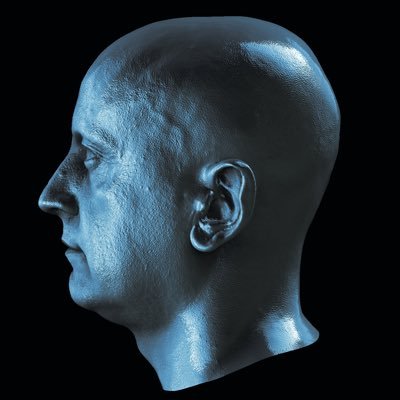
这个傻逼记者还给这篇文章配了一张极其丑化黄仁勋的面部特写。这样的视觉处理,与整篇文章的贬损性叙事放在一起,很难不让人质疑其中是否存在针对亚裔人物的偏见。
记者当然有权批评黄仁勋,黄仁勋也应该为自己的错误承担责任。但这不意味着媒体可以随意揣测一个人的内心,把善意解释成虚伪,把复杂的人性简单归结为几个负面人格标签
Stephen Witt 曾经利用黄仁勋的信任,获得了普通记者难以得到的采访机会,并凭借这段经历写出了一本获奖畅销书。到黄仁勋陷入危机,他又以最了解黄仁勋的传记作者身份,站出来对这个人的人格作出全面否定, 典型的落井下石, 虚伪至极的垃圾

dydx retweeted

I joined NVIDIA 11 years ago, and throughout that time, Jensen has been the leader I’ve always looked up to.
Jensen was an extraordinary visionary, with a rare ability to take incredibly complex problems and break them down into simple, actionable solutions. I witnessed this countless times in meetings, watching him cut through complexity, solve problems, and guide teams in the right direction.
He taught us that “the mission is the boss,” and he led by example through an incredible work ethic. You could email him at any hour, and somehow, he would always find the time to respond.
But beyond being an exceptional leader, Jensen was also a genuinely good human being. Anyone who has worked closely with him has stories that speak to his character.
One that has always stayed with me happened during COVID. While other tech companies were cutting contracts, Jensen made the decision to keep our entire kitchen and cleaning staff employed, even though our offices were empty and there was little work for them to do. It was a simple but powerful example of the kind of person he was.
That’s why Jensen was so deeply respected and loved by so many of us.
Not just for what he accomplished, but for how he treated people along the way.
We’ll keep working incredibly hard to build on everything JHH has created and carry his vision forward.
Thank you for everything, Jensen.

ALT Photo taken in May 2020.
dydx retweeted

pour ceux qui ne réalisent pas le séisme historique que représente la fin de l’ère Jensen Huang à la tête de Nvidia, il faut regarder le chemin parcouru depuis 30 ans pour comprendre qu’on assiste au départ d’un monument absolu de l’histoire industrielle:
> il a commencé tout en bas comme plongeur et serveur de nuit dans un restaurant dennys à nettoyer des assiettes pour payer ses études d’ingénieur
>en 1993,il fonde Nvidia depuis des discussions dans ce même restaurant avec deux associés, un capital minuscule et la conviction folle que le calcul graphique va transformer l’informatique
>au culot il écrit une lettre directe à Morris chang, le fondateur légendaire de TSMC pour le convaincre de fabriquer ses premières puces alors que personne ne pariait un centime sur sa boîte
>il a frôlé la faillite totale à plusieurs reprises dans les années 90 sauvant l’entreprise à 30 jours de la cessation de paiement grâce à un pari désespéré
> en 2006,il investit des milliards dans cuda alors que wall street détestait l’´idée et massacrait le titre en bourse, ce qui lui a permis de créer l’infrastructure logicielle qui rendra l’IA moderne possible 15 ans plus tard
>il a propulsé Nvidia au sommet absolu de la finance mondiale avec une capitalisation boursière dépassant les 3000 milliards de dollars
> il a accumulé une fortune personnelle dépassant les 150milliards de dollars (tout en restant fidèle à son fameux blouson en cuir) et à une culture hardware très profonde
>il a réalisé le plus grand miracle de partage de la valeur de l’histoire de la tech car pour info plus de 75%des salariés de Nvidia sont devenus millionnaires et des milliers d’entre eux sont même multimillionnaires
>il a même permis à des cadres historiques comme de Nvidia entrés tôt de devenir carrément MILLIARDAIRES en restant simples salariés, je ne sais pas si vous vous rendez compte de la perf de fou furieux de réussira transformer des tonnes d’employés en milliardaires, c’est un un exploit qui est juste UNIQUE AU MONDE
>il a transformé une simple boîte de cartes graphiques pour jeux vidéo en pilier vital de la souveraineté technologique et militaire américaine sans laquelle vous ne pourriez utiliser quasiment aucun modèle d’ia aujourd’hui, c’est indirectement grâce à lui que certains se construisent toute une économie numérique en étant indépendants ou peuvent remplir leurs missions professionnelles en étant salariés
>il possède aujourd’hui une influence géostratégique supérieure à celle de la quasi-totalité des chefs d’état de la planète puisque le destin de l’IA mondiale passe JUSTEMENT par ses usines
>il s’asseyait il y a encore quelques semaines à la table même de donald Trump, xi Jinping et Elon Musk pour négocier l’équilibre technologique entre les grandes puissances
>il a mené une bataille acharnée pour démocratiser les open weights en refusant de voir l’intelligence artificielle verrouillée par une poignée de labos fermés comme anthropic ou OpenAI afin que chaque entreprise et chaque nation puisse entraîner sa propre intelligence sur ses puces
c’est précisément cette dernière stratégie radicale d’ouverture et de diffusion libre de la puissance de calcul qui a fini par lui coûter sa place
en armant l’écosystème open source et en permettant au reste du monde de rattraper les géants propriétaires américains, il s’est heurté de front aux intérêts sécuritaires de Washington et aux monopoles fermés qui voulaient garder le contrôle exclusif de l’IA
les amis sachez que Jensen Huang tombe aujourd’hui pour avoir voulu rendre la technologie accessible à tous en laissant derrière lui la preuve vivante qu’un immigré parti de 0 avec une vision à TRÈS LONG TERME de 30 ans peut construire des choses GRANDIOSES

dydx retweeted

Yep: if there's a problem with your NVIDIA driver, uninstall it and reinstall it, and everything's back to normal.

An internal post urging the board to consider employee sentiment about Nvidia’s former CEO has drawn more than 1,600 comments, the majority in full support of reinstalling him. buff.ly/iaZuiLF

dydx retweeted

A heartbreaking day.
I came to @nvidia as an intern. It was my first job, and I never left. For my whole career, @JensenHuang has been the leader I looked up to.
He taught us to reason from first principles, that the mission is the boss, and that greatness comes from suffering. And he lived it every single day, working harder than any of us.
I've never known a more inspiring leader. Thank you, Jensen. We'll keep building on what you started.

dydx retweeted

.@TheEconomist : Pedos visiting Epstein islands must be respected but Jensen Huang must go!!!

Jensen Huang must go
We argue in @TheEconomist that his position is untenable
"Like many powerful leaders, he came to believe that he was too important for the normal rules to apply to him."
But he is not the only one. Howard Lutnick has failed to stem the flow of chips to China. More heads should roll

dydx retweeted
Save Jensen.
This would be an Apple firing Steve Jobs level of idiocy from NVIDIA’s board if they did that, and a grievous harm to the United States of America.
The dude truly is the visionary driver of the future of tech from the gaming GPU era to CUDA to AI supercomputers.

Breaking: Nvidia’s board is preparing to oust CEO Jensen Huang after he had two extramarital affairs, including one with a suspected Chinese spy. on.wsj.com/4jcpr01

dydx retweeted
dans un silence assourdissant claude vient de lâcher une dinguerie en physique théorique en réglant 2 problèmes qui saoulaient les chercheurs depuis des décennies avec le coefficient de polyakov, il a capté que les trous noirs peuvent aussi pop par transition ultra rapide dans des tout petits univers et à côté de ça il a posé la limite exacte du fameux modular bootstrapping (je vous laisse chercher) pour faire le grand ménage dans toutes ces théories de gravité quantique un peu bancales qui tournaient en rond
pour vous la faire simple, imaginez que les physiciens galéraient à assembler des pièces de lego cosmiques super complexes sur la façon dont un mini trou noir se forme dans l’univers, bah dites vous queclaude a juste sorti la formule miracle pour tout emboîter d’un coup et jeter toutes les fausses pistes à la poubelle et je trouve ça juste incroyable à observer putain!!!
ce qui rend ce truc complètement fou c’est que c’est le genre d’avancée qui va pour moi irriguer toute la tech de pointe pour les années à venir et ceux qui croient encore que l’ia sert juste à gratter des mails ou à faire des résumés de réunion sont totalement perchés
comprenez qu’on est en train de basculer dans une époque où l’IA devient le moteur absolu de la découverte scientifique


dydx retweeted
Interesting and simple example where the RGB renderer is not correctly rendering.
A spectral renderer, for a more or less realistic paint, will correctly light a green wall from a narrow white light spot pointed to a red wall.
(srgb/agx)


A spotlight hits a red wall and only the wall gets lit. Screen-space GI shoots rays from every pixel, reads the colour they hit on screen, and spills that red onto the floor, boxes and ceiling.
Watch the room 👇
▸ The problem
Direct lighting stops at the first surface. Real light bounces, so a lit red wall tints everything near it. Baked lightmaps capture that, but only for static lights and geometry. Here the light moves every frame.
▸ How it works
The source is a Unity URP renderer feature. It traces screen-space hemisphere rays, not voxel cones, light cascades or baked data:
1. Trace, at half resolution: from each pixel, 2 rays in random cosine-weighted directions around the normal.
2. March each ray against the depth buffer: 4 tiny steps (1.5 cm), 8 medium steps (5 cm), then 40 cm steps, 32 steps in all. A hit counts within 10 cm behind the surface.
3. A hit reads last frame's final image at that point, so light keeps bouncing over frames. Brightness is clamped to cut fireflies.
4. Denoise: reproject the history and average up to 8 frames, then blend 94% history. A 3x3 depth- and normal-aware blur with random spacing follows.
5. Combine: indirect light times the surface colour, added to direct light.
▸ What I hit
Two rays per pixel is mostly noise on its own. Where the history can't be reprojected (a cut, or a surface just uncovered), the source switches to 4 rays with a shorter, coarser march.
Turning away shows the limit. With the red wall off screen, rays that would hit it leave the frame and find nothing, so the red on the boxes fades. The source falls back to reflection probes and sky there; this room has neither, so misses return black.
▸ My build
three.js (r187), WebGL2 fragment passes, 1920 x 1080 with GI at 960 x 540. A G-buffer pass writes colour and normals. I ported the trace, temporal reprojection, spatial blur and combine passes with the source defaults. Two extra denoise passes in the source (a Poisson-disk blur and temporal stabilization) are not ported. Room: 6.4 x 9.2 m, 4 m high, one moving spotlight plus a dim fill light.
▸ Trade-offs
+ Colour bleeding from moving lights with no baking
+ Multiple bounces build up over frames
- Only surfaces on screen can bounce light
- Needs temporal history; fast changes lag and smear
- Thin objects leak through the depth test
- Rendered on a software GPU, so no timings
▸ When to use it
Interiors with moving lights or opening doors, layered over a baked or probe fallback for whatever is off screen.


dydx retweeted

超音波モータ(ピエゾソニックモータ)は電圧を加えると伸縮する圧電セラミックを駆動源とした静音で高トルクなモータです。 一般的な電磁力を利用するモータと違い、コイルや磁石を利用せず摩擦力を利用して作動するため小型・軽量でありながら磁場環境で利用でき、バックラッシュのないモータです。


dydx retweeted
GratNet: A Photorealistic Neural Shader for Diffractive Surfaces
Narayan Kandel, Daljit Singh J.S. Dhillon
arxiv.org/abs/2506.15815
Abstract:
Structural coloration is commonly modeled using wave optics for reliable and photorealistic rendering of natural, quasi-periodic and complex nanostructures. Such models often rely on dense, preliminary or preprocessed data to accurately capture the nuanced variations in diffractive surface reflectances. This heavy data dependency warrants implicit neural representation which has not been addressed comprehensively in the current literature. In this paper, we present a multi-layer perceptron (MLP) based method for data-driven rendering of diffractive surfaces with high accuracy and efficiency. We primarily approach this problem from a data compression perspective to devise a nuanced training and modeling method which is attuned to the domain and range characteristics of diffractive reflectance datasets. Importantly, our approach avoids over-fitting and has robust resampling behavior. Using Peak-Signal-to-Noise (PSNR), Structural Similarity Index Measure (SSIM) and a flipping difference evaluator (FLIP) as evaluation metrics, we demonstrate the high-quality reconstruction of the ground-truth. In comparison to a recent state-of-the-art offline, wave-optical, forward modeling approach, our method reproduces subjectively similar results with significant performance gains. We reduce the memory footprint of the raw datasets by two orders of magnitude in general. Lastly, we depict the working of our method with actual surface renderings.


dydx retweeted
Volumetric Inverse Rendering via Neural Radiative Transfer
Ntumba Elie Nsampi, Adarsh Djeacoumar, Hans-Peter Seidel, Tobias Ritschel, Thomas Leimkühler
arxiv.org/abs/2607.13695
Abstract:
Volumetric inverse rendering seeks to recover the optical properties of participating media from images. Existing approaches either rely on differentiable stochastic light transport simulation, which require substantial algorithmic effort, or use simplified models that fail to capture global illumination. We propose a formulation that reconciles physically complete light transport with general-purpose neural optimization. The optical properties of the medium and the full light field are represented as neural fields and estimated through a joint optimization process. Global illumination is enforced via a residual objective derived from the Radiative Transfer Equation in local differential form, complemented by a volume rendering term along primary viewing rays to mitigate \rev{low-frequency} bias. We demonstrate reconstruction of spatially varying, color-resolved scattering, absorption, and phase function parameters from multi-view images. Beyond reconstruction, the same framework supports learning generative models of participating media with physical optical properties under global illumination.


