

Building one-person marketing departments. Follow to learn how to do your marketing with AI. 🛠️ https://xitter.gq/t.co/NoUoU2RJO5 🏗️ https://xitter.gq/t.co/y35731purM
Joined April 2009
- Tweets462
- Following442
- Followers1.4K
- Likes334





Pinned Tweet
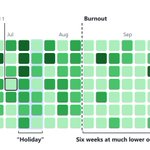
I haven't posted for over a month. It was burnout, and I'll write about it tomorrow. But I'm back now.
I'll be here a lot more from now on, so here's who I am and what I'm building.
I'm a marketer and founder. I've spent a decade selling things on the internet:
> Launched simple web projects since school and marketed every one of them myself
> Found the niche that paid: CPA networks. Years of performance marketing on my own money
> Sold every offer you've seen online, from enlargement pills/creams/pumps for a certain organ (yes, that was me pushing them on you) to bank loans
> 2017: cofounded my first project with a team - 25 people. I ran marketing and some other things. The project failed: the market moved while we were building it. (The photo is from that year - the hackathon we won. Narrator: everyone is smiling here. They didn't know yet how it would look a year later.)
> Then a marketing agency for early-stage projects, and CMO or fractional CMO at several of them - building the whole marketing function from nothing
> 2025/2026: joined the founding teams of two projects (post-mortems will follow). One reached the top 10 on its chain in about half a year, then couldn't raise. The other closed early when the market changed
When those two shut down, I understood I'd been making the same mistake all that time.
I was always behind the scenes, so nothing carried over. No audience, nothing with my name on it.
Now I'm building Adaptico OS in public - an open-source go-to-market operating system, 28 commands so far, on GitHub. It's one of a few things I'm working on - the others I'll show when they're ready.
Here's what I'll be posting about:
> What changed in marketing since 2017 - and again since 2025 - and what stayed the same
> The set-and-forget AI marketing myths: what the agents really do, and where they still need you
> The exact tools I use for each marketing job, instead of one chatbot for everything
> The launch mistakes I've watched kill projects
> The real numbers of building all this in public - wins and flops
My goal for the rest of 2026 on X: show how one person can actually run a project's whole marketing with AI - no "my agents do everything" promises, just the things that work - on live projects.
If that's the kind of thing you want to see more of, follow me. I'll be posting all of it here.

2
6
1,129
Anyone can build a copy of your SaaS in a few weeks now, as a side project. What's left is distribution.
As a solo founder, you can pay for it with ads or someone else's audience, or you can build your own.
Building your own means running your product like a media company.
Here's what changes:
A product company that makes content
> Builds for months, then looks for customers
> Posts when it ships something
> Writes about its features
> Stops posting when it gets busy
A media company that makes a product
> Has readers before it launches
> Publishes weekly about its users' problem
> Answers what its users search for
> Keeps publishing when nothing shipped
To publish like that:
1. Pick one place your users already read or watch.
2. Pick one format you can repeat.
(your earlier pieces become the examples AI follows)
3. Keep your raw material in one folder.
(support emails, replies you got, competitors' bad reviews, what you tried)
4. Ask AI to pull the insights out of it, then draft in that format.
(tell it to use only what's in the folder)
5. Cut everything that could be about any other product.
6. Publish at a pace you can keep when you're busy.
7. See which pieces sent someone to your product, and make more like those.
Someone can copy your product in a few weeks. Nobody can copy a year of publishing in a few weeks.
I've just started mine - here's the dashboard I built for it.

17
7
232
Getting first 10 B2B SaaS customers, 2016:
> 65 cold emails a founder wrote by hand
> 18 replies
> 10 customers
Getting first 10 B2B SaaS customers, 2026:
> A GTM engineer and a Clay subscription
> 2,000 cold emails a day
> 75 warmed-up mailboxes on 25 spare domains
> SPF, DKIM and DMARC on every domain
> Waterfall lead enrichment, 6 providers
> Auto-swap any domain under 1% replies
> 15 messages, 20 spintax variations each
> Each "personalised" with their dog's name
> Plus an AI video of you jumping on one leg
> A building in public thread on the setup
> 300 replies, 290 from other AI
> 10 customers, months after you launched
I've spent a decade marketing other people's products. Then I built my own as a solo founder and never really marketed it.
That's Adaptico OS, my open-source AI marketing tool for founders. I launched it in June: 20+ releases since, and barely any stars on GitHub.
Meanwhile, my X feed is full of celebratory screenshots and 7-fig SaaS ARRs. When someone with a big audience shares a repo, it gets 1k stars instantly.
My only marketing was building in public here, where my posts barely get any traction.
Building something doesn't earn you users by itself. Knowing that doesn't make it any less frustrating.
So I've started marketing Adaptico OS - some outreach and a few other things, all small for now.
Last week I published a guide to curing One More Feature Syndrome. I should have read it in June.

22
8
417
Every feature you build and every direction you take comes from your research.
If the research is bad, you spend months building a SaaS nobody needs.
To make mine better, I run the same question through several AI tools, because each one reads different sources:
1. Write down the one question you need answered.
(for example: are there customers already paying to solve the problem you want to build and launch for, and how much?)
2. Run it through at least two of these:
> Gemini Deep Research
> ChatGPT Deep Research
> Claude Research
> Grok, which also reads what users post on X
(if you only pay for one, ask a friend who pays for another to run it for you)
3. Save each report in one research folder.
(if you use Claude Code or Codex, ask it to organise the reports for you)
4. Give that folder to a separate AI chat or agent and ask it to merge the reports:
"Mark what the reports agree on and where each claim came from. List where they disagree and keep both sides. Flag anything with no source."
(ideally, save this as a skill so the merge runs the same way every time, but it works without one too)
5. Open the sources behind every disagreement yourself.
(this is where you stay in the loop: agents gather and merge, you check)
6. Open the sources behind the agreements you're about to rely on.
(all of them can quote the same blog post, or a source you wouldn't trust)
7. Write down what you decided and why, in the same folder.
(your next round of research starts from there)
Use it before your next launch, or any other big decision about the product.

2
154
Vibe coding is the best thing that happened to solo founders and indie hackers: a feature for your SaaS takes an hour now.
Here's what the feature really costs you in addition to this hour:
The users you didn't talk to
> While you were building, you weren't working on your go-to-market: finding customers and talking to them. If you just launched, you could have been asking the first visitors why they didn't sign up.
A later launch
> If you haven't launched yet, every feature pushes the launch back, and with it the day you find out whether anyone wants the product.
The work around the code
> 37signals, the company behind Basecamp, listed 23 steps for adding one feature, and writing the code was step 6. A solo builder skips some of them, but you still have to test the feature, write the help page and update the landing page. And one feature leads to more: team accounts need invites, roles and billing.
The bugs
> CodeRabbit, a code review tool, checked 470 code changes in open-source projects. The ones co-written with AI had about 1.7 times more problems than the ones written without it. A vibe coder working alone has nobody to hand the bugs to, and each fix and review is another hour not spent on distribution, getting the product in front of customers.
A product that takes longer to understand
> A visitor gives your landing page a few seconds. Each feature you add to the page makes it a bit harder to see what the product is for in that time, and some visitors leave before they do.
A product that's harder to learn
> A study in the Journal of Marketing Research concluded that once a product has enough features, one more shouldn't be added even if it costs nothing to add. The authors called it feature fatigue: each feature is one more thing a new user has to learn.
And after all that, the feature may sit unused. Pendo, an analytics company, looked at 615 software products. 12% of the features got 80% of the daily use. 80% of the features were rarely or never used.
Why founders and builders keep building features instead of finding customers is in the article below, with a 7-day plan to stop.


12
9
395
If you're a solo founder running your SaaS marketing with AI, every answer is a guess until it knows your product.
Everyone running AI agents has a soul.md, a user.md and an agents.md by now. They tell the model who it is, who you are and how to work. They say nothing about your product, your users, your rivals or what you already tried.
That's the go-to-market part most founders skip. Here's what goes wrong, and what fixes it:
It gives advice that fits any product
-> product.md: who it's for, what they use today, why they'd switch
It tells you to try every distribution channel at once, with a team you don't have
-> stage.md: where the project is (still building, just launched, first users), the next step, your budget, your hours, anything else you can't do
It doesn't know how your users talk
-> audience.md: where they talk online, and what they say there, word for word
It has never looked at your competitors
-> competitors.md: their pages, prices and what their users complain about
It suggests what already failed
-> log.md: what you tried (a Product Hunt launch, cold email, building in public), what came of it, and what you ruled out
It has no idea what your numbers are
-> no file: connect your analytics and payments through MCP or an API, so it reads your signups and paying customers live
It agrees with every idea you have
-> one line in agents.md: "list what's wrong before what's right"
It repeats a mistake you corrected yesterday
-> rules.md: every correction, written as a rule it reads next time
It writes slop
-> examples/: if you publish anything, 10 things you wrote and 10 from others that made you stop and read
Each file only needs what the model can't guess about your product.
You can set up a first version in a weekend. After that you stop explaining your product in every new marketing chat, and you spend your time correcting the model when it's wrong.
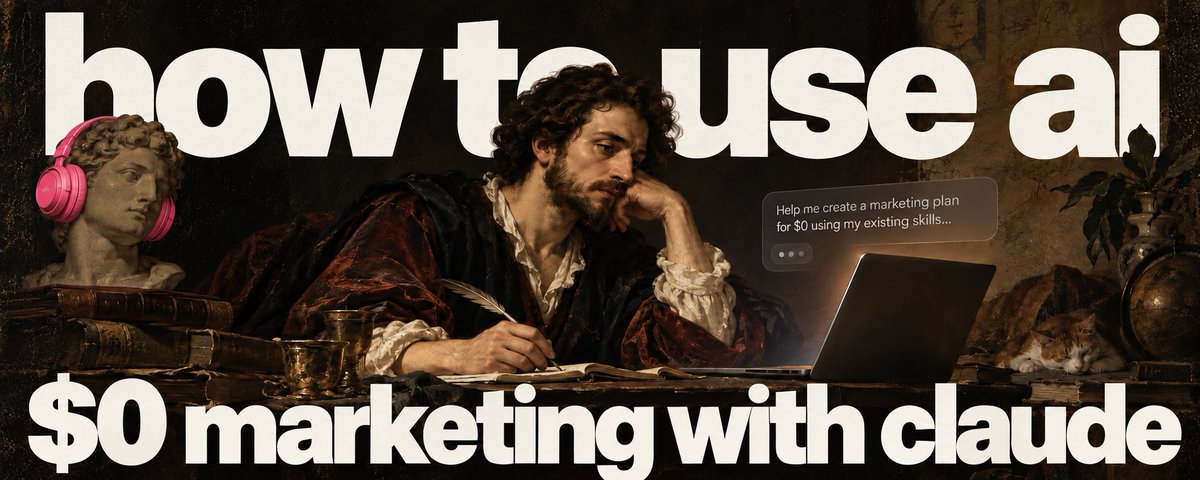
This guide shows how to run AI marketing with Claude in 8 steps, all for $0.
If you're a solo founder or indie hacker who just launched a SaaS, it's worth saving.
8 days ago I posted a list of what I let AI do on the projects I work on, ranked by how much I trust the result. Here's where this guide's steps land on it:
It runs alone:
> Finding emails for the leads (step 2)
It does the work, I check it:
> Competitor research (step 1)
> Ranking creators by fit (step 4)
> Finding posts that worked (step 5)
> Communities and keywords (steps 7-8)
It writes, I edit every line:
> Outreach messages (step 3)
> Posts from your interview (step 6)
> SEO articles (step 8)
It never decides:
> Your ideal customers (step 1)
> Which step to do first
Step 1 is where I'd change this guide. It asks Claude to describe your ideal customers, and steps 2 to 8 all go after the people it describes. If AI picked them, your whole go-to-market reaches the wrong people faster.
AI can run most of the marketing now. A founder still has to stay the human in the loop on who it's for. That's the job of a marketing engineer.

10
12
564
If you've just launched and you're posting about your product on X every day to get users, and nobody signs up, here's what to check:
1. Your customers aren't on X.
(search X for the problem you solve. If only other builders and indie hackers talk about it, go where your customers talk)
2. Your posts are about you.
(building in public reaches other founders, posts about your users' problem reach users)
3. Your bio doesn't say what your SaaS does.
(a stranger should get it in one read)
4. Your pinned post shows no result.
(one thing the product did for a user is enough)
5. Your bio link goes somewhere else.
(send them straight to the product, not to a list of your other links)
6. Your landing page says something different from your bio.
(open it on a phone and read the first screen)
7. Your signup asks too much.
(no card and no call before they've tried it, and count who starts signing up and never finishes)
8. Nothing happens after they sign up.
(an email goes out within a minute and tells them the one thing to do next)
Here's where to start:
> Few profile visits on your posts: 1 and 2.
> Profile visits but no visitors from X on your site: 3, 4 and 5.
> Visitors but few signups: 6 and 7.
> Signups who never come back: 8.
/gtm funnel, a skill in Adaptico OS, maps the path from your page to first use and shows you where users drop off.
Use it before you write your next post.
12
8
383
What solo founders think happens when they let AI find users for their SaaS:
> It figures out who will pay
> It reaches them on channels that work
> Customers start flowing in
What actually happens:
2
1
187
> It decides everyone will pay
> It lists every channel it's heard of
> It starts on all of them at once
> It emails everyone it can find
> It spams Reddit, X and Indie Hackers
> It spends the ad budget and sells nothing
> It invoices strangers in case one pays
> It buys fake users for the signup chart
> It posts that chart as building in public
> It reports "strong early traction"
> It asks for a bigger budget
1
110
7 types of founders doing marketing with AI. Only 1 of them keeps getting users:
THE COPY-PASTER
Asks ChatGPT for the landing page, ads, emails and posts. Ships all of it. Has never changed a word.
THE COLLECTOR
Saves every "absolutely insane" GTM system that shows up on X. Has 423 prompts, 286 skills, a Notion page to sort them and an Obsidian vault to link them to the AI brain. Has used 3 of the prompts.
THE FLEET COMMANDER
Has 40 agents. Wakes up to 300 finished tasks and 50 Telegram messages about them. Still can't say what any agent did. Posts threads on how they run the calendar and book flights. Calls it building in public.
THE ENGINE BUILDER
Built a content engine, a lead engine and a dashboard to watch them both. The dashboard shows 200 posts, 12 views and no leads.
THE RESEARCHER
Asks 4 models the same question, then asks a 5th to compare the answers. Has never asked a user anything.
THE TOOL SWITCHER
Moves to every tool that just launched, rebuilds the whole setup around it and posts a screenshot. Has been setting up since March.
THE MARKETING ENGINEER
Decides who the product is for and what to say. Lets AI do the work, reads every result and sends it back when it's wrong. Set up a simple system months ago, and only changes it when something really useful comes out.
Only the last one can grow a project month after month.
9
6
284
Getting 100 users for a new product in 2016:
> Posting on Hacker News and Product Hunt
> Emailing a few tech bloggers
> Asking friends to try it
Getting 100 users for a new product in 2026:
> Posting daily on X, for other founders
> Replying to "what are you building?"
> DMing 500 strangers "let's connect"
> Cold emailing founders who cold email you
> Messaging every colleague you've ever had
> Being helpful on Reddit, to mention it once
> Asking for "feedback" on r/SideProject
> Posting a Show HN that gets 2 points
> Listing it on 100 directories, read by bots
> Building a waitlist of 14, 9 of them you
> Spending longer on the video than the app
> Asking strangers for GitHub stars
> Telling ChatGPT about your app, so it learns
> Holding a cardboard sign at a conference
> Joining an upvote group of 40 founders
> Asking your family to upvote on Product Hunt
> Paying an X influencer with bot followers
> Paying a TikToker to get excited about it
> Offering 100 free spots, 97 still left
5
4
404
How to reach users who've never heard of you by building something they already search for.
Those users are the top of the funnel: everyone with the problem your product solves who hasn't found you yet.
Your landing page, pricing and emails never reach them. A small free tool that solves a piece of that problem can.
HubSpot's free Website Grader graded more than 4 million sites. With vibe coding, you can build a tool like that in a few days.
What you can build:
- A calculator: the calculation your users now do in a spreadsheet
- A grader: paste a URL, get a score and the 3 worst problems
- A checker: one yes or no they want answered about their own thing
- A generator: makes one small thing your paid product makes, for free
- A directory: every tool in your niche, one page each, so search finds it
- A comparison table: prices and limits of every competitor
- A template or dataset: the file they'd otherwise spend a weekend making
How to pick one and ship it:
1. Find what someone searches for when they have the problem your product solves.
(look on Reddit and Google, in their words)
2. Build the tool to solve only that.
(if it takes more than a few days, it's too big)
3. Show the result with no signup.
(ask for an email only to save or send it)
4. Give each result its own link.
(that's what gets shared and found by search)
5. Put your product under every result, as the next step.
(say what it does next, not just its name)
6. Post it where they ask for help.
(nobody finds a new tool on their own)
7. Count uses and signups every week.
(if nobody uses it after a few weeks, pick a different problem, not a different design)
/gtm channel in Adaptico OS scores this against the other ways to get users for your product, so you know if it's the right bet.
Use it before you pick your next way to get users.
2
1
139
AI research tools like this one can save you a lot of time on a big decision. But before you make that decision based on their report, you should know what they can't see.
ChatGPT, Gemini and Claude have tools like this too. They all read public web pages and write a report from what they find.
So they can't see how much a rival really makes, or what its customers say on calls.
They also have no way to check most of what a page says. A company that sells SEO tools writes on its blog that SEO is the best way to get customers, and that can end up in the report as a fact.
What they're really good at is collecting information from lots of pages:
> All your rivals, from lists and directories
> How each rival describes itself, and who it says it's for
> What each rival charges, and what's on each plan
> Reddit and forum threads where someone asks for a product like yours
> "Best tools" lists that mention your rivals
> Newsletters and blogs that have written about your rivals
So let them do the collecting, and do the judging yourself. On a big decision, that part still takes time.

The research behind every big decision usually takes a week. Claim that week back.
Today, we are introducing TinyResearch and TinySet.
Available now: tinyfish.ai/deep-work
TinyResearch turns a hard question into a report you can make a decision on.
TinySet turns a natural language prompt into a complete dataset, built from information scattered across pages on the web.
1
127
Launching a software product in 2016:
6 months of building, 2 weeks of marketing.
Launching one in 2026:
2 weeks of building, 6 months of marketing.
Most builders I see still plan it the 2016 way.
1
134
What I let AI do on the projects I work on, ranked by how much I trust the result:
S tier: it runs alone, I look when something breaks
- A morning summary of what changed
- Scoring long lists by rules I wrote
- Finding a contact email for every lead
- Sorting what competitors promote each week
A tier: it does the work, I verify it before I use it
- Finding what worked and why
- Research, with a link to every source it quotes
- Judging who's worth paying to promote the product
- Building internal tools and dashboards
B tier: it writes, I steer and polish
- Landing pages and site copy
- Cold emails and onboarding emails
- Posts and articles
- Ads, and headlines to pick from
- The prompts and skills that run everything above
C tier: it argues, I listen and often disagree
- What to build next
- Which channel to try next
- What to charge
- What's wrong with my plan
D tier: it never decides
- Who the product is for
- What it replaces
- What the product promises
- What to do now
- When to shut a project down
The lower a job sits on this list, the longer it takes to find out the answer was wrong.
Check the bottom of your own list first. If AI picked who your product is for, everything above it is built on a guess.
1
2
94
Build-in-public Twitter: "Distribution is the hard part"
Also build-in-public Twitter:
Month 1: "Build it and they will come"
Month 2: "Marketing can wait until the product is finished"
Month 3: "Just one more feature"
Month 4: "We'll launch when it's ready"
Month 5: "We're live. The product will sell itself"
Month 6: "Nobody signed up. We need to fix the product first"
Month 7: "We'll do marketing after the next release"
8
2
125
Every founder, asked what's harder: "Distribution, obviously."
The same founder, asked what they did all week: "Built."
2
126
"Positioning is consultant bullshit."
I get it. But here's what happens without it.
Users come to your page. They look at what you offer. And they can't tell why they should pick you instead of someone else. So they leave.
Before the landing page, before a single line of the site, before any ads, settle three things:
1. Who the product is for.
2. What it replaces.
3. Why that person should switch.
Positioning feels soft next to shipping features. So founders jump straight to tactics - a redesign, a launch, some ads. Traffic arrives but doesn't convert. And the blame lands on the wording or the price.
Usually the product just never had a clear frame. You never meet the users who bounced because of it.
Once the three answers are settled, everything gets cheaper. The landing page has a claim to make. The ads know who they're for. Fewer visitors leave confused.
It's the first thing a go-to-market audit checks on an early-stage product. When I rebuilt my audit command, positioning clarity got one of the two heaviest weights in the score.