

Writer on Indian history and culture and global history of ideas based in Pondicherry, India. Retweets not endorsements.
Joined February 2013
- Tweets727
- Following45
- Followers311
- Likes165





Peter Heehs retweeted
My column in @ttindia on the work and legacy of the historian Sumit Sarkar:
telegraphindia.com/opinion/h…
Peter Heehs retweeted

Jonathan Mingle on the Ladakhi activist Sonam Wangchuk and his long campaign for India’s climate and youth go.nybooks.com/4wzMlCX

Peter Heehs retweeted

We are delighted to announce that The Mother: A Life of Sri Aurobindo’s Spiritual Collaborator by @peterheehs and M.S. Swaminathan: The Man Who Fed India by @pjkc23 have made the Top 10 shortlist for the History Book Award! @HistoryLitFest
Given the outstanding quality of scholarship submitted, this recognition is truly meaningful.
#READWithHarperCollins #HistoryBooksAward

Peter Heehs retweeted
From Parisian salons to Pondicherry’s ashram, her life was a journey across worlds, weaving Western modernity with Eastern wisdom, and building a legacy rooted in spiritual transformation.
She stood beside Sri Aurobindo as his closest collaborator, guiding minds, shaping an ashram, and choosing India as her true home. Based on deep archival research across three countries, @peterheehs brings us a powerful biography of a woman who expanded the boundaries of devotion, belonging, and the soul’s journey.
The fourth book in the Indian Lives series, edited and curated by @Ram_Guha is available in bookstores and online.
#READWithHarperCollins #TheMother #SriAurobindo #IndianLivesSeries

Peter Heehs retweeted
Curated and edited by @Ram_Guha, the Indian Lives series brings together powerful biographies of key figures in Indian history—#PatrickOlivelle’s Ashoka, #ChitralekhaZutshi’s Sheikh Abdullah, #NicoSlate’s Kamaladevi Chattopadhyay, and @PeterHeehs’s The Mother.
Grab your copies at your nearest bookstore or order online!
#READWithHarperCollins #RamachandraGuha

The first four volumes in the INDIAN LIVES series, curated by me and published by @HarperCollinsIN. Each the work of an acclaimed scholar, each deeply researched as well as elegantly written.

Peter Heehs retweeted
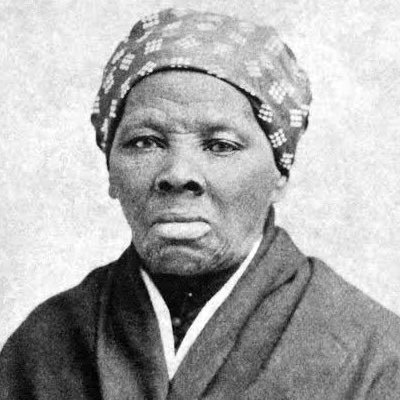
On this day in 1915, Jazz & swing music singer Billie Holiday was born in Philadelphia, PA.

Peter Heehs retweeted

Peter Heehs has written the most informative book on The Mother. It's, primarily, meant for the general readers, since most people in India are not aware of The Mother & Sri Aurobindo. Nevertheless, it should also find a place in the home of every devotee.
harpercollins.co.in/product/…
Peter Heehs retweeted
The fourth book in the INDIAN LIVES series that I edit is out. Peter Heehs’s magnificent biography recounts in riveting detail how Mirra Alfassa made the journey from the art salons of Paris to becoming ‘The Mother’ of the Sri Aurobindo Ashram. Available online and in bookshops.

Peter Heehs retweeted

There has been much comment in Pakistan's media on ISRO's outstanding achievements while bomoaning the fact that Pakistan's space agency SUPARCO was set up in late 1961, a few months before India's INCOSPAR in Feb 1962.
What is not recognised is that from day 1 Nehru stressed SELF-RELIANCE, even as there were some voices in Delhi advocating greater American involvement and some others pleading for closer cooperation with the Soviets.
Nehru first and Indira Gandhi later were clear: the space programme had to be designed, controlled and executed by Indian professionals in the civil domain. In this, they were of course guided and influenced by Bhabha, Sarabhai, Dhawan, Haksar and many others.
The foundation and vast infrastructure for science and technology created in the Nehruvian era, was done in the face of trenchant criticism, that being an extremely poor country India could ill-afford such investments. Yet it is the vision of a self-reliant and a scientifically advanced nation that yielded such rich dividends.
Peter Heehs retweeted
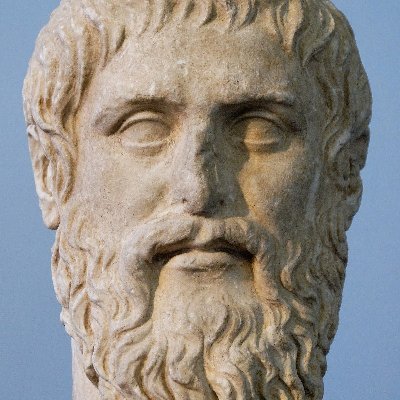
We're so used to seeing and hearing about the pyramids that it's easy to forget how strange and extraordinary they really are.
So, just to remind you:
When woolly mammoths went extinct the Pyramids of Giza were already more than 500 years old.
Cleopatra and Julius Caesar are closer in time to the present day — to the Burj Khalifa — than to the construction of the Pyramids of Giza.
Where are they and who built them?
There are three pyramids on the Giza Plateau, which is on the west bank of the River Nile, in northern Egypt. They aren't far from Memphis, which was the capital of Ancient Egypt when they were constructed.
The largest and oldest was built in less than thirty years around 2570 BC for the Pharaoh Khufu. The second was built for Khufu's son, Khafre, and is only a few metres shorter. The third and smallest was then built for Menkaure, Khafre's son. Three monumental tombs for three generations of the same family.
Nearby are many more tombs for various members of the royal court, the Sphinx, several more temples, and the remains of a sort of workers' town including houses, workshops, bakeries, kitchens, breweries, a hospital, and a necropolis.
Khufu's Pyramid, known as the Great Pyramid, was the tallest building in the world for over 3,800 years — that is, until the spire of Lincoln Cathedral in England was constructed in 1311.
And at more than 6 million tonnes it was the heaviest manmade structure ever built, and is still third behind only the Great Wall of China and the Three Gorges Dam.
The mortar used in constructing the Great Pyramid alone weighs over half a million tons, which is more than the total weight of the Burj Khalifa.
See, the Great Pyramid is almost entirely solid — there are only a few narrow shafts and three small chambers inside. It was largely built from huge blocks of local Giza limestone, although its exterior was once covered in polished white limestone transported there from nearby Tura, and its interior includes blocks of granite weighing up to 80 tonnes transported from Aswan, over 500 miles away.
The *precision* of the pyramids is also remarkable. On a technical level their masonry is astonishingly accurate, but even more amazing is that the four sides of the Great Pyramid are all almost exactly the same length — they have a variation of no more than 60 millimetres.
Not to forget that all three pyramids are aligned according to the points of the compass — within one tenth of a degree of perfect geographical accuracy.
And if these facts weren't impressive enough, the actual construction of the pyramids — the specifics of how the blocks were quarried, transported, and lifted into place — remains a marvel we have yet to fully understand.
But those are merely the facts of the Pyramids of Giza; perhaps more interesting is what they really mean.
After all, you can learn a lot about any society from its architecture. What we say about ourselves can rarely be trusted — but what we do and what we leave behind is always truthful. In other words, that which we build expresses our priorities, how our society works, and who has the most power.
Think of it this way: what are the biggest buildings in the modern world?
By volume it is factories (the Boeing Everett Factory is number one right now) and distribution centres.
By total floor space it is airports and malls.
By height it is mixed-used skyscrapers, though they are usually dominated by offices, especially relating to finance. The Pentagon was the world's largest office building until this year; it has been overtaken by the Surat Diamond Bourse in India.
By capacity? Well, there are sports stadiums, the biggest of which is the Narendra Modi Stadium in India, with an official capacity of 132,000. That being said, no single complex can hold a greater number of people than the Masjid al-Haram in Mecca, which has a capacity of 4 million.
So the largest buildings in the 21st century are almost all related to industry, finance, retail, transport, and leisure — with religious worship something of an outlier. This is a technologically advanced, industrial, highly consumerist society in which businesses hold a great deal of power, and in which the wants and demands of the public are very important.
For comparison, during the Middle Ages nothing came remotely close to cathedrals in size or complexity, though castles and fortresses were also far bigger than everything else. We can draw the basic conclusion that religion was of immense and central importance, that the church as an institution was very wealthy, and that power was actually spread out among the hereditary nobility rather than being entirely concentrated in the monarch alone, not to mention the political and spiritual power also held by the church.
So, what about the Pyramids?
The Ancient Greek historian Herodotus remarked that the Pyramids of Giza were proof of how tyrannical a ruler Khufu — or Cheops, as the Greeks called him — must have been. In his native Greece the largest buildings were temples for public worship; the Great Pyramid was a monument to but one man alone, and this shocked Herodotus.
The biggest buildings of the 21st century are all useful. They have a clear and immediate purpose, and usually one which benefits — in some sense — lots of people. A factory produces things we all use, a distribution centre organises our online shopping, an office is a place of work, and a stadium is where we go for entertainment. Our largest buildings are intimately and inseparably related to employment and consumption.
What about the Pyramids? They were tombs for the Pharaohs and they were supposed to last forever. In other words, they had no immediate use or purpose, at least for the living. They served only one person: the Pharaoh — plus his family and closest supporters, though they were buried nearby rather than inside — in his journey through the Afterlife.
So this is not the same as a large and lavish royal or presidential palace; such buildings are designed to be used as a seat of power and administration — by several succeeding generations or leaders.
Meanwhile, all the resources and labour that went into building the Pyramids, which were literally manmade mountains, were for the benefit of one Pharaoh alone, after his life had ended — and, to a lesser extent, those lucky enough to have been buried nearby at the time.
Does that mean Khufu and his descendants were tyrants? In some sense, yes. But there is evidence that those who built the Pyramids were not, as Herodotus thought, slaves, and were instead closer to conscripted workers and freely employed craftsmen who were fairly remunerated for their labour.
See, it wasn't just that Khufu held total political power; he was also the spiritual leader of his subjects, such that their work was fundamentally religious in nature — it might have even helped them achieve a better afterlife.
There was nobody who could refuse Khufu's desire to build the largest tomb in human history, because he was a divinely appointed intermediary between gods and humans; no regulation to stop him, because his will was the law; no limits to his expenditure, because he collected the taxes and owned all the land in the kingdom.
However powerful the world's richest and most influential people might now seem, none of it compares to the power wielded by Pharaohs like Khufu; a power that was political, financial, legal, military, and spiritual — absolute.
And so the Pyramids are a glimpse into a society fundamentally and almost irreconcilably different from that in which we now live, to the earliest epochs of human civilisation, long before democracy and the rule of law, when one man could rule as a god and have mountains built to serve as his personal, eternal monument on earth.

Peter Heehs retweeted

We are delighted to announce that Bloomsbury History: Theory and Method has been awarded a Best in Reference 2022 accolade by @LibraryJournal! Learn more about the platform here: https://xitter.gq/t.co/eWvyLKvGGX

Peter Heehs retweeted
I thought I had seen every translation of Sir Edwin Arnold's epic poem on the Buddha The Light of Asia (1879)the subject of my last book. But today Peter Heehs, author of a super biography of Sri Aurobindo informed me of a Romanian translation of 1895 that I had missed in my work

Peter Heehs retweeted

In 1977, media prophet Marshall McLuhan discussed CIA and FBI surveillance, and then turned it into one of the most mind-bending riffs on identity in the digital age I've ever heard.
Peter Heehs retweeted

8/8 Act clearly, as Leo Tolstoy, one of our great writers, whose quote I ended my speech with, bequeathed: “War is a product of despotism. Those who want to fight war must only fight despotism."
Peter Heehs retweeted

🚨 NEW: The spike in covid-19 cases in India is so steep that it’s hard to call it a wave — it looks more like a wall. And it’s infecting entire families and swamping hospitals across the country. wapo.st/3tzqyLc

Peter Heehs retweeted
I'm become very interested in yakshas, yakshis and nagas- classes of sacred beings which seem to be relatively peripheral to modern Indian religion and spirituality, but which dominated much of the art of early India, whether Hindu, Buddhist or Jain. – at New Delhi, India



Peter Heehs retweeted

My message to my fellow Americans and friends around the world following this week's attack on the Capitol.
