

Editor for Janes Armoured Fighting Vehicles @JanesINTEL Interested in armoured vehicles, air defence, and Soviet/post-Soviet designs All views my own
Joined February 2022
- Tweets3.1K
- Following524
- Followers1.3K
- Likes25K





Pinned Tweet
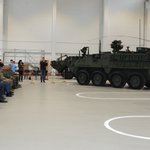
My latest @JanesINTEL special report takes a detailed look at Team Grenadier’s bid for the UK’s important Light Mobility Vehicle programme, including its newly unveiled protected MRLV, plans for all nine variants and the division of production work between France and the UK.
There is something fishy going on within Bulgaria as of late, where multiple separate incidents are highlighting an attempt to distance itself from Germany industry in all fields...
Recently, a domestic debate over two German Kaufland’s disputed €76m fine has prompted the company to review €200m in planned investment and recommend that Schwarz Group, which also owns Lidl, reconsider its plans for Bulgaria.
At the same time, Sofia is courting Chinese carmakers. Great Wall Motor plans to begin producing its ORA 5 in Bulgaria in early-27, with capacity for 50,000 cars a year. This relationship with GWM is not new, but state support to revitalise it is. Bulgaria has spent decades building ties with the German automotive industry, supplying components for Mercedes and Volkswagen Group cars, but those ties also leave Bulgarian suppliers exposed when German manufacturers cut costs, with factory closures already taking a toll. Attracting Chinese manufacturers offers a way to broaden that industrial base and reduce dependence on German orders.
There is a similar development in defence. The Bulgarian-Turkish ARVT consortium’s proposed ~€250m gunpowder plant near Haskovo has been granted national-importance status. Meanwhile, “Iganovo”, established for the Rheinmetall/VMZ joint venture, seems dead on arrival. That does not mean Rheinmetall is out: the government says talks are continuing. However, very little is being mentioned at an official level anymore about Rheinmetall's investment in Bulgaria.
There is nothing inherently wrong with broadening Bulgaria’s investment base. Chinese automotive production and Turkish involvement in gunpowder manufacturing could both bring useful industrial capacity. The question is whether these projects will complement existing German investment or whether Sofia is making its longstanding investors less welcome while betting on new ones.
Too early to call this a deliberate shift away from Germany, but worth watching.

Interesting that Armin has been seen with Boiko Borisov at least twice on the run to today's announcement of the 51/49 split RHM/VMZ ammunition and gunpowder plant in Sopot.

1
3
207
Would recommend reading @ruslantrad's analysis on the domestic retail fines on Kaufland and the potential larger pivot ongoing at the moment:
xitter.gq/ruslantrad/status/2122…

The current Bulgaria’s confrontation with Kaufland and Lidl is not only a dispute over food prices, inspections or competition rules, but is also a case study in how an economic conflict can be turned into a political and information campaign.
On November 9, Bulgaria’s Commission for Protection of Competition fined Kaufland Bulgaria a record €75.7 million over alleged unfair trading practices toward Bulgarian producers and suppliers. Kaufland says it will appeal. The next day, authorities temporarily closed a Lidl store in the city of Vidin after food-safety violations were found. Lidl says it was subjected to “unprecedented institutional pressure,” noting 171 inspections in the last two weeks of October alone, against an average of 86 per month earlier in the year.
The government presents this as consumer and producer protection. That may be part of the story: large retailers do have real market power, and scrutiny of supplier relations, pricing and food safety is legitimate. But the scale, timing and political amplification of the campaign matter. When regulators, ministers, MPs, trade unions and nationalist commentators all converge on the same corporate target, the effect is no longer simply enforcement. It becomes a demonstration of political power.
This fits a familiar disinformation and influence model: identify a large, foreign-owned company; frame it as an enemy of “ordinary Bulgarians,” local producers and national sovereignty; amplify isolated violations into a story of systematic betrayal; then call for boycotts, prosecutions or expulsion. The aim is not necessarily to prove every allegation but to create a moral and emotional narrative in which the company becomes a symbol of foreign exploitation, and the state becomes its defender.
Revival's leader Kostadin Kostadinov has called publicly for a boycott of Kaufland, urged citizens to buy from “Bulgarian companies,” and asked the Prosecutor’s Office to investigate the chain. Online groups have organised a seven-day national boycott from November 16 to 22nd. A classic escalation pattern as a regulatory dispute becomes a nationalist mobilisation, and a commercial grievance becomes a question of patriotism.
There is - of course - a disinformation aspect. The narrative works by merging separate grievances into one emotionally charged story: Germany is portrayed as pressuring Bulgaria over Ukraine funding, German-owned retailers are presented as symbols of foreign economic dominance, and the government’s actions against Kaufland and Lidl are framed as a defence of Bulgarian producers, workers and consumers. This allows nationalist and pro-Kremlin actors to turn a regulatory dispute into a sovereignty issue, portraying Kaufland and Lidl not simply as companies facing inspections or fines, but as instruments of German pressure on Bulgaria. The result is a familiar disinformation pattern: a real economic conflict is amplified through anti-German and anti-foreign-capital rhetoric, boycott calls and demands for state retaliation, while the absence of public evidence linking the retailers directly to Merz’s Ukraine policy is obscured by the strength of the political narrative.
Why Kaufland and Lidl, but not Billa? The most obvious common factor is that Kaufland and Lidl belong to Germany’s Schwarz Group, while Billa is Austrian. That has led some observers to see an anti-German dimension in the campaign. It is a plausible interpretation, especially in a political environment where foreign ownership, “German influence” and national sovereignty are frequently weaponised.
A more cautious reading is that Kaufland and Lidl are the largest and most visible targets, with extensive store networks, supply chains and public exposure. Kaufland received the record competition fine; Lidl then became the focus of food-safety inspections and a highly publicised closure. Billa’s management has also said that the business environment is tense and that inspections against parts of the business are not normal. In other words, Billa may be affected by the same climate, but has not yet become the central symbol of the campaign.
The danger is that legitimate oversight gets mixed with political theatre. Bulgaria has every right to enforce competition law, food-safety rules and tax obligations. But a state campaign that treats a major investor as a nationalist enemy, encourages boycotts and blurs enforcement with propaganda risks damaging investor confidence, supply chains, jobs and Bulgaria’s reputation as a predictable place to do business.
The key question is not whether big retailers should be regulated - they should - but whether Bulgaria is enforcing clear rules through transparent institutions, or using regulation, rhetoric and nationalist mobilisation to discipline companies and mobilise political support.
1
1
89
A nice rare photo of a B without ERA blocks, and the A-style Tucha layout.

Le 27 novembre 1984, l'ordre 1183-300 du CC PCUS et CM URSS autorisa la mise en service du char 184 sous le nom de T-72B. Développé au début des années 80 avec des améliorations graduelles, le nom T-72B peut correspondre à des chars radicalement différents. + de 5 700 chars prod.


11
453
Funny looking Italian IDV SMR6 of the Garibaldi brigade deployed for Trakia-26 in Novo Selo. Good to see such measures being implemented in exercise, even if it looks slightly like a truck crashed in a chicken coop.

Slovakia ordered 14 F-16s and began air policing in October 2026. Bulgaria has eight, targeting IOC in 2027. Slovakia’s first jets arrived nine months earlier... but what explains the readiness gap, and when will Bulgaria achieve armed QRA even if not 24/7?

18 listopada odbył się pierwszy start alarmowy pary dyżurnej nowych słowackich F-16 Block 70. Skierowano je nad Polskę w ramach zintegrowanej obrony powietrznej i przeciwrakietowej NATO. Przypomnę, że od 4 lat to my im pilnowaliśmy przestrzeni, jak oddali swoje MIG-29 na Ukrainę.

1
6
445
After 26 years there are now small signs that the Bulgarian army reflects its NATO membership.

1
12
299
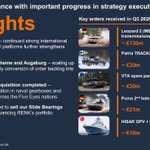
Highlighted orders from today's Renk group's Q3 earnings call, including HSWL076 transmission orders for Trackx for delivery in 2027.
Renk also completes acquisition of David Brown Defence, perhaps better know for producing the TN54 gearbox for Challenger 2. Renk also divesting from their slide bearings unit, selling to Austria’s Miba.


Maybe I fired the gun too early, but Goeran Swistek spokesmen at the BMVg rebutted General Mandon's comments on 9 October:
"Exactly, I'd be happy to add something here. Of course, we've also taken note of the media reports and the posts on social media. You're probably also aware that General Mandon and other official French bodies have since issued a correction, a retraction.
I personally commented extensively on the project here – I believe it was in June. From our perspective, nothing has changed. I'd be happy to summarize it again if you wish. There were adjustments to the overall project, which we made at the request of both sides. We are now focusing not on a specific platform, but on platform independence. This could involve manned or unmanned systems. The aim is to develop future technologies for armored warfare, with a focus on command and control, networking, and guided combat. It's a so-called system-of-systems approach.
In addition, I can also mention that the Franco-German Defense and Security Council reaffirmed this approach with the Nörvenich Declaration of July 17, 2026."

1
3
240

Not hard to find but for wider awareness, chart from page 24 of the NAO Ajax programme report defining the Ajax capability drops and meanings (seen at the bottom).

1
188


Some interesting products showcased on the first day of ADEX in Baku today. Exhibit A; "how many ZU-23s do you want? - Yes."


Aselsan sadly using one of the the pre-production RN-94 vehicles as a target during tests for LGK 84 guidance kit. Only five were known to have been built.


A poignant time to mention that an alleged informal name in the US Army for the T-72A (left) and later T-72B (right) was "Dolly Parton" and "Super Dolly Parton" to denote the thicker frontal turret armour from the earlier Urals. Why you may ask? Go google a photo of 1980s Dolly Parton and you'll soon understand. Nonetheless, rest in peace.


There was a meeting today between Bulgarian defence minister Dimitar Stoyanov with Lockheed Martin representatives as well as the Chargé d'Affaires H. Martin McDowell and Chief ODC LTC Omar M. Cavalier. It was stated that the second tranche of the Bulgarian F-16 order is now delayed to the later half of 2030, and consequently a formal request has been sent for second-hand F-16s to Washington.


