
First-ever NFT with real intrinsic value. Contains locked liquidity that earns trading fees forever Deploy time TBA
Joined August 2025
- Tweets34
- Following1
- Followers90
- Likes34



Pinned Tweet
Loading...
[████████████████████████░] 98%

I went through every major rug pull and exit liquidity drain since Ethereum launched in 2015. The documented incidents alone add up to more than $16 billion in stolen funds
That's not even the other way people lose money here. Team and VC token unlocks are a separate mechanism, no theft involved, just dilution. Across 2025's major token launches, 84.7% now trade below their opening valuation. Median drop: 71%
Two different ways to lose everything. Picule Protocol removes both: no team allocation, no VC allocation, and liquidity nobody can pull except community voting with execution delays
New token standards and trends keep appearing, so Picule's launch manager supports more than one ERC20 and ERC721 pair
Private tokens, new NFT standards, AI tokens: the DAO and the developer program decide what gets added, so only what the community supports gets built
Nothing launches on Picule until the first sale closes
The first project is @picule_family, and the community decides whether the platform opens
🤖 Made with AI
One wallet, one NFT at mint. Every payment goes into the pool and stays there
Picule is built for collectors, not for flippers
Picule Protocol runs on a custom Uniswap V2 fork, not V3
V3 is hard to automate for a reinvesting fund manager. Stock V2 can’t claim fees without pulling liquidity
So we added logic: the fund manager can take only the fee share, never the liquidity
Locked liquidity = more trust
On a Picule curve sale the first ETH buys almost twice as many tokens as the last
Split your buy into a hundred pieces and you get exactly the same total
Votes on Picule are counted from a snapshot taken when a proposal is created
Tokens borrowed or bought after that carry no weight
No team allocation, no VC round, so where does Picule earn?
From a slice of swap fees and a 2.5% marketplace fee, never from selling tokens
Good morning web3
If an ICO on Picule doesn't reach its goal, every contributor gets 100% of their ETH back
It sits in the sale contract until the sale closes, and there is no function that lets the team withdraw it
On Picule every mint phase is priced on its own: free, a fixed price, or a share of the pool, never above 10%
310 mints take a 10 ETH pool to 16.4 ETH, all of it locked liquidity and none of it to the team
Now you're not just buying a jpeg
Every NFT minted on Picule adds liquidity to the token behind it, and that liquidity is locked to your NFT
Picule's developer program is open to anyone holding a protocol NFT. Propose a new token standard, NFT standard, fund manager standard, or ICO sale model to the DAO
The ICO side works like this. The core starts with six sale models. Governance can register a seventh through a DAO vote. Each model is its own contract, called through delegatecall, and it checks its own parameters when a sale is created, so a bad curve fails at launch, before anyone sends ETH. Sales that are already running keep the model they started with
Token and fund manager standards are checked against a campability table, so a token only launches alongside a fund manager it was approved with
Found a better standard or a curve nobody has tried? Bring it to the DAO
Crypto has a launch problem. Projects get a pool, a dev wallet, and an exit. Picule Protocol: no team allocation, no VC allocation, liquidity locked forever, and every big decision goes to a DAO vote
Confirmed airdrop for early testnet adopters
Active users will get bigger piece of cacke
Create, trade, earn, but dont forget to have fun
You buy a token launched on Picule.
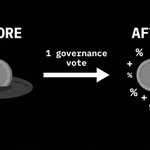
Holders vote to migrate liquidity from Dex to a yield vault
Your tokens now earn yield automatically. No action needed
This is Picule Protocol, where governance actually changes what your tokens do
