




Pinned Tweet
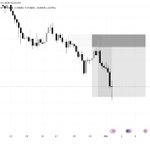
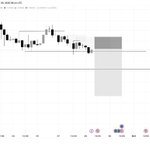
So, this will literally be my personal journal but a public one.
I’ll be sharing my thoughts and opinions on reality, trading, individual trades, and pretty much anything in between, because I believe they’re all connected in one way or another.

One thing I learnt Last month is that not allowing your initial conviction play out is a sabotage to consistency and to your system itself and doing so would prevent you from realizing the full potential of your system long term.
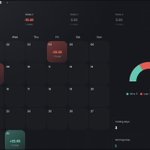
OCTOBER’s
- Closed the first trade prematurely, wasn’t an actual loss
- 2 out of the 3 trades on 14th was closed prematurely also.
- The loss on GU from the prev post isn’t here because @GoatFunded restricted me from trading after I requested for payouts.

OCTOBER’s
- Closed the first trade prematurely, wasn’t an actual loss
- 2 out of the 3 trades on 14th was closed prematurely also.
- The loss on GU from the prev post isn’t here because @GoatFunded restricted me from trading after I requested for payouts.


Hey y’all… Trust you been good?
It’s been pretty quiet around here. September was the last time I properly documented anything.
I started last month by making the exact same mistake I had promised myself I wouldn’t repeat: CLOSING TRADES PREMATURELY.

Turns out, missed opportunities hurt more than losses themselves.
At least I know what poison to choose next time.
#TheWarStaysOn
Also, @GoatFunded withheld my payout, shit stressed the hell outta me mentally, and I had a few real-life commitments that needed my attention.

E retweeted

🚨🚨| Carrick began his own press conference with a statement before answering questions. #mufc
Hello @GoatFunded, I experienced similar issue.
I submitted my payout request since 14th October & was scheduled for a call on 9th November, that is about three weeks later.
I expect mine to be rescheduled as well, as it’s only fair that the same consideration is extended to me


Hi Destiny, it looks like you may have selected something incorrectly during the booking process, as all our interviewers have available slots well before November 13th.
Our team is already sending you a new booking link, and you should be able to schedule and complete your interview within the next few days.
Just to clarify, GFT only requires verification interviews for a small percentage of traders requesting payouts, and these interviews are normally completed within a few days of receiving the booking link.


E retweeted
During a trade, “worrying about the outcome” is not part of your job.
Staring at the chart when there is nothing you need to do.
Checking your P&L again and again.
Constantly wondering whether this trade will win.
No matter how seriously you take these activities, they are not part of the job of executing your rules.
“Focusing on the process” does not mean forcing yourself not to care about the outcome.
It means eliminating everything outside the process.
First, be clear about what your job is.
You look at the chart to check whether your system’s conditions are met.
When your entry conditions are met, enter according to your rules.
Then follow your exit rules and exit when those conditions are met.
If you have placed exit orders, let those orders close the trade.
You start a trade according to your rules and end it according to your rules.
That is your job.
If you exit at a profit, you call it “taking profit.”
If you exit at a loss, you call it “cutting your losses.”
The names differ, but your job is the same.
Both are exits executed according to your rules.
As long as you think, “I took profit, so I did a good job” or “I was stopped out, so I did a bad job,” you are judging the outcome, not the process.
What you check is whether you followed your rules.
The outcome of one trade does not change how well you did your job.
If you place stop loss and take profit orders at entry and your rules require only waiting for one to be hit, your work on that trade is done.
Which order the price hits is not your job.
Whichever one it hits, the value of your work remains the same if you followed your rules.
Thorough preparation is what makes this possible.
Before trading live, test your rules yourself over a large sample of trades to understand the results of following them consistently over the long run.
Include risk management and position sizing in your system from the start.
You decide what to do during preparation.
During execution, you follow that plan.
Your job does not include rewriting the rules to suit how you feel that day or the P&L in front of you.
During a trade, you are an employee who trusts the plan the boss made in advance.
There are fewer customers today.
Sales are down.
That does not give you permission to launch a sale or change the price tags on your own.
That is not doing your job diligently but changing the job you were given.
Your job is to follow the boss’s instructions.
It is not to rewrite the plan based on that day’s sales.
Preparing thoroughly.
Consistently following the rules you established.
These are two jobs that belong to different stages.
If your rules are vague, you need to work on your preparation.
If your rules are clear but you cannot follow them, you need to build trust in those rules.
Once you know where the problem is, you know what you need to work on.
Check the predetermined conditions.
Take the predetermined actions.
You do not need to add worrying about wins and losses to that job.
You do not need to call a loss taken according to your rules a failure and give yourself the job of making it back.
To focus on the process, do not give yourself more work.
Remove everything that is not part of your job.
All that remains is the process you need to focus on.
