

501(c)3 transforming how LongCovid, ME/CFS, Lyme+ and Alzheimer’s are studied, diagnosed, and treated. Leading the #LongCovid Research Consortium.
United States
Joined October 2020
- Tweets3K
- Following2K
- Followers14.4K
- Likes3.6K







Pinned Tweet
From Crisis to Cure: PolyBio is supporting top HIV researchers to pivot into the study and treatment of Long COVID. Watch the full video to learn how this collaboration is being maximized & driving forward innovative research: youtu.be/6kC1lyY6hPc?si=adTg…

At the Harvard/MIT Martinos Center, Dr. Mario Murakami and the VanElzakker lab are using ultrahigh-resolution 7T fMRI to understand how changes to cerebrospinal fluid (CSF) flow in people with Craniocervical Instability can produce a phenotype similar to that seen in ME/CFS and other neuroimmune conditions.
The brain relies on cerebrospinal fluid to carry out metabolic waste that builds up during normal physiological processes, acting as a “garbage disposal,” as explained by Murakami. Changes to healthy CSF flow may result in the buildup of these metabolites in the brain.
Said Murakami, “There is a compromised structure of CSF flow in CCI [patients] compared with healthy controls, which means that maybe this is part of the mechanisms which drive the symptoms—the brain fog, the pain, the fatigue, the autonomic dysfunction.”
5/ Watch Dr. Murakami’s full presentation from the PolyBio Spring 2026 Symposium here: youtu.be/tD5gWVEjudQ?t=19498…
3/ This study builds on growing evidence that a portion of patients with IACI, including Long COVID and ME/CFS, possess functional and structural brainstem abnormalities. The brainstem itself is additionally susceptible to CSF flow changes, and contains dorsal nuclei that control autonomic function, pain, sleep, and sickness behavior—which, if dysfunctional, could have implications for these functions.
4/ Early findings presented by Dr. Murakami providing evidence for these structural and functional differences in the IACI patient population may reflect a pre-existing vulnerability factor, or a consequence of pathology related to acute illness effects on cerebrospinal fluid pressure, infection, or inflammatory effects on the elasticity of the meninges or laxity of craniocervical structural ligaments.
At the Harvard/MIT Martinos Center, Dr. Mario Murakami and the VanElzakker lab are using ultrahigh resolution 7T fMRI to understand how changes to cerebrospinal fluid (CSF) flow in people with Craniocervical Instability can produce a phenotype similar to that seen in ME/CFS and other neuroimmune conditions.
The brain relies on cerebrospinal fluid to carry out metabolic waste that builds up during normal physiological processes, acting as a “garbage disposal,” as explained by Murakami. Changes to healthy CSF flow may result in the buildup of these metabolites in the brain.
Said Murakami, “There is a compromised structure of CSF flow in CCI [patients] compared with healthy controls, which means that maybe this is part of the mechanisms which drive the symptoms—the brain fog, the pain, the fatigue, the autonomic dysfunction.”
3/ This study builds on growing evidence that a portion of patients with IACI, including Long COVID and ME/CFS, possess functional and structural brainstem abnormalities. The brainstem itself is additionally susceptible to CSF flow changes and contains dorsal nuclei that control autonomic function, pain, sleep, and sickness behavior—which, if dysfunctional in patients, could largely alter these functions.
4/ Early findings presented by Dr. Murakami providing evidence for these particular structural and functional differences in the IACI patient population may reflect a pre-existing vulnerability factor, or a consequence of pathology related to acute illness effects on cerebrospinal fluid pressure, infection, or inflammatory effects on the elasticity of the meninges or laxity of craniocervical structural ligaments.
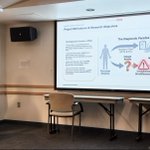
Today at the Harvard/MIT DeMartinos Center: VanElzakker lab team member Salah Assana presented on a whole-body PET-MRI study using a fibrin-binding radioligand in Long COVID patients with breathing issues. Supported by PolyBio, the ongoing study investigates fibrin accumulation in the lungs that isn’t identified on standard clinical imaging.

2/ Read about the ongoing PolyBio-supported study here: polybio.org/projects/evaluat…

Breaking: PolyBio-Supported Preprint Finds Persistently Activated Virus-Specific T cells in a Subset of People with Long COVID
👉🏻Virus-specific immune cells show signs of ongoing stimulation and impaired function in a subset of people with Long COVID, offering a potential way to guide targeted clinical trials
1/

21/ By helping connect an individual’s illness to a specific biological process, this approach could support the development of treatments matched to the mechanisms driving Long COVID.
Full article: polybio.org/polybio-supporte…
