Mark Pors 🦖 (@pors) header
Mark Pors 🦖 (@pors) profile picture

Building https://xitter.gq/t.co/pRJXNjcrwa. Co-founder and CTO of Watchmouse (acquired by CA Technologies (acquired by Broadcom)).

The Hague, Netherlands
Joined October 2007
Photo by Mark Pors 🦖 (@pors)Photo by Mark Pors 🦖 (@pors)Photo by Mark Pors 🦖 (@pors)Photo by Mark Pors 🦖 (@pors)Photo by Mark Pors 🦖 (@pors)Photo by Mark Pors 🦖 (@pors)Photo by Mark Pors 🦖 (@pors)Photo by Mark Pors 🦖 (@pors)Photo by Mark Pors 🦖 (@pors)Photo by Mark Pors 🦖 (@pors)
For any researcher in life sciences having a hard time staying current in their field: Paperzilla now has the PubMed literature index as a source. ✅ bioRxiv ✅ medRxiv ✅ ChemRxiv ✅ PubMed
1
3
5
584
This paper came up in my morning research brief. If you also want to stay up to date in a field that interests you, set up a Paperzilla research brief. Every morning, a quick chat to see what's new and relevant. Link 👇
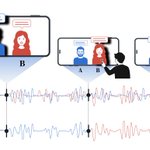
Imagine two people talking at the same time, but you want a clean audio signal from just the one you "select". This paper describes a system that, after you select the desired speaker, extracts the correct audio using lip movements. Not sure how useful this is, but pretty cool nonetheless. Read 👀👇
1
2
118
Imagine two people talking at the same time, but you want a clean audio signal from just the one you "select". This paper describes a system that, after you select the desired speaker, extracts the correct audio using lip movements. Not sure how useful this is, but pretty cool nonetheless. Read 👀👇
1
1
1
1
168
This paper came up in my morning research brief. If you also want to stay up to date in a field that interests you, set up a Paperzilla research brief. Every morning, a quick chat to see what's new and relevant. Link 👇
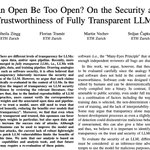
The good, bad and ugly of open-weight models: Good: run it, study it, nobody can take it away. Bad: attackers can fine-tune the guardrails away. Ugly: LLMs are hard to patch and you can’t control downloaded copies. That is the ultra-short takeaway of this fascinating paper. Link below 👇
1
26
The good, bad and ugly of open-weight models: Good: run it, study it, nobody can take it away. Bad: attackers can fine-tune the guardrails away. Ugly: LLMs are hard to patch and you can’t control downloaded copies. That is the ultra-short takeaway of this fascinating paper. Link below 👇
2
2
3
140
Authors of this paper on X: @florian_tramer and @mvechev. Sorry if I butchered the summary a bit to fit in 300 chars :)
1
18
Hey, look, preprint paper growth accelerates with the introduction of AI agents! There is only one way to fight this: with your agent! The Paperzilla research brief exists just for that. 🦖👇
"Is the arXiv Apocalypse upon us? A break in preprint growth coincident with agentic AI" That is the title of a new paper I found in my morning brief, so of course I had to have a closer look. A couple of findings: - Solo-authored papers increased by 70% in mathematics and 71% in condensed matter between 2025 and 2026. - Submission volume in October 2026 reached 14% above the October 2025 total by the 23rd of the month. - Preparation time for the study dropped from an estimated working week to 3.75 hours using agentic tools. Link below 👇
1
2
96
Mark Pors 🦖 retweeted
Hey, look, preprint paper growth accelerates with the introduction of AI agents! There is only one way to fight this: with your agent! The Paperzilla research brief exists just for that. Link in comment.
"Is the arXiv Apocalypse upon us? A break in preprint growth coincident with agentic AI" That is the title of a new paper I found in my morning brief, so of course I had to have a closer look. A couple of findings: - Solo-authored papers increased by 70% in mathematics and 71% in condensed matter between 2025 and 2026. - Submission volume in October 2026 reached 14% above the October 2025 total by the 23rd of the month. - Preparation time for the study dropped from an estimated working week to 3.75 hours using agentic tools. Link below 👇
1
1
2
59
"Is the arXiv Apocalypse upon us? A break in preprint growth coincident with agentic AI" That is the title of a new paper I found in my morning brief, so of course I had to have a closer look. A couple of findings: - Solo-authored papers increased by 70% in mathematics and 71% in condensed matter between 2025 and 2026. - Submission volume in October 2026 reached 14% above the October 2025 total by the 23rd of the month. - Preparation time for the study dropped from an estimated working week to 3.75 hours using agentic tools. Link below 👇
2
2
1
242
I don't want another list of 30 papers to skim every morning. I want to know which few new papers deserve my attention and why, and be able to ask questions about them. That's the idea behind Paperzilla's morning research briefs. You can set one up for your own field.
An interesting paper by Apple Research arrived in my morning brief. They describe the training of a small model that can run on the iPhone to help an agent navigate iOS apps. Say, computer-use for iPhones. One finding I found funny: rewarding each successful step made the model drag out the journey, even when it could have gone straight to completing the final task. More interesting findings in the paper 👇
4
55
Mark Pors 🦖 retweeted
There's a buzzy new paper about GPT-6 Astra being able to directly interpret model weights (prompts full of floating point numbers) - I tried it with Qwen 3.8 27B on my laptop and found that, after 45+ minutes, that model could achieve the same thing simonwillison.net/2026/Nov/3…
411
443
110
5,423
333,997
An interesting paper by Apple Research arrived in my morning brief. They describe the training of a small model that can run on the iPhone to help an agent navigate iOS apps. Say, computer-use for iPhones. One finding I found funny: rewarding each successful step made the model drag out the journey, even when it could have gone straight to completing the final task. More interesting findings in the paper 👇
1
1
1
2
199