
Deep interest in thinking;fascinated by how better thinking can help organsations and individuals perform https://xitter.gq/t.co/VkQVzT2BjP Empowered Learning LLP, Executive Coach.
Pune, India
Joined June 2014
- Tweets1.4K
- Following406
- Followers141
- Likes503






Prasad Deshpande retweeted

I've spent hours and hours thinking about how AI is going to change writing. This is a 90-minute distillation of everything I've learned.
Some things I believe:
1. The combination of LLM-driven humor and image generation means that we're about to enter the golden age of memes.
2. The best writers will be fine. Robert Caro and Dostoevsky aren’t about to be disrupted by ChatGPT.
3. What are the different models like? ChatGPT is your friend who makes a lot of good points, but it’s kinda boring, Claude is your hippie friend who loves to get vulnerable but takes the whole “express yourself” thing a little too far, and Grok is your unhinged friend who leans a little too hard into tinfoil hat theories, but is always a trip to jam on ideas with.
4. People who say that AI writing is low-quality aren’t realizing that quality exists along two dimensions: (1) the absolute quality of the writing and (2) how tailored the writing is to your interests at the time.
5. I’ll tell you this: What writers are doing with AI behind closed doors is a long way ahead of what's publicly understood. I don't expect this to change anytime soon because of the social stigma associated with AI-enhanced writing. Because of that, if you want to see the cutting edge, you're gonna have to piece things together through private conversations and group chats.
6. If you want to follow what's happening in AI, remember this quote from William Gibson: “The future is here, it’s just not evenly distributed yet.” You can get a glimpse of the future by looking at how a small percentage of writers are already using AI.
7. I’m bearish on writers who are currently using AI to write for them, and bullish on writers who are currently using AI to write with them.
8. What kinds of writing will continue to be written by humans? Ones that speak to our humanity. People are interested in people. Their stories, their struggles, their emotions, their drama.
9. Almost all utilitarian writing, where the goal is to convey information, not do it beautifully, will be written by AI.
10. In some ways, AI is the end of slop. So many Google search results are slop. LinkedIn posts are slop. The way Twitter got taken over by Threadbois in 2021 was also slop. AI-generated writing is already better than all of those things, so why would you read them now?
11. AI will be tougher on writers than readers. Readers will be exposed to some slop, but the Internet will be good about filtering it out. Writers, though, are now competing against ever-improving LLMs, which are getting better and better by the month.
12. Humans will contribute with unique data or perspectives. The famous Peter Thiel interview question doubles as a good writing prompt: “What very important truth do few people agree with you on?”
13. New technologies breed new kinds of art. Ever notice how flat 13th or 14th century Medieval art looks? And how different that art looks from the Renaissance art created in the 15th and 16th centuries? Technical innovations like the camera obscura and perspective grids are behind this. Similarly profound changes will come to the writing world because of AI (credit to @jmrphy for the idea here).
14. Satya Nadella says: “The new workflow for me is I think with AI and work with my colleagues.” When it comes to discovering ideas, I've also found that jamming with an LLM is more productive than doing it with most people I know (save for a few giga-brain conversationalists).
15. Thought experiment: Will AI-writing be more like music or chess? With music, we don't care how a song is made. We just want it to be good. With chess, there's a huge market for watching human beings play even though the computers are already better. I think non-fiction writing will go the way of music. People won’t care how it was made. They’ll just care that it’s good.
16. AI has flipped the rules of tech adoption. Seasoned managers usually drag their feet with adopting new technology, but the ones I know love AI, while frontline workers struggle to see the point. My theory is that AI matches how managers already operate. Management has always been a kind of prompt engineering: set a vision, delegate, give feedback, iterate. But LLMs remove the drama that used to come with having a team. No 1-on-1s. No emotional tangles. It's like management without the headache. For frontline employees, things are different. They aren't as accustomed to setting a vision and giving feedback, so LLM prompting is a daunting and unfamiliar kind of work for them.
17. AI editors are already quite good. Sure, they aren’t as good as the world’s best editors, but they’re a fraction of the cost, they’ll instantly give you 80th percentile feedback, and they work 24/7. As a novelist recently said to me: “Paying an editor to review my novel costs me $7,000 and a 4-6 week turnaround time, whereas Claude costs me $1.25 and gets me results a few minutes later.” The edits definitely aren’t as good, but there’s a virtue to speed (and this guy isn’t a chump writer).
18. The way AI-skeptics hate on LLMs while using old models is like driving a ‘92 Honda while hating on a self-driving Tesla.
19. AI-generated fiction makes people very upset. A friend insists it’s like having sex with a robot. Doesn’t matter how good it is. It ain’t human-generated, and there’s something uniquely repulsive about that.
I’ve shared the full conversation below. It’s a solo-episode of me riffing on what I’ve learned about AI for ~90 minutes. If you’d rather watch it on YouTube or listen on Apple or Spotify, I’ve shared the links in the reply tweets.
And if you have any questions, I’ll be extra active in the replies for this episode.
Prasad Deshpande retweeted

"Kamala Harris's 'frog-to-princess' transmutation has been amazing to watch, but also chilling. The US no longer enjoys an independent press. The American fourth estate is almost entirely an arm of the Democratic party." 1/8
spectator.co.uk/article/will…

Prasad Deshpande retweeted

write a retrospective memo on what happened. no one could have expected that. the squid. the time travel. the incessant chanting. the garlic bread. Explain how we can possibly move forward.
(OMG. Also, Steve!)

Prasad Deshpande retweeted

TIL the the origins of ‘debugging’ date back to pre-transistor computing. The glow of vacuum tubes would attract moths at night, sometimes causing them to malfunction.
Engineers would then need to literally debug the computer by removing moths from the circuit!

Prasad Deshpande retweeted

ChatGPT's life coaching was perceived as more helpful, empathetic and balanced than that of professional advice columnists. frontiersin.org/articles/10.…

Prasad Deshpande retweeted

When parents literally mortgage their houses, land or sell off jewellery to fund their ‘preparation in Kota’ coz there is no education loan for preparation, it builds that pressure on the kids.
When your kid becomes your only hope to pull you out of poverty or a debt trap, and the kid knows it. They take that extreme step. When there is this extreme stress of proving to be an asset than a liability one year longer. They take that extreme step.
In almost all last letters they always apologise to their parents. It’s just heartbreaking. Work hard yourself. Don’t expect your kids to change your fortune.
Prasad Deshpande retweeted

Brilliant! This made my day!
A rare rooted Ad amidst ads these days with urban, elitist and woke themes. On how we remain/become psychologically colonized and move away from our roots, in the name of modernism, liberalism and progressivism. (got it on WA, found the youtube version here -> youtube.com/watch?v=ja1lMGI0…)
Prasad Deshpande retweeted
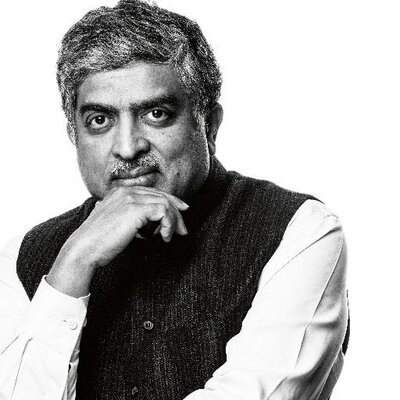
A presentation of mine has been doing the rounds on WhatsApp. It is from a talk on India's #DigitalTransformation over the last 15 years led by the many #DigitalPublicInfrastructure (DPIs) we've built. There have been many non-linear changes in the country. I attempt to join the dots and present the bigger picture. It is a testament to the great work done by the government and our entrepreneurs!
For those not on WhatsApp (like me😀), I decided to release it under a Creative Commons license:
drive.google.com/file/d/1UK_…
You can also hear the talk: youtube.com/watch?v=NpZDBHKh…
If you have any more 🇮🇳 related data points or stories that you feel should be in next version, please reply here.

Prasad Deshpande retweeted

Josh Waitzkin was a chess prodigy.
He won the U.S. Junior Chess Championship at age 11. He became an International Master at age 16. And his life was made into a movie (“Searching for Bobby Fischer”) at 17.
But then, around the age of 18, Waitzkin quit playing chess because…
He got a new coach.
“I was a naturally creative, aggressive chess player,” Waitzkin explained.
But the new coach forced Waitzkin to play like the great chess players Anatoly Karpov and Tigran Petrosian—“the most positional, conservative chess players.”
When he was forced to play in a way that didn’t align with his natural proclivities, Waitzkin said, “I lost my love for the game.”
So he quit.
He later took up martial arts, and after just 2 years of training, he won his first national championship in martial arts.
Asked if he took anything from chess into the martial arts, Waitzkin said he leaned into his unique physical and mental traits:
“And in my observation of competitors in any discipline, this a really fundamental idea. Those who succeed at the highest level, I think, basically manifest their unique character through their discipline.”
Takeaway 1:
Waitzkin said he was at his best (as a chess player then a martial artist) when his style aligned with his personality.
This is known in economics as “match quality”—the degree of alignment between the traits of a profession and the traits of a person.
The NBA executive turned venture capitalist, Sam Hinkie, was asked how he thought about shaping his career path.
Essentially, Hinkie said he tried to optimize for match quality.
“By nature,” Hinkie explained, “I think in decades, and I have a steady temperament.”
So, Hinkie thought, “Can you get to a place where there is leverage on that kind of thinking, where that kind of steady temperament is rewarded?”
Takeaway 2:
Waitzkin writes in his book, “The Art of Learning,” that “one of the most critical factors in becoming a high performer is the degree to which your relationship to your pursuit stays in harmony with your unique disposition.”
The music producer Rick Rubin is a good example of this.
Rubin is a voracious consumer of art. He’s constantly listening to music, reading a book, watching a movie, at a museum, or driving around just to look at beautiful architecture.
“It’s all I do,” Rubin told screenwriter Brian Koppelman. “But not because it’s my job. It’s like, my job is my job because the person that I am loves to do those things.”
- - -
“It seems to me that each of us expressing our own originality is the essence of our art and professionalism.” — Jim Henson
Follow @bpoppenheimer for more content like this!


Prasad Deshpande retweeted

Humlog, the iconic Doordarshan TV serial, was a masterclass in storytelling that captured the essence of Indian middle-class life in the 1980s.
However it traces its origin to the most unlikely inspiration: a sewing machine revolution that rocked Peru. Gather around. 1/22

Prasad Deshpande retweeted

Excellent presentation of the present and future of nuclear energy, and the case for why nuclear, not weather-dependent energy, will the basis for a minimum-carbon economy. quillette.com/2023/02/09/the…
Prasad Deshpande retweeted

The primary job of parents isn't to make kids happy or successful. It's to build their character.
Nurturing character isn't limited to instilling our values. We should also encourage kids to define their own values.
True success is preparing our kids to decide who they become.
Prasad Deshpande retweeted

Global media is speculating whether current challenges in the business sector will trip India’s ambitions to be a global economic force. I’ve lived long enough to see us face earthquakes, droughts, recessions, wars, terror attacks. All I will say is: never, ever bet against India

Prasad Deshpande retweeted

A pharmacist’s wedding invitation! People have become so innovative these days….

Prasad Deshpande retweeted
A lesson in Teamwork of course. But also an analogy for how a start-up company needs to operate. Success comes not from relentlessly advancing together in one direction but back & forth, trying new angles of approach & then going for the ‘kill’ when the strategic path is clear
Prasad Deshpande retweeted
One Modi wants India
One Modi wants Miss India
One Modi is wanted in India
