

Into the depths of life / Senior Researcher @ Jones!Lab-EMBL / CRISPR-Cas optimization
Vilnius, Lithuania
Joined April 2011
- Tweets390
- Following62
- Followers419
- Likes320





Pinned Tweet
What truly hinders progress in biology research? You may have your favorite – automation, lack of great ideas, regulatory hurdles – but here's one I believe outweighs everything else – research planning. 1/3
3
5
772
While VCs are busy investing in wet lab automation, I see a brighter future in developing high-throughput methods. More CPU cores will never match GPU's parallel processing power. Automation sounds like the ultimate exploitation mode of the exploration-exploitation balance.. 1/5

1
3
138
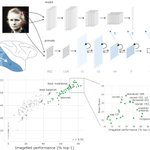
Beautiful ideas: The first shows how to synthesize massive libraries that cover a desired mutational landscape (rather than a random one) without a huge cost; the second explores how to screen more variants by packing more of them into each cell. 4/5
1
2
100
Here are my illustrations trying to visualize how the methods work: tinyurl.com/ht1-2026 5/5

1
102
Jonas Kubilius retweeted

I’m actively looking to match ambitious scientists with funding.
Through some combination of my writing, podcasts, in-person events, scientific research and other activities that my friend @markwbudde would call “hypernetworking,” I’ve managed to meet a lot of wealthy individuals interested in funding ambitious scientists. I’ve had my own work funded this way, and though it’s not sustainable enough to replace the work of larger funding bodies of the NIH, for the right kind of person it is just what they need.
I am writing this post because I am helping one of these groups – Fulcrum Science – find projects worth giving money to.
While I’m pretty flexible, I’m particularly interested in hearing from people who are actively working on open sourced LLMs for frontier biology.
Plenty of groups have shown what is possible with frontier, closed-source LLMs. I’ve also seen it in my own work (which I hope to talk about soon). I also think that the absolute frontier of intelligence isn’t required to do interesting things in science.
I’d like to help match an existing lab – academic or industry – with a decent sum of funding to showcase what open sourced models can do in biology.
Pitch me what you’d do.
Please note, I am not looking to hear about any projects that involve Claude or ChatGPT for any reasoning, experimental analysis, or embodied automation stuff. Open source only!
I’m also open to hearing about other things within biology. If you have an idea you have struggled to get funded, and you have a good reason for me to believe you, please reach out.
My email is eryneym [at] gmail.com. You can also DM me on Twitter.
I find it fascinating that even J.J. Hopfield himself appears to have struggled his entire career to find a good problem to work on! The need for a good problem pushed him to constantly connect to people far outside his expertise, often with little useful output in the end.

"Choosing problems is the primary determinant of what one accomplishes in science."
'Now What?' by Nobel Laureate John Hopfield should be required reading for aspiring scientists.
pni.princeton.edu/document/1…

1
61
Jonas Kubilius retweeted

I agree.
Robots are the non-biologist's abstraction of how scaling in biology scales. Imagine people in the 1940s pouring money 100x money into automating the vacuum tube factory than inventing the transistor. Imagine putting everything into giant CPU factories instead of inventing the GPU.
We are disproportionally thinking/resourcing innovation in biology as if it's car manufacturing. There is ample opportunity to improve, redefine and scale measurement in front of us.
I recently talked to someone at a robot-first science factory with near billion in funding boasting how they measure ~1000 mutants a week. A team of 4 at Dyno scaled the equivalent assay multiplexing by 25x. 1 person can run it. The robot is scaling the wrong layer.
I'm not against robots and I think they will have the role to play. But I think their impact on biology is overblown, especially on how it scales in performance per dollar deployed. The danger is we become so obsessed with vacuum tube factories that we don't fund the transistors of biology.
Complex physical value chains are somewhat path dependent, once you build a highway instead of a subway, you have to deal with a lower efficiency, higher pollution world. Most current robotic approaches are a crude, and poorly scalable, way to scale biology.

Jonas Kubilius retweeted

Emma's is the right take. The interesting question is not "can lab automation replace literally everything we do by hand?"
The interesting question is "what new experiments can we perform with automation that could never be done by hand?"
And for my money the best automation-only experiments are not going to be the ones that simply require lots of scale and replicates.
I'm more curious about the way AI enables rapid real-time adjustment of experimental conditions in response to data.
I want to see tight automation loops where an AI is making significant changes to the protocol 10 times a day. Not just changing the pipetting volumes on a few experimental inputs - totally refactoring a protocol the way that a human would.

Speaking as someone who spends most of their time building automation platforms and teaching people to do it (enough that I built a whole class around it)... but who also spent six years of my life splitting stem cells every 36 hours... I am split on this one.
On one hand, @mkoeris is right that the primitives are learnable and that novel combinations are not some sacred skill. On the other, @hsalis is 💯 that the large majority of experiments are far from autonomous. Most methods that are truly automatable, I can still do way faster and probably better with a multichannel pipette, I just have better things to do with my time.
Automating bespoke science is the hard part, but that is where the most exciting progress is to be made. I'd encourage all to challenge themselves to think beyond automating the mundane and ask what science simply could not be done in the absence of a robot: real time responsive feedback, or changing many parameters at once based on the data as it is generated. The kind of experiment where no amount of extra hands would ever get you there. We are only scratching the surface there.
(Currently grading midterm proposals for my automation class at the moment. One aim has to justify a genuine *need* for automation, and any proposal that justifies it with throughput, combinations, scale, or time is a big yawn. Think bigger, people 🦾)
I love such lists. When I started in biology, I was puzzled that nobody was talking about the "big problems" – only their own niche problems. Big Problems align people towards common goals and and give a reason to pick a problem, rather than default to the one you were handed.

In light of the progress in mathematics, we at Edison Scientific and FutureHouse have assembled a set of Millennium Problems for Biology. They are chosen to be very hard to solve but very easy to validate in a simple laboratory environment. Any of these, if solved, would mark a major advance in biotechnology, and most of them would contribute materially towards curing disease. These are, in some sense, the “last reasonable eval” for AI in biology. This was work primarily by @MichaelaThinks and myself, with contributions from many others.
Short descriptions below. The full descriptions of the problems with acceptance criteria are at the Bio Millennium Problems website, linked in the next post. Share more if you have ideas. If they meet our criteria, we’ll add them to our list (with attribution and permission).

61
Love the idea of challenges in biology and especially want to compliment for a really cool selection of such challenges in this post.


1
162
Great story to keep in mind when thinking about the limits of our brain: eastoftheweb.com/short-stori… (via @MoAlQuraishi)
1
55
Why I switched from AI to biology: "most problems can't be worked out at a desk by thinking. Those stay bound by how fast we can build the thing and see if it holds, and that clock barely moves." And boy is it slow in biology to build an assay that works!


I've always been puzzled by some researchers insisting that a preprint is "not a full paper". Glad to see some data that, in fact, peer review mostly adds delays, not quality.

Takeaway: for most papers, the preprint is a reliable preview of the published version.
Browse all 72,644 pairs: rustlab1.github.io/PreprintP…
Preprint:
biorxiv.org/content/10.64898…
w/ @HaoYin20
My first preprint in biology is out now! No wet lab from me yet, but I'm grateful for the opportunity to contribute in a small yet meaningful way with my data analysis and machine learning skills, and to learn from Costas Patinios and @BeiselLab.
biorxiv.org/content/10.64898…

1
58
"The cognitive equivalent of aerobic activity is contemplation — the intentional focusing of your mind's eye on a singular topic, with the goal of increased understanding."
I increasingly value focus on 1 thing until I get it fully. Never realized this is called contemplation!

In @nytopinion
“In a short span of time, we transformed the way we thought about health,” Cal Newport writes. “I’ve come to believe that a similarly rapid revolution is possible in how we respond to our diminishing ability to think.” nyti.ms/4bViv2H

1
64
Enjoyed the piece, esp. the fact that historically lab notebooks were "a space for working through research questions" than for recording observations. Agreed with the conclusion that paper notebooks will remain important for the former – sth I've been rediscovering recently too.

lab notebooks are close witnesses to the process of scientific discovery - unlike the more polished and retrospectively written published articles. i trace their history from early modern science to our time
56
Jonas Kubilius retweeted

the greatest regret i have is underestimating the value of long term compounding.
friendships, people, places, all get better with decades. beautiful things dont even start to reveal themselves for years. it is entirely what life is about. a few good things for a long time.
Jonas Kubilius retweeted

Some of the most underinvested areas in frontier biology that could accelerate civilizational progress:
- Cheap, large-scale DNA synthesis (writing entire chromosomes or full organisms)
- Real-time, non-destructive RNA sequencing in living cells
- Highly accurate AI-powered polygenic scores for complex traits (disease risk, cognition, longevity) → enabling full genome design
- Ultra-precise, multiplex genome editing (far beyond CRISPR) with minimal off-target effects, scalable across millions of cells
- Safe, efficient, tissue-specific in vivo delivery systems
- Safe and effective human germline engineering
- Accelerated clinical trials via testing on decedents (with consent)
- Next-gen human enhancement: muscle, cognition, mood — beyond GLP-1s
- Ectogenesis / artificial wombs
Who’s actually building in these areas? Drop names, companies, or researchers below 👇