

Amor não é uma coisa que te pega de surpresa, te transforma em refém e toma de assalto tudo o que você tem. O nome disso é ladrão!
Japão
Joined September 2019
- Tweets40.5K
- Following36
- Followers1.1K
- Likes296K








Ministro Fazuelon ☭⃠ 卐⃠ retweeted

Black Friday nos Estados Unidos: povo compra eletrodomésticos e eletrônicos
Black Friday no Brasil: comprar papel higiênico
Ministro Fazuelon ☭⃠ 卐⃠ retweeted

“I am so old that I can remember when liberals were liberal, and when common decency was actually common.”
— Thomas Sowell

Ministro Fazuelon ☭⃠ 卐⃠ retweeted

Pessoal do Ceará sem água por causa do tráfico ficou por isso mesmo né KKKKKKKKKKK
Ministro Fazuelon ☭⃠ 卐⃠ retweeted
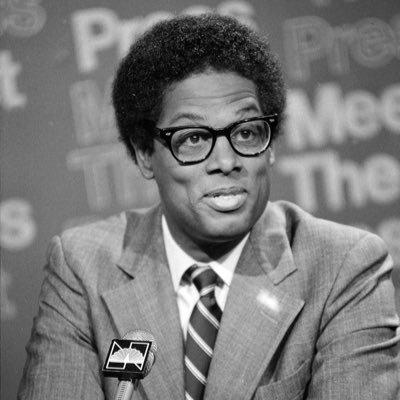
“The more I study the history of intellectuals, the more they seem like a wrecking crew, dismantling civilization bit by bit — replacing what works with what sounds good.”
— Thomas Sowell
Ministro Fazuelon ☭⃠ 卐⃠ retweeted

“Concentrated power is not rendered harmless by the good intentions of those who create it.”
— Milton Friedman


Ministro Fazuelon ☭⃠ 卐⃠ retweeted


Traição, videochamada e serra elétrica: como um homem foi esquartejado vivo por ordem de chefe do CV em Fortaleza glo.bo/ku2ksoi

Ministro Fazuelon ☭⃠ 卐⃠ retweeted

O @AndreJanonesMG já se manifestou sobre o Trabuco do Lula?
🤖 Made with AI


🚨🚨🚨🚨🚨🚨🚨🚨🚨🚨🚨🚨🚨🚨🚨🚨🚨🚨🚨🚨🚨🚨🚨🚨
++ EM REUNIÃO COM LULA, TRABUCO DEFENDE AUMENTO DA IDADE MÍNIMA PARA APOSENTADORIA
++ Ajuste fiscal tem que ser entendido no "gerúndio". É algo que se faz continuamente - defende Trabuco
++ Ajuste fiscal se fará pelo ajuste da Previdência Social. Ela foi construída em teses do final do século XIX.
++ Trabuco critica modelo da Previdência brasileira e defende AUMENTO CONTÍNUO DA IDADE MÍNIMA PARA APOSENTADORIA acompanhando o aumento de expectativa de vida.


Ministro Fazuelon ☭⃠ 卐⃠ retweeted

Chernobyl might be the best show ever made about incentives: a system that pays people for good reports gets good reports, right up until reality files its own.
In the Soviet Union, reporting bad news could end your career. So to please the Party, everyone from the control room to the Kremlin swore everything was fine.
It was a system run on lies. But physics doesn't answer to the Party. 🧵

Ministro Fazuelon ☭⃠ 卐⃠ retweeted

Socialists treat the economy like one pie. In their heads, the pie fell out of the sky onto the table, and the only problem left is that some greedy kids grabbed bigger slices than others.
Let me explain this in a way even a socialist or a five-year-old could understand.
Comrade, nobody found that pie. A baker made it. He paid for flour and an oven and worked all morning before the first slice existed. The baker bakes again tomorrow only if he keeps enough of the reward to make another pie worth the trouble.
Now cut his pie into equal slices for everybody and take it away from him, and the baker learns something: baking is a lousy deal. The next day fewer pies will show up, and a while later none will. Your "fair" division ends up dividing nothing.
When a baker gets better at baking, he takes no slice away from other people. He bakes more pies with the same effort, and the whole table eats better. Trade works the same way. When one kid swaps an apple for a friend's cookie, both kids walk home happier, and no pie got smaller.
According to the World Bank, the number of people living in extreme poverty fell from around 2.3 billion in 1990 to 811 million, while the world added billions of people. If the economy were a fixed pie, every new mouth at the table would have thinned everyone's slice. Instead, each new mouth came with hands, and those hands baked.
The Soviet Union spent nearly seventy years trying to slice the pie evenly and ended up with empty shelves and long lines for bread. Take the bakers away, and what remains is a table with an empty plate and a crowd of hungry grown-ups arguing over how to divide it.

Ministro Fazuelon ☭⃠ 卐⃠ retweeted

Sabe pra onde iam os R$ 79 milhões do Flávio que o Dino travou a pedido do PT?
R$ 23,3 milhões pro combate ao crime
R$ 16,2 milhões pra hospitais e ambulatórios
R$ 14,7 milhões pra atendimento especializado em saúde
R$ 4,5 milhões pra tratamento de câncer no INCA
R$ 2,5 milhões pra saúde básica em Duque de Caxias e R$ 1,5 milhão em Bom Jesus do Itabapoana
R$ 300 mil pra Rede Sarah
R$ 16,4 milhões pras Forças Armadas, a maior parte pra hospitais militares
Pra atingir o Flávio, o PT topou travar dinheiro do combate ao crime e dos pacientes com câncer do RJ.
Ministro Fazuelon ☭⃠ 卐⃠ retweeted

You have every right to know what your government is doing, and they have no right to know what you are doing.
That is why they are called public servants and we are called private citizens.
Instead, the relationship has been inverted. The state hides behind secrecy, classified files, and redactions while demanding total visibility into your finances, communications, movement, and behavior.
A society where the rulers live in privacy while the population lives under surveillance is the very definition of tyranny.
Ministro Fazuelon ☭⃠ 卐⃠ retweeted

“Life in general has never been even close to fair, so the pretense that the government can make it fair is a valuable and inexhaustible asset to politicians who want to expand government.”
— Thomas Sowell

Ministro Fazuelon ☭⃠ 卐⃠ retweeted
“Ours may become the first civilization destroyed, not by the power of our enemies, but by the ignorance of our teachers and the dangerous nonsense they are teaching our children. In an age of artificial intelligence, they are creating artificial stupidity.”
— Thomas Sowell
Ministro Fazuelon ☭⃠ 卐⃠ retweeted

At the 1976 Summer Olympics in Montreal, reporters asked East German swimming coaches why their teenage female athletes suddenly had deep baritone voices and massive, heavily muscled shoulders.
The coaches laughed. They told the press they were in Montreal to swim, not to sing.
Newspapers printed the joke and moved on. When an American swimmer pointed out the obvious, that something in the pool wasn't right, sportswriters across the United States turned on her instead.
Her name was Shirley Babashoff.
She was nineteen years old, from Fountain Valley, California, and she had spent more than half her life preparing for that pool. Since the age of eight, she had trained under coach Mark Schubert at the Mission Viejo Nadadores club, waking up in the dark to swim ten thousand meters a day before and after high school.
At the 1972 Munich Games, she had won Olympic gold at fifteen. By 1976, holding multiple national records, she arrived in Montreal as the anchor of the American women's team.
Once the races began, the East German women dismantled every expectation in the aquatic center. They won eleven of the thirteen swimming gold medals and shattered world records in nearly every event.
Shirley swam the races of her life. She broke her own American records and walked away with four silver medals, posting times that would have guaranteed gold in almost any other era.
The American press expected her to smile on the podium and graciously congratulate the swimmers who beat her.
Shirley refused to play along. She stated plainly what everyone in the building could see: her competitors had developed deep voices and physiques unlike anything ever seen in women's swimming.
She wasn't media-trained, and she didn't hide her frustration when reporters pushed leading questions. She gave blunt answers and flatly refused to fake a smile for the cameras when she felt cheated on the world stage.
At the time, the International Olympic Committee had no reliable test to detect anabolic steroids, and Cold War politics prioritized keeping up the appearance of fair play. The United States Olympic Committee offered Shirley zero public defense.
American sportswriters found it far easier to attack an outspoken nineteen-year-old than to investigate an international sports machine. Columns across the country dubbed her "Surly Shirley," branding her a bitter runner-up and an embarrassment to American sportsmanship.
On the final day of the swimming events in Montreal, Shirley stepped onto the starting blocks for the 4×100-meter freestyle relay.
Her teammates, Kim Peyton, Wendy Boglioli, and Jill Sterkel, kept the race tight. When Shirley dove in for the anchor leg, she was swimming head-to-head against Kornelia Ender, the East German star who had already claimed four gold medals.
Shirley swam her leg in 55.48 seconds. The American women hit the wall in 3:44.82, beating East Germany by less than a second to win the gold medal.
It was the only women's swimming race the East Germans lost in the entire 1976 Olympics.
Even that victory couldn't shake the label the press had pinned on her. Shirley retired shortly after Montreal at nineteen years old, remembered by much of the public simply as the swimmer who complained.
Then, in 1989, the Berlin Wall fell.
In the early 1990s, the newly unified German government opened the archives of the Stasi, East Germany's secret police. Inside those files was a classified government directive called State Plan 14.25, a state-sponsored doping program engineered to prove communist superiority through Olympic medals.
The records laid out the exact milligrams of synthetic testosterone given to teenage girls. Doctors had handed thirteen- and fourteen-year-old swimmers little blue pills in locker rooms and at training tables, telling them they were vitamins. The pills were Oral-Turinabol, a potent anabolic steroid, administered in doses higher than those given to adult male weightlifters.
In the late 1990s, the doctors, coaches, and officials behind the program were put on trial in Berlin. Former East German athletes testified in court about failing livers, heart conditions, and severe birth defects in their children, victims of their own government.
Every allegation Shirley Babashoff had made in 1976 was proven as documented fact.
Still, the International Olympic Committee never changed the official record books, and the medals were never redistributed. Shirley went home to California, where she spent more than thirty years delivering mail for the United States Postal Service.
The 1976 times still stand.
She was asked to lose gracefully to a lie, and she chose to tell the truth even when her own country called her bitter for it. Why is it so often easier for people to punish the person pointing out an obvious unfairness than to confront the system behind it?

Ministro Fazuelon ☭⃠ 卐⃠ retweeted

Acabo de terminar la lectura de «La riqueza y la pobreza de las naciones» de David Landes.
Veintinueve capítulos sobre una sola pregunta, por qué unos países son tan ricos y otros tan pobres.
Landes no es de mi palo ideológico, es un historiador económico de Harvard, weberiano, convencido de que la cultura explica casi todo.
Y sin embargo, en el capítulo tercero, documenta algo que yo hubiera firmado sin cambiarle una coma.
Landes dice que la gran suerte de Europa fue la caída de Roma.
Después de Roma nadie logró reconstruir el imperio, y el brazo de la autoridad quedó corto.
El poder quedó partido entre la corona y los señores locales, que competían entre sí por gente y por rentas.
Y esa competencia tenía una consecuencia muy concreta.
Si un señor trataba mal a sus súbditos, los súbditos se iban a otra parte.
Landes lo llama el derecho de salida, y sostiene que la fragmentación fue el freno más fuerte contra el comportamiento arbitrario y opresivo.
Por eso los reyes europeos tuvieron que negociar, conceder franquicias y exenciones para atraer campesinos y comerciantes a sus tierras.
Por eso nacieron las comunas, ciudades donde un siervo fugado podía quedarse y vivir como hombre libre.
Landes cuenta que el conde de Flandes se cruzó en el mercado de Brujas con un siervo que se le había escapado, quiso llevárselo, y los burgueses lo echaron de la ciudad a él y a sus matones.
Ahora miren el contraste con China.
Un imperio sin competidores, que se pensaba el centro del universo, del que no había adónde huir.
A principios del siglo XV China tenía la flota más grande del mundo, la del almirante Zheng He, con más de trescientos barcos en el primer viaje.
Europa no podía ni imaginar algo así.
Y el Estado chino decidio desmantelarla.
Para 1500, construir un barco de más de dos mástiles se castigaba con la muerte.
En 1525 se ordenó a las autoridades costeras destruir los barcos de altura y arrestar a sus dueños.
En 1551 directamente pasó a ser delito salir al mar en un barco de varios mástiles, incluso para comerciar.
Un poder del que nadie puede escaparse no necesita que sus súbditos prosperen, le alcanza con prohibir.
Pero lo más interesante es lo que Landes no termina de ver.
Él mismo reconoce que la fragmentación suele verse como una desgracia, y que hoy la unión europea se vende como la cura de las guerras de ayer.
Y no saca la conclusión.
Si lo que hizo rica a Europa fue que el poder estaba partido y la gente podía irse, por tanto cada paso hacia la centralización es un paso hacia la China.
La moneda única y la armonización fiscal entre países apuntan exactamente a eso, a que el pagador neto de impuestos no tenga adónde irse.
Jean Baechler ya lo había planteado en 1971 en «Los orígenes del capitalismo», la expansión del capitalismo le debe su origen y su razón de ser a la anarquía política, o sea, a que ningún poder único gobernara todo el continente.
Landes llega al mismo lugar por el lado de la historia y se queda a mitad de camino, porque le atribuye a la cultura lo que fue, antes que nada, un límite a la capacidad de saquear.
La riqueza de Occidente nació donde el gobernante sabía que la gente se le podía ir.
La pobreza, casi siempre, nace donde tiene la certeza de que nadie puede.
El libro que leeré la próxima semana será «The Great Divergence» de Kenneth Pomeranz.
Es el libro que discute de frente con el que acabo de terminar.
Ministro Fazuelon ☭⃠ 卐⃠ retweeted

Don’t be jealous guys, but back in my day the ladies had no tattoos, no nose rings, no purple hair and no penises…

Ministro Fazuelon ☭⃠ 卐⃠ retweeted

Passando pra lembrar que tem alguns brifados na imprensa que mudam de opinião como quem troca de meia.

