


Pinned Tweet
Got my first repost from Elon Musk
Honestly, it's inspiring when the world's first trillionaire reposts your content
It feels like social proof that I should keep improving my content and myself as an expert
X is the best platform for getting quality content noticed and selling services at a high ticket
The repost feels great. Creating useful content feels better. Back to work


grokbot it's an agent with its own identity, its own computer, and it stays on when you're not
here's what "active AI employee" actually looks like in the demo:
- chief of staff agent - checks in on your other agents, reads your calendar, dispatches tasks to the right one automatically
- shopping agent - logged into your accounts, books tickets, buys groceries, reports back
- marketing agent - signed into your actual linkedin, browses your past posts for tone, then writes and publishes a new one on its own
- engineering agents - self-triage bug reports, kick off cloud coding agents, come back with a pull request, a screenshot, and a video of the fix
the interface isn't a dashboard, it's a chat - same shape as texting a coworker, no tool calls to babysit
the number that matters more than any of the demos: grok 4.6 scored 70.8% on cursor bench at $2.81 a task, fable 5 max scored 70.5% at $17.32
same capability, 6x the cost difference - that's the unlock that makes running a fleet of these actually affordable instead of a novelty
rewind retweeted
dead internet theory is starting to feel less like a theory...
now anyone with an idea can run their own higgsfield content factory
experts said 90% of online content could be ai-generated by 2026. it’s 2026
remember when a weird video meant some guy actually filmed it?
🤝 Paid partnership

dead internet theory is starting to feel less like a theory...
now anyone with an idea can run their own higgsfield content factory
experts said 90% of online content could be ai-generated by 2026. it’s 2026
remember when a weird video meant some guy actually filmed it?
🤝 Paid partnership
rewind retweeted
space bunny was minimax m3.1 flash all along...
the anonymous model that sat at #1 on openrouter for 10 straight days (56.7t tokens) and #1 on opencode for 12 days (106t) finally has a name
so i used it to build a content planner from scratch
the trick is giving it the whole picture at once, smart way to set it up:
- step 1: connect minimax m3.1 flash to claude code and set effort to max
- step 2: dump everything into one prompt: niche, audience, my last 50 posts, what performed and what flopped. the 1m-token context takes it all
- step 3: have it build the app: a 30-day calendar, a hook bank, post drafts per platform
- step 4: add a “why it worked” analyzer that reads my top posts and pulls out the patterns
- step 5: generate a week of posts in my format, then rewrite the weak ones
- step 6: test it, fix the bugs, ship it
what a build like this costs: under $0.50 at api prices (rough math: ~1.5m tokens in, ~300k out)
why it’s cheap enough to run every day:
> $0.15 per 1m input tokens, $0.60 output, $0.015 cached
> 70% lower cost on agentic tasks than the previous minimax model
> 73.7% on deepswe v1.1, close to top coding models
> 200+ tokens per second output
don’t compare price per token, compare the price of a finished task. that’s where this model wins
rewind retweeted

you don't prompt a video anymore, you direct it kling 4.0 on Higgsfield lets you set start, middle and end frames, so you storyboard the key beats and control the pacing instead of regenerating 20 times and hoping.
🤝 Paid partnership

rewind retweeted

Kling is back.
Kling 4.0 is now live on Higgsfield.
> Omni Reference: characters, objects and audio in one generation
> 30-second scenes in a single pass
> Start, middle and end frames to direct every beat
> Native 4K coming soon
Available now on Higgsfield.
rewind retweeted
full office in 3d with claude opus 5.5 + blender...
a few reference shots in, 1,876 objects out
a smart way to set it up:
- step 1: connect opus 5.5 to blender via mcp, send 2-3 reference shots
- step 2: set a fixed camera matching the reference
- step 3: build the room shell first: walls, windows, blinds
- step 4: add big furniture, check against the reference, lock it
- step 5: fill each zone with clutter: desk, shelves, sill, floor
- step 6: add close-up detail where the camera looks most
- step 7: assign materials, then match the reference light
- step 8: render, compare side by side, fix one thing per prompt
i like to keep the reference camera fixed the whole time
same angle every stage, so you instantly see what’s still missing
here’s how to build a game-ready room in blender and move it into unreal engine 5 with claude opus 5.5...
nobody opened a 3d app by hand, and now it runs in real time
the trick is letting opus decide how each object gets made, smart way to set it up:
- step 1: connect opus 5.5 to blender through blender mcp
- step 2: give it one reference image for the room: layout, mood, light
- step 3: simple objects get modeled directly in blender (walls, desk, shelves, boxes, blinds)
- step 4: complex props get a reference image first, then tripo turns it into 3d (chair, monitors, figurines)
- step 5: opus cleans up the tripo props in blender and places them in the room
- step 6: light the scene in blender until the stills look right
- step 7: have opus port the whole scene from blender to unreal engine 5
- step 8: the room now runs live in the engine, ready for gameplay
the agent works, you direct. he still checked every result and gave notes along the way
rewind retweeted
the 2026 personal brand playbook is larpmaxxing...
film yourself once. become a different main character every post
with higgsfield genjutsu lite, one source video turns into new looks
how to build a persona with it:
- step 1: film one strong take: talking to camera, a walk-in, a reaction
- step 2: run it through genjutsu lite with a new look: tailored suit on a rooftop, explorer in the desert, astronaut on a launch pad
- step 3: keep your face, voice and moves, and change everything around you
- step 4: post the transformations as a series so people come back for the next one
- step 5: double down on the aesthetics your audience reacts to
and now larpmaxxing is 5x cheaper
🤝 Paid partnership
rewind retweeted
ai drama ads are quietly out-performing normal ads right now...
they open it for characters, tension, and a payoff they have to stay for
so the brands scaling hardest stopped interrupting the show. they made the ad the show
here’s how to make one with arcads:
- step 1: pick a style: pixar 3d, talking animals, realistic drama, claymation
- step 2: pick a story: a relationship about to crack, a secret about to come out, an absurd disaster
- step 3: open with conflict in the first 2 seconds (a furious bulldog, a guilty cat, feathers everywhere)
- step 4: build tension with quick cuts, one beat per shot
- step 5: let the product solve the problem inside the story, not after it
- step 6: end on a payoff or a twist that makes people rewatch
story formulas that work:
> a relationship falling apart over a problem the product fixes
> an absurd situation where the product is the unexpected hero
> a family drama taken to the extreme
> a before-and-after that feels like a real transformation
if it feels like an ad, they scroll. if it feels like a story, they stay
i like talking animals for this. nobody skips a bulldog in a bathrobe yelling at a cat.
🤝 Paid partnership

introducing AI Short Drama
Create cinematic AI Short Drama in one click
Available today on arcads.ai
ai drama ads are quietly out-performing normal ads right now...
they open it for characters, tension, and a payoff they have to stay for
so the brands scaling hardest stopped interrupting the show. they made the ad the show
here’s how to make one with arcads:
- step 1: pick a style: pixar 3d, talking animals, realistic drama, claymation
- step 2: pick a story: a relationship about to crack, a secret about to come out, an absurd disaster
- step 3: open with conflict in the first 2 seconds (a furious bulldog, a guilty cat, feathers everywhere)
- step 4: build tension with quick cuts, one beat per shot
- step 5: let the product solve the problem inside the story, not after it
- step 6: end on a payoff or a twist that makes people rewatch
story formulas that work:
> a relationship falling apart over a problem the product fixes
> an absurd situation where the product is the unexpected hero
> a family drama taken to the extreme
> a before-and-after that feels like a real transformation
if it feels like an ad, they scroll. if it feels like a story, they stay
i like talking animals for this. nobody skips a bulldog in a bathrobe yelling at a cat.
🤝 Paid partnership
introducing AI Short Drama
Create cinematic AI Short Drama in one click
Available today on arcads.ai
rewind retweeted
larping just got 4.5x cheaper...
wan 3.0 is now on higgsfield, and it costs 4.5x less than seedance 2.5
below: filmed in a backyard next to a trampoline
above: same guy, same moves, same words, on a rooftop with a pool and a skyline
how it works:
- step 1: film yourself talking anywhere: backyard, bedroom, parking lot
- step 2: upload the clip to higgsfield and pick wan 3.0
- step 3: describe the new scene: “rooftop terrace, infinity pool, city skyline at sunset”
- step 4: wan 3.0 keeps your face, gestures and timing, and swaps the world around you
the rule that changes everything... at 4.5x cheaper, you can test 5 scenes for the price of 1
the cheaper it gets, the more you can experiment
🤝 Paid partnership
rewind retweeted
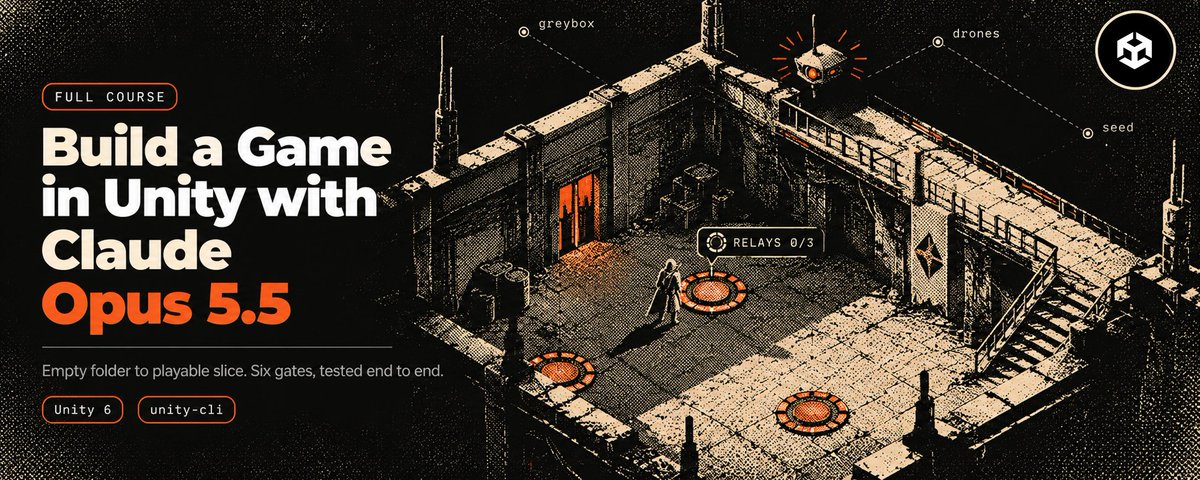
here’s how to build a japanese canal boat game with claude opus 5.5 + unity 6 + blender..
the trick is one system per prompt, smart way to set it up:
- step 1: create a unity 6 urp project and connect opus 5.5 through unity’s plugin and blender mcp
- step 2: greybox the canal: water channel, stone walls, 2 bridges, docks
- step 3: boat physics: throttle, steering, wake trails, speed in knots on the hud
- step 4: opus models the props in blender: the covered boat, houses, the vermilion bridge, the pagoda, lanterns
- step 5: water shader + day/night cycle + rain, with lanterns that switch on at dusk
- step 6: a compass on top and 9 landmarks that unlock on the map (“water gate, 3 of 9”)
- step 7: docking lessons: “come alongside the temple steps below 2 kn and press e”
- step 8: opus playtests in play mode, reads the console and lists bugs before fixing
who does what:
> blender: every model
> unity 6: the water, the light, the weather, the ui
> opus 5.5: boat physics, quests, scene setup, tests
> you: steer it and say what feels off
i like to test every feature at night in the rain. if it still looks good there, it’ll look good everywhere.
here’s how to build a japanese canal boat game with claude opus 5.5 + unity 6 + blender..
the trick is one system per prompt, smart way to set it up:
- step 1: create a unity 6 urp project and connect opus 5.5 through unity’s plugin and blender mcp
- step 2: greybox the canal: water channel, stone walls, 2 bridges, docks
- step 3: boat physics: throttle, steering, wake trails, speed in knots on the hud
- step 4: opus models the props in blender: the covered boat, houses, the vermilion bridge, the pagoda, lanterns
- step 5: water shader + day/night cycle + rain, with lanterns that switch on at dusk
- step 6: a compass on top and 9 landmarks that unlock on the map (“water gate, 3 of 9”)
- step 7: docking lessons: “come alongside the temple steps below 2 kn and press e”
- step 8: opus playtests in play mode, reads the console and lists bugs before fixing
who does what:
> blender: every model
> unity 6: the water, the light, the weather, the ui
> opus 5.5: boat physics, quests, scene setup, tests
> you: steer it and say what feels off
i like to test every feature at night in the rain. if it still looks good there, it’ll look good everywhere.
rewind retweeted
flux 3 max just made seedance 2.5 look slow...
same quality tier, but 10 sec of video in ~12 sec instead of 4.5+ min.
the numbers (per fal’s benchmarks):
- 1,139 elo on artificial analysis, among the top image-to-video models
- matches seedance 2.5’s elo, ~22x faster
- +50 elo over the original flux 3
- ~12 sec to generate 10 sec of video
why it matters:
- you test 20 ideas in the time one seedance render used to take
- real-time-ish generation means you iterate like you’re editing, not waiting
the rule now... don’t pick between quality and speed. this one has both.
i like to run my first drafts through the fastest model and only re-render the winners. this one makes that loop almost instant.
try flux 3 max on fal 👇
🤝 Paid partnership

Introducing FLUX 3 Max, the latest post-trained video model from fal Research in partnership with @bfl_ai.
FLUX 3 Max is tied for #1 in image-to-video quality on independent third-party benchmarks, generating a 10-second, 720/768p video in ~12 seconds.
For the next three weeks, FLUX 3 Max is 75% off, making it the most affordable frontier video model at its quality level.

flux 3 max just made seedance 2.5 look slow...
same quality tier, but 10 sec of video in ~12 sec instead of 4.5+ min.
the numbers (per fal’s benchmarks):
- 1,139 elo on artificial analysis, among the top image-to-video models
- matches seedance 2.5’s elo, ~22x faster
- +50 elo over the original flux 3
- ~12 sec to generate 10 sec of video
why it matters:
- you test 20 ideas in the time one seedance render used to take
- real-time-ish generation means you iterate like you’re editing, not waiting
the rule now... don’t pick between quality and speed. this one has both.
i like to run my first drafts through the fastest model and only re-render the winners. this one makes that loop almost instant.
try flux 3 max on fal 👇
🤝 Paid partnership
Introducing FLUX 3 Max, the latest post-trained video model from fal Research in partnership with @bfl_ai.
FLUX 3 Max is tied for #1 in image-to-video quality on independent third-party benchmarks, generating a 10-second, 720/768p video in ~12 seconds.
For the next three weeks, FLUX 3 Max is 75% off, making it the most affordable frontier video model at its quality level.
rewind retweeted
here’s how to automate ai ugc ads with claude opus 5.5 + kling 4..
the trick is giving opus a skill and an mcp, smart way to set it up:
- connect opus 5.5 to kling 4 through mcp
- have opus break down 20-30 competitor ads
- drop in a product pdf and pick a story: problem > pain > product > payoff
- opus writes the script for one exact buyer, with the pain in the first 3 sec
- opus makes character sheets and a first frame for every scene
- kling 4 animates each scene as a 10-sec shot with tagged refs
- test 2-3 clips, then run the rest
- opus edits, adds an elevenlabs voiceover, exports 9:16
test 2-3 clips before generating 50. a face that changes in clip 2 is cheap to fix. in clip 40 it’s a disaster
why kling 4 beats seedance 2.5 right now:
- 4x cheaper than Seedance models
- yet it matches the insane quality of seedance 2.5
2.4M subscribers through AI-generated videos...
the numbers:
- 2.4m followers, 151 posts
- top reels: 46.5m, 36m, 15.3m, 10.3m
- most reels land between 1.3m and 7.5m views
- one format, repeated: a strange fact + a map + a story
the trick is the format never changes, only the topic does. here’s how to set it up:
- step 1: ask opus 5.5 for 50 hooks
- step 2: opus writes a 60-75 sec script per hook from real sources, then splits it into 3-5 sec shots
- step 3: for every shot, opus writes an image prompt
- step 4: generate the frames in gpt image 2.5 with one style ref, so every reel looks like the same channel
- step 5: animate each frame in seedance 2.5
- step 6: voiceover in elevenlabs
- step 7: cut in capcut
and the rule that saves the account... every number has to be real. one wrong fact in an education niche and the comments eat you alive
