





Rhonda retweeted

Great start to the working day: the Band of the @GrenadierGds playing the 'Dam Busters' March by Eric Coates, as part of London Poppy Day.
Please do give generously to this year's @PoppyLegion Appeal. 🇫🇰🇬🇧


Rhonda retweeted

You can take the boy out of Belfast, but you can’t take Belfast out of the boy. What a legend, Conor Haughey. #FleetwoodTown
Rhonda retweeted

Well done to Royal Mail on this and credit to the artist 👏
gbnews.com/news/royal-mail-p…


Rhonda retweeted

In Remembrance of Hattie McDaniel
Born | June 10, 1893 in Wichita, Kansas, USA
Died | October 26, 1952 (aged 59) in Woodland Hills, California, USA
Video | Hattie McDaniel as Mammy in Gone with the Wind (1939), for which she received the Oscar for Best Supporting Actress.
Thank you, Sir Kevin,..@BBC #SirKevinSinfield
...there aren't enough words !!
When you lose hope in humanity....look to Kevin Sinfeld! ❤️
Rhonda retweeted

Did you know that the first women to land on the Normandy beachhead in June 1944 were nurses of Queen Alexandra’s Imperial Nursing Service?
Their task was to establish a field hospital for 600 wounded soldiers.
They succeeded.
Please remember these heroines who saved lives:


Rhonda retweeted

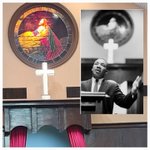
In December 1958, a 21-year-old Black law student named Bruce Carver Boynton was riding home to Selma for Christmas when his Trailways bus stopped in Richmond, Virginia. During the layover, he entered the bus terminal restaurant and sat in the section reserved for white customers. The Black section was visibly unsanitary, while the white section was clean and empty. When Boynton was told to move, he refused.
The police arrested him for trespassing. He spent the night in jail and was fined $10. But Boynton was a law student at Howard University, and he understood that interstate passengers had federal protections against racial discrimination. Instead of accepting the conviction, he appealed.
His case eventually reached the U.S. Supreme Court, where Thurgood Marshall argued on his behalf. On December 5, 1960, the Court ruled 7-2 in Boynton's favor. The justices held that the Interstate Commerce Act prohibited racial discrimination in facilities serving interstate bus passengers, including terminal restaurants that functioned as part of the transportation service.
The decision was groundbreaking, but a Supreme Court ruling did not instantly change what happened on the ground. Segregated bus terminals across the South continued operating. That gap between the law and reality became the target of the Freedom Rides in 1961. Black and white activists deliberately traveled through the South on interstate buses to test whether the Boynton decision would actually be enforced. They were met with beatings, arrests and a firebombing in Anniston, Alabama.
By November 1961, federal regulations required interstate bus terminals to remove segregation signs and end discriminatory practices. Boynton's case had helped provide the legal foundation that made those changes possible.
His story also carried a deeper connection to Black education and activism. Boynton was born in Selma in 1937 to Samuel and Amelia Boynton, civil rights activists who worked to register Black voters. His middle name, Carver, honored George Washington Carver, who had taught his mother at Tuskegee and served as his godfather.
Bruce Boynton later became a civil rights attorney and spent much of his career fighting discrimination. He died in 2020 at 83. What began with a hungry student refusing to move in a Virginia bus terminal became a Supreme Court case that helped expose how much work remained after segregation was declared unlawful.

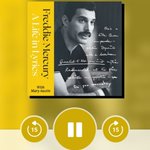
A love and a solid friendship that endured through decades and immense changes, - ...a beautiful memoire..x
#MaryAustin
#FreddieMercury

Rhonda retweeted

October 24th, 2012.
Corporal Channing Day, aged 25 from Comber, and of 3 Medical Regiment was killed in the village of Char Kutsa, Helmand Province, Afghanistan, by small arms fire alongside her colleague Corporal David O’Connor.
Lest we Forget Channing and her colleague. 🇬🇧


Rhonda retweeted

GREATER SHANKILL ACT
Today we remember the 9 innocent lives lost on 23rd October 1993 when the IRA set off a no warning bomb in Frizzell's fish shop.
Our thoughts are also with the survivors and those who were first on the scene and witnessed the horrors of the aftermath.


Rhonda retweeted

I have seen many sad photos of war but this one is difficult.
Diggers Ron and Phil Chitty at their brother Arthur's grave. Ron and Phil were POWs in Germany but returned home 1943 via Egypt in a POW exchange WWII.
Arthur was killed in first Battle of El Alamein, 1942. He was 23.


Rhonda retweeted

PHOTO OF THE DAY: A mine rescue worker silently contemplates the Aberfan Disaster (1966). 📷 Jim Gray

Rhonda retweeted

9.15am, Aberfan.
In silence as they remember the 144 who died in the disaster, 60 years on

Rhonda retweeted

As a former British officer who served in Afghanistan, I will not be voting for the Government’s Troubles Bill.
Those men and women who served during the Troubles made split-second decisions while operating under orders and the rules of engagement, in conditions most of us cannot imagine.
The legal principle governing the use of force has not changed. British soldiers in Northern Ireland back then were guided by the same principle that guided me and my colleagues in Afghanistan.
However, rules and standards have shifted since then, and soldiers shouldn’t be judged retrospectively by rules that did not exist when they served.
Nor should they be exposed to endless or vexatious re-litigation without new material evidence.
That is neither fair nor just and could impair critical decision-making on the battlefield.