

Movilidad - Seguridad Vial - Planificacion Urbana y Regional
Quito - Ecuador
Joined May 2011
- Tweets4.1K
- Following2.1K
- Followers740
- Likes2.2K






¿Realmente la ANT sostiene esta teoría? Sería importante conocer qué evidencia técnica o estadística respalda la supuesta relación entre la capacidad económica y los siniestros de tránsito.
@AMT_Quito
36

El AVE, considerado uno de los grandes orgullos de la ingeniería y el transporte español, vuelve a sufrir un grave siniestro, y no es el primero de este año.
Aunque las causas deberán ser determinadas por la investigación, se informe de una posible intervención del factor humano.
En una época en la que la inteligencia artificial y los sistemas automatizados permiten anticipar riesgos, detectar anomalías e incluso evitar errores humanos, debemos preguntarnos si ¿estamos aprovechando realmente todo el potencial de las nuevas tecnologías para mejorar la seguridad del transporte?
Live Updates: At Least 68 Killed in Train Crash in Spain, Officials Say nytimes.com/live/2026/10/28/…

41
Los desechos de la producción de chocolate pueden utilizarse como biomasa, elaboración de bebidas nutritivas, fertilizantes y otros. Su utilidad eliminaría desechos que perjudican la capa vegetal. @economico_produ
How Cacao Can Do So Much More Than Make Chocolate wri.org/insights/hidden-bene…
15
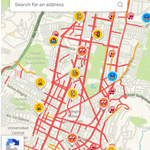
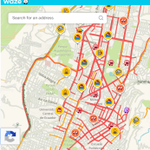
Estado del tráfico en el hipercentro donde cayó la tempestad del día de hoy en Quito. Vías y casas inundadas, carros atascados. Resultado: un caos del tráfico


Digital Transport Forum Webinar: Can technology personalise the transport experience? its-uk.civiplus.net/civicrm/…
35
Richard A. Hidalgo retweeted

Sweden Is Pioneering Roads That Wirelessly Charge EVs While Driving
by @_fluxfeeds
#ElectricVehicles #EmergingTech #Automation #Automotive #Transport
Richard A. Hidalgo retweeted

The Same Drone That Finds You Can Hunt You
In June, two hikers got lost in Australia's Snowy Mountains after wandering off the Dead Horse Gap trail in Kosciuszko National Park. They were reported overdue around 7 p.m. Less than five hours later, they were walking out with rescuers.
What found them wasn't a helicopter. Fire and Rescue NSW launched a drone equipped with thermal imaging and AI detection software. It picked up the two men about half a kilometer off the trail. Rescuers talked to them through the drone's speaker, then used its spotlight to help guide the ground team in. Search officials said technology like this can turn what might have been a multi-day operation into a matter of hours.
We're seeing the same thing in the U.S.
In Colorado in June, Douglas County Search and Rescue used a drone to find two lost hikers who were running low on water and phone battery. Then the drone flew back with water and other supplies while rescuers made their way in.
In Kentucky, a two-year-old disappeared with the family dog. Within moments of launching a drone, operators spotted the dog circling a neighbor's swimming pool. Rescuers went there and found the child at the edge of the pool.
In Malibu, a 78-year-old man with dementia walked out to get his mail on a December evening and never came back. Temperatures were dropping into the 40s. A sheriff's search team put up a thermal drone and found him in thick brush about a quarter-mile from his house.
And now police and fire departments are putting drones on rooftops and launching them automatically to 911 calls. In some cities they're arriving several minutes before a cruiser can get there. Sometimes the drone can tell dispatchers they don't need to send an officer at all.
This stuff saves lives.
But here's the uncomfortable part: much of the technology is dual-use.
Thermal cameras. Computer vision. Small onboard computers. Automatic object recognition. Navigation that doesn't depend entirely on GPS or a radio link.
Put that stack over a mountain and it can find a lost hiker. Put it over a battlefield and it can help find a tank, track a vehicle or guide an explosive drone through heavy jamming.
That's happening in Ukraine right now.
Russia launches huge numbers of drones against Ukrainian cities. Ukraine sends its own long-range drones deep into Russia against refineries, airfields and military infrastructure. Electronic warfare is so intense that both sides are adding more autonomy because radio links and GPS can't always be trusted.
That doesn't mean millions of fully autonomous killer robots are roaming Ukraine. Most aren't.
But the direction is clear. Ukraine is already using AI for target recognition, tracking and autonomous navigation. Some drones can lock onto a target approved by an operator and complete the final approach even after communications are jammed. Russia appears to be pushing further, testing and fielding systems capable of finding and selecting some targets using onboard computer vision.
The technology is moving faster than the rules. International humanitarian law still applies, but governments still haven't agreed on a binding international framework specifically governing autonomous weapons.
Then there's the industrial problem.
The U.S. doesn't make enough small drones at anything close to the scale or price the market now demands. China built that industry, and DJI became its dominant company.
Washington has legitimate security concerns about relying on Chinese aircraft for police departments, critical infrastructure and government operations. Federal procurement restrictions have tightened, and since late 2025 the FCC has blocked new foreign-made drone models from getting the approvals needed to enter the U.S. market.
I understand the security argument.
But banning your biggest supplier doesn't magically create an American replacement.
Secure U.S.-approved drones can cost multiples more than the Chinese systems agencies have been flying, and first responders have repeatedly complained about losing capability while paying more. That leaves police and fire departments trying to stretch older fleets while domestic manufacturers race to catch up.
The military side isn't much more comforting. Ukraine and Russia are changing drone designs, frequencies, guidance systems and counter-drone tactics on wartime timelines measured in weeks. A Pentagon official said this summer that American industry is still years away from matching Ukraine's wartime drone production.
The U.S. didn't completely miss drones. We missed scale.
It's a version of what happened with solar panels and batteries: manufacturing moved overseas, costs collapsed, supply chains matured, and only later did Washington realize that the ability to make millions of cheap things is itself a strategic capability.
So the answer isn't to stop using drones.
It's to build them.
Fund American drone and counter-drone manufacturing at real scale. Give police, firefighters, farmers and small businesses domestic alternatives they can actually afford. And when a drone carries a weapon, keep a human legally accountable for the decision to use lethal force.
Those two hikers walked safely out of the Snowy Mountains because a fire service bought a drone and trained someone to fly it.
Every fire department in America should be able to afford to do the same.
🤖 Made with AI

Richard A. Hidalgo retweeted

This is why I and many had so much respect for the late King Harald V.
This short clip from a recent speech of his shows a dignity, an openness and a sense of humour and service that epitomised the late King.

Richard A. Hidalgo retweeted

MI COLUMNA DE HOY
En la muerte, en toda muerte, incluso en la muerte del rival, hay códigos.
Códigos de respeto, de misericordia, incluso códigos de silencio.
Regocijarse o burlarse de la tragedia "Sensi-Contugi y Hollihan" sí es de humanos: de los ruines, de los rastreros.
Lean, para ver si recuperamos un ápice de humanidad👇🏻

‘Códigos para rastreros’. Lea #EnsusMarcasListosFuego de Felipe Rodríguez (@FRM87). ow.ly/14Qy50ZBEb8


Desde la Ingeniería de Tráfico Conductual, hay varias razones por las que un conductor hace un mal uso del carril de rebasamiento ej.:
· Comodidad de conducir sin observar espejos, evaluar espacios ni realizar cambios de carril.
· Pensar que ese es su “espacio” y que nadie debe invadirlo. Por ello evita ser rebasado reduciendo espacios para los vehículos que intentan rebasarlo por la derecha y ubicarse delante de él.
Creer que ayudan a cumplir las normas circulando por el carril de rebasamiento al límite de la velocidad permitida y en su razonamiento: “nadie tiene derecho a rebasarle”. El resultado es: rebasamientos por la derecha e incremento de la agresividad y los riegos.
Por qué algunos conductores permanecen en el carril izquierdo en vías rápidas como la Av. Simón Bolívar, aun cuando no están rebasando?
¿Cuál cree usted que es la principal razón de ese comportamiento?
80%Desconoce la norma
20%Comodidad o hábito
0%Controla a otros
0%Nadie debe pasarlo
10 votes • Final resultsLa presencia de vehículos lentos ocupando el carril para rebasar, deteriora significativamente la operación de la vía: aumenta el tiempo de recuperación del flujo, reduce la capacidad efectiva y abona a aumentar cuellos de botella y cambios de carril innecesarios.
19


