

Read, write, learn, teach, and invest.
England, United Kingdom
Joined March 2009
- Tweets3.8K
- Following4.2K
- Followers823
- Likes5.3K









Riyazi Farook retweeted

The Lean FRO and Mathlib Initiative have released a joint statement on the Lean verification of the Riemann Hypothesis.
On November 20, Levent Alpöge released a proof of the Riemann Hypothesis as a Lean library of 17 million lines of code. Over the past day, the Lean and Mathlib communities worked together to verify it. The statement certifies the proof as correct and describes how it meets all necessary verification criteria.
Congratulations to Levent on this achievement, and thank you to everyone in the community who contributed to the verification.
Full statement: leanprover-community.github.…

Riyazi Farook retweeted

Maths frontier moves extremely fast and a few points on a benchmark or an index can unlock huge capabilities. We went from IMO gold (~150 ECI) in July 2025 to a Riemann hypothesis (!!!) being proven (~190 ECI).
By just looking at the line going up, it is hard to appreciate what a monumental difference this is in the model capability. Only months ago mathematicians were of the opinion that models are somewhat useful and perhaps are only good for finding counter-examples.
And now, a model solves the biggest, most famous problem that many smartest people in the world have spent years trying to solve.
Small jumps in our measurements can have enormous consequences.

Riyazi Farook retweeted

Today we're launching Perplexity Frontier Research.
The goal of Perplexity Frontier Research is to create a system that can perform autonomous research.
The work will focus on multi-agent orchestration, reinforcement learning, continual learning, systems, and pre-training.
We will develop algorithms, models, and evaluations, released openly, and tested in Perplexity products. Our work will be supported by more than 10,000 GPUs.
The Frontier Research team will regularly publish papers, models, data, and benchmarks.
We're actively hiring researchers and engineers for Perplexity Frontier Research in San Francisco, Palo Alto, New York, and London.
research.perplexity.ai
Riyazi Farook retweeted

An AI system coordinates laboratory instruments to conduct multi-step molecular-biology experiments with limited human intervention
go.nature.com/4sIngog

Riyazi Farook retweeted

Introducing Claude Fable 5.2 and Claude Mythos 5.2, designed to tackle the most daunting technical challenges.
They’re capable collaborators on ambitious projects in many fields, and show improvements in areas like coding, reasoning, and vision.
Riyazi Farook retweeted

A paper in Nature describes a multi-agent framework that coordinates data science, medical reasoning and health coaching over longitudinal wearable and clinical data to provide holistic personal health support. go.nature.com/4k8aahI

ALT This is figure 1, which gives an overview of the personal health agent
Riyazi Farook retweeted

Who is accountable when an AI agent working for government breaks the rules? OII DPhil candidate Jonathan Rystrom maps three risks agentic systems pose to the state, along with five principles for keeping humans in charge: oii.ox.ac.uk/are-governments…

Riyazi Farook retweeted

To understand how the brain forms memories, feelings and behaviours has long been a dream for researchers.
Karl Deisseroth, Peter Hegemann and Georg Nagel have been awarded the 2026 #NobelPrize in Physiology or Medicine for discoveries leading to optogenetics, which makes it possible to switch on, or off, the activity of individual nerve cells in a living brain.
This method is now being used in laboratories around the world to reveal the brain’s mysteries.

Riyazi Farook retweeted

The idea of an intelligence explosion caused by recursive self improvement has been around for a long time but until very recently it did not seem imminent. Now many leading researchers think it may happen quite soon. You can read our paper about it here:
casp.ac/reports/intelligence…

Riyazi Farook retweeted
arXiv has updated our policy on rate limiting for all submitters.
This update was made to fairly distribute moderator time & support the arXiv community of staff, volunteers, readers & authors.
Please read our announcement to learn more: blog.arxiv.org/2026/10/01/up…

ALT arXiv logo in white over a whiteboard with math symbols.

Riyazi Farook retweeted

Anthropic’s Economics team is sharing a new model of how AI might affect economic growth, jobs, wages, and more by 2030.
Explore the scenarios, tell us what you think will happen, and see how your answers compare to more than 10,000 Americans. anthropic.com/institute/econ…

Riyazi Farook retweeted
The world of R&D is forking into two paths: the token-abundant research, and the token-starved research. The future is in the former - evidentially, the progress by today's top AI industry teams and neolabs is breathtaking, where researchers’ human brilliance is super charged by AI’s assistance. Every research university president should be reading this report and reflecting on what the future of higher education research should be.
openai.com/index/research-ac…

Riyazi Farook retweeted
We’re sharing a solution to the Navier-Stokes Millennium Prize Problem, one of the deepest problems at the frontier of mathematics.
The proof was produced by a group of agents, using an OpenAI next-generation model significantly more capable than GPT-6 Astra.
The problem concerns whether the description of smooth three-dimensional fluid motion modeled by the Navier-Stokes equations can break down. It has remained unresolved for roughly 90 years.

Riyazi Farook retweeted

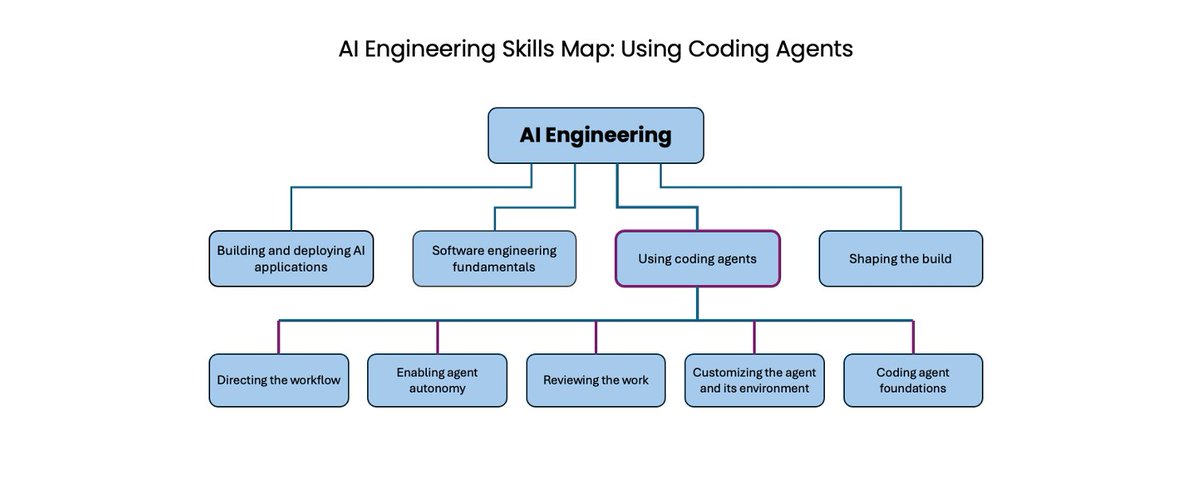
The most important skills for using AI coding agents effectively. Presenting the AI Engineering Skills Map for using coding agents.
Riyazi Farook retweeted

🗣️ The Institute for Ethics in AI is pleased to announce the AI and Human Rights Summit — a day bringing together academics, technology companies, regulators and civil society to explore how human rights can be embedded in the governance of AI.
➡️ Date: Monday 5 October 2026
The Summit builds on a consultation process led by Professor Yuval Shany (@yuvalshany1) as part of the Institute's Accelerator Fellowship Programme (@EthicsinAI_AFP), spanning workshops in Oxford, Geneva, Harvard and Pretoria, and on his White Paper examining the case for an International AI Bill of Human Rights.
The day will bring together speakers from international human rights bodies, national regulators, civil society organisations and major technology companies, across a full programme of keynote and panel sessions.
The Summit will be hosted by Dr Caroline Emmer De Albuquerque Green, the Institute's Director of Research and Professor Yuval Shany, Senior Inaugural Fellow of the Accelerator Fellowship Programme.
🔗 Places are limited. Submit an expression of interest: oxford-aiethics.ox.ac.uk/eve…

Riyazi Farook retweeted
Applications are open for the Claude Campus Ambassadors program. This year, we’re expanding opportunities to more students, with three tracks for undergrads, graduate students, and PhDs/postdocs.
Apply here: anthropic.com/campus
