

$4.5M Funded 🇺🇸🇩🇪🇦🇪 | full-time trader 4+ years | discipline over emotions | sharing my journey
Joined November 2023
- Tweets1.9K
- Following325
- Followers3.3K
- Likes2.2K





Pinned Tweet
As promised, here is the exact plan I used to scale my prop firm portfolio to $6.9M.
Instead of pushing one account to the limit, I focused on building a portfolio so I could reduce risk per account by spreading trades across more capital.
The process was simple:
• pass challenges
• secure funded accounts
• keep risk consistent and gradually reduce it as the portfolio grows
• reinvest 100% of payouts into new accounts
I ranked prop firms based on my overall evaluation and experience and worked through the list from top to bottom, scaling each one to its max allocation.
As more funded accounts were added, risk per trade had to be reduced to avoid concentration risk when trading them simultaneously.
My recommendation:
• 0.75% – 1% risk in challenge phases
• 0.5% – 0.75% in funded stages
I attached a PDF with the full prop firm ranking and the exact scaling structure so I can provide as much value as possible.
I hope this can help some of you on your journey.
If you have any questions, feel free to reach out!
Robin

The biggest mistakes I made early in my trading career — after 4.5 years in the game:
1. Trading too much
2. Changing strategy too often
3. Risking too much after losses
4. Focusing on money instead of execution
5.Ignoring the statistics behind my edge
6. Forcing setups because I wanted action
7. Thinking more complexity = better trading
I made almost all of these mistakes myself.
The biggest improvement came when I did the opposite:
Trade less.
Keep it simple.
Know your numbers.
Manage risk.
Repeat the same process.
Most traders don’t need more information.
They need more discipline.
The best way to beat the prop firm game long term:
1. 2-step challenges > complicated funding models
2. 2–3% payouts consistently > chasing 10% payouts
3. 0.5–0.75% risk once funded > trying to grow fast
4. static drawdown accounts > unnecessary rule complexity
5. multiple firms > depending on one prop firm
6. account rotation > trading every account on every setup
7. keeping funded accounts boring > constantly pushing for more
The goal is not to make the most money from one account.
The goal is to keep accounts alive, diversify firm risk and collect payouts for years.
That’s how you win the prop firm game.


Quality setups > more trades.
One of the biggest lessons from 4.5 years of trading:
You don’t need to trade every day.
For me, 1–2 quality setups per strategy per week are more than enough.
More trades usually means:
• lower-quality setups
• more unnecessary exposure
• more emotional decisions
• more chances to make mistakes
Especially when managing larger capital, the goal isn’t to stay active.
The goal is to wait until your edge is actually there — and then allocate properly.
You’re not paid for how often you trade.
You’re paid for the quality of the decisions you make.


$4,174.29 from one trade on a $100K account.
A few years ago, I would’ve had to work almost 2 months for that amount.
Today, this came from one single account out of a portfolio of 60+ accounts.
NZDCHF short.
+4.1R with 1% initial risk.
And that’s the part I want people to understand:
Trading becomes a completely different game once you have a proven edge and learn how to scale it properly.
One strategy.
One execution.
Then capital does the rest.
It took years to get here.
Stay consistent. Keep improving. Keep building.
The scale eventually becomes hard to imagine.


Small follow-up on the NZDCHF trade.
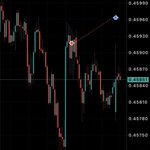
This is the position where I got stopped out on The5ers and BrightFunded because of the spread.
Price eventually reached my original TP today for almost +3R.
On some other accounts I was able to stay in the position, while others were closed around breakeven.
Was it frustrating? Of course.
But the trade itself was good.
The setup was valid.
The idea played out.
The execution followed the plan.
Sometimes the account result simply won’t reflect the quality of the trade.
Overall still a solid week.
Market conditions have also been extremely volatile, especially around the recent Nvidia-driven moves, so I’m keeping things cautious for the rest of the week.
Protect capital. Stay selective. Don’t force anything.


2–3R consistently > chasing 5–10R
One of the biggest changes in my trading was finding the sweet spot between win rate and risk-to-reward.
For me, that’s usually around 2–3R.
Why?
• easier to reproduce
• higher probability of reaching TP
• less greed during the trade
• smoother equity curve
• easier to trust statistically
A 10R winner looks great on a screenshot.
But I’d rather execute a repeatable 2–3R model with strong data behind it over and over again.
You don’t need spectacular trades.
You need a structure you can repeat for years.


4.5 YEARS in prop trading taught me this Part 2:
1. 2–3R consistently > chasing 5–10R
2. 0.5–0.75% funded risk > trying to grow accounts fast
3. consistent payouts > one huge payout
4. portfolio management > managing every account individually
5. planning before the trade > decisions during the trade
6. following your system > following your emotions
7. capital preservation > percentage gains
The longer you stay in the game, the more you realize:
You don’t need more excitement.
You need more structure.
More discipline.
More repetition.
And fewer unnecessary decisions.


4.5 YEARS in prop trading, MID 6 FIGURES in payouts and HIGH 7 FIGURES Funded taught me this:
1. simple strategies > complex strategies
2. quality setups > more trades
3. knowing your data > guessing your edge
4. risk management > perfect entries
5. account rotation > trading every account the same
6. staying funded > passing challenges fast
7. boring consistency > exciting trading
That’s really most of it.
Know your numbers.
Protect your capital.
Execute your plan.
Repeat it long enough for the edge to play out.
I understand that spreads widen during rollover, but a spread of over 0.3% on NZDCHF, resulting in a full SL on a trade that was comfortably in profit, is simply not something I would expect from two reputable prop firms like The5ers and BrightFunded.
@the5erstrading
@BrightFunded
As a swing trader, I fully understand the risks of holding positions overnight. However, this level of spread widening is quite disappointing.
I’d appreciate some transparency from both firms regarding their pricing and execution conditions during rollover.
As you guys know, I always share both the positive and negative experiences I have with prop firms. Last week, I shared my payout from The5ers. Today, I’m sharing this.
Transparency goes both ways.


One of my favorite quotes from Alex Hormozi:
“Discipline feels boring until you witness what it creates.”
And honestly, this sentence perfectly describes the process of becoming a consistent trader.
Most people are searching for the next strategy, indicator or shortcut.
But in reality, long-term progress usually comes down to a few simple things:
Do the same things every single day.
Stay focused on your process.
Remove distractions.
Showing up every day, journaling, following your rules, managing risk and waiting for the right opportunities.
It feels repetitive.
It feels boring.
But that boring consistency is exactly what compounds over time.
The goal is not to be perfect for one week.
The goal is to build systems and habits you can follow for years.
I posted this a while ago and reading it again reminded me how important this message actually is.
Not just for my own trading, but for the entire trading space and our industry.
The longer I’m in this game, the more I realize how true it is.
Most of the things that create long-term results aren’t exciting.
They’re repetitive.
They require patience.
They require discipline.
And they have to be done over and over again, even when nobody sees the progress yet.
That’s why this quote still hits so hard for me.
Discipline feels boring until you witness what it creates.


Most traders want trading to feel exciting.
But the best trading usually feels boring.
Same setups.
Same risk.
Same preparation.
Same rules.
Same review process.
Again and again.
No constantly changing strategy.
No chasing the market.
No trying to make back losses faster.
No increasing risk because “this one looks perfect.”
Just repeating a process you already know works.
That’s the part most people underestimate:
Consistency is supposed to feel repetitive.
You’re not trying to create a perfect week.
You’re trying to build a process you can execute for years.
The boring days build the discipline.
The discipline builds the consistency.
And the consistency eventually builds the results.


New week. Reset everything.
Last week’s wins don’t matter.
Last week’s losses don’t matter.
No chasing challenges.
No “just a little more risk.”
No forcing trades.
Just:
• follow the plan
• respect the rules
• execute with discipline
• focus on this week only
100% discipline. 0% excuses.
Wishing you all a successful trading week.
Another practical example of how I manage allocation across the portfolio.
I’m currently around +1.3R on this AUDNZD short, with roughly 10% of the total portfolio allocated to the trade.
On the examples shown:
• one account is around +$2.9K floating
• another around +$1.3K
• 3 additional accounts are allocated to the same position
This is a Model 3 setup.
Model 3 operates on a higher timeframe, so I specifically allocate it to accounts where weekend holding is allowed and where the account rules fit the statistical characteristics of the strategy.
That’s an important part of my portfolio management:
The account structure has to fit the model.
This setup was also lower on my internal quality scale, which is why only around 10% of the portfolio was allocated.
But “lower quality” doesn’t mean bad.
It means lower relative to my absolute best setups.
If a 10/10 setup gets broad portfolio exposure, this might be a 7–8/10 setup that still has enough edge to justify capital — just with smaller allocation.
That’s how I think about exposure:
Better setup → more allocation.
Lower-conviction setup → less allocation.
No edge → no trade.
The goal isn’t to put maximum size on every opportunity.
The goal is to match setup quality, model characteristics and account structure as efficiently as possible.


Small recap of the week.
I closed two positions across the portfolio:
• USDJPY — Model 3
• EURCAD — Model 1
Both were executed with different risk allocations depending on the setup quality and the model.
USDJPY was taken on roughly 30% of the accounts allocated to Model 3.
Unfortunately, that one ended as a loss.
In hindsight, I could have moved it to breakeven earlier, but the setup itself was still valid — so I’m fine accepting the loss.
EURCAD was the stronger opportunity.
That was a higher-quality Model 1 setup, so I executed it across the full Model 1 allocation.
The trade reached around +1.5R floating, then came back into my breakeven area.
Depending on the account, I was stopped out around breakeven or with a small profit.
So overall:
Pretty much a flat week across the portfolio.
And that’s completely fine.
Different models.
Different allocations.
Different outcomes.
Just executing the framework and letting the numbers play out over time.
I also still have a third position running and currently floating in profit.
I’ll post a separate update on that one later.


Sunday is one of the most important days of my trading week.
The market is closed.
No noise.
No pressure.
No positions to manage.
Just preparation.
Every Sunday I go through my Model 1, Model 2 and Model 3 and prepare the week ahead.
I look at:
• which pairs could become interesting
• what I want to see technically
• important fundamental events
• currency strength / weakness
• futures and broader market context
• potential scenarios for each model
The goal isn’t to predict the week.
The goal is to already know what I’m waiting for before the market starts moving.
That creates calm execution during the week.
Less reacting.
Less overthinking.
Less forcing trades.
More waiting for the exact situations I prepared for.
Planning creates clarity.
Clarity creates patience.
Patience improves execution.
Trading becomes much easier when the decisions are made before the emotions arrive.


Start treating prop trading like portfolio management.
Not like a race to pass challenges.
Choose firms like a portfolio manager.
Choose account structures like a portfolio manager.
Allocate capital based on your strategy.
Reduce risk once funded.
Protect drawdown.
Diversify across different models.
Rotate accounts instead of exposing everything to one setup.
Keep funded accounts boring.
Withdraw profits consistently.
Don’t chase every new firm.
Don’t chase every discount.
Don’t chase every trade.
Know your numbers.
Know your losing streaks.
Know your account rules.
Know exactly how much portfolio exposure you have at any time.
The goal isn’t to get funded fast.
The goal is to stay funded for years.
Build the portfolio.
Protect the capital.
Let the edge do the rest.
First payouts from my The5ers Summer accounts.
Wanted to give you guys an update after testing the accounts properly.
I currently have 3 Summer accounts live, and just requested the first payouts on all three.
Hit the 2% payout cap on each account.
The payout process itself was extremely smooth — approval came through in under 24 hours.
So far, really impressed with the overall experience.
The Summer Challenge was already one of the better value-for-money options I’ve tested, and the funded side has been just as smooth so far.
The three live accounts are already around 6–7% overall profit, and once they reach the scaling threshold, they should be upgraded further.
I also still have 3 more Summer accounts in Phase 2.
So far:
• strong pricing
• clean account structure
• fast payout approval
• solid scaling potential
• very smooth overall experience
Definitely one of the better prop firm experiences I’ve had recently.
I’ll keep you updated as the other accounts progress.


Start thinking like a professional trader.
Every decision you make should reflect that.
Wait for opportunities like a professional trader.
Prepare like a professional trader.
Protect your mental capital like a professional trader.
Manage risk like a professional trader.
Execute your plan like a professional trader.
Review every trade like a professional trader.
Build systems like a professional trader.
Keep improving like a professional trader.
Accept losses like a professional trader.
Stay patient like a professional trader.
Think long-term like a professional trader.
Never chase the market.
Only execute high-quality opportunities.
Become the trader your strategy deserves.


After 4.5 years in prop trading and six figures in payouts, these are currently some of my favorite account types across the firms I use:
@AlphaCapitalUK — 2-Step
Max allocation: $300K
@FTMO_com — 2-Step
Max allocation: $400K
@fundingpips — 1-Step Flex
Max allocation: $400K
@FundedNext — 2-Step
Max allocation: $300K
If I had to build a prop portfolio from scratch again, these are some of the first structures I’d look at.
For me, the priorities are simple:
• clean rules
• enough drawdown
• no unnecessary restrictions
• reliable payouts
• an account structure that actually fits the strategy
The goal isn’t to find the easiest challenge.
The goal is to find accounts you can actually keep funded long term.