
From the country of turtlenecks | Quant. biology | Biobuilding @orakldotbio | Former @institutpasteur @Cambridge_Eng @Polytechnique | 🇫🇷 🇸🇪 🇪🇺
Paris, Frankreich
Joined May 2012
- Tweets2.8K
- Following757
- Followers392
- Likes6.1K








Gustave Ronteix retweeted

Congrats to the incredible folks at Orakl Bio!! Super impressive and determined team fighting the good fight against cancer.

We just raised a $34M Series A at @orakldotbio, co-led by @NorrskenVC and @singular__.
AI has become remarkably good at designing molecules. Yet most cancer drugs still fail in clinical trials.
Here's why, and what we're doing about it 🧵
Gustave Ronteix retweeted

Today, we release the weights of a new and improved Le Chonk, advancing the open frontier for agentic coding and cybersecurity.
💻 Built to build: Le Chonk ranks #1 on @cognition’s FrontierCode among open models, and sets a new benchmark for Pareto efficiency on @artificialanalysis.
🛡 Built to defend: State-of-the-art in cyberdefense, put through the paces by the world's leading cyber vendors, including @CrowdStrike, @cloudflare, @rubrik, @zscaler, and others.
Built for sovereignty: Make it yours. Download the weights on @huggingface , customize it with Mistral Forge, and deploy it wherever you need it.
Read more from our team and customers 👇:

Gustave Ronteix retweeted

Should Europe leave frontier AI to the Americans and the Chinese?
The idea has gained ground in Europe. It is a fundamental mistake.
Build or surrender: for now, the choice is still ours.
Full article below.
Gustave Ronteix retweeted

The real world abounds with recursively self-improving systems, but one in particular deserves attention: Science, modeled as a system (perhaps even as an agent, with goals and resources). If you want to really understand AI RSI, science should be your reference point.
Science is an intelligent system, and it is obviously recursively self-improving:
1. Scientific discoveries unlock new technology that helps build better experimental tools. This is a top driver of progress in nearly all fields.
2. They unlock new conceptual advances (ideas, theories) that help solve more problems.
3. They increase society's economic output, leading to more resources flowing into science.
4. They unlock better faster tooling (e.g. more compute via better chip & networking technology).
As a result, many measures of scientific *input* grow exponentially:
1. Headcount (doubles every ~15 years)
2. Global R&D spending (doubles a bit faster, every ~13 years)
3. Papers and patents (technically this is a measure of headcount)
4. Compute dedicated to science (doubles every ~2 years)
But is scientific progress exponential? Historically, the rate of scientific impact over time has remained roughly constant since the start of the industrial revolution (i.e. scientific progress is *linear*). 1850-1900 was about as dramatic as 1900-1950 or 1950-2000.
1850–1900: Evolution, germ theory & antiseptic surgery, thermodynamics, electromagnetic field equations, the periodic table, pharmaceuticals, electricity, telegraph and telephone, internal combustion engine, skyscrapers, mechanized agriculture...
1900–1950: special and general relativity, quantum mechanics, nuclear fission & atomic energy, antibiotics, genetic theory, electronic computers, information theory, synthetic polymers and plastics, the transistor, aviation...
1950–2000: DNA, genetic engineering, integrated circuits, microprocessors & personal computing, the Internet, crewed spaceflight, moon landing, satellite communications & GPS, standard model of particle physics...
In real terms, like life expectancy, which has increased in a remarkably linear fashion of roughly 3 months per year since 1840, progress is a straight line. This is especially apparent for fields where impact is easy to measure, like biology, medicine, and agriculture.
I first wrote about this phenomenon and its causes in 2012, and a steady stream of research has confirmed it in the years since. Examples include the 2018 paper by Nielsen and Collison, "Science Is Getting Less Bang for Its Buck," and the 2020 economic paper, "Are Ideas Getting Harder to Find?" (In fact, I believe the Nielsen paper stemmed from a conversation I had with him about this exact idea six months earlier)
In short, the primary cause is that research solves the highest-impact, easiest problems first, and every subsequent problem is either harder or lower-impact. Exponentially so. The paper that presented information theory wasn't very hard to write (single author!) but you'd have a hard time ever writing a CS paper that beats it in impact.
This is why science as a system requires exponential resources (input) to produce linear impact (output). It gets exponentially harder over time.
Worth thinking about if you're pondering RSI for AI. I fully believe AI RSI is already happening and will accelerate in the future. But I do not believe this leads to an "intelligence explosion" -- that would fly in the face of everything I know about intelligence and everything I know about recursively self-improving systems.
Gustave Ronteix retweeted
Meet Mistral Large 4, aka Le Chonk.
• 1T parameters, natively multimodal. 49B active.
It is the best open weights model from US or Europe on aggregated benchmarks.
• State-of-the-art on critical workloads, including cyber defense, manufacturing and finance and it surpasses closed frontier models on visual grounding.
• Forged in Europe end-to-end and is deployable from Europe via our own Mistral Cloud infrastructure.
• Available to all via API today. Working with cybersecurity partners privately.
Open weights release end of October.
🤖 Made with AI
Gustave Ronteix retweeted

Super stoked to show what the @tychobio_ai team is cooking here !
Let the high-quality data flow ;)

We’re excited to announce a new collaboration with @tychobio_ai to advance AI-driven RNA therapeutics for rare disease.
PacBio HiFi + Kinnex sequencing will generate full-length RNA data from 10,000+ samples to help train AI drug discovery models.
🔗 bit.ly/4AVHK0A

Gustave Ronteix retweeted

McKinsey out today on AI drug discovery — "focusing on what matters most." The framing is right. Most AI in pharma is still applied to the easy parts. The hard part is target biology and clinical translation. mckinsey.com/industries/life…

Gustave Ronteix retweeted

Ordinary Abundance. This is the greatest thing I've read in weeks. No kidding. This should win a Pulitzer in a category not yet invented. ordinaryabundance.com/

Gustave Ronteix retweeted

Raises the question: for ML, what is value of large single-cell perturbation screens in homogenous cell populations, i.e. the vast majority of currently available data + what so many organizations are racing to generate
That is still unanswered...
Gustave Ronteix retweeted

The training data market has exploded for LLMs and bio foundation models are next.
But biological data is extremely complex and requires a data generation playbook that prioritizes quality over immediate scale.
@_DimensionCap Research article live now!
research.dimensioncap.com/p/…

Gustave Ronteix retweeted

🤖 Made with AI


Gustave Ronteix retweeted

if you’re an ai researcher you should really consider working on bio
pretraining is great: data sets are big enough for interesting stuff but not so big you’re spending all your time on weird cluster optimization
post training is in the age of research:
the lab is the only true validation, but it’s expensive so figuring out the limits of what we can do for evals in silico is still very open question
existing stuff kind of works: we have proof of life for the ability of ai to accelerate bio but there is a long way to go
it feels a lot like computer vision after imagenet or nlp after the first transformers started really working
if your idea works, you might get to help improve the human condition. way cooler to talk about at parties than “we pushed benchmark X for chat model Y up by 3 point”
Gustave Ronteix retweeted
Agreed. And the Bitter Lesson doesn't argue *against* domain specific data/models imho, it simply says the architectures that consistently win are the ones that scale with data, a.k.a Learning and Search.
Gustave Ronteix retweeted
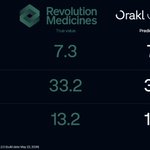
Introducing SCOPE (Screening-to-Clinical Outcome Prediction Engine): a translational platform integrating patient-derived organoid (PDO) drug screening with clinical prognostic features to forecast arm-level efficacy in oncology trials.

Gustave Ronteix retweeted

New paper detailing the platforms of @orakldotbio
Orakl has built an impressive bank of patient-derived PDAC and CRC organoids in which they screen any drug. This paper shows that they can accurately reproduce clinical trials results with such screens.
Gustave Ronteix retweeted
In the coming years we’re going to see a lot of claims about “autonomous labs” accompanied by videos of cool-looking robots.
I’m extremely bullish about this space and I’m rooting for all these companies to succeed. But right now it’s hard to know who is succeeding because the word “autonomous” has no fixed meaning.
It’s lowkenuinely a problem that robots look so cool. It's easy to see a video of robots in motion and be convinced that the future has arrived. If you haven’t worked on an automated lab floor, frontier tech looks about as cool as useless arm-flailing.
So here are some quick heuristics you can use to get a sense for how “autonomous” the lab you see in a video really is.
- Compact form factors. Physical space is at a premium in the lab. Mature automation systems use it efficiently. If a robot has lots of open space around it, that’s a sign that it requires a lot of human support.
- Cold storage. Almost all biological protocols need some kind of refrigeration. Automating sample retrieval from freezers is particularly annoying, because frost interferes with mechanical gripping, barcode reading, etc. If you don’t see a freezer near the robot, it means humans are doing the sample management off-camera.
- Sample transfer. Real lab protocols require the operations of many different devices (PCR machines, incubators, liquid handlers, centrifuges etc) - too many to fit in a single workstation. An autonomous lab needs a way to shuttle samples around. If you don’t see plates moving around the room, humans are doing that.
- Inventory and waste. Biotech eats a lot of reagents and makes a lot of plastic waste. Managing inventory is labor intensive but unglamorous - the last thing most buzzy startups want to care about. A true autonomous lab demo will include robots doing boring and unsexy things.
With these tips, you too can become a cynical jerk who looks at a startup’s tech demo and says “that’s not REALLY an autonomous lab!”
But don’t do that. Instead, root for success and watch as more automation teams check off more items from this list over time. I’m expecting fully autonomous labs, even by my high standards, before 2030.
Gustave Ronteix retweeted

Behind the scenes, all the frontier AI labs are inking partnerships with bio startups to get access to their data to improve model performance on bio tasks.
Basically every startup that has a legit high throughput platform has been approached about a data licensing deal.
Gustave Ronteix retweeted

The TIGIT catastrophe‼️
30 agents
220 trials
~50,000 patients
>$3B+ invested
0 approvals.
This is herding in drug development.
In BMJ Oncol we examine why it happens, the hidden costs, and what needs to change.
It’s already happening again in ADCs...
🔗:bmjoncology.bmj.com/content/…

