


loving the updates to Gemini and the models. Truly exceptional work
Also it seems the 3rd party MCP URL auth has been fixed and now I can connect to @executorsh in gemini and have it access all my apps (even the custom ones)


2
39
Arpit Garg retweeted

NVIDIA reported fiscal Q3 revenue of $115.8 billion, up 103% year over year. Data Center revenue reached $107.6 billion, up 110%.
finterest.ai/a/8205ef38a7ee4… $NVDA

This can actually be seen, stocks like $KOVAI are giving numbers of big hospitals and are sitting at the lowest of P/Es. They just need more eyes and momentum (Not financial advice)
@finterestai


Where to hide if you are afraid of AI?
Well, in Asia, it's Indian equities. By sector, it's healthcare. Ha!
Indonesia is not a place to hide despite no AI.
1
84
$COST never disappoints..

Costco declared a $30-per-share special cash dividend, an approximately $13.3 billion payment. It is payable Dec. 4 to shareholders of record Nov. 24. finterest.ai/a/9af8133aced84… $COST

1
55
Arpit Garg retweeted
Costco declared a $30-per-share special cash dividend, an approximately $13.3 billion payment. It is payable Dec. 4 to shareholders of record Nov. 24. finterest.ai/a/9af8133aced84… $COST
At the end what matters is the company, management, execution and numbers. All of this short term FUDs are just noise. Doesn’t help anyone with convictions for long term businesses and investments.

I’m fully aware that no serious investor takes @SemiAnalysis_ seriously these days, but just to add insult to injury:
Let me get this straight...
Semi gloated about the leak that $IREN was facing delays with $MSFT and immediately used it as another opportunity to throw shade at the company.
Except they apparently failed to realize that it was $MSFT that requested networking / topology changes from what had originally been agreed, which is what pushed part of the deployment into early next year.
$IREN Co-CEO @danroberts0101 was very explicit about this on yesterday’s call.
He also explained that accommodating a change of this magnitude so deep into construction would be much harder for most other neoclouds, because they rely heavily on third-party data center providers and therefore have another party in the middle whenever something needs to be changed.
$IREN, on the other hand, owns and operates the entire infrastructure stack itself.
That vertical integration gave the company the flexibility to accommodate $MSFT's last-minute request, and Dan made clear that the relationship between the two companies remains “fantastic.”
In other words, $IREN was flexible and agile enough to accommodate a major last-minute change in $MSFT's requirements, even this deep into the deployment process.
And somehow @SemiAnalysis_ found a way to spin that into a negative for $IREN?
This really shows how disingenuous this “publication” has become....
How were independent retail analysts with a near-zero budget in @jiahanjimliu and @FransBakker9812 able to figure this out WEEKS ago, while one of the largest AI-focused “research companies” failed to understand what was actually happening?
Don’t they have sources at $MSFT?
Apparently they aren’t quite as well connected as they like to appear...
Who in their right mind is paying these clowns for their coverage? 😂
1
66

Arpit Garg retweeted
The most important metric was holdout stability. Several models looked great on dev but dropped 10 to 15 points on the holdout (Luna fell from 0.897 to 0.749). The Gemini 3.1 models stayed flat across both sets (Flash Lite was 0.872 dev vs 0.878 holdout).
Steadiness between dev and holdout is the only signal that actually predicts production reliability.
Run your own evals on your own data. What wins on leaderboard vibes is rarely what wins your cost and latency budget in production.
PS: these are old analysis that haven't been run on the latest Argon model
@GoogleDeepMind @GoogleAI


Consolidations aren’t just happening in AI
DoorDash agreed to acquire Instacart for about $17B in equity value, or $65 per share. The consideration will be at least 75% cash, with closing subject to approvals. finterest.ai/a/df7d82a6bad64… $DASH
2
56
📊Public benchmarks only tell half the story.
There is constant debate on X about whether @GoogleAI is "back" or falling behind.
But for my multimodal production pipeline (document OCR + physical item detection), Google was never out of the game.
I ran a benchmark across 44 photos (19 dev, 25 holdout) comparing 16+ models with identical prompts, rescored against verified human labels (me).
Two clear takeaways:
Document OCR: Gemini 3.1 Pro won cleanly
Combined accuracy:
• Gemini 3.1 Pro: 0.955 ($3.92 / 1k photos, 3.7s)
• Opus 5.5: 0.909 ($18.96 / 1k photos, 5.4s)
• Sonnet 5.5: 0.873 ($9.41 / 1k photos, 3.9s)
• GPT-6.1 Sol: 0.858 ($21.27 / 1k photos, 7.7s)
Gemini 3.1 Pro was not just the most accurate, it was ~5x cheaper than the other frontier models.
Detection: Gemini 3.1 Flash Lite dominated on economics 🔨
Accuracy was effectively a tie at the top:
• Gemini 3.1 Pro: 0.883 ($5.95 / 1k photos, 4.4s)
• Gemini 3.1 Flash Lite: 0.875 ($0.62 / 1k photos, 2.0s)
• Qwen 3.5 397B: 0.875 ($3.06 / 1k photos, 5.5s)
• Sonnet 5.5: 0.826 ($11.58 / 1k photos, 4.8s)
• Opus 5.5: 0.816 ($23.48 / 1k photos, 5.7s)
Flash Lite delivered top-tier accuracy while running 2x faster and costing 18x to 37x less than Claude.

Google’s Gemini 4 Carbon is the new #1 on the Artificial Analysis Intelligence Index v5, and second only to Claude Opus 5.5 on the Artificial Analysis Coding Agent Index
Gemini 4 Carbon scores 59 on Intelligence Index v5, driven by leading performance in complex reasoning, knowledge, and scientific tasks. It also has large gains in coding and knowledge work, particularly when compared to other Gemini models, but it is not leading in all these areas.
As with launch of Gemini 4 Argon, Gemini 4 Carbon is being rolled out to selected users and is not yet publicly available. Google is offering a 50% launch discount, with no confirmed end date. All our charts and figures use standard pricing for both Gemini 4 Carbon and Argon.
Key results for Gemini 4 Carbon with high reasoning:
➤ Gemini 4 Carbon leads the Intelligence Index v5, with the #1 score in 4 of the 9 Index evaluations: HLE-Diamond, Terminal-Bench-Science, AA-Omniscience, AutomationBench-AA. Carbon makes substantial gains elsewhere but is not leading in coding and knowledge work
➤ Behind only Claude Opus 5.5 on coding agents: With Antigravity CLI, Gemini 4 Carbon (high) scores 59 only 3 points behind Claude Code with Claude Opus 5.5 (max, 62) on the Artificial Analysis Coding Agent Index. Carbon ranks second on both Terminal-Bench 4.0 (64%) and FrontierCode v1.1 (51%), behind Claude Opus 5.5 (max) at 56%. Google has historically underperformed in this area and so this improvement stands out
➤ Improved agentic knowledge work, but not yet leading: On AA-Briefcase, Gemini 4 Carbon (high) scores 1609 Elo, a 126-point improvement over Gemini 4 Argon (high, 1483), but still behind models including Grok 4.7 (xhigh, 1638), Muse Wonder (max, 1659) and Kimi K3.1 Pro (1678). The largest gain comes from Presentation, up 293 Elo to 1598, alongside a 120-point improvement in Analytical Quality to 1671
➤ Lower Cost per Task than Claude Opus 5.5 for comparable overall intelligence: Gemini 4 Carbon costs $7.76 per Intelligence Index task, ~23% less than Claude Opus 5.5 (max, $10.04) but ~1.2x GPT-6 Astra (max, $6.25). It uses 123k output tokens per task, 29% fewer than Claude Opus 5.5 (max, 173k). At the same $4/$20 standard pricing, its Cost per Task is in line with Gemini 4 Argon ($7.68), while scoring 9 points higher on the Intelligence Index
➤ Leading AA-Omniscience v1.1 score, with low hallucination: Gemini 4 Carbon scores 54 on our recently updated AA-Omniscience v1.1, 6 points ahead of Claude Opus 5.5 (max, 48) and 8 points ahead of Gemini 4 Argon (46). Accuracy (% correct) rises 10 points over Argon to 58%, while its hallucination rate rises from 4% to 11%. This is still the second lowest of any model, behind only Argon, compared with 50% for both Claude Opus 5.5 (max) and GPT-6 Astra (max)
Key model details:
➤ Context Window: 1M tokens
➤ Multimodality: Text, image, video, and speech input, with text output
➤ Pricing: $4/$20 per 1M input/output tokens, the same as Gemini 4 Argon’s standard pricing, with a 50% discount. Cached input tokens receive a 95% discount ($0.20 per 1M)
Congratulations to the @GoogleDeepMind team!

1
2
89
The most important metric was holdout stability. Several models looked great on dev but dropped 10 to 15 points on the holdout (Luna fell from 0.897 to 0.749). The Gemini 3.1 models stayed flat across both sets (Flash Lite was 0.872 dev vs 0.878 holdout).
Steadiness between dev and holdout is the only signal that actually predicts production reliability.
Run your own evals on your own data. What wins on leaderboard vibes is rarely what wins your cost and latency budget in production.
PS: these are old analysis that haven't been run on the latest Argon model
@GoogleDeepMind @GoogleAI
A big bang PR to refactor and migrate production agent workflows on @DBOS_Inc , excited about this.

Arpit Garg retweeted
PI Industries has unveiled Pioxaniliprole, which it says is India's first indigenously discovered insecticide molecule. The active ingredient has received CIB&RC registration. finterest.ai/a/8d384926c12a4… $PIIND
@Currence_AI our Senior Analyst Paola analyses where @AnthropicAI 's capacity sits today and who carries the power risk based on their recent S-1 filing.

1
1
70
For an in-depth analysis get access to Currence platform here platform.currence.ai/researc…
1
1
19
And to get the data right to your AI tools, we also released our MCP recently.
currence.ai/blog/mcp

14
Arpit Garg retweeted
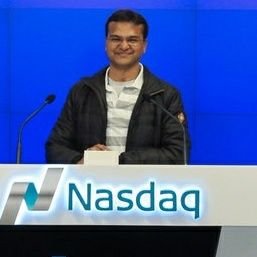
Based on whatever are the speculations on taxation related to stock market, as per quoted by sources of news channels....stock market won't be able to take such things positively at all.
The extent of the damage in terms of sentiment, rupee depreciation, inflation and also in terms of time has been so much, that there has to have an all round reset of taxation policies around investment.
Reforms needed in India stock market
1. Complete removal of managed price mechanism like ESM, GSM, ASM, circuit filters, etc.
The basic principle of stock market is price discovery naturally through demand & supply and through multiple other parameters based on business and fundamentals.
However all the above regulatory mechanisms are leading to price discovery in a managed way and there are significant chances of manipulation as well in these mechanisms. In addition, these mechanisms are a manipulation on liquidity as well.
2. Why there are two stock exchanges when the purpose of each one is same. Some stocks listed on NSE, some on BSE and some on both....cannot understand why...
Its better to merge the two and maybe rename as Bharat Stock Exchange.
Overall there can be three stock exchanges
~ Bharat Stock Exchange for all kind of secondary trading of businesses
~ MCX for all kind of commodity trading
~ Exchange exclusively for only SME companies
3. There should not be any advanced tax liability on gains arising out of stock market.
As the nature of these gains is very variable, the net tax liability should become due only at the end of financial year or at the most may be by 15th March.
4. Remove all of STT, cess, surcharge, LTCG, STCG.
Introduce one tax Capital Gain Tax as 15% flat on any kind of gains.
Govt will be a significant beneficiary if they understand how the stock market works, how the mindset reacts and how the behaviour builds.
5. Remove tax on complete dividend income.
Develop a habit of giving more in the hands of public. More the money with public, more they will spend on consumption and lifestyle, more taxes for govt at every step.
It is fair to have Taxes on earning as a business or as a salary,
It is again fair to have reasonable Taxes on spending,
However It is not fair to have so much Tax on investing ...Bank Interest, Stock Market Capital Gains, Dividend.
If stock market is impacted negatively, every other sector will be impacted sooner than later.
Stock market will cheer all this and hence more and more people will be part of this important ecosystem and hence more contribution towards the taxes.
It will be a Win Win for everyone.
Ultimately economy runs better by giving as much money in the hands of consumer as possible. Consumption is the input to every other sector directly or indirectly. Will create more money for the govt because ultimately more money in the hands of consumer will trigger more spending and hence more taxes
Actions in the form of rewards matter rather than actions or statements in the form of punishment or disappointment.
Govt needs to know that investors directly or indirectly runs the entire country and the complete economy. It's the investor who ultimately rules the world.
That investor can be Mukesh Ambani, Elon Musk or any other small or big investor who owns a stake in stock market.
If something is important for the overall economy, we need to make it more attractive by giving forward looking incentives rather than punishments.
Do not divide and rule the country rather embrace and work together for the humanity and the country !!!
Retweet
@narendramodi @nsitharamanoffc @PMOIndia @TVMohandasPai @NileshShah68 @Iamsamirarora @nsitharaman @ncbn @Ajay_Bagga @Nigel__DSouza @Nupurkunia
#LTCG #STCG #STT #StockMarket
Most AI coding agents handle browser automation in one of two broken ways:
1. Spin up a throwaway, headless Chromium instance (losing active logins, sessions, and cookies).
2. Attach a blunt tool to your entire main browser (risking killed tabs, typing character-by-character into wrong inputs, or leaking credentials).
While building local Brave automation for my @pidotdev agent harness via CDP, I had to solve a few practical engineering problems to make it safe, fast, and actually usable:
1. Session-owned tab isolation
Never let an agent take over arbitrary user tabs. Every agent session owns an explicit, named tab pool (e.g. `console`, `docs`, `dashboard`). Resuming a session reuses its own tabs; starting a new agent gets isolated tabs. If an agent crashes or times out, your personal tabs are completely untouched.
2. Never type character-by-character into modern web apps
Simulating keystrokes one character at a time with `press` is a relic of older automation frameworks. On React/Lexical/Draft.js rich-text editors, sequential synthetic key events race against asynchronous state reconciliation, dropping characters or triggering accidental Enter-to-submit.
Instead, inspect the control kind, target the contenteditable root, and hydrate the entire multiline draft in a single atomic tool call via CDP's Input.insertText pipeline. Fast, zero dropped chars, zero focus-stealing loops.
3. Brittle selector paths will kill you
LLMs love latching onto fragile, auto-generated DOM trees (`div > div:nth-child(3) > ...`), which modern SPAs rewrite on every minor re-render.
Instead of dumping raw DOM trees, the inspection pass filters for actionable controls and forces selector generation to anchor on stable widget identities:
• Priority attributes (`data-testid`, semantic ARIA roles)
• Nearby unique ancestor anchors
• Rejecting ambiguous or non-unique selectors before execution
4. Defense in depth on file uploads & sensitive paths
Giving an LLM direct control over OS file pickers is a security nightmare. The tool handles uploads programmatically with explicit user approval of absolute paths, while strictly refusing hidden files, directories, credential paths (like ~/.ssh or .env), or symlink aliases before CDP ever touches the file input.
5. Fail-closed safety on mutations
Web automations fail. But when a network request times out, you never blindly retry a click, Enter key, or submit button. If an action fails, the harness must re-inspect the rendered DOM state first to verify what actually happened before deciding whether to repeat it.
If your coding agent can't safely tap into your logged-in browser without blowing up your active windows or leaking secrets, it's missing half the real-world dev loop.
Code & skill implementation:
github.com/bluearpit/pi-cust…