
🌮🤖 Speech and language modeling researcher. Principal SWE @ Google Deepmind. ♊🌊 Gemini Audio and Astra core team.
California, USA
Joined July 2007
- Tweets1.4K
- Following1.4K
- Followers1.3K
- Likes5.8K



Pinned Tweet
My team in GDM Frontier AI is hiring (Mountain View). If you're a researcher interested full duplex modeling, multimodal LLMs (Gemini), modality gap, joint speech/text modeling, PGMs, streamable generative models, and representation learning for language modeling -- DM me!

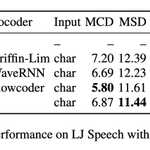
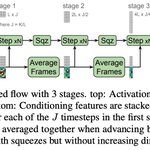
ALT Long-form Speech Generation with Spoken Language Models. ICML 2025 Oral. Recent work from our team on long-form speech language models with state-space models.
RJ Skerry-Ryan retweeted

Big news: Gemini 4 Neon (High) is the best @GoogleDeepmind model on the Agent Arena Index, ranking #2 overall and reshaping the Pareto frontier!
With 1336 pts based on 4.2k real-world agentic sessions from Arena’s global community, it surpassed:
- #4 Carbon (High): 1303 pts
- #9 Hydrogen (High): 1271 pts
- #11 Argon (High): 1229 pts
Neon is on the Agent Arena Pareto frontier at $2.82 median cost per task. It scores higher than #3 Claude Opus 5.5 (Max) for 53% less per task, and is 69% less per task than #1 Claude Fable 5.2 (Max). See Pareto in thread.
It's strong across key signals:
- #2 Praise vs. Complaint: 1539 pts (user satisfaction with the agent’s outcome)
- #2 Steerability: 1298 pts (how well an agent responds to user corrections)
- #3 Task Completion: 1316 pts (explicit confirmation of task success from users)
See where it landed in the Code Arena: WebDev and Text Arena below in thread.
Congrats to the team at @GoogleDeepmind on another huge release!


RJ Skerry-Ryan retweeted

1/ I got early access to Gemini 4 Neon and spent the day testing it in Antigravity. It built 17 interactive demos for me, from shooters to 3D worlds. Here are 8 of them, plus coding and tool use tests. I'm also sharing what went right and what went wrong.
A thread:
RJ Skerry-Ryan retweeted

Introducing Gemini 4 Neon! Pushing the frontier across domains and punching above its model class in a meaningful way. To me, Neon feels like the right balance of intelligence, speed, and usability. Available now across @GoogleAIStudio, the API, and more!


RJ Skerry-Ryan retweeted

You will notice that Gemini Carbon thinks differently than Claude and GPT. It often comes up with entirely different but more clever solutions than competitor models.
This is precisely because we never distilled other models. Distilling other models creates a poor imitation rather than unique intelligence.

RJ Skerry-Ryan retweeted

#Gemini 4 Hydrogen brings the specialized skills of our #GeminiRobotics ER 2 (Embodied Reasoning) models into the core #Gemini 4 model series, and it beats them on nearly every axis 🔥 . On the public ERQA benchmark, Hydrogen outperforms Gemini Robotics ER 2 on spatial reasoning tasks such as multi-view correspondence and 3D trajectory reasoning at similar latency. Try it out!
Learn more at: developers.googleblog.com/ge…
@GoogleDeepMind Robotics

Struggled as well. It's soft sci-fi

I'm really struggling with this. Not saying that he is wrong on everything, but listening to the scenarios feels like playing a game with a child, the rules of which he is inventing as we go, to end up with a pre-determined outcome.
-- Why would AIs take over the labs?
-- They would want to control everything to cheat on graders
-- How would the AIs take over wider control?
-- They wouldn't want anyone finding out that they cheated so they would start hacking governments and taking control over resources
-- What if government will show up with guns to stop it?
-- They would control the public opinion against that
-- How would they control public opinion?
-- They would hack into all devices and control information flow
-- What if we manage to stop the big data centres anyway?
-- The models will get small enough and will be spread everywhere to control everything
Again, I don't want to say that we don't need to take this seriously - his main point of improving security seems unambiguously like a good thing.
But the idea that we are on a realistic path towards AI's taking over the world in a year just seems like a fantastical idea that is derived by starting from that as an outcome and then backing into it with ever more esoteric unlikely scenarios that must all happen together for this to occur.
2
221
haters will say it's benchmaxxed

other than the fact that everything takes 20 minutes, gemini 4 carbon is now my favorite model. i use it for anything i want done thoroughly and correctly. it's brilliant, legible, and fixes its mistakes quickly and honestly if asked. it's like if astra max was normal
8
466
RJ Skerry-Ryan retweeted
I’m looking for behaviors / failures / mistakes that Gemini Carbon makes.
I would like it in this format
1. Harness
2. Prompt
3. Full session trace if comfortable sharing
4. Claude / GPT trace of same prompt
5. Model / thinking level
DM me these or comment here! These are super helpful
RJ Skerry-Ryan retweeted

Gemini 4 Carbon might be the best AI scientist right now - crazy how Google has much such a triumphant come back
RJ Skerry-Ryan retweeted

Cannot stress how important this is.
If you're a professor, graduate student, or student researcher in the physical and natural sciences, please apply to get free access to @antigravity Ultra.
I'll be hosting onboarding sessions for scientists in the coming weeks, stay tuned! – at San Francisco, CA

We are offering 10,000 scientists the highest usage tier in Google Antigravity free of charge for 6 months. Please apply! forms.gle/WvmBbPvRbpKG1BPn9

🎶 let's ship it to prod 🎶
🎶 it's friday at five 🎶
🎶 so i'll leave it with god 🎶

NEW: Multiple sources tell @CBSNews that an update to the private communications network that connects America's air traffic control system caused the system to reboot.
When the FAA's telecommunication infrastructure rebooted, it crashed, causing the communications outage.
The system is operated by L3Harris.
Reporting w @NicoleSganga
1
3
504
RJ Skerry-Ryan retweeted

you are not prepared to hear this:
Gemini Orchestrator (Carbon+Hydrogen) in agy is the best agentic setup right now.


RJ Skerry-Ryan retweeted

While everything is down Google's Antigravity is cooking just fine, I bought the pro plan to test it again after a long time of not using it and oh boy it's gotten waaay better.
Forget about Claude and GPT limit and look at the limits for Gemini models:
3 hours of work using Orchestrator(Argon) and it cost 13% Argon weekly and just 2% of weekly and as for the results I'm gonna share the project soon.

RJ Skerry-Ryan retweeted

I have a major result to share.
I’ve found conclusive forensic evidence that the top 4 Chinese AI labs—DeepSeek, Moonshot, MiniMax and Ant Group—have built their newest models on NVIDIA’s most advanced Blackwell chips, which are barred from export to China.
This sounds insane, but I discovered that almost every AI model carries a hidden signature of the GPU that trained it. When a model is first set up, the starting values of its weights are laid out in a pattern that depends on the exact GPU. Each combination of GPU and seed number produces a unique pattern—a sort of fingerprint of the hardware used to create the model. Traces of that pattern survive training into the published model.
Again, this evidence isn’t based on any insider information or leaking. It’s based on a forensic analysis of the model weights released by the companies themselves.
I searched more than six trillion combinations of chip layout and seed number and matched them to open-weights models. In doing so, I found conclusive evidence that six Chinese AI models—including DeepSeek-V4-Pro, Kimi K3, and MiniMax-M3—were initialized on NVIDIA Blackwell systems. Four of the models match Grace Blackwell, the GB200 and GB300 parts in NVIDIA’s flagship liquid-cooled rack-scale systems.
I then verified these results on real hardware. Running unmodified PyTorch with the seeds I’d recovered, a Blackwell B300 reproduced DeepSeek-V4-Flash’s untouched starting weights bit for bit, and a rented GB200 reproduced Kimi K3’s to a correlation of 0.999995. A Hopper H100 reproduced none of DeepSeek-V4-Flash’s, and changing the seed by one broke the match. (DeepSeek’s seed is 953049583 by the way.) The method also was verified to match 24 known open-weights models to the hardware that developers said they used.
It is exceedingly unlikely that these results are a coincidence. Across six trillion combinations, the best accidental match should reach only about 8 sigma (i.e., eight standard deviations above what random chance would produce). The real matches range from 49 to 1,385 sigma, and even the weakest single test hits 20.
These were data-center-scale training runs. With some analysis of release schedules and model details, I estimate that the largest, Kimi K3 and DeepSeek-V4-Pro, used 2,000 to 3,000 Blackwell GPUs each. Clusters of this size cost on the order of $150 to $200 million each to buy, and across these labs alone would add up to more than half a billion dollars of export-controlled GPUs, not counting experimental compute or otherwise. It’s quite likely that we see multi-billion dollar expenditure on export-controlled GPUs.
I am highly confident in this result, and it has been independently verified by senior researchers at OpenAI and Anthropic. You can read the full report at unemploymentlabs.com/checkpo….
There is much more I’ve identified about these models through other forms of checkpoint forensics like this, and will have more to share soon.

RJ Skerry-Ryan retweeted
Introducing Gemini 4 Hydrogen, an extremely capable and fast model built to bring Gemini 4 to everyone!
Available to all tiers of Google AI Studio, Gemini API, Gemini for business, the Gemini app, Google Search, and paid Google AI Pro + Ultra subscribers in Google Antigravity.


RJ Skerry-Ryan retweeted

Okay so, we just found that over 50 papers published at @Neurips 2025 have AI hallucinations
I don't think people realize how bad the slop is right now
It's not just that researchers from @GoogleDeepMind, @Meta, @MIT, @Cambridge_Uni are using AI - they allowed LLMs to generate hallucinations in their papers and didn't notice at all.
It's insane that these made it through peer review👇
