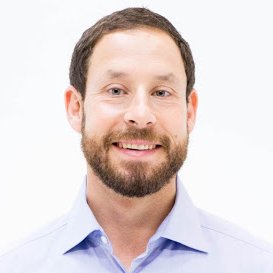
CEO of QuickMD. Prior CEO and CTO of @MedMen. Sold my first 3 companies to @salesforce and @Disney and @ticketmaster
Los Angeles, CA
Joined October 2007
- Tweets1.5K
- Following577
- Followers1.2K
- Likes119









As QuickMD grows, we're looking closer at what keeps patients in care after their first visit.
Early on, scaling a national provider network is about foundational blocking and tackling: scheduling, state coverage, and clinical guardrails. That baseline gets people in the door, but it doesn't tell you what happens next.
In opioid use disorder care, whether someone comes back for a second visit or drops off before stabilizing is the difference between recovery taking hold and treatment failing. Tracking retention across the network helps us support providers and fix friction early. Access only matters if people stay.
4
46
People are picking up kratom and 7-OH thinking they are taking a harmless wellness supplement, only to hit opioid withdrawal when they stop.
Honest labeling and potency limits are overdue, but banning these products without making medical treatment accessible just strands patients.
1
10
787
I left Forward, QuickMD's annual offsite, energized by our talented team. Seeing the future comes easily. Getting it out of my head so the team can execute is the real challenge.
My work is naturally offset from the team. While everyone delivers what we committed to, I'm in a fixated space thinking about next year. I walk, iterate on the whiteboard, and build frameworks to capture my ideas.
That clarity matters. Every bit of friction we remove helps someone with opioid use disorder get into treatment and stay there.
A plan that has lived in my head for weeks without being pressure-tested is usually the one I trust least. Until someone else can run with it, it isn't finished.
1
1,814
One way I try to understand where QuickMD can better help patients stay in recovery is by walking through the patient’s journey, step by step. I almost always find something that surprises me.
I look at where they get stuck and who’s involved. If something goes wrong, what happens next? Do we have the right process to help them through it?
Some questions stay with me, and those often become the next thing we work on. I don’t always come away with an answer. But I usually have a clearer sense of what needs our attention.
10
8,733
Would you believe an introvert could run a company?
I enjoy engaging with people, I just don't gain any energy from it. I can think in a meeting, but that's different from having space to think deeply about something I've chosen. By the afternoon of a meeting-heavy day, I'm not much use for that kind of thinking.
So I make room on purpose: usually a morning walk, Do Not Disturb on, no notifications.
I enjoy the conversations. I also need time when I'm not having one.
1
11
8,038
Monday Meanderings: For the past three weeks, I've been noticing a pattern that points back to the same habit broken down in these three steps:
- Walks. I go on a walk and get all my messy thoughts out. Half of what I think there goes nowhere, but I keep all the notes anyway. I talk for thirty or forty minutes into Wispr Flow, then come back to it later.
- AI. It's a useful thinking partner. The biggest risk is reaching for it before I've even finished the thought. So I finish the messy version first, then use AI to refine it or stress test it.
- The business. When I don't have a topic, I map out the business as a sequence: acquisition, booking, the visit, support afterward. Something usually comes up that I hadn't written down.
Messy notes first, decisions after.
1
11
4,733
Compounds up to 240 times more potent than morphine sat on gas station shelves, sold as a natural, safer alternative for pain relief and "mental clarity."
DEA's August order puts mitragynine pseudoindoxyl, MGM-15, and MGM-16 in Schedule I. They're synthetic derivatives of kratom-related compounds, and they showed signs of opioid dependence in animal models.
The products came in fruity flavors and chewable formats, at stores with no age restriction. The label said natural. The compound was lab-made.
I think adults should be able to make informed choices, and nobody got that chance here. A ban with no off-ramp for people already dependent just moves the demand somewhere else.
11
5,770
Having insurance and being able to afford care are no longer the same thing.
Everyone in this survey had health insurance. 38% of them still delayed or skipped care or medications because of cost.
That's from a 2025 survey of 2,500 US adults under 65, funded by Imagine360. Two years earlier, it was 27%. Of those who skipped care, 42% said their problem got worse.
That statistic is basically why I show up to work every day.
At QuickMD, you see the price before you book, you don't need a referral, and you're seen the same day.
Source: imagine360.com/news/healthca…

12
3,348
Having built and sold four companies, I know what it takes for a company to succeed. But working in health care forced me to rethink what the "product" really means.
In tech, the product is the thing you ship. In health care, the product is the model itself.
We're treating 65,000 patients with 200 providers and 50 people in corporate. That ratio is the product.
With addiction treatment, effective medication already existed. What was broken was access: provider shortages, distance, wait times, work schedules, stigma.
Telehealth can remove some of those barriers for someone who lives hours from care or can't wait three weeks for an appointment.
We kept watching the same thing happen: someone starts Suboxone, stays a visit or two, tries a Reddit taper protocol, and ends up back where they started or worse months later.
I've led a few companies now, and the pattern that worries me most is always the same one: people finding their own way around something because the real path felt too slow or too hard to reach.
I've spent real time in spaces where people self-experiment with their own health, sometimes for good reason. Tapering off Suboxone without supervision isn't in that category.
Restarting after a failed taper isn't neutral. It tends to make the medication less effective the second time. A schedule built for a stranger on a forum isn't built for your dose or your history.
Wanting off medication eventually is normal. Doing it with someone who can see your actual case, not a thread written for someone else, is what makes it stick.
10
12,270
Monday Musings: once a month, I round up a few raw thoughts sitting in my notes app. Three things on my mind in the drug supply this month, and they all come back to the same idea: education comes after medication.
- Medetomidine. We saw what happened when xylazine became more common. Now another veterinary sedative is showing up in fentanyl samples, and many systems are still catching up.
- Kratom and 7-OH. The federal picture is shifting fast, and we've spent the past few weeks making sure clinicians and patients have somewhere reliable to go while the rules catch up.
- Peptides. I follow the longevity space closely and worked in it before QuickMD. The public conversation often moves much faster than the evidence and quality-control conversation.
Different topics, same pattern. The supply changes first. Everyone else reacts afterward.
11
8,538
Having two kids has forever changed the way I think about addiction.
To me, it is a family issue. Someone struggling with addiction does not just impact themselves. It reaches parents, partners, and kids, whoever is standing closest. I have two kids of my own, and I don't want them anywhere near this.
When I started looking at opioid treatment access, I expected the problem to be a lack of effective medication. We had it.
The problem was that getting buprenorphine could involve long waits, limited local providers, travel, and administrative barriers, at exactly the moment someone was ready to ask for help.
I have built products my whole career. This was an infrastructure problem hiding in plain sight.
Some things have improved: the X-waiver requirement is gone, and telehealth has expanded access in ways that have pushed prescribing higher.
When this medication works, it gives a family back what it lost. That's the part I keep coming back to.
2
12
11,209
ADHD and addiction intersect more often than most people realize. Here's the question I keep coming back to:
How many people enter treatment with ADHD that was never identified, or was identified but never properly addressed?
I'm not a clinician, but I build in addiction treatment.
Research shows adults with ADHD are at higher risk of substance use disorder, partly because of how it affects dopamine regulation. That doesn't make it a cause.
But untreated impulsivity, difficulty with routines, sleep problems, and emotional dysregulation can complicate recovery for some people.
The immediate priority in treatment is often stabilization, and it should be.
But "stabilized" isn't always the same thing as fully understood.
14
13,580
The most interesting thing to me about ChatGPT entering Epic is what it cannot do.
I spent close to two decades as an engineer before I ever ran a company. That background is why "read-only" caught my attention this week. It only gets you halfway there.
OpenAI's new Epic integration is read-only. Pulls context into ChatGPT for authorized users. Can't write to a chart, place an order, or message a patient.
Same logic runs through most of what we treat at QuickMD, addiction care, menopause, antibiotic history, GLP-1s. Better context means a better conversation, not a shortcut around one.
The best technology should make the clinician more present, not less necessary.
13
7,598
A single sheet of paper is apparently all it took to get synthetic drugs into a U.S. jail undetected.
Cook County Jail reportedly seized a page containing multiple synthetic substances that had come in through the mail.
1
7
8,158
If your GP still talks about HRT like it's 2002, they're not wrong on purpose. They're just busy.
The 2002 Women's Health Initiative study caused a generation of clinicians to pull back hard on hormone therapy.
1
10
13,920
GLP-1s turn down the noise around food.
For many people, cravings soften and the constant mental tug-of-war finally quiets.
That is the opening. But it is not the whole story.
1
12
17,366
Most tele-psych platforms try to treat everything and end up doing none of it particularly well.
There is a different approach: five conditions, done properly.
Anxiety affects 19% of US adults annually. Depression 8%. Insomnia 10-30%. PTSD 3-4%. OCD 1-2%.
2
16
28,487
Search for psychiatric meds online and you're playing Russian roulette with illegal pharmacies.
More than 80% of medication-led results are rogue sites shipping potentially substandard drugs with zero clinical oversight.
1
11
17,591
The biggest problems in women's health are not mysterious.
Women are under-represented in trials and datasets.
Risk tools are still built on male-dominant data.
Midlife symptoms are treated as noise, not signals.

1
12
12,510