

Editor-in-chief of @WorksinProgMag. Editor at @StripePress and head of publishing at @stripe.
London
Joined January 2007
- Tweets22.1K
- Following1.4K
- Followers72K
- Likes78.4K



Pinned Tweet
The new issue of Works in Progress, arriving with subscribers this week, is our best ever and packed with must-read pieces.
Our lead essay is @RobinRivaton and @bswud on how China's cities, and the competition between them, have driven its rise to techno-industrial preeminence.
It also includes:
- @danwwang on Chinese and American second-tier cities,
- @tylercowen on the food of Brazil,
- @vpostrel on the invention of supermarkets,
- @CharlesCMann on the discovery of porcelain,
- @salonium on the myth of accidental scientific discovery,
- Stephen Kotkin on Leninism's fatal flaw,
- @owl_posting on biomedical hedge funds,
- @PMArslanagic on the formula for lovable cities,
- @pietergaricano on Ukraine as the future of war,
- @PatRubenFitz on the Bronze Age Collapse, and
- @SCP_Hughes on the social lives of hard-partying Victorian elites.
Plus: love and shame in Ancient Rome, making mosquitoes extinct, the return of 1930s dating norms, and why Pakistan is home to the world's best architect. And our new crossword, our cocktail column, classifieds, and more!
The new edition has had a massive design upgrade with beautiful, premium matte paper, a larger form factor, and bigger, clearer and more elegant typeography. It is a joy to read.
Copies arrive with subscribers this week: subscribe now or by October 16th to get yours.
worksinprogress.co/print/


Sam Bowman retweeted

Ben has for many years been the best analyst in tech. I’m very much looking forward to this new @stratechery + @stripe partnership.
stratechery.com/2026/present…

Agree with this by @dsquareddigest. Trying to reduce the "supply" of barriers to growth without addressing the "demand" for them will not work. People want these regulations because they have reasonable fears about what will happen without them!
backofmind.substack.com/p/th…


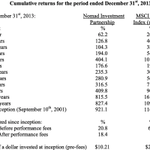
How can someone make a 921% return in 13 years while the market overall has delivered 117%? This book is an amazing insight into the mind and decisions of someone who did it.


And now you can preorder the NOMAD LETTERS (out December 1!): press.stripe.com/nomad-lette…
For years these letters have circulated (at first, unofficially) among investors, acquiring a devoted readership. We wanted to give them a permanent home in print.
Nick and his partner Qais Zakaria’s record is extraordinary. The letters are the account of how they got there, featuring everything from studying Amazon and Costco (Nomad’s defining investments)—to visiting cement plants in Zimbabwe, and beyond.
They’re candid about their mistakes and curious about the forces that shape investors’ behavior: incentives, psychology, and the wisdom (or foolishness!) of the crowd.
Since closing the fund, they’ve devoted their time to philanthropy, a journey Nick recounts in the lovely foreword he wrote for this edition.
I’m thrilled to continue adding to the investing corner of our catalogue, and I can’t think of a better work to follow Poor Charlie’s Almanack. ❣️


Mike joining Works in Progress is a huge moment for us and marks the start of the next phase in our project.
He is one of the most insightful, interesting and enjoyable to read writers anywhere, and his book, The Land Trap, is fantastic and one of the most "Works in Progress" non-fiction books written in years. He is the perfect person to help us produce model-based analysis of business, economics and finance, and great original reporting on everything from robotics and drones to the state of America's cities.
Most of all I am excited about working with (another!) one of my best friends. I first met Mike when he was a student and declared afterwards that he was so impressive that I would buy stock in him if I could. It's taken 14 years, but this is one step better. Works in Progress has become harder work as it has grown, but it's amazingly fun and rewarding as well, not least because I get to do it with some of my favourite people in the world.
As Mike says, we've seen incredible growth in our first year in print and we have extremely high hopes for 2027. Above all we have to make everything we do as excellent as it possibly can be. We're looking for journalists and other writers who are doing truly excellent work to join our team, so if that's you, watch this space.

Some big personal news: I'm moving to join Works in Progress as executive editor, starting next month. I have been hoping for an opportunity to work with @bswud and @s8mb for more than a decade, and I'm incredibly excited to finally have one.
WIP is expanding on every front right now. We'll soon begin coverage of business and finance, as well as putting out more reported features. To that end, we'll be hiring more writers and reporters in the year to come. I'm planning to remain based in the US to help build out our presence here.
The print edition of WIP has existed for less than 12 months, but sometime in the next week or so we will reach our 10,000th paying print subscriber. It's a group that now includes people who've been at the highest echelons of government and who run the world's biggest public companies. We’re already on track to 3x that number next year. We'll be in store at Barnes & Noble, Hudson News and independent newsagents next week too.
I think WIP is providing something that people are craving from physical media right now: fewer, extremely well-crafted pieces in a beautifully designed form. Issues now feature an amazing group of columnists, including Tyler Cowen, Dan Wang and Stephen Kotkin. Each edition is better than the last.
You'll see us in more and more places next year too. In January, our new weekly documentary films will launch on YouTube. We're expanding into the events space, with a new series in North America. The sky is the limit from here on out.
Beers of this strength are almost invariably revolting – they usually taste bad and make drinking a much higher stakes business than it ought to be. 4%, the moderate's choice, is just very hard to beat.


I'm grateful to Jonathan for writing this and very pleased to publish it in Works in Progress – he does great work, and I like him and respect his views immensely. I have two thoughts in response.
One is that I am not hugely compelled by people telling others what they should focus on. As long as you're not doing active harm to the world, it's fine to work on a less high-priority area than you could. Comparative advantage is not always easy to judge from outside and part of living a satisfying life is doing what you find most intrinsically interesting and rewarding.
And entrepreneurship is *inherently* about working on things that other people underrate! There wouldn't be any opportunities for discovery if it was clear exactly what everyone should focus their time on.
(I don't have much time for people who complain that a handful of EAs are worried about shrimp welfare either, unless they are actually hurting the shrimp.)
Two: even if you concede Jonathan's argument that encouraging nice buildings and places does not instrumentally advance the cause of YIMBYism – we can agree to disagree – I think that it is a mistake to dismiss aesthetics as being trivial.
People want beauty and pleasure in their lives, not just boxes to sleep and work in. Cities should be amazing places to be, and the way they look and feel is a big part of that. The greatest cities I have been to are Paris, London, Tokyo, and New York, all of which are breathtakingly beautiful cities in their own way, even though some of them create that beautiful whole from various ugly parts arranged well. I think this is often true of parts of London, where individually ugly buildings nonetheless combine to make a beautiful skyline or street. The best places, like inner Paris and lower Manhattan, combine beautiful streetscapes with individually-beautiful buildings.
If you think too much about "units of housing" and not enough about which places people most want to live in and visit, you will miss a lot of what actually matters to people about the places they live and visit. It is a constant error to think that the "function" of buildings and cities does not include "being pleasant and looking nice".
This is all obviously subjective, but so are lots of other important things that still benefit from some form of collective decision making – pollution, noise, public order, the provision of public goods. The interesting meta-question to me is what institutions allow for the best ways to make these decisions and resolve conflicts between people.

I'm in @WorksInProgMag's letters section this week, arguing that British YIMBYism's preoccupation with beauty is a massive waste of time and resources.
Beauty is marginal. There are bigger problems to solve in British housing—they're just all a bit less sexy.

PS: It's kind of funny that this is Jonathan's header picture, from what looks like a very interesting event YIMBY Melbourne held on the *barriers* to beautiful building. I think if aesthetics really were as marginal as Jonathan says here, he wouldn't have organised this event and wouldn't have had a packed out lecture theatre attending it!
youtube.com/watch?v=yLqJwwLp…

I initially had the same reaction as these writers – the idea of a book being banned because the author has expressed support for a terrorist group is outrageous, as is the punishment of people for saying they support Palestine Action (or any other terrorist group).
What I didn't realise was that Rooney has promised to donate her royalties to Palestine Action. It seems a lot less clear that you should be allowed to conduct business activity with the express purpose of raising money for a terrorist group. The books should be allowed to be sold, but the royalties should be withheld. I would not allow people to fundraise for violent Neo-Nazi or Islamist groups either.
You could argue that Palestine Action should not be proscribed, but that is not the argument being made in this letter.


The specific case of Sally Rooney isn't an act of censorship.
I am a free speech absolutist. If she wanted to write book called "Why I support Al Qaeda, ISIS, and the IRA" then I'd support her right to do so. Britain should have a First Amendment approach to speech.
However, if she wants to give the proceeds of that book to those organisations, then it is right for her publisher to prevent her (and it would probably be criminally liable too.)
The open letter is cowardly. They should have the courage to state clearly their view: it should be legal to directly fund organisations that unapologetically break into military base.
BTW, I note that none of the signatories of this letter signed the Harper's letter in favour of free speech. Some however attacked it.
The Romans were a lot less sexually permissive than I used to think. Free men were permitted to rape slaves, including children, but extramarital sex between free men was punished, as was female infidelity.
worksinprogress.co/issue/wer…

Sam Bowman retweeted

“The Simpsons” was a beloved animated sitcom that ran for ten legendary seasons and concluded in 1999. The show was celebrated for what was widely perceived as a near perfect run that wrapped before it wore out its concept and overstayed its welcome.
Creator Matt Groening and showrunner James L. Brooks famously decided to bring the show to a conclusion after experiencing the negative audience reaction to the season 9 episode “The Principal and the Pauper,” in which it was revealed that the school’s principal was actually an impostor who had stolen the real Seymour Skinner’s identity. Brooks did not want to sully the show’s legacy by doing a bunch of weird episodes as the franchise slid into mediocrity and cultural irrelevance, so the writers and cast decided instead to go out on top and end things on a high note.
However, because of its centrality in 90s pop culture, a long-running Internet joke is to pretend “The Simpsons” is still on the air, a premise that gets more absurd and deranged with each passing year. If this show were still producing new episodes, it would be in its 38th season now, and most of the voice cast would be in their 80s.
The joke is to imagine how distorted this charming show would have become if it had been stretched out to more than 800 episodes. Comedy posters on “weird Twitter” used to try to top each other by making up terrible ideas for what modern episodes of the show might be like.
For example, a viral 2012 tweet imagined an episode where Lady Gaga helps Lisa Simpson with her self esteem. In 2019, popular shitposter Megan Amram originated the premise of Bart Simpson becoming a men’s rights activist to protest a gender-swapped reboot of “Itchy and Scratchy.”
But perhaps the most elaborate Internet “Simpsons” joke was a 2017 YouTube mockumentary “The Problem With Apu,” in which the comedian Hari Kondabolu ironically pretended to be offended by the charming and innocuous convenience store owner character Apu.
Everyone thought this was hilarious, especially since the show had been off the air for nearly two decades when the mockumentary was released. So, Twitter ran with the joke by pretending to “cancel” Apu, and the viral gag memorably resulted in the character’s voice actor, Hank Azaria, recognizing the meme by promising never to perform the character again, which everybody thought was really funny since Azaria had been retired for years.
Now, nearly a decade later, fans are pretending that the show — which has now been off the air longer than most people tweeting about it have been alive— has brought back the “cancelled” character with a new racially-appropriate voice actor.
I actually don’t think this is that funny, and I kind of think the gag of pretending “The Simpsons” is still airing new episodes has overstayed its welcome, a mistake the actual show “The Simpsons” would never have made.
If you haven’t seen this 1990s classic, which — and I cannot emphasize this enough — ended after 10 seasons in 1999, you can watch all the episodes on Disney+ (except the one with Michael Jackson that got pulled from streaming).


"the Tribunal determined the open market rent was"
...

This Labour government’s transformative Renters’ Rights Act empowers private renters to challenge unreasonable rent increases.
If a tenant believes a proposed rent increase is above the open-market rent, they can refer the matter to the First-tier Tribunal.
In a recent case in Manchester where the Landlord proposed an increase in rent from £1,650 per calendar month to £1,700, the Tribunal determined the open market rent was actually £1,450 per calendar month.
We’re standing up for renters and our reforms are working.
gov.uk/residential-property-…

Sam Bowman retweeted

I always thought that the ancient Romans were tolerant about sexuality, until the rise of puritanical Christianity. Reading Kyle Harper, I learnt that this picture is not exactly false, but it is extraordinarily misleading:
worksinprogress.co/issue/wer…
- Sexual penetration of a free Roman man was severely punished, possibly by death. Consenting to penetration was also seriously punished. Lesbianism was not criminalised, but was regarded with contempt.
- The one great subject of permissiveness was the penetration of enslaved people. Although relatively few people owned slaves, many prostitutes were enslaved and prostitution was ubiquitous, so coerced sex was widespread.
- In some parts of the empire, many married women probably seem to have worn face veils in public.
- There was not even theoretically a norm of male fidelity: although wives were required to be faithful to their husbands, the inverse was not even aspirationally true.
- Early Christianity wrought a kind of revolution on ancient morality. All forms of sexuality apart from procreative sex within monogamous marriage were relentlessly and violently condemned, and even marital sex was allowed only rather grudgingly. In effect, the Christians extended to men the restrictions that had previously applied only to women.
- To a limited extent, they also extended the protections previously enjoyed by free men to other groups of people. Although the early Christian record on slavery is mostly very poor, they did introduce the first laws against the forcible prostitution of slaves. Transgressors were to be arrested and sent to the public mines, ‘which is’, the law ran, ‘less of a punishment than that of a woman who is seized by a pimp and compelled to endure the filth of an intercourse that she did not will’.
It is not clear how much behaviour actually changed in practice – the Christians were never able to get people to behave exactly as they wanted. But the change in official norms was revolutionary, and not quite the revolution I expected.
No word about an exit tax though. Exit tax this year, CGT rise next year seems fairly possible.
bbc.co.uk/news/articles/c50m…

So much of our electricity supply is now based on fixed price assets: wind, nuclear and solar electricity that have low running costs but high set-up costs, and the electricity grid itself.
This means that new demand can lower prices by spreading these costs out among more buyers, and data centres can lower electricity costs (and, empirically, are lowering them). I've even had conversations with eminent economists who find this counterintuitive, so it is not surprising that policymakers and the public may also feel sceptical.
How building data centres could cut Britain's sky-high electricity bills by billions:
- Failing electricity use has made electricity more expensive as a fixed costs of supplying power (grid, policy, balancing, etc.) are concentrated on a small share of demand.
- New demand from data centres helps dilute those fixed costs. This could save £2bn a year (£69 per year) if the Government's compute target is hit.
- Data centres are extremely profitable, even at high power prices. They care about speed, but the grid queue can create decade-long delays. Letting companies pay to jump the queue could raise billions.
- Britain could replicate the success of spectrum auctions and sell-off faster grid connections. Accelerating 3GW by 3 years is potentially worth £12bn to data centre builders!
- In the US, tech companies are making large investments in new generation (SMRs, gas, renewables) as states adopt 'bring your own power' policies. Doing the same here could accelerate clean power buildout and fund necessary gas plant renewals.
samdumitriu.com/p/build-the-…

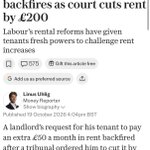
We have nationwide rent controls now.
This tribunal didn’t just stop a rent rise within a tenancy, it cut the rent to below what had been agreed between the landlord and the tenant at the start of the tenancy based on a judgement of what the property is worth.


This is what I warned would happen a year ago. The Act’s defenders said this wouldn’t happen.

The government's Renters' Rights Bill looks like it will be a catastrophe, inadvertently introducing rent controls and reducing the supply of housing even more. It is the clearest evidence that the whole British state that has brought it about is completely broken:
• Written by the civil service
• Introduced by the Tories
• Passed by Labour and the Lib Dems
• Cheered on by the mainstream media
The bill's core provision is to eliminate "no-fault evictions". Many understand this to mean evictions during a rental lease. In fact, this is already impossible. What the new bill does is to stop landlords from being able to regain their property after a lease has expired.
This means that renting a property to someone now means that they get to live in that property indefinitely. A landlord can only evict them if they are selling the property, or plan to move into it themselves, or if a tribunal gives them permission after ruling against the tenant for bad behaviour.
Within these indefinite contracts, rent increases will be capped at whatever the 'market rate' is determined to be by a tribunal. Tribunals will not be able to *raise* rents, as they currently can and often do – only lower them or keep them where they are. The only risk to a tenant is that their challenge is deemed "vexatious".
Not only will rent increases *within* contracts be controlled by courts, rents for *new* contracts will also be controlled by them. Tenants will be entitled to agree a rent, move in, and then immediately take their landlord to a rent tribunal on the grounds that the rent they have just agreed to is "too high".
Rent tribunals will thus have the power to control all rents. All rents will be set under the threat of a tribunal intervening. There will be no "market rate", so the tribunal will have no independent "market rate" to refer to.
A tenant who challenges a rent increase will have their rent frozen at the old, lower rate while their challenge is ongoing (which could take over a year). Like the Building Safety Regulator right now, tribunals are likely to be extremely backlogged, creating huge delays where tenants do not have to pay their new higher rents, if they ever do. Tenants will have huge incentives to challenge nearly all rent increases.
We have already seen how bad courts are at ruling on prices, eg in cases where Next's shop workers have been given the same pay as factory floor workers, and in Birmingham where the council was forced to pay £760m to care workers and teaching assistants because a court decided that these roles were equivalent to jobs like rubbish collectors.
All this amounts to rent controls. These are terrible for many reasons.
1. They will cause landlords to sell up and leave the market. This is both to avoid the risk of being stuck with a bad tenant, and because once the rent has been kept artificially low by a rent tribunal, landlords will be losing money compared to just selling into private owner-occupation.
Rental properties allow for easy doubling up (housesharing) which is much messier under owner-occupation. The effective supply of housing is about to drop. In Ireland, postwar rent controls shrunk the rental market from 26% to 8% of the total housing stock in 40 years. In Britain, 1916–88, the share of properties available for rent went from 75% of the market to 10%.
2. They cause landlords to neglect their properties. Landlords receiving artificially-depressed rents for their properties have no incentive to maintain them. Rent controlled properties, famously, become neglected and fall into decay, as leaks, cracked plaster and broken windows are left unaddressed. The country's housing stock that remains in renting will decay. Our cities will become more decrepit.
3. They stop people from moving around for better jobs. We already have this effect with social housing, where huge amounts of inner London housing (30–40%!) are held by tenants in low wage jobs, or who have no job at all, instead of by people who could move to London to earn and produce more. This will happen to large swathes of the rental market too, stopping people from moving into prosperous cities where they could get better jobs.
4. They stop the supply of new homes for rent. Under rent controls, there is no incentive to build new homes for renting. Britain built essentially no private flats for rent between 1945 and the end of rent controls in 1988. The same was true in France between WWI when it introduced rent controls and the slow end of rent controls in the postwar era.
5. They push renters into the black market. To actually get a place to live, a lot of people will sidestep these new rules and rent informally, with none of the protections we currently have for renters like the deposit protection scheme. This is the sort of scenario that allows landlords to *really* exploit and steal from their tenants.
–
Do not assume that anyone involved with this knows what they're doing. We have already seen, in the case of the Building Safety Regulator and the second staircase regulations (brought in by the same Housing Secretary who designed this bill), how disastrous the consequences of well-intended but misconceived interventions in the housing market can be.
London building has already ground to a halt. And things are about to get even worse.
