

Strategist, writer & policymaker | FinTech builder | Former UK Govt Chief of Staff
Joined January 2009
- Tweets35.4K
- Following7.4K
- Followers11.6K
- Likes36.5K






Samuel Coates retweeted

Today in The Times I’ve spoken about something deeply personal.
In 2018 my brother Tariq took his own life. He never told anyone, not his closest family and friends, what he was going through. Looking back, we believe stigma was a large part of it.
He isn’t alone. More than 7,000 people die by suicide every year in the UK, and over 70% were not in contact with the mental health services that might have saved them. It remains one of the biggest killers of young people.
I’m supporting this campaign because of Philip Pirie, who lost his son Tom in 2020 and has since rallied experts and politicians around the country to push for change. When he approached me, I was very happy to join forces with him.
Together we’re calling – alongside psychiatrists, charities and MPs from across the political spectrum – for a national public health campaign to reduce the stigma around suicidal thoughts and encourage more people to reach out for help.
Public health campaigns work: we’ve seen it with drink-driving and HIV/AIDS. And the evidence suggests this one would more than pay for itself. Every life saved spares a family unimaginable grief and the country real cost.
Giving people permission to speak saves lives.
If you’re struggling, or worried about someone who is, the Samaritans are there free, day or night, on 116 123.
thetimes.com/article/11bef78…
Poor comms judgment sending a severe alert with wildfires advice.
My central London train carriage suddenly screamed with alarms on everyone’s phones (two times each) about something that had zero urgency here.
Other countries routinely send normal SMS for government guidance.

Not to be dramatic but for several seconds I was running through potential actions on a terror attack etc. Only to get rural bbq advice


And if it ever is… a bunch of people won’t know because they switched off the alerts in their phones after getting BBQ advice.

Dear @UKgovcomms deploying the emergency message for a very hot day only serves to dilute the effectiveness of service. UK is not under nuclear attack or about to be slammed by a meteor.
Samuel Coates retweeted

There should be an award for the best Father Ted moment. People stalking deer, declaiming on stage, hiding in wardrobes...

This will be footage in Media Training 101s for years. Former Aussie Nats leader taking out his nerves/anger on his dog… xitter.gq/JoshButler/status/2079…
Samuel Coates retweeted

I’ve had the rare privilege to embed among traveling England fans at this World Cup and over time, I’ve observed how and why these chants emerge with the detachment of an anthropologist.
It’s fascinating.
England football chants are born through a decentralized, bottom-up process that functions like a cultural meme-plex.
They draw on pre-existing, widely recognized melodies from the English cultural repertoire - pop songs, hymns, nursery rhymes, or TV themes - and layer new lyrics tailored to the match or players.
The mechanism is straightforward - a single fan initiates the chant at high volume. If the tune is familiar and the lyrics fit the rhythm and moment, nearby supporters join in rapidly. Participation spreads organically through the crowd. Attempts that lack resonance or timing might fail to gain traction and fade quickly, though this is uncommon for well-crafted ones.
They typically develop a signature chant for each beloved player. Bukayo Saka’s uses the ABBA track “Voulez-Vous,” with adapted lyrics. Jude Bellingham’s repurposes The Beatles’ “Hey Jude.” These adaptations succeed because the base melody requires minimal learning, allowing instant widespread uptake.
This system serves a practical social function as it acts as an informal in-group signal. Knowing the tune and lyrics demonstrates shared cultural knowledge and belonging. In a way you can think of it as a test: do you know the tune? Do you know the lyrics? Do you love England? Are you one of us?
Supporters who participate affirm their place in the collective; those who do not simply observe. The process requires no central coordination, relying instead on rapid social transmission in highly stimulating environments such as pubs, stadiums or even subways on the way to a big game.
Tl;dr: English football chants represent an efficient form of emergent group identity - low-effort to join, high-reward for cohesion, and continuously evolving based on real-time fan creativity. This explains their speed of adoption and persistence across matches.

This is so lame. I was always a Liverpool fan, albeit not an avid one. Now I can say I’m not one at all.
Shouldn’t need to choose between national identity and your particular flavour of foreign investor-owned premiership team, but it’s an easy choice to make.

Macca and Argentina take on England for a place in the #FIFAWorldCup final 💪🇦🇷

ALT A graphic for England v Argentina featuring Alexis Mac Allister. Fixture details: England v Argentina FIFA World Cup semi-final 20:00 BST Wed 15 July Atlanta Stadium, Atlanta
Samuel Coates retweeted

Delighted to welcome the 2025 and 2026 cohorts of @francobritish Young Leaders 🇫🇷🇬🇧 to the Residence yesterday evening.
At a time of global uncertainty, these connections matter more than ever - building the relationships that will shape the future of the Franco-British partnership.

Samuel Coates retweeted

A major new research project by the Independent Commission on Community and Cohesion is trying to address the problem of increasingly fractured communities.
Project chair Sir Sajid Javid and playwright James Graham discuss the social cohesion crisis.
Declining a pioneering adventure = decline of a pioneering culture

Among the half of Britons who say they would turn down an opportunity to visit the Moon, a simple lack of interest is the most common reason to not want to go
Not interested: 23%
No point: 8%
Reject idea of safe return: 8%
Would be scared or anxious: 7%
Nothing to do: 6%
Too old: 6%
Places on Earth I want to visit first: 5%
Happy on Earth: 4%
Claustrophobic: 3%
Would damage environment: 3%
Waste of money: 3%
Fear of flying/heights: 3%
Health issues: 3%
yougov.com/en-gb/articles/54…

Samuel Coates retweeted

It’s the fifth anniversary of the immortal and magnificently arch turn of phrase “while some recollections may vary”

Samuel Coates retweeted

I get Starmer is in a tricky position. Problem is that he appears to regard international law as a substitute for moral judgment/leadership. Like he hopes it will dictate what to do. It's the wrong way round: legal frameworks are derived from our sense of what's right and wrong.
Samuel Coates retweeted
There is room for disagreement about foreign policy.
There is no place for applauding violence against fellow Britons or amplifying Russian state propaganda.
Ukraine is fighting for its sovereignty. We should conduct our debate with seriousness and decency.

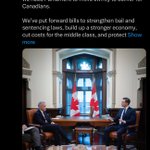
A PM having a bilateral with a LOTO. Trying to think if that’s happened in UK in recent years? (Not just on margins of a formal event, or a sensitive briefing)


Samuel Coates retweeted
“One of the best political memoirs I’ve read in years.” - The Times
Thanks to Patrick Maguire for a generous review.
thetimes.com/culture/books/a…

Samuel Coates retweeted
I am delighted to be able to share my childhood memoir, The Colour of Home, with you.
'A remarkable story of resilience and ambition, brimming with love for his family' SUNDAY TIMES
It is out today and you can order your copy from the link in my bio.
Samuel Coates retweeted

I have a new podcast - Conservative Crossroads! It's a biweekly discussion between two conservatives who disagree about things from Ukraine policy to American identity. Listen if you're interested in the main currents of American conservative thought!
ricochet.com/series/conserva…
