

20 • ahl ar-raʾy • eclectic
Joined May 2025
- Tweets5.8K
- Following80
- Followers1.7K
- Likes5.1K




Pinned Tweet
the server is back up and running again
discord.gg/MAVeRxfrsJ
ibn taymiyyah speaks about this. he writes:
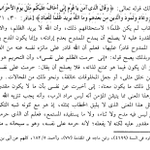
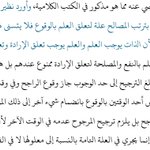
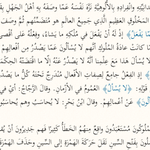
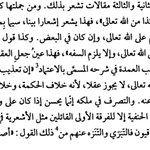
On this basis, His saying, “Indeed, I have forbidden injustice to Myself,” is sound. And prohibition (taḥrīm) means restraint or prevention (manʿ). This cannot properly apply to something that is intrinsically impossible. Thus, it would not be appropriate to say, “I have forbidden Myself” or “I have restrained Myself from creating an equal to Myself,” or “from making created things creators,” or the like of impossibilities.
The most that is said in interpreting this [statement] is that its meaning is: “I have informed [you] concerning Myself that whatever cannot be an object of power cannot proceed from Me.” Yet the believer knows with certainty that this is not what the Lord intends. It is obligatory to declare God and His Messenger transcendent above intending a meaning of this kind, which is unbefitting of such an address. For, besides resembling mere repetition and the clarification of what is already clear, it contains neither praise nor laudation, nor anything that the listener might gain from it.
It is therefore established that the thing He has forbidden Himself is something within His power, but which He does not do because He has forbidden it to Himself, and He—Glorified is He—is transcendent above committing it.
This is further demonstrated by the fact that the definitions of injustice given by people apply to this [kind of act], rather than to that [which is intrinsically impossible]. For example, the saying of some of them: “Injustice is putting a thing somewhere other than its proper place.” This is like their saying, “Whoever resembles his father has not acted unjustly”—that is, he has not placed the resemblance somewhere other than its proper place.
It is well known that God—Glorified is He—is a Just Judge, who places things only in their proper places. Placing them somewhere other than their proper places is not intrinsically impossible; rather, it is possible, but He does not do it because He does not will it. Indeed, He detests and abhors it, since He has forbidden it to Himself.
Likewise, [this applies to] whoever says: “Injustice is causing harm without just entitlement.” For God does not punish anyone without right. Likewise, [the verse states]: “and He has not wronged them in anything” [cf. al-Kahf 18:33].
As for whoever says, “It is disposing of another’s property,” this definition is neither universally applicable nor exclusive. For a person may dispose of another’s property rightfully and thus not be unjust; and he may dispose of his own property without right and thus be unjust. The servant’s wronging of himself is mentioned frequently in the Qur’an.
Likewise, [the same applies to] whoever says: “It is the commanded act being contrary to what was commanded,” and the like. If the validity of such a formulation is granted, then God—Glorified is He—has prescribed mercy upon Himself and forbidden injustice to Himself. Thus, He does not do what contradicts what He has prescribed, nor does He do what He has forbidden.
This answer is not the place to elaborate upon these matters to which we have drawn attention; rather, it merely alludes to the subtle points.
Through this, the middle position becomes clear. It is that the injustice which God has forbidden Himself includes, for example, His withholding recompense for the good deeds of one who does good; His punishing an innocent person for evil deeds that he did not commit; His punishing one person for another person’s sin; or His judging between people without equity; and similar acts from which the Lord is declared transcendent on account of His equity and justice, despite His being capable of performing them.
He is deserving of praise and laudation precisely because He has refrained from this injustice while being capable of it. And just as God is transcendent above attributes of deficiency and defect, so too is He transcendent above acts of deficiency and defect.


/hail retweeted

I think most who hold to DCT still have the intuitive sense that their Lord acts with wisdom and they worship Him with that in mind. The repugnant theoreticals are good Twitter bait but they provide a weak foundation for building a relationship with the Exalted ﷻ

also the genocide being commanded by god also doesn't hold for the same reason. my claim is that god does not serve as the proximate cause of genociding those who do not deserve it - that is - innocent humans; which would make him a immoral agent. all the communities that god had killed in the past were punished and not genocided for brute and sheer pleasure.
i don't think understood the point I made in the entire paragraph. however, ill address the examples he presented.
first, the khidr example. the response is that it is irrelevant because my original passage was more particular and precise - i did not say god never commanded evil qua evil or an instance of horric evil that was unjustified. the fact that the murder of the boy was justified because had he grown up, he would have caused much more harm. thus, if there be a divine command that the boy must be killed, god would not become an immoral agent. rather, he would only be an immoral proximate agent has he commanded the boy to be killed without him commiting any heinous crimes in future. meaning, had the kid been innocent in his future self, it would indeed have been unjust of god.
likewise the second point of abraham and the sacrifice, this is also misunderstood. abraham, by virtue of his utmost degree of prophethood, knew that god is wise and just - hence, what occured to him was test of his commitment to god. indeed, we ourselves witness that his son was *not* killed. this argument would too likewise work had he actually been killed. moreover, hypothetically, even if the sacrifice had to come to pass, god would, by virtue of his mercy and wisdom, compensate him with much more greater.


also the genocide being commanded by god also doesn't hold for the same reason. my claim is that god does not serve as the proximate cause of genociding those who do not deserve it - that is - innocent humans; which would make him a immoral agent. all the communities that god had killed in the past were punished and not genocided for brute and sheer pleasure.

indeed this is the correct position of hanafis.
Khātimat al-muḥaqqiqīn wa-ḥujjat ʿulamāʾ al-ʿIrāq - Shihāb al-Dīn al-Ālūsī [d. 1854]:
An objection analogous to the foregoing has also been raised against the Ḥanafīs, since they maintain purposive explanation and make knowledge of the ordering of benefits the cause of knowledge's attachment to actual occurrence. They therefore cannot maintain that the Necessary Existent, Exalted is He, is a free agent in the strictest sense, because the essence necessitates knowledge, knowledge necessitates the attachment of the will, and the attachment of the will necessitates the action.
There is no way out of this except to say that, in their view, it is not the case that knowledge of benefit and welfare necessitates the attachment of the will. Rather, it merely gives one possibility a preponderance that does not reach the level of necessity.
As for the following objection:
“If preponderance does not reach the level of necessity, it is possible for the preponderant possibility to occur at one time and not occur at another time, despite the presence of that same prepondering factor. If one of the two times is distinguished by actual occurrence through the addition of something else to that factor, then the original factor was not itself preponderant. Otherwise, preponderance would arise without a prepondering factor. Moreover, the absence of the preponderant possibility at the other time would necessitate the preponderance of the less-preponderant possibility, because actual occurrence had been preponderant by virtue of that factor.”
This objection is answered in two ways.
First: This line of reasoning applies only to a complete cause in relation to its effect, not to a freely choosing agent in relation to his action. If what is meant is that preponderance must necessarily follow without a further prepondering factor—as would be required in the case of a complete cause—then it is evident that such necessity does not follow here. But if what is meant is that preponderance occurs without a prepondering factor, then the claim that this consequence is impossible in the case of a freely choosing agent is itself disputed. Otherwise, what difference would there be between an agent who acts by necessitation and one who acts by choice?
Second: A factor that makes something preponderant with respect to one time may not make it preponderant with respect to another time; rather, it may be contrary to the welfare appropriate to that other time. It therefore does not follow that one of two equal possibilities, or the less-preponderant possibility, must be preferred at another time. Rather, what follows is that the preponderant possibility is preferred at every time [at which it is preponderant]. He, Exalted is He, knows all the benefits appropriate to their respective times. Thus, His will, Glorified is He, attaches to the occurrence of each contingent thing at a particular time so that the benefits appropriate to that time may result from its non-occurrence [at other times]. There is therefore no difficulty.
This is the position upon which one should rely. For, regarding the first objection, someone may say that preferring the less-preponderant possibility is impossible in the case of the Necessary, All-Wise One, even if it is possible in the case of other freely choosing agents.


Mâturîdî büyüklerimizin "hikmeten vâcip", "vücûb-u ihtiyârî", "vücûb minallâh", "hikmeten lâzım" veya "lüzûm" derken kastettikleri anlamda lütuf manası iptal edilmiş değildir.
Allah Teâlâ'nın hikmetli olan şeyi tercih etmesi her zaman kendinden bir lütuftur. O da lütfu nedeniyle övgüyü mutlak olarak hak eder. Ancak bu, hikmetli fiil ile hikmetsiz fiil arasında tam bir eşitlik bulunduğu anlamına gelmez.
Bunu akla yaklaştırmak için şöyle düşünülebilir: Nasıl ki bilgili ve erdemli birisi, kendini zorlayıcı bir etken bulunmasa bile insanlar içinde söz ve davranışlarına -erdemi gereği- dikkat eder. Bu özelliklerden biri ondan gitmediği sürece böyle davranması beklenir. Bilgisi ve erdeminin gereği olarak güzel davranması da onun teşekkürü hak etmesini engellemez.
Allah Teâlâ'nın, bizim gibi iradeli varlıkları başıboş bırakmayıp genel anlamda da olsa ilâhî bir yönlendirme yapması O'nun irâdesi ve kudreti dikkate alındığında ilk bakışta aklen mümkündür. Ancak O'nun hikmeti (veya tüm sıfatları) dikkate alındığında bu, "yapılması da yapılmaması da eşit olan" sıradan bir mümkün değil aksine belki "râcih" veya "hikmetin gereği" diye tabir edilebilen bir gerekliliktir. Ve bu gereklilik, "vücûb alallâh" veya "mûcib bi'z-zât" görüşlerinde ifade edilenden farklıdır.
Yani Allah'ı doğru tanıyanlar O'nun hikmeti gereği iradeli varlıkları başıboş bırakmayacağını bilmelidir. Buna işareten Allah Teâlâ şöyle buyurmuştur:
"Allah'ın kadrini gereği gibi bilmediler çünkü 'Allah hiçbir insana bir şey indirmedi.' dediler."
| En'âm Suresi, 91. Ayet-i Kerîme
Al-Ḥākim al-Jushamī al-Muʿtazilī [d. 1101]:
His statement — “He is not questioned about what He does” — indicates that God does not create the acts of human beings, command them to do what they are incapable of doing, or punish them without sin. This is more consistent with tawḥīd (divine oneness) and ʿadl (divine justice), for if He created their acts and willed them, then He would be the one most deserving of being questioned.

Fakhr al-Dīn al-Rāzī [d. 1210]:
As for the Muʿtazilites, they accept that it is impermissible to ask God, “Why did You perform this action?”
However, they base this on a different principle: namely, that God Most High knows the reprehensibility of reprehensible acts and knows that He has no need of them. Whoever is such that He knows these things cannot possibly perform a reprehensible act.
Once we understand this, we understand in general terms that everything God Most High does is wisdom and correctness. Given this, it is impermissible for a servant to say to God, “Why did You do this?”
Abū Ḥayyān al-Gharnāṭī [d. 1344]:
He then described Himself as the Owner of this immense created order, which encompasses all the worlds. He then described Himself as possessing perfect power and the utmost authority in judgement, saying: “He is not questioned about what He does”—for He has the right to do whatever He wills within His dominion. His action is at the highest degree of wisdom; therefore, no objection can be raised against Him, nor can His actions be challenged or reviewed.
Since it is customary for kings not to be questioned about the actions that proceed from them, despite the possibility of error in those actions, the King of kings has an even greater claim not to be questioned in this way—especially given our knowledge that nothing proceeds from Him except what is necessitated by wisdom that is free of any defect or anything that could warrant objection.
The wording “about what He does” is used because action encompasses all the attributes and kinds of actions, and everything that proceeds from Him falls under it, including creation, provision, benefit, harm, and other things besides these.
The apparent meaning of His statement, “He is not questioned,” is that it is general with respect to all times.
Al-Zajjāj said: “That is, on the Day of Resurrection, ‘He is not questioned’ about His judgement concerning His servants, ‘but they will be questioned’ about their deeds.”
Ibn Baḥr said: “He is not called to account, whereas they are called to account.” It has also been said: “He is not held to account, whereas they are held to account.” End quot
“But they will be questioned”: because they are owned and subjugated, and errors frequently occur on their part. Thus, they are deserving of being asked, “Why did you do such-and-such?”
Al-Ḥasan recited lā yusal and yusalūn, with the sīn bearing a fatḥah. He transferred the vowel of the hamzah to the sīn and then omitted the hamzah.
Mustajīzādeh [d. 1737]:
Among these is the statement of the author of al-Taʿdīl (Ṣadr al-Sharīʿa ):
“The same applies to God Most High.”
This clearly suggests—particularly when considered in light of the preceding and following context—that reason is a judge over God Most High, even if only in certain cases.
Likewise, the author of al-Tabṣira (Abū Isḥāq al-Bukhārī) states that sending the messengers is obligatory upon God Most High; otherwise, absurdity would follow. This amounts precisely to making reason a judge over God Most High.
Similarly, the author of al-ʿUmda (Abū al-Barakāt al-Nasafī), in his commentary entitled al-Iʿtimād, states:
“Punishing the obedient and granting bliss to the disobedient is impossible for God Most High; it is not rationally permissible, because it contradicts wisdom, and what contradicts wisdom is folly, from which God Most High must be declared transcendent. Disposing of His dominion is good only when it accords with wisdom.”
Thus, only the first group of Ḥanafīs, who hold the same position on goodness and badness as the Ashʿarīs, can fully disavow this doctrine. As for the other groups—particularly the Iraqis/Samarqandis—their disavowal of and dissociation from that position is more difficult than extracting a thorny plant with bare hands. [...]
Perhaps you, O seeker of pure truth and unadulterated sincerity, will find that if you were to follow the books of these scholars and examine their statements, you would not arrive at this degree of clarification and precision, in the manner set out here, except after exhaustive investigation, meticulous examination, and sustained reflection.
You would then discover how much I have endured in this matter in order to achieve this refinement and synthesis, and this precision and verification.
— Al-Masālik fī al-Khilāfiyyāt bayna al-Mutakallimīn wa-l-Ḥukamāʾ 1.192-193


Shaykhzādah [d. 1537]:
The Ḥanafī scholars held that pardoning unbelief is rationally impermissible, as stated in al-Taʾwīlāt by Shaykh ʿAlam al-Hudā Abū Manṣūr al-Māturīdī, al-ʿUmda by Imām al-Nasafī, and its commentary. Shaykh al-Ashʿarī and those who followed him held that pardoning unbelief is rationally permissible, as stated in al-Tafsīr al-Kabīr by Imām Fakhr al-Dīn al-Rāzī, Kashf al-Kashshāf, and al-Musāyara by Imām Ibn al-Humām.
The Ḥanafī scholars argued that God Most High’s wisdom necessitates punishment for whoever believes in unbelief and adheres to it, and that wisdom does not admit of pardon for the like of such a person. What indicates that wisdom necessitates what we have mentioned is that unbelief is intrinsically repugnant: it does not admit of being declared permissible or of its prohibition being lifted. Accordingly, its punishment likewise does not admit, in accordance with wisdom, of being lifted or pardoned. This is stated in al-Taʾwīlāt by Shaykh ʿAlam al-Hudā Abū Manṣūr al-Māturīdī.
The Ashʿarī scholars argued on the basis of His Most High’s statement:
“If You punish them, then indeed they are Your servants; and if You forgive them, then indeed You are the Almighty, the All-Wise.”
They argued that this verse presents two alternatives: punishing the unbelievers and forgiving them. Yet the textual evidence does not support presenting these two alternatives as equally possible; this therefore entails interpreting the verse as indicating the rational permissibility of pardoning unbelief.
In al-Tafsīr al-Kabīr, Imām Fakhr al-Dīn al-Rāzī states, concerning His Most High’s words, “Indeed, God does not forgive associating partners with Him, but He forgives what is less than that for whomever He wills” — to the end of the verse:
“We say that forgiveness [of associating partners with God] is permissible according to us and according to the majority of the Basran Muʿtazilites.
They argued that punishment for a sin is a right belonging to God Most High, and that there is no harm to God Most High in relinquishing it; therefore, relinquishing it must be good. However, textual evidence in our revealed law indicates that it does not occur.”
The meaning of the noble verse is: “If You punish those who die holding to the abhorrent statement concerning God, then indeed they are Your servants; and if You forgive those whom You have honoured with Islam and guidance, then indeed You are the Almighty, the All-Wise.” For among them were those who came to believe after holding those abhorrent views concerning God, as stated in al-Taʾwīlāt by Shaykh ʿAlam al-Hudā Abū Manṣūr al-Māturīdī.
Alternatively, this may have occurred when He raised him to heaven, rather than on the Day of Resurrection.
Imām al-Rāzī said: “On this interpretation, the answer is straightforward, because His Most High’s statement, ‘If You punish them,’ means: if You cause them to die persisting in this unbelief and punish them, then indeed they are Your servants; and if, through Your enabling grace, You bring them out of the darkness of unbelief into the light of faith and forgive them, then that too is Yours [to do].”
— Naẓm al-Farāʾid 1.31-32
al-Qārī [d. 1605]:
The author of al-ʿUmda (Abū al-Barakāt al-Nasafī [d. 1310]), one of our Ḥanafī scholars, stated:
“According to the Ashʿarīs, it is rationally possible for believers to remain eternally in Hell and for unbelievers to remain eternally in Paradise, except that revealed evidence has come to the contrary; therefore, its occurrence is deemed impossible on the basis of revealed evidence.
According to us, however, it is also rationally impermissible.”
— Al-Qawl al-Sadīd fī Khalaf al-Waʿīd 1.35
Kemâleddin Beyâzîzâde [d. 1687]:
Goodness (ḥusn) means deserving praise and reward, while ugliness (qubḥ) means deserving blame and punishment. As for attributing falsehood to God, it is rationally impossible for Him to be described by it. This means that the rational intellect knows the impossibility of this within the scope of its own independent judgment, rather than merely through clarification or some other means. Goodness and ugliness are not simply established through the fact that the Lawgiver has commanded or prohibited something.
The meaning is that the intellect can know that an act is good or bad and that its agent deserves praise or blame, reward or punishment. This is a general rational judgment, known through reasoning. It does not mean that the intellect itself makes goodness or badness obligatory, nor does it mean that the intellect independently legislates moral obligations, as the Muʿtazilites are alleged to maintain.
As for the specific nature of reward—that it takes place in Paradise—and the specific nature of punishment—that it takes place in Hell—these are known through revealed law. This position was adopted by al-Qaffāl al-Shāshī, al-Ṣayrafī, al-Ḥalīmī, Abū Bakr al-Fārisī, Qāḍī Abū Ḥāmid, and many of their predecessors. This is reported in al-Qawāṭiʿ by Abū Naṣr al-Samʿānī al-Shāfiʿī and in al-Kashf al-Kabīr. It was also the position preferred by al-Qalānisī and those who followed him, as mentioned in al-Tabṣira al-Baghdādiyya.
It is impermissible to abrogate what cannot cease to be good or bad, such as the obligation to believe and the prohibition of unbelief. The aforementioned scholars adopted this position.
Goodness and badness are also understood in relation to the objects of command and prohibition, in accordance with the wisdom of the One who commands and prohibits. This will be discussed in the first chapter.
Goodness means that an act is such that the intellect recognizes it as containing a praiseworthy outcome. Badness means that the intellect recognizes that it does not contain such an outcome. This definition encompasses acts that God Most High could conceivably perform but does not perform because of His wisdom. This is discussed in al-Tabṣira, al-Taʿdīl, and al-Tasdīd.
Everything that proceeds from God Most High is good, by consensus. This will be explicitly stated in the chapter on refuting the Murjiʾa in the third section.
It is rationally impossible for God Most High to be characterized by injustice or by anything unbecoming of Him. Therefore, it is rationally impermissible for Him to punish an obedient person or to pardon unbelief, because this would be incompatible with wisdom. The intellect consequently judges that such things are impermissible, as stated in al-Tanbīhāt.
It is impermissible to impose an obligation that lies beyond one's capacity, whether because of a lack of ability or because a necessary condition is absent. This position was adopted by al-Ustādh Abū Isḥāq al-Isfarāyīnī, as mentioned in al-Tabṣira, and by Abū Ḥāmid al-Isfarāyīnī, as mentioned in al-Subkī's commentary on the creed of Abū Manṣūr.
God's acts are directed toward benefits and wise purposes that accrue to His servants and differ in degree. This does not entail that God attains perfection through His acts, nor does it entail that performing what is most beneficial (al-aṣlaḥ) is obligatory upon Him. This was the position adopted by the author of al-Maqāṣid and others, as discussed in Kashf al-Ṭawāliʿ. The matter will be addressed in the third chapter.
— Ishārāt al-Marām min ʿIbārāt al-Imām Abī Ḥanīfa al-Nuʿmān 1.54
a question to asharite divine command theorists
if reason cannot independently establish the moral status of an act, and that status depends entirely on divine legislation, then why does god's legislation so consistently align with what we independently apprehend as good and evil? why is gratuitous cruelty condemned rather than permitted, and justice praised rather than prohibited? if the answer is that god acts according to his wisdom, then what makes this wisdom meaningfully oriented towards the good rather than simply a description of whatever god wills? if there is no substantive connection between what we apprehend as good and god's legislative choices, their systematic correspondence seems inexplicable; but if there is such a connection, then our rational apprehension of goodness and evil appears to track something relevant to divine legislation beyond the bare fact of command itself.
consider this: if god is truly an supra-moral agent such that what he command does not, in any way, concern our relevant notion of morality or that-which-is-moral and preponderates alternatives without there being anything other determinant/determining factor beyond will (accompanied with power), why do all that which is divine commanded seem to perfectly align with our relevant moral conceptions that we establish the praiseworthy-ness and blameworthy-ness prior to revelation such as charity, being kind to parents, helping out the needy, enjoining good and forbidden evil and much of what god commands that is deemed “good”.
if god were genuinely indifferent to the distinction between what reason apprehends as good and evil, insofar as that distinction possesses no independent normative authority, we should expect at least some divergence between our moral judgments and his legislation, including the possibility of acts that are paradigmatically abhorrent to us being divinely permitted or even commanded. why do we not observe a single instance of divine command such as “the obligation of comitting rape” or the “obligation of comitting genocide” or “on the forbiddenness of helping out poor people” such an occurrence would only go on to prove the truth of DCT - yet we do not see any particular instance.
another possible objection: the asharite says that the reason for absence is because he knew, from the human standpoint (which admits moral relations) that if i (god) were to command such and such, they would not believe in me. hence I only commanded that which would accord with their moral intuitions.
this response is the most problematic because it implicitly concedes to the assertion that gods actions have a final cause, he acts with purpose, reason and motive, and more importantly, he only commands that which is more "fitting" - none of which the asharite creed accepts.
some more thoughts regarding this:
consider that do you believe god is not a moral agent and he's supra-morality. hence, in principle, god can do quite literally anything. now, imagine that we have established the truth of islam and were at this position in time and you say “god is indifferent to moral norms - he can do anything he wants”
then, you go further: we do not dictate what god cannot do and what cannot do. he owns all of us. we have no right to question him.
this invites a natural quran that I worry about often: in what meaningful sense is god, god? is all that is left of that particular necessary existent that you deem as « god » - a being who can create, in the blink of an eye, thousands of innocent kids and subject them to the punishment (more accurately, torture) of hell any different from a demon? let's ponder about this deeply: there's this existent, with essential necessity attached to his being, such that he is absolutely not concerned with any aspect of goodness and badness and merely serves as the causal ground for subsequent effects, that is, merely an agent that imparts existence as a cause.
i find it quite hard, then, to attribute all the qualities that we would predicate to the traditional conception of a deity. an agent that loves us, cares about us, wants good for us, is himself full of love and goodness, dislikes evil and forbids. if you strip away all those essential concomitants, what exactly is there left?
do not object: all that which you have raised is an appeal to emotion! it is sufficient for me to dismiss this.
because here's another thing you should think about: consider that islam has JUST arrived. and further assume that the book commands: there is one god that must worship and associate none. but here's the catch, the book, in the very same breadth, commands three things as an obligation:
1. kill innocent children/babies -
2. if you have a female daughter, bury them alive
3. commit mass genocides
4. commit robbery and theft
5. lie excessively
now, also add the fact that for the truthfulness of this speech/book, the relevant messenger performs miracles with the claim of prophethood and likewise the book contains detailed prophecies that were extremely unlikely to occur.
now the question that i think is quite pressing is: would we accept this scripture? i think the very obvious and intuitive answer would be no. the fact being that if the scripture fails at the very level of our intuition such that it goes against our innate disposition (fitra) relating to good and bad, it does not matter how compelling the arguments it might make for its non-human origins. point being, that the emotional and moral aspect bears extremely high relevance w.r.t how things are assessed. given that the book commands things that are something we would innately not associate with the divine, even if the book self-authenticates itself, the very hypothetical presence of such commandments would make the majority of human presence not believe even if they were to be treated with hell for denial.
a question to asharite divine command theorists
if reason cannot independently establish the moral status of an act, and that status depends entirely on divine legislation, then why does god's legislation so consistently align with what we independently apprehend as good and evil? why is gratuitous cruelty condemned rather than permitted, and justice praised rather than prohibited? if the answer is that god acts according to his wisdom, then what makes this wisdom meaningfully oriented towards the good rather than simply a description of whatever god wills? if there is no substantive connection between what we apprehend as good and god's legislative choices, their systematic correspondence seems inexplicable; but if there is such a connection, then our rational apprehension of goodness and evil appears to track something relevant to divine legislation beyond the bare fact of command itself.
consider this: if god is truly an supra-moral agent such that what he command does not, in any way, concern our relevant notion of morality or that-which-is-moral and preponderates alternatives without there being anything other determinant/determining factor beyond will (accompanied with power), why do all that which is divine commanded seem to perfectly align with our relevant moral conceptions that we establish the praiseworthy-ness and blameworthy-ness prior to revelation such as charity, being kind to parents, helping out the needy, enjoining good and forbidden evil and much of what god commands that is deemed “good”.
if god were genuinely indifferent to the distinction between what reason apprehends as good and evil, insofar as that distinction possesses no independent normative authority, we should expect at least some divergence between our moral judgments and his legislation, including the possibility of acts that are paradigmatically abhorrent to us being divinely permitted or even commanded. why do we not observe a single instance of divine command such as “the obligation of comitting rape” or the “obligation of comitting genocide” or “on the forbiddenness of helping out poor people” such an occurrence would only go on to prove the truth of DCT - yet we do not see any particular instance.
possible objection: so you claim that what commands in his book is such that no one could raise a moral issue against? do we not observe the kuffar disagree and attack quran?
my response is that my claim is weaker than “no possible disagreement among with respect to its reception”. rather, the deeper point or nuance is more specific: despite the enormous range of acts god could supposedly have commanded or prohibited, we find no unambiguous instance of him commanding something paradigmatically atrocious, such as the gratuitous torture of innocents, or prohibiting something paradigmatically virtuous, such as helping the destitute, merely for its own sake. rather, the commands overwhelmingly correspond to what we independently recognize as virtues and vices. remember, if god is supra-morality, then no matter how much qualitatively heinous the act is, it can, in principle, be commanded just like how charity can be commanded. keep this in mind.
mind blowing apologetics.

Muslims following the Sunnī Maturidi & Ash'arī aqeedāh(school of thought), which is the biggest aqeedāh in Islam, cannot logically on metaphysical principle reject our doctrine of Orthodox Christology, that's God the Word assuming human flesh, without it becoming eternal or the divine nature becoming created.
For example, let's compare it with their understanding of what the Qur'ān is.
For them, the eternal Qur'ān can exist on a writing surface or someone’s tongue aswell as on the preserved tablet in the presence of God. That's, the Qur'an is both assuming, & entering creation without alteration of substance/mixture. This theology is analogous to what our Christology entails, that God the Word united & assumed human nature unto Himself without morphing into change, or an alteration.
The Shi’a & Mu’tazilites knew this too. It’s the reason they rejected the doctrine of Kalam Nafzī, & even stated & accused them that they’ve received such a philosophy from the Christians.