

"Blessed are they whose iniquities are forgiven, Blessed is the man to whom the Lord hath not imputed sin." Catholic 🇻🇦
Joined November 2023
- Tweets15.1K
- Following292
- Followers4.6K
- Likes10.4K




Late night stream. Going to make it members-only tomorrow morning so watch while you can.
youtube.com/live/-f77mk0vwRQ


Kevin Fernandez retweeted
The fact that Marvel lists No Way Home but not Brand New Day in the list of what to watch for Doomsday basically confirms it.

A Protestant privately sent me Samuel’s subtweet while my account was deactivated. I always enjoy dialoguing with Samuel but on this issue he has consistently shown he has no idea what he is saying. For instance, conflating the improperly syllogistic proof of a particular within a universal with a syllogistic virtual conclusion that draws a property from an essence, effect from its cause, etc.
The Church does not reveal new articles in that her pronouncements never have a real distinction from the deposit, and has at most a conceptual distinction. It is “new” revelation insofar as the truths virtually revealed in other truths are made explicit; mediate revelation is converted into immediate revelation. It was not immediately revealed that Christ has two wills, but it was mediately revealed in the truths that He is God and perfect man.
As for Matt Hedges’s witty comment about this making the Church the formal object, it is a dumb comment. When we say one cannot assent to a theological conclusion by the habit of faith but only by the habit of theology unless the Church formally teaches it, we say this because the Church is a living rule of faith able to continually explicate, not because there is some essential necessity that the Church herself do this.
Thus, if a man is reading through Scripture and forms some theological conclusion, and later encounters that same conclusion proposed formally by Scripture, he can give the assent of faith since the rule of Scripture has communicated a divine testimony, which is the formal object of faith. This doesn’t suddenly make Scripture the formal object either.
In fact, Hedges here says too much and implies the defeat of his own position. If “not being able to assent until the Church pronounces it” makes the Church the formal object, then he has conceded that he does not have faith in theological conclusions. For Protestants, one is not able to assent to a proposition from the Church until he “sees clearly the deduction of things of this nature from” Scripture (Field) and thus, under Matt Hedges’s own rules, the formal object of this assent is not faith but demonstration i.e. theology.
Cool article below.

Mohler: "If such a [mortal] sin be committed, then the darkness, the folly of the world, and the unpriestly life, take again possession of the soul ; and thereby is communion with God broken off, and the baptismal grace forfeited. Hence, if the sinner wish to be converted from his evil ways, he needs a new reconciliation with God, and therefore another sacrament ; and such a sacrament is penance conceived to be. Yet it ought not to be hence inferred, that penance, as a sacrament, is instituted only for such as return from a course of conduct, and a state of feeling, absolutely incompatible with the abode of Christ in their souls. It is for all believers an institution of fatherly instruction, exhortation, correction, quieting, and solace."
Symbolism, ch. 4, § 32.

This is kind of ironic. We are accused of taking advantage of every time the word “tradition” is used positively by Scripture and the Fathers without considering the sense, but if St. Irenaeus says the Christian faith saves as opposed to non-Christian religions, he’s clearly teaching sola fide.

Mohler: "After this investigation we shall be enabled to appreciate Gerhard's Loci Theologici (t. vii, p. 206, loc. xvii, c. iii, sect. v.) where he endeavours to base on tradition the Protestant doctrine of faith. It is a compilation totally unworthy of a man like Gerhard. Every passage wherein any doctor of the Church asserts that faith in Christ alone conducts to salvation, he alleges in favour of the Protestant theory, without at all inquiring what sense the author attached to these words. He was even so foolish as to make use of those passages wherein fathers of the Church (for example, St. Irenaeus.) assert of the Catholic faith, in opposition to heretical systems of doctrine, that it can alone insure salvation! The perception that a father of the Church, like Chrysostom, who held anything but the Protestant doctrine respecting original sin, free-will, and its relation to grace, could not possibly have entertained the Lutheran view of faith, it would be perhaps too much to expect from Gerhard; for any desire to investigate the internal connexion between different doctrines he did not even feel."


Mohler: "After this investigation we shall be enabled to appreciate Gerhard's Loci Theologici (t. vii, p. 206, loc. xvii, c. iii, sect. v.) where he endeavours to base on tradition the Protestant doctrine of faith. It is a compilation totally unworthy of a man like Gerhard. Every passage wherein any doctor of the Church asserts that faith in Christ alone conducts to salvation, he alleges in favour of the Protestant theory, without at all inquiring what sense the author attached to these words. He was even so foolish as to make use of those passages wherein fathers of the Church (for example, St. Irenaeus.) assert of the Catholic faith, in opposition to heretical systems of doctrine, that it can alone insure salvation! The perception that a father of the Church, like Chrysostom, who held anything but the Protestant doctrine respecting original sin, free-will, and its relation to grace, could not possibly have entertained the Lutheran view of faith, it would be perhaps too much to expect from Gerhard; for any desire to investigate the internal connexion between different doctrines he did not even feel."
Kevin Fernandez retweeted
Since you have been talking about icon veneration, this would be my take and why I don’t see Nicaea 2 as a problem. Wait until the end for the objections.
youtu.be/ytXkrHUhx4s?is=fnPC…
Question for @Craig_Truglia. Did I understand you correctly in claiming during the debate that St. Epiphanius was himself against icons but that “most” other bishops were not?
St. John Chrysostom actually says the exact opposite. From my notes:
“Christ performed miracles so that, by thus appearing worthy of belief (πιστόπιστος), and drawing men to Himself, He might introduce virtue into the world."
Homilies on Matthew, Homily XLVII, no. 4, P.G., vol. LVIII, col. 480.
"The demonstration furnished by the miracles leads you to the knowledge of the faith."
Homily on the Beginning of Acts, Homily IV, P.G., vol. LI, col. 106.
"How could He have been recognized for what He was without miracles? The dignity of His doctrine, prophecy, and miracle were so many inducements addressed to the souls of His hearers, to make them examine His deeds, their souls thus being won over beforehand." Homilies on John, Homily XXIII, P.G., vol. LIX, col. 139.
"We have no need of sight, since faith takes its place; for miracles are given not for the faithful but for unbelievers." Homilies on Matthew, Homily XII, P.G., vol. LVII, col. 205.
The OP’s quote doesn’t say miracles can’t authenticate revelation, but that the claims of an apparent miracle worker can’t contradict previous revelation and that if it does, we should reject it.


I often get asked from Catholics and Protestants, how can we say the Church always implicitly believed in the inspiration of a book like 2 Peter or 2 Maccabees even though this was not always explicitly believed in the universal Church’s tradition, and we cannot say that its inspiration is implicitly proven from apostolic authorship or its internal marks?

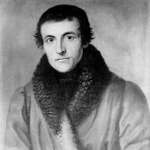
Logging back on to share this photograph of Fr. Domenico Palmieri, S.J. sent to me by Fr. Carola S.J. at the Gregorian University. God bless you all.

Kevin Fernandez retweeted
Despite what the Protestant polemicists say in their works, Catholics affirm that everything necessary for salvation is clearly contained in Scripture. This is a point of agreement and is not what the debate is about.


Kevin Fernandez retweeted

Sola Scriptura/Rule of Faith discussion is out now! @sincead33 vs @mattjhedges11
