

Endocrinologist, GD Hosp & Diab Inst., Kolkata (India). Ad. Editor- Williams Endocrinology 14th Ed'2020. Asso. Editor- DMSCRR (IF 10), IJDDC, World J Diabetes
Kolkata, India
Joined December 2018
- Tweets2.7K
- Following157
- Followers6.4K
- Likes8.8K





Pinned Tweet
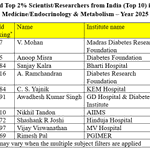
Top 2% Scientists of World representing India in the field of Medicine. Humbled to see my name too 🥹🙏🏽💐 amongst the Indian star ⭐️ @docanoopmisra @drmohanv @vijayviswanatha @DrJitendraSingh #MedTwitter


Glad to be identified among the top 2% of scientists across the world, cited by the University of Stanford. The youngest among the 8 listed from @cmcvelloreoff Indeed an IKIGAI moment.@IndiaESI @Rssdi_official @IdecPune @UniMelb @bakeridi @EndoBrigade @SAFES_endocrine @IMPA_12

ALT Ioannidis, John P.A. (2023), “October 2023 data-update for "Updated science-wide author databases of standardized citation indicators"”, Elsevier Data Repository, V6, doi: 10.17632/btchxktzyw.6
Dr. A. K. Singh; MD, DM (Endo) 🇮🇳 retweeted

From Weight Loss to Weight Maintenance in Lower-BMI Asian Adults: How Low Is Too Low With Incretin-Based Therapy?
Authors: Dr. Awadhesh Kumar Singh, Dr. Akriti Singh and Dr. Ritu Singh — Kolkata, India.
@singhak_endo
The central clinical dilemma
Potent incretin-based therapies such as semaglutide and tirzepatide have created a new challenge for Asian physicians:
When a patient reaches normal BMI, should we continue treatment, reduce the dose, or shift the therapeutic objective from further weight loss to weight maintenance?
The authors argue that attained BMI should trigger clinical reassessment, not automatic discontinuation.
12 High-Impact Clinical Pearls
1\. Asian obesity requires a different therapeutic perspective.
Asian Indians develop visceral adiposity, diabetes and cardiometabolic complications at relatively lower BMI. Conventional BMI alone may underestimate disease burden.
2\. Treatment eligibility and drug approval are different.
The 2025 Endocrine Society of India guideline considers pharmacotherapy at BMI above 27 kg/m², or above 25 kg/m² with obesity-related comorbidity. However, the Indian weight-management labels for semaglutide and tirzepatide specify initial BMI ≥30, or ≥27 kg/m² with a weight-related comorbidity.
3\. STEP 11 provides an important warning about excessive weight reduction.
With semaglutide 2.4 mg at 44 weeks:
* 50% of evaluable treated participants attained BMI ≤25 kg/m².
* Among participants starting below BMI 30, 18% reached BMI below 20 kg/m².
This demonstrates the importance of monitoring attained BMI, without proving that these values are harmful.
4\. STEP 12 extends evidence into lower-BMI Asian populations.
Mean baseline BMI was 27.8 kg/m². Semaglutide produced 12.1% weight loss at 44 weeks, with a BMI reduction of 3.4 kg/m². However, the distribution of attained BMI was not reported.
5\. BMI around 22 kg/m² may be a useful reassessment signal.
Some Chinese incretin trials permitted maintenance-dose reduction around BMI 22. This is a pragmatic trial-protocol trigger, not a validated universal stopping threshold.
6\. BMI below 18.5 kg/m² requires particular caution.
The STEP 12 protocol mandated dose reduction below this threshold. Clinicians should not wait until underweight develops before reassessing treatment intensity.
7\. Lean-mass preservation is a major priority.
In a STEP 12 DXA subset, approximately 75% of weight lost was fat mass and 25% lean soft tissue. Muscle strength and physical function were not assessed.
Adequate protein intake, resistance exercise and functional assessment deserve attention.
8\. Normal BMI does not guarantee resolution of obesity-related disease.
A patient with BMI 23 and persistent visceral adiposity differs substantially from a patient with the same BMI but poor nutrition, declining strength and minimal residual adiposity.
9\. Stopping incretin therapy can produce substantial weight regain.
The STEP 1 extension demonstrated regain of approximately two-thirds of prior semaglutide-associated weight loss within one year after withdrawal.
10\. Maintenance-dose reduction offers a third option.
SURMOUNT-MAINTAIN demonstrated that tirzepatide dose reduction to 5 mg preserved more weight loss than withdrawal, although continuing the maximum tolerated dose was more effective. These results cannot be directly extrapolated to lower-BMI Asian adults.
11\. Six domains should guide treatment reassessment.
* Ongoing weight trajectory
* Residual central or visceral adiposity
* Persistence of obesity-related complications
* Fat mass and lean mass
* Nutritional intake, strength and functional reserve
* Drug tolerability and patient preference
12\. The future objective is durable metabolic health, not maximal weight loss.
Once therapeutic goals are achieved, treatment intensity should be individualised to maintain benefit while minimising malnutrition, frailty and excessive weight loss.
doi.org/10.1007/s13410-026-0…

Hot from oven 🔥 our perspective Just published. How low is too low with incretin-based therapy in low-BMI Asians @kamleshkhunti @AmarPut @DrAmbrishMithal @AskDrShashank @drmohanv @DrRituSingh5 link.springer.com/article/10…

Happy to be in this elite group from India with all stalwarts for consecutive 6 years @docanoopmisra @drmohanv @AskDrShashank @SanjayKalraDr1


Nearly a year of work finally came to effect. Outcomes of inadvertent GLP-1RA exposure during periconception: no obvious harm. Stop it as soon as pregnancy is diagnosed. No advice of discontinuation of preganency. Congrats @DrRituSingh5 for Herculean work. f6publishing.com/ArticleInPr…

GLP-1 Receptor Agonists & Pregnancy — What Does Human Evidence Really Say?
CME INDIA CLINICAL PEARLS
Singh R, Singh A, Singh AK. Human pregnancy outcomes after early glucagon-like peptide-1 receptor agonist exposure:
1. Accidental early exposure ≠ proven teratogenicity.
The most reassuring finding is that no consistent increase in overall major congenital malformations (MCMs) has emerged after inadvertent preconception or early-pregnancy GLP-1RA exposure.
2. But “no signal” does NOT mean “proven safe.”
The evidence remains largely observational, heterogeneous and confounded. Current data argue against a large reproducible teratogenic effect; they do not establish safety for intentional treatment during pregnancy.
3. The evidence base is now much larger than isolated case reports.
The review identified 47 reports, including 17 case reports, 3 case series, 1 pharmacovigilance analysis, 1 regulatory trial-pregnancy dataset, 16 cohort/registry/controlled studies, and 3 systematic reviews with meta-analyses.
4. One of the strongest comparative datasets is reassuring for malformations.
In the multinational Cesta cohort, 938 GLP-1RA-exposed pregnancies in women with T2D were compared with 5,078 insulin-exposed pregnancies. Major congenital malformations were not increased: adjusted RR 0.95 (95% CI 0.72–1.26); first-trimester sensitivity analysis was similarly reassuring (RR 1.03, 95% CI 0.73–1.47).
5. Meta-analyses tell broadly the same story.
One meta-analysis involving 36,963 pregnancies found no increase in MCM versus other antidiabetic agents (OR 1.08, 95% CI 0.86–1.37) or insulin (OR 1.00, 95% CI 0.77–1.28). However, heterogeneity and baseline differences prevent declaring GLP-1RAs pregnancy-safe.
6. Miscarriage remains an area of uncertainty—not established causality.
Signals for spontaneous abortion have appeared in pharmacovigilance and some datasets, but these cannot establish cause and effect. In regulatory trial data, spontaneous abortion was numerically higher among exposed pregnancies, while overall nonviable pregnancy rates were similar between groups.
7. Preeclampsia, prematurity and fetal-growth signals need caution.
Studies have inconsistently reported preeclampsia, preterm birth, altered gestational weight gain, fetal growth abnormalities and renal/genitourinary findings. None currently forms a convincing reproducible drug-specific pattern.
8. The biggest confounder may be the woman—not the molecule.
Women receiving GLP-1RAs commonly have T2D, obesity, PCOS, infertility, hypertension or renal disease—conditions that themselves increase miscarriage, congenital anomaly, hypertensive disorder, prematurity and abnormal fetal-growth risks.
9. Exposure timing matters enormously.
“Used months before conception,” “stopped around conception,” “stopped after a positive pregnancy test,” and “continued through pregnancy” are not biologically equivalent exposures. This is especially relevant to long-acting agents such as semaglutide, dulaglutide and tirzepatide.
10. Accidental exposure is NOT, by itself, an indication for pregnancy termination.
The review supports cautious reassurance rather than automatic termination following inadvertent preconception or early-pregnancy exposure. Appropriate obstetric and metabolic follow-up remains important.
11. Once pregnancy is recognized: STOP the GLP-1RA.
Current evidence supports discontinuing GLP-1RA therapy when pregnancy is identified and promptly transitioning to pregnancy-compatible metabolic therapy. Planned or continued GLP-1RA treatment during pregnancy is not supported by present evidence.
12. Preconception counselling is becoming essential in the GLP-1 era.
Women of reproductive age receiving these agents should be counselled regarding contraception, pregnancy intention, planned discontinuation and transition of therapy. Weight loss may improve ovulation/fertility, particularly in women with obesity/PCOS, making an unplanned pregnancy more plausible.

Welcome to this elite club 💐🙏🏽


Looking forward to this!
Ahmedabad this Sunday, September 20.
For too long the focus has on been on #weightloss effects of #GLP1 drugs
Recent research reveals the direct benefits of these drugs on organs like the liver, heart, kidneys and brain.
Fascinating area of medicine!

Dr. A. K. Singh; MD, DM (Endo) 🇮🇳 retweeted

4 th paper in international journal in one month and counting . 🙏🏻🙏🏻


Synthetic Versus Reference Semaglutide for Weight Management: Reporting Gaps and Clinical Claims - Singh - Diabetes, Obesity and Metabolism - Wiley Online Library dom-pubs.onlinelibrary.wiley…


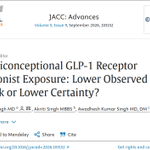
Our LTE in #JACC Advances @JACCJournals just published -Periconceptional GLP-1 Receptor Agonist Exposure: Lower Observed Risk or Lower Certainty? Congrats authors @DrRituSingh5 @akritimilisingh sciencedirect.com/science/ar…

It was a privilege and honour at DMIDU 2026. Thank you @drmohanv Sir for the invitation 💐🙏🏽 with @AskDrShashank


Dr. A. K. Singh; MD, DM (Endo) 🇮🇳 retweeted
Our commentary on: Short-Term HbA1c Non-Inferiority of Synthetic Semaglutide Should Not Be Conflated With Full Therapeutic Interchangeability - Singh - Diabetes, Obesity and Metabolism - Wiley Online Library
dom-pubs.onlinelibrary.wiley…

Dr. A. K. Singh; MD, DM (Endo) 🇮🇳 retweeted
📚 CME INDIA Clinical Pearls
📝 Article: Inadvertent GLP-1RA Exposure in Pregnancy: Reassuring Data, Unresolved Safety (Letter to the Editor)
👨⚕️ Authors: Ritu Singh, Akriti Singh, Awadhesh Kumar Singh
@DrRituSingh5 @akritimilisingh @DrAmbrishMithal @docanoopmisra @AskDrShashank @kamleshkhunti @drmohanv
📰 Journal: American Journal of Obstetrics & Gynecology (2026)
💎 Clinical Pearls
🔹 Current human evidence is reassuring for inadvertent early pregnancy exposure to GLP-1 receptor agonists, with no consistent increase in major congenital malformations demonstrated so far.
🔹 However, the available evidence remains low certainty because most data come from observational studies, registries, pharmacovigilance databases, and retrospective cohorts rather than randomized trials.
🔹 The largest included cohort contained a substantial number of women with type 1 diabetes, whose pregnancy risks differ from those with obesity or type 2 diabetes, potentially limiting generalizability.
🔹 Heterogeneity in comparator groups (general population, diabetes, obesity, insulin-treated women) increases the possibility of residual confounding and exposure misclassification.
🔹 A non-significant pooled risk does not equal proof of safety. Low event numbers and wide confidence intervals mean clinically important risks cannot yet be excluded.
🔹 A possible renal malformation signal observed in the largest study deserves further organ-specific analyses before firm conclusions are drawn.
🔹 Apparently reduced live-birth rates with semaglutide should be interpreted cautiously, as they may reflect baseline differences, comparator mismatch, or elective pregnancy termination rather than a true drug effect.
🔹 Two previous meta-analyses also reported no significant increase in miscarriage, stillbirth, major congenital anomalies, or fetal growth restriction, supporting an emerging—but still incomplete—reassuring safety signal.
🔹 Randomized trials are unlikely to be ethically feasible in pregnant women. Future evidence should come from pregnancy exposure registries, active-comparator pharmacoepidemiology, and long-term offspring follow-up.
🔹 Clinical message: If GLP-1RA exposure occurs inadvertently before pregnancy recognition, current evidence is reassuring and should help guide counselling. Nevertheless, GLP-1RAs should still not be intentionally initiated or continued during pregnancy until higher-quality safety data become available.
🎯 CME INDIA Take-Home Message
"Reassurance, not complacency."
Current data support counselling that accidental early GLP-1RA exposure is unlikely to markedly increase major fetal risk, but the evidence remains insufficient to recommend planned or continued GLP-1RA therapy during pregnancy. Decisions should remain individualized until more robust long-term safety data emerge.
ajog.org/article/S0002-9378(…

Thank you for posting this important nuances of Generic vs Innovator Semaglutide ♥️🙏🏽 @DrRituSingh5 @akritimilisingh @DrAmbrishMithal @docanoopmisra @AskDrShashank @kamleshkhunti @drmohanv
CME INDIA – Critical Analysis
Synthetic Semaglutide vs Reference Semaglutide: Why "Non-Inferior" Does Not Mean "Fully Interchangeable"
The accompanying Letter to the Editor by Awadhesh Kumar Singh, Akriti Singh, and Ritu Singh provides an important scientific perspective on the Phase III study by Gopalakrishnan et al. evaluating synthetic semaglutide against reference semaglutide. Rather than disputing the study, the authors emphasize that the conclusions should remain proportional to the evidence generated.
🔍 Key Critical Appraisal
✅ 1. HbA1c non-inferiority is not therapeutic interchangeability The trial successfully demonstrated similar HbA1c reduction over 24 weeks. However, therapeutic interchangeability requires much broader evidence, including analytical comparability, manufacturing consistency, pharmacokinetics, pharmacodynamics, device performance, stability, and long-term clinical outcomes—not glycaemic efficacy alone.
✅ 2. A 24-week study cannot establish long-term equivalence Semaglutide is prescribed for years. Cardiovascular protection, renal protection, durability of weight loss, and long-term safety cannot be inferred from a six-month glycaemic trial.
✅ 3. HbA1c-guided dose escalation complicates dose comparison Because dose escalation depended on HbA1c—a biomarker that reflects glycaemia over the preceding 8–12 weeks—the study cannot conclusively prove dose-by-dose equivalence between the 0.5 mg, 1 mg, and 2 mg formulations.
✅ 4. Cardiovascular and kidney benefits remain unproven Reference semaglutide has robust cardiovascular and renal outcome data from dedicated outcome trials. The present study was not designed to evaluate these endpoints; therefore, similar cardio-renal benefits should not be assumed solely from glycaemic non-inferiority.
✅ 5. Immunogenicity evidence is reassuring but limited No anti-drug or neutralising antibodies were detected, but the relatively small sample size and short follow-up cannot exclude uncommon immune responses or delayed immunogenicity.
✅ 6. Analytical comparability should be publicly available The authors highlight that claims of "full therapeutic interchangeability" should ideally be supported by peer-reviewed analytical data on molecular structure, impurities, potency, stability, and device performance—not merely referenced as regulatory documentation.
🎯 CME INDIA Take-Home Message
The Phase III trial provides strong evidence that synthetic semaglutide achieves comparable short-term glycaemic control and safety in Indian patients with type 2 diabetes. This is an important step toward improving affordability and access. However, scientific precision matters. Short-term HbA1c non-inferiority should not be interpreted as proof of complete therapeutic interchangeability, particularly regarding cardiovascular outcomes, renal protection, long-term safety, or substitution across all clinical settings. As Awadhesh Kumar Singh et al. emphasize, clinicians should distinguish between regulatory approval, clinical non-inferiority, and full therapeutic interchangeability.
Authors of the critical analysis:
Awadhesh Kumar Singh, Akriti Singh, Ritu Singh.
dom-pubs.pericles-prod.liter…
(dom-pubs.pericles-prod.liter…)

Dr. A. K. Singh; MD, DM (Endo) 🇮🇳 retweeted
CME INDIA – Critical Analysis
Synthetic Semaglutide vs Reference Semaglutide: Why "Non-Inferior" Does Not Mean "Fully Interchangeable"
The accompanying Letter to the Editor by Awadhesh Kumar Singh, Akriti Singh, and Ritu Singh provides an important scientific perspective on the Phase III study by Gopalakrishnan et al. evaluating synthetic semaglutide against reference semaglutide. Rather than disputing the study, the authors emphasize that the conclusions should remain proportional to the evidence generated.
🔍 Key Critical Appraisal
✅ 1. HbA1c non-inferiority is not therapeutic interchangeability The trial successfully demonstrated similar HbA1c reduction over 24 weeks. However, therapeutic interchangeability requires much broader evidence, including analytical comparability, manufacturing consistency, pharmacokinetics, pharmacodynamics, device performance, stability, and long-term clinical outcomes—not glycaemic efficacy alone.
✅ 2. A 24-week study cannot establish long-term equivalence Semaglutide is prescribed for years. Cardiovascular protection, renal protection, durability of weight loss, and long-term safety cannot be inferred from a six-month glycaemic trial.
✅ 3. HbA1c-guided dose escalation complicates dose comparison Because dose escalation depended on HbA1c—a biomarker that reflects glycaemia over the preceding 8–12 weeks—the study cannot conclusively prove dose-by-dose equivalence between the 0.5 mg, 1 mg, and 2 mg formulations.
✅ 4. Cardiovascular and kidney benefits remain unproven Reference semaglutide has robust cardiovascular and renal outcome data from dedicated outcome trials. The present study was not designed to evaluate these endpoints; therefore, similar cardio-renal benefits should not be assumed solely from glycaemic non-inferiority.
✅ 5. Immunogenicity evidence is reassuring but limited No anti-drug or neutralising antibodies were detected, but the relatively small sample size and short follow-up cannot exclude uncommon immune responses or delayed immunogenicity.
✅ 6. Analytical comparability should be publicly available The authors highlight that claims of "full therapeutic interchangeability" should ideally be supported by peer-reviewed analytical data on molecular structure, impurities, potency, stability, and device performance—not merely referenced as regulatory documentation.
🎯 CME INDIA Take-Home Message
The Phase III trial provides strong evidence that synthetic semaglutide achieves comparable short-term glycaemic control and safety in Indian patients with type 2 diabetes. This is an important step toward improving affordability and access. However, scientific precision matters. Short-term HbA1c non-inferiority should not be interpreted as proof of complete therapeutic interchangeability, particularly regarding cardiovascular outcomes, renal protection, long-term safety, or substitution across all clinical settings. As Awadhesh Kumar Singh et al. emphasize, clinicians should distinguish between regulatory approval, clinical non-inferiority, and full therapeutic interchangeability.
Authors of the critical analysis:
Awadhesh Kumar Singh, Akriti Singh, Ritu Singh.
dom-pubs.pericles-prod.liter…
(dom-pubs.pericles-prod.liter…)
Our commentary on: Inadvertent GLP-1RA Exposure in Pregnancy: Reassuring Data, Unresolved Safety (Letter-to-the-Editor) - American Journal of Obstetrics & Gynecology ajog.org/article/S0002-9378%…
Our commentary on: Short‐Term HbA1c Non‐Inferiority of Synthetic Semaglutide Should Not Be Conflated With Full Therapeutic Interchangeability - Singh - Diabetes, Obesity and Metabolism - Wiley Online Library dom-pubs.onlinelibrary.wiley…
Dr. A. K. Singh; MD, DM (Endo) 🇮🇳 retweeted

Major achievement by our Journal! We shall strive for more this year....
@SameerGupta @ElsevierConnect @ElsevierConnect
#diabetes #metabolicsyndrome #nutrition #impactfactor #endocrinology #research #reviews #weightloss
🤖 Made with AI
