

Co-host, Regina Unscripted | Catholic writer & commentator | Vatican affairs, theology & culture | With the salvation of souls in view.
Essex, UK
Joined April 2011
- Tweets137K
- Following777
- Followers20.7K
- Likes44.4K




Mark Lambert retweeted

“A PADRE PIO CHAPTER”
Like @TaylorRMarshall, I’m not happy about Archbishop Golka’s request and have concerns about what it could mean for Fr. Ripperger and the Doloran Fathers down the road.
That said, we all need to seriously consider this comment (below) and Taylor’s response to it, specifically: “It’s so often in the lives of priests, there come moments of restriction, and how a priest deals with that determines his sanctity and his spiritual potency…” youtube.com/watch?v=gP41kEc9…
As Taylor said yesterday, the best ways we can support Fr. Ripperger right now are by (1) praying for him and (2) sending a donation to support his work: dolorans.org/donate
One thing that will definitely NOT help Fr. Ripperger is bashing Archbishop Golka. On the contrary, we need to pray for His Excellency — that he will see all the good fruit that Fr. Ripperger’s public speaking has produced and allow him to resume such endeavors.
Our Lady of Sorrows, pray for us! St. Padre Pio, pray for us!
Mark Lambert retweeted

I see people around me crumbling under the stress of trying to operate at a completely unnatural rate, and I don’t think this is simply a matter of individual weakness or poor time management. The extraordinary prevalence of stress and anxiety in modern Britain suggests that something much larger is going on.


Mark Lambert retweeted

The 'atonement complex' turns Britain's slavery history into inherited guilt, with taxpayer reparations offered as absolution. Is it historically selective and economically dubious?
At @iealondon with @NigelBiggar, @RobertJenrick & @DanielJHannan.
economicaffairs.co.uk/p/invi…

Mark Lambert retweeted

The church needs to realize that this is what we are dealing with when we are dealing with the Muslim world. Until we come to this understanding, we're going to see more of this.
Mark Lambert retweeted

Whoever wrote the screenplay knew absolutely nothing about poetry. Indeed, the movie is ultimately not about poetry at all. It is a screed against classical learning in the Western tradition as nothing more than a stifling of real creativity and freedom under the weight of stuffy old white men who were about nothing except a patriarchal desire for power and control.
It is also an utterly formulaic movie following the “Robin Williams as a messianic misunderstood genius fighting against the horrible people in charge” genre. From this movie, to Good Morning Vietnam, the motif is the same. Robin Williams as an antinomian messiah. It is utterly adolescent slop: rebellion against all “rules” as stupid and oppressive in order to champion a freedom that only nihilism can bring us.
REGINA Unscripted discuss the week's goings on and particularly Fr. Ripperger youtu.be/vQqEijFy3fM

If you want to change Catholic teaching without admitting that you are changing it, the first thing you need to do is redefine what counts as Tradition...Which is why this latest development in Rome is o concerning. Pope Leo XIV has renewed the International Theological Commission, whose members (importantly) are appointed on the recommendation of Cardinal Víctor Manuel Fernández, Pope Francis buddy from Argentina & ghost writer of Amoris Laetitia. One of the commission's principal tasks will now be to establish what constitutes Sacred Tradition, where it is found, and crucially, how we determine whether something belongs to it. Apparently, after two thousand years, the Church needs help understanding what constitutes her own Tradition! This is barking mad as we say in Essex.
I suppose I can admit that these are legitimate theological questions, but context matters enormously, and so does the identity of the people asking them. We have just lived through a decade in which the language of doctrinal development, pastoral discernment and the demands of contemporary culture has repeatedly been wrongly employed to justify positions that appear increasingly difficult to reconcile with previously authoritative Catholic teaching. Think of the controversies surrounding Amoris Laetitia, the reformulation of the Church's teaching on capital punishment & Fiducia Supplicans. In each instance, the central question has been whether we are witnessing an authentic development of doctrine or an attempt to accommodate positions that earlier generations of Catholics would have recognised as incompatible with what the Church had always taught.
Now Cardinal Fernández, whose own approach to these questions has generated enormous controversy, presides over a Commission charged with examining the very criteria by which such distinctions are to be made. Does anyone seriously imagine that this is merely an abstract academic exercise? What particularly concerns me is the possibility that longstanding teachings will increasingly be classified as historically conditioned, culturally contingent or otherwise reformable, while contemporary theological innovations are presented as legitimate expressions of a supposedly deeper understanding of the Gospel.
In other words, Tradition could cease to function as a criterion against which proposed changes are judged and instead become something continually reinterpreted to accommodate those changes. This would turn the Catholic understanding of doctrinal development on its head. St Vincent of Lérins famously insisted that authentic development must preserve the same doctrine, the same meaning and the same judgement. Vatican I reaffirmed this principle, while Vatican II explicitly taught that the Magisterium is not above the Word of God but serves it. The Church can grow in her understanding of revelation. She cannot legitimately contradict what God has revealed. I am increasingly concerned that we are witnessing the emergence of an ecclesiastical culture in which fidelity is measured less by adherence to what the Church has received than by enthusiasm for whatever the current theological programme happens to be.
Whoever controls the definition of Tradition effectively controls the boundaries of permissible doctrinal change. That is why this initiative matters so much, and why Catholics should scrutinise its direction with considerable seriousness. My concern is not that the Church is studying Tradition. It is that, under the guise of clarifying Tradition, some may be attempting to establish theological permission to depart from it.
catholicworldreport.com/2026…

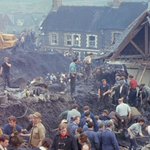
Today marks the anniversary of a particularly terrible Welsh tragedy. 116 children went to school on 21 October 1966 and never came home.
Sixty years ago on this very day, the Welsh mining village of Aberfan suffered one of the most appalling tragedies in modern British history. At 9.15am, a mountain of coal waste collapsed onto the village, engulfing Pantglas Junior School and nearby houses. In all, 144 people died, devastatingly 116 of them were children.
One of the things that makes Aberfan particularly haunting is that it wasn't simply a natural disaster. The danger had been recognised & warnings had been raised, despite that the spoil tip remained above a community whose children attended school beneath it. The subsequent inquiry condemned the National Coal Board for its responsibility, exposing a devastating failure of institutional judgement and accountability.
There's a huge moral lesson here which must be learned & it is one that extends well beyond the mining industry. Institutions can become so accustomed to defending their procedures, reputations and authority that they lose sight of the human beings they exist to serve. Warnings become inconveniences, responsibility becomes dispersed & those with the least power bear the terrible consequences. Remembrance must mean more than expressing sorrow, it requires us to confront uncomfortable truths, to insist upon justice and to recognise that responsibility cannot simply be dissolved into bureaucracy. Sixty years later, as the generations who witnessed Aberfan grow fewer, remembering those children and their teachers remains an act of fidelity to the truth.
May they rest in peace, and may their families and community never be forgotten. 🙏


A Roman coffin, an Anglo-Saxon cross & a skeleton that has baffled historians for over 150 years! This extraordinary mystery at Westminster Abbey may finally have been solved!
In 1869, workmen at the Abbey uncovered a Roman sarcophagus bearing the name of Valerius Amandinus, a wealthy inhabitant of Roman London who lived in the fourth century, but something didn't add up. Carved into the lid was a large Christian cross dating from the tenth or eleventh century, some 700 years later. Who, then, was actually buried inside? New scientific analysis produced a remarkable answer. Carbon dating placed the remains between AD 987 & 1052 & Professor Warwick Rodwell believes they most probably belong to Ælfwig, Abbot of Westminster's Benedictine monastery, who died around 1020 although his successor, Wulfnoth, remains another possibility.
What's particularly fascinating about this is the extraordinary continuity of Christian history represented by this discovery.
Long before Westminster became the setting for royal coronations and great occasions of state, it was a Catholic Benedictine monastery, its monks living according to the Rule of St Benedict, praying the Divine Office and offering the Holy Sacrifice of the Mass.
Here we have a Roman stone coffin, centuries later adapted for the burial of a Christian abbot, its lid recarved with the sign of Christ's victory over death.
That is truly beautiful: a monument from Roman Britain given a new purpose by the monks of Anglo-Saxon England, whose spiritual inheritance helped shape the nation we know today. Beneath the grandeur of Westminster Abbey lies a much older story of England's Catholic faith, and archaeology is still bringing it to light.


We invented machines to save us time but have you ever noticed that nobody seems to have any left?? In a wonderfully perceptive, witty and rather poignant essay, Katherine Bennett @AuditeInsulae explores one of the great paradoxes of modern life: technology promised to liberate us from drudgery, but instead we've become slaves to its relentless demands.
Her provocative defence of lateness is really a defence of something far more important: our right to be human, to have limitations, to prioritise relationships over efficiency & to remember that not everything is urgent.
There's a particularly powerful Christian insight running through this piece, and I suspect it will resonate with an awful lot of people!
A really excellent read, don't miss it! 👇
catholicunscripted.com/p/in-…
Mark Lambert retweeted

Fr. James Martin has openly blessed same sex couples, promoted confusion between sexual identity and Catholic identity, and even challenged Scripture’s teaching on homosexual acts.
The issue is not whether popes and bishops favor pastoral outreach, but whether they are protecting the flock while upholding God‘s righteous requirements.
Bishops are commanded to uphold sound doctrine, correct error, and guard against scandal (Titus 1:9; Acts 20:28–30).
When shepherds tolerate confusion rather than defend revealed truth, they fail their sacred duty to protect the sheep from stumbling blocks.
I'm really pleased that the Government has finally decided to approve the gas field at Jackdaw but why has this taken 2 1/2 years? Any sensible analysis would lead one to conclude this was the only thing we could do.

Mark Lambert retweeted

This is not an attack on Fr. Ripperger, whom I appreciate and admire. This is an attempt to set the record straight, after irresponsible media inspired vicious attacks and insults against the bishop.
FORWARD BOLDLY - link below
Mark Lambert retweeted

In a healthy Church, I could see the need for bishops to prioritize keeping celebrity exorcists in check. There's definitely dangers involved in that role.
But honestly, in today's Church, that doesn't even make the top 1,000 of things our bishops need to be concerned about.
Mark Lambert retweeted

Trump has burned through decades of accumulated goodwill from US allies. I know his behaviour wounds many patriotic Americans. Still, the fact is that he keeps getting away with it. I am beginning to think that the damage might be irreparable.

Mark Lambert retweeted

Guy who is nothing more than an OnlyFans performer has icky feelings about the Catholic Church. Maybe that's 'cause your feelings are ruled by your lowest appetites and the Catholic Church is the only voice left in the modern world opposed to that condition.

The catholic church feels Satanic
Readers added context they thought people might want to know
The Catholic Church is the largest non-governmental provider of social services and charity.
The CC also created and developed: hospitals, universities, psychiatric hospitals, Asylums, orphanages, community dining halls, leper colonies and public education.
en.wikipedia.org/wiki/Catholic_…
en.wikipedia.org/wiki/Caritas_I…
usa.inquirer.net/15692/catholic…
en.wikipedia.org/wiki/Catholic_…
pubmed.ncbi.nlm.nih.gov/18286394/
crosscatholic.org/blogs/2021/05/…
bibleinterp.arizona.edu/articles/commu…
en.wikipedia.org/wiki/Leper_col…
studentsofhistory.com/education-in-t…
Frighteningly, Blessed Fulton Sheen precisely identified the spiritual crisis of the 21st century more than fifty years ago.
Reflecting on Christ's encounter with the Gerasene demoniac in Mark 5, Archbishop Fulton J. Sheen identified three characteristics of the diabolical which, viewed through the lens of contemporary culture, make for unsettling reading.
1. The obsession with nudity. The degradation of human sexuality, the commodification of the body and the progressive abandonment of modesty. What was once regarded as intimate and sacred becomes something to be consumed.
2. Violence and destruction. Not simply physical aggression, but a culture increasingly fascinated by hatred, confrontation, humiliation and the destruction of others. Violence becomes entertainment; cruelty becomes a spectacle, we see this in art, tv even news coverage today.
3. The fragmentation of identity. Perhaps the most striking of all. The Gerasene demoniac answers Christ's question, "What is your name?", with the words: "My name is Legion, for we are many." Sheen saw here a profound image of the divided self, a person whose interior unity has been shattered. We are created to possess an interior unity, in which our reason, will, emotions, desires, body and soul are integrated and ordered towards God. Sin disrupts that unity; we become divided against ourselves, knowing what is good but desiring what is harmful, pursuing happiness through things that ultimately leave us dissatisfied. St Paul describes something similar in Romans 7:19:
"For I do not do the good I want, but the evil I do not want is what I do." What makes Sheen's analysis so fascinating here is his understanding of the diabolical as fundamentally destructive of unity: within the human person, within families, within society and even within the Church. Consider the extraordinary fragmentation of contemporary Western culture, our confusion about the human person, our disintegrating relationships and our increasingly bitter divisions. Sheen was not suggesting that everyone experiencing these difficulties was possessed. He was identifying something far more important: the spiritual logic of evil, which seeks to separate what God has joined together.
Perhaps the most revealing question is not whether Sheen's observations describe our society, it's obvious & chilling how clearly they do, but how we came to regard so many of these symptoms as signs of progress?
