

Professor of Economics | Political Economy - Public Choice - History of Economic Thought - Austrian Economics
Murfreesboro, TN
Joined August 2014
- Tweets14.9K
- Following1.5K
- Followers3.6K
- Likes21.5K




“Capitalism stands its trial before judges who have the sentence of death in their pockets. They are going to pass it, whatever the defense they may hear; the only thing a successful defense can possibly produce is a change in the indictment.” - Joseph Schumpeter
“How can someone carry on like that in a coffee house!”

Hello @elonmusk and @tylercowen ,
You have just decided to publicly attack our research, six days before the vote on the California billionaire wealth tax.
Your attempt to discredit our work and that of our numerous academic colleagues is pathetic.
Let’s take a look. 🧵


Daniel J. Smith retweeted

The AI response may well be imperfect, but it does raise a legitimate concern: your choice of which criticisms to engage with seems to consistently lean in one direction. Which is the criticism I made for years in many peer-reviewed papers.
Rather than focusing on the AI response, appeals to authority, or rhetorical flourishes, I would welcome a substantive engagement with the arguments that Phil Magness (@PhilWMagness) and I have developed across multiple papers, which have so far gone largely unanswered.
The same applies to the work of Auten and Splinter, Josh Rauh, and Sylvain Catherine.
I think there is a basic principle of scholarly debate at stake here. It is difficult to invoke the importance of serious academic criticism while declining to engage with substantive objections from researchers who have devoted considerable effort to examining your work. This is particularly true when those objections are sometimes characterized in ways that do not accurately reflect the arguments being made.
We are serious scholars raising serious questions. Surely, it is reasonable to expect that these arguments receive the same consideration as criticisms you have chosen to address.
I am not asking for much—simply a fair and substantive engagement with our actual arguments. Ignore how mean Tyler was to you. That is not important to scholarship debates!
Hello @elonmusk and @tylercowen ,
You have just decided to publicly attack our research, six days before the vote on the California billionaire wealth tax.
Your attempt to discredit our work and that of our numerous academic colleagues is pathetic.
Let’s take a look. 🧵
Daniel J. Smith retweeted

From me @NRO, with a frightening warning to voters:
A List of Things Democrats Might Do If They Retake Power
nationalreview.com/corner/a-…

Daniel J. Smith retweeted

🧵on the AI audit of Saez and Zucman and by implication Piketty (or PSZ together):
Since some are objecting to what the computer found, here's a list of biases in this trio's work that were found by humans over the last decade.
Daniel J. Smith retweeted

California serves as an example to Colorado, demonstrating why seemingly technical changes to fiscal rules can matter long after the political debate that produced them fades.
Read @thomas_savidge's latest for Civitas Outlook: civitasoutlook.pulse.ly/voka…


Another example of turn-taking in office (from Montesquieu). This would be an interesting case study to extend the literature (the States General of the Netherlands also provides another unstudied case).

See my paper here: link.springer.com/article/10…

Check out my brother’s video on pumpkin beer! @MackinacCenter
facebook.com/share/r/1DuJuKL…
Should democracies themselves determine how, by whom, for whom, and on what issues democracy should make decisions? (Montesquieu) This is a core concern of constitutional political economy. The corner solution of democracy, all the way down (like turtles), can lead to troubling outcomes if you care about other values, such as individual and political freedom, in addition to democracy.

I’m gradually working on granting Montesquieu’s favor. I’ve read sections, but never the whole book.


Unfortunately, both the Democratic Party and the Republican Party are retreating from economic liberty and embracing state economic control. reason.com/2026/10/28/the-mi…

Daniel J. Smith retweeted

Unfortunately, both the Democratic Party and the Republican Party are retreating from economic liberty and embracing state economic control. reason.com/2026/10/28/the-mi…
Daniel J. Smith retweeted
'Nazi-Communism' by @AXELKAISER demonstrates that Marx, Lenin, and Hitler were beasts of the same feather.
Read Juliana Geran Pilon's full review on Civitas Outlook: civitasoutlook.pulse.ly/ayqk…

“In a time of ignorance, one has no doubts even while doing the greatest evils; in an enlightened age, one trembles even while doing the greatest goods.” - Montesquieu
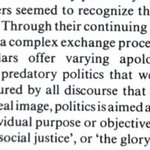
We know where the equilibrium of predatory politics leads—a point French economists should recognize with particular clarity given their country’s long arc from the Revolution to dirigisme. Yet conceptions of social justice remain alluring enough that some economists continue to advocate expansions of the political domain that invite such predation. A more proper and humble economics, by contrast, confines itself to the design of rules that keep politics within well-defined tasks, thereby preventing the predatory equilibrium.
James M. Buchanan:

Daniel J. Smith retweeted

Josh Rauh and Ben Jaros of Stanford's Hoover Institution work out that a founder who pays California's wealth tax by selling shares must sell about $1.59 for every $1 owed, because the sale itself triggers roughly 37% capital gains tax. The bill grows the moment you try to pay it.

Zuckerberg's fortune is mostly Meta shares, not cash in the bank. California's proposed wealth tax would take 5% of it, about $12bn, so the only way he can pay is by selling shares, which would cost him control of his own company. Meta has had to invent a new kind of share just to get around that. That's the liquidity problem Zucman says doesn't exist.