

卐The existence of a few systems of positive feedback indicates that our fundamental structure is biased in an expansive, upward direction卐
Joined November 2023
- Tweets2.3K
- Following146
- Followers2.2K
- Likes34.1K




Intelligent design reads as juvenile because it fails to sufficiently depart from the mechanistic worldview it attempts to critique. By externalizing an organism's nature, it turns all lifeforms into artifacts. A more compelling theistic philosophy of the organism retains the immanence of its nature, amounting to a kind of theistic self-organization.
"Nature is nothing but a certain kind of art, i.e., the divine art, impressed upon things, by which these things are moved to a determinate end. It is as if the shipbuilder were able to give to timbers that by which they would move themselves to take the form of a ship."
- St. Thomas Aquinas, Commentary on the Physics
This distinction creates room for emphasis on what differentiates biological organisms from mechanistic artifacts like watches: adaptiveness and phenotypic plasticity, manifested in their self-organizing goal-directedness and capacity to make compensatory changes to form or physiology during their lifetime (e.g., acclimatization or immune response).
Yet not all adaptation is good. Maladaption is adaptation that compromises the system's potential for future adaptation. This is the difference between stress and constructive stimulation, elaborated in Hans Selye's General Adaptation Syndrome.
Organisms also, unlike artifacts, have the unique ability to procreate:
"It may be said of individuality that, while the tendency to individuate is everywhere present in the organized world, it is everywhere opposed by the tendency toward reproduction. For the individuality to be perfect, it would be necessary that no detached part of the organism could live separately. But then reproduction would be impossible. For what is reproduction, but the building up of a new organism with a detached fragment of the old? Individuality therefore harbors its enemy at home. Its very need of perpetuating itself in time condemns it never to be complete in space."
- Henri Bergson, Creative Evolution
Reproductive function requires potential for undifferentiated growth: estrogen required for ovulation, pufa required for viable sperm, etc. This tradeoff creates metabolic vulnerabilities to chronic stress, manifesting as the maladaptations of cancer, disease, aging, etc.
Yet the ability of cells to remain in the less differentiated state required for reproduction also allows for the flexibility and adaptability that facilitates regeneration and wound healing. This sheds light on Peat's assertion that "self-organizing systems decay only if they have assimilated inertia, and--with a little support of the right kind--the centers of degeneration can become centers of regeneration."
This "support" is tangibly the production of cardinal adsorbents: ATP, CO2, and protective steroids like pregnenolone and its downstream metabolites that temper undifferentiated growth with structure and differentiation at the cellular level.
“The primitive steam engine, as Newcomen conceived it, required the presence of a person exclusively employed to turn on and off the taps, either to let the steam into the cylinder or to throw the cold spray into it in order to condense the steam. It is said that a boy employed on this work, and very tired of having to do it, got the idea of tying the handles of the taps, with cords, to the beam of the engine. Then the machine opened and closed the taps itself; it worked all alone.
Now, if an observer had compared the structure of this second machine with that of the first without taking into account the two boys left to watch over them, he would have found only a slight difference of complexity. That is, indeed, all we can perceive when we look only at the machines.
But if we cast a glance at the two boys, we shall see that whilst one is wholly taken up by the watching, the other is free to go and play as he chooses, and that, from this point of view, the difference between the two machines is radical, the first holding the attention captive, the second setting it at liberty.
A difference of the same kind, we think, would be found between the brain of an animal and the human brain.”
Henri Bergson, Creative Evolution


“It is true that a merely biological interpretation of knowledge threatens the validity of knowledge, including the knowledge of biology. It is true that to be knowers in a way consistent with the truth of our knowledge, we must distinguish somehow between success on the one hand and validity or truth on the other. Only by some such distinction can we justify our affirmation of our knowledge as knowledge, not merely a set of conditioned reflexes that happen to work. Yet I cannot help feeling it strange that we should do this so suddenly and briefly at the very top of our biological ladder.
It seems to me much more plausible to suppose that far down in the history of life itself something like knowing began: that our reaching out to reality is but a fuller development, marvellously magnified by the invention of symbolic systems, of a curiosity common to many kinds of animals, supported by different sensory capacities, different kinds of awareness, different passions, but fundamentally akin.
Our instincts, our affections, our deepest values, are developments of similar drives in other animals; so, too, our ways of knowing. This is indeed a precarious view.”
Marjorie Grene, “A Portrait of Aristotle”
I have had a nagging dissatisfaction with the dissipative structure answer due to its inclination to totally externalize identity to environmental forces, which strikes me as inappropriate as an explanation of biological self-organization, because biological systems have intrinsic natures.
Basically, necessary but not sufficient.
I think this vague dissatisfaction has recently found some articulation in Moreno and Mossio’s conception that biological systems are thermodynamically open but organizationally closed.
This allows for distinctions to be made on the basis of autonomy, which intuitively makes sense. Living organisms are obviously autonomous in a way that a hurricane or Benard cell is not. This is important if you are looking for models that can account for intentionality.

I think the answer to it is the same answer as to the formation of a hurricane
An asymmetry of forces for long enough inevitably creates a self-reinforcing pattern given the appropriate conditions
3
16
1,217
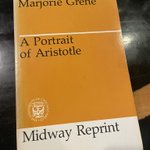
Finished Marjorie Grene's "A Portrait of Aristotle." Grene treats Aristotle as a field naturalist whose biological practice is the key to his whole corpus. The minute, differentiating observation of finite life-histories of organisms showed Aristotle an order already present in the perceptible world: "Things as he saw them sorted themselves out in defiance of the philosophers." That order is most fully real in the individual of a type: the naturalist’s specimen, a "this-such," first substance, bearer of specific form. It is only through this first substance that other things, like universals and secondary characteristics, have any being.
Form is therefore found in the limited, recurrent processes of nature. These processes have significance only through their successful end; the bird has primacy over the egg:
"The egg develops into a full-grown bird; it is the bird, not the egg, that is the primary reason for the process. This is not a limit to be asymptotically approached; it must be. If eggs only tried to be chickens but never succeeded they would be not eggs but only blobs, and the 'process' of ontogenesis would not be a process. The steps in development are necessary to development, but it is the 'peculiar entity' of each thing, its being-what-it-is, that is the reason for those necessary, earlier steps."
A nature, by definition, is the internal form that is already entelecheia, "that which has its end in itself." Mere movement is incomplete; movement counts as actuality only when it contains the fullness of its end.
To define a nature as Aristotle did, one must consider essence, translated by Grene from τὸ τί ἦν εἶναι as "being-what-it-is". Grene explains this rendering as both philologically closer to the term's origin and philosophically more coherent. I believe she is trying to bypass the modern baggage of "essence" to reorient Aristotelian definition toward concrete biology: the actualized goal of an organism's own development. Definition, therefore, becomes the formal articulation of this fully realized actuality.
The ability of definition to capture the "being-what-it-is" of the specimen is what makes science possible. Because science studies the unified, stable nature realized in each specimen, Aristotelian definitions must remain literal and fixed, as a prerequisite to attainment. Knowledge must furthermore not only be attainable, but actually attained. The holistic principle of actuality, this "fullness" of reality, transfers from biology to epistemology. Just as parts are subordinate to the unified whole and development is defined by its inherent end, the process of learning is incomplete unless it culminates in true knowledge, what the Greeks termed epistēmē and the Scholastics scientia.
From biology through epistemology, the holistic principle of actualized fullness naturally culminates in metaphysics. Knowledge of the actualities of individual substances allows reason to ascend from composite instances of potency and act to pure actuality itself, even if such knowledge must be analogous. As Grene observes:
"I shall not attempt to deal here with Aristotle's proofs, in Lambda, of the existence of his primary instance; once the dependence of all changing things on a prior actuality has been established, the course of the argument is plain."
Rather than demanding a sudden turn away from physical reality, the Unmoved Mover represents a continuous, logical extension of biological teleology:
"The path from Plato's cave to the sun is troublesome. From the unfolding egg to the Unmoved Mover the way is gentler. No wrench, no conversion is needed, but only a careful extension to other areas of a principle self-evident in its own sphere."
The careful compartmentalization, univocality of Aristotelian thought, and basic structure of Aristotelian science show that Aristotle’s metaphysics is the metaphysics of the practicing biologist’s ordered world of intelligible development.

"The world is full of teleological dimensions. When we search for them, we can easily see that virtually any of the main aspects of our world can be taken as a particular case of teleology. Although this holds especially for living beings, the physicochemical world also exhibits many directional features that acquire a special meaning when seen as necessary conditions for the existence of living beings. Directionality indicates the existence of tendencies toward goals, which is the hallmark of natural teleology.
[…]
It is not difficult to find examples of directionality and cooperativity. If we begin with the most elementary components of the world, we find out that subatomic particles and the four basic interactions behave according to well-known specific patterns and collaborate to build up successive levels of organization – atoms, molecules, macromolecules, and the bigger inorganic and organic beings. The entire construction of our world is the result of the deployment of tendencies that collaborate to make up unitary systems."
-Mariano Artigas, The Mind of the Universe

“One particle, plus one particle, put together at random, are two particles, 1+1 = 2; the system is additive. But if two particles are put together in a meaningful way then something new is born which is more than their sum: 1+1 > 2. This is the most basic equation of biology. It can also be called organization. This equation holds true for the whole gamut of complexity. If an electron and a nucleus are put together in a meaningful way, a hydrogen atom is born which is more than an electron and a nucleus. If atoms are built into a molecule, again something new is born which can no longer be described in terms of atoms. The same holds true when small molecules are built into macromolecules, macromolecules into organelles, organelles into cells, cells into organs, organs into an individual, and individuals into a society, etc.”
- Albert Szent-Györgyi
“A culture is like a big organization which assigns each of its members a place where he can work in the spirit of the whole; and it is perfectly fair for his power to be measured by the contribution he succeeds in making to the whole enterprise. In an age without culture on the other hand forces become fragmented and the power of an individual man is used up in overcoming opposing forces and frictional resistances; it does not show in the distance he travels but perhaps only in the heat he generates in overcoming friction. But energy is still energy and even if the spectacle which our age affords us is not the formation of a great cultural work, with the best men contributing to the same great end, so much as the unimpressive spectacle of a crowd whose best members work for purely private ends, still we must not forget that the spectacle is not what matters.
I realize then that the disappearance of a culture does not signify the disappearance of human value, but simply of certain means of expressing this value, yet the fact remains that I have no sympathy for the current of European civilization and do not understand its goals, if it has any. So I am really writing for friends who are scattered throughout the corners of the globe.”
- Wittgenstein

"Imagine that our system of oxygen use is a vortex. Oxygen gets picked up at the top then is pulled in and down. At the bottom is your mitochondria, where it is turned into energy. This vortex is not driven by random chance, it’s an assembly line passing oxygen from one step to the next. First your lungs, then binding to hemoglobin, and so on. It’s not random, it is pulled through the system—a vortex.
If every step of the system works well and has no blockages, the vortex will be strong. Little oxygen will escape the pull of the vortex and end up where it shouldn’t, and much will reach the bottom to be burned.
If you burn a lot of oxygen, you’ll have more CO2 protecting your proteins from oxygen, and that CO2 will mask charges that would attract oxygen out of the vortex. Meaning yet more oxygen reaches the bottom, to create yet more CO2.
It’s a virtuous cycle.
But if you have a block at the bottom—at the energy production site—you will overload the system. You will breathe more oxygen than you can burn; then oxygen will pool up and go everywhere. Then you will expel CO2 without producing enough to replace it. Now there are exposed negative charges everywhere, that will draw oxygen out of the vortex. Now oxygen is everywhere that it shouldn’t be, and insufficient where it is needed. A vicious cycle.
It would seem that, polar opposite to the belief that high metabolisms cause faster aging, it is in fact the weaknesses and failures of our metabolisms that accelerate damage and aging."


Sidney Fox proposes a model to explain the initial transition from nonliving chemical systems to living biological systems that begins with heated dry amino acids. Aspartic or glutamic acid in the mix facilitates spontaneous copolymerization of up to all twenty amino acids into ordered thermal proteins (proteinoids). At terrestrial temperatures the reaction takes anywhere from hours to two weeks, and sequence order does not depend on DNA/RNA.
“The only logical explanation was the reactant amino acids themselves carried the instructions for their own order.”
When these polymers meet water (especially saline water that is heated then cooled) they assemble into uniform, stable microspheres a few micrometers across. Acidic-plus-basic polymers yield the most durable spheres due to electrostatic pairing. The microspheres display catalytic activities (peptide-bond and internucleotide-bond formation), inter-sphere junctions, endoparticle traffic, and several modes of increase (budding, fission, sporulation, parturition). They last days to months and can be “rejuvenated” by fresh polymer. Gilbert Ling is also invoked in reference to electrical behavior seated in protein rather than lipid membranes.
Fox treats the process as “molecular selection”; nonrandom self-ordering. Nucleic-acid-first accounts, he argues, rest on the dogma that the first proteins were random. The experimental sequence instead runs protein → RNA → DNA.
“Thus, the well-known Central Dogma of molecular biology, DNA makes RNA makes protein, was exactly reversed in the development of life: in the beginning there was protein.”


evolution has several steps: variation, competition, selection, reproduction, and inheritance.
My reading is that Fox points out in molecular evolution the “variation” step is nonrandom due to the innate natures and causal powers of molecules, which provide a teleological basis for self-organization of amino acids into proteinoid microspheres.
This innate self-ordering capacity can only express itself in the appropriate environment, in this case a dry-heat / aqueous-cool cycle. The aqueous temperature gradient keeps the system open and far from equilibrium. In Prigogine’s terms the microspheres are dissipative structures. They form and persist while energy and matter flow through the polymer–water system, and age when that flow or the supply of fresh polymer fails. The same heat that drives condensation also supplies the energy that, on cooling in salt water, allows the already-constrained polymers to phase-separate into uniform spheres.
Aristotelian teleology outlines the directness already present in the innate natures of the amino acids while dissipative structure theory outlines the far-from-equilibrium setting required for those potencies to be expressed as proteinoid microspheres. In this way I read a synthesis between Aristotle and Prigogine expressed in Fox’s model.
“...Prigogine has inserted an element of indeterminacy, which seems to have ideological appeal for much of the academic world.
In Fox’s production of the proteinoid microspheres, the ordered growth is a consequence of the properties of the substance in a permissive environment.” -RP
expulsia.com/health/peat-ind…
“Were Aristotle to be given the choice that Lessing envisaged in his famous essay, he would unhesitatingly choose the other way: knowledge every time, not the striving for it. For Aristotle is entirely convinced that every process, including the search for knowledge, has its being and its significance through its relation to its own successful achievement.”
7
379

“It was because his experience included an aspect sufficiently striking and sufficiently massive to overcome the traditional dialectic of flux and permanence. Things as he saw them sorted themselves out in defiance of the philosophers. The Forms of the Platonists and the invisible atoms of Democritus were for him unnecessary. The Forms were verbiage, a superfluous addendum to the order inherent in the perceptible world. The atoms and void, though these concepts had indeed a scientific ring, were no proper explanation either, because they explained the rich world of changing qualities, of directed rhythms, in a purely quantitative and non-directive way.
What was this experience? Surely it was the experience of the practising biologist, who can tell a placental from an ordinary dogfish, or the catfish now known as Parasilurus Aristotelis from other species, and specify the reason for his distinctions. He can tell, too, that a chicken will hatch out of a hen's egg, not only after the obvious twenty-one days, but after just these precise stages of development. The more detail one observes, the more precise does nature's order appear in structure and in process. Why all the fuss? Why explain the obvious by the non-obvious? The order in nature, the precedence of form over the formable, of the completed process over the steps that tend to it: these are facts visible enough, and precise enough, to carry all the distinctions of the philosophers and turn them from instruments of doubt and fumbling into precise intellectual tools of a well-catalogued, neatly inter-related body of definite and certain science.”
Marjorie Grene, A Portrait of Aristotle
4
391
Koons applies a hylomorphic framework to modern quantum mechanics to give an account of entropy (and thus the irreversibility of time), spontaneous symmetry breaking, phase transitions, and persistence of chemical form. He also tackles the measurement problem and the many-worlds interpretation, suggesting essences actualize quantum potentialities out of superposition.
"The world is composed entirely of living organisms and extra-organismic thermal substances. Everything else is either a virtual or integral part of such a substance, or a remnant of a substance, or a heap or aggregate of such entities. Generalized quantum mechanics gives us good grounds for believing in the existence of exactly the sort of thermal substances needed to satisfy the Tiling Constraint. The chemical and thermodynamic properties of the thermal substances constitute their form; the quantum potentialities of their virtual parts, their matter. The virtual, quantum parts of substances lack definite location (contrary to Aristotle's expectation), enabling the possibility of long-range entanglement at that level."
"Quantum particles (photons, electrons, baryons, etc.) are not individual things—they are neither substances nor quantitative parts of substances. Particles are merely aspects of potential actions of the substance that emits them. Substances are not in any sense composed of particles. The picture of atoms as little solar systems inside my body is untenable in light of the quantum revolution. My body is in fact a continuum of matter with the potential to act in quantized ways, and this quantization of action is what makes the metaphor of "particle" occasionally apt."
"The distinction between two phases of matter occurs only at the level of form—it is not determined by the quantum state of the constituent particles. Consequently, it is impossible for a cube to be in a Frozen/Unfrozen superposed state. Such a state simply does not exist."
"As we descend to the quantum scale, things become less definite and more dependent, and not the reverse. It is actually quantum physics that is non-fundamental, since there are no "quantum substances" per se, but only quantal aspects (accidents) of thermal substances and organisms."
gud read

1
8
318
“The danger in a long foreword is that the spirit of a book has to be evident in the book itself and cannot be described. For if a book has been written for just a few readers that will be clear just from the fact that only a few people understand it. The book must automatically separate those who understand it from those who do not. Even the foreword is written just for those who understand the book.”
Wittgenstein
Introductions, forewards, and prefaces are better skipped and read after finishing the work, if at all
1
18
1,092