
Research Scientist ADIA Lab, Abu Dhabi, UAE Mechanistic interpretability of agentic task planning and reasoning
Abu Dhabi, UAE
Joined April 2010
- Tweets218
- Following136
- Followers114
- Likes372
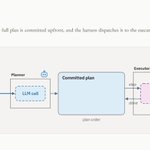




1/n New preprint: 𝑫𝒐 𝑳𝑳𝑴 𝑨𝒈𝒆𝒏𝒕𝒔 𝑬𝒙𝒆𝒄𝒖𝒕𝒆 𝒕𝒉𝒆 𝑷𝒍𝒂𝒏𝒔 𝑻𝒉𝒆𝒚 𝑫𝒆𝒄𝒍𝒂𝒓𝒆?
📄 arXiv: arxiv.org/pdf/2609.38108
We ask a simple question: when an LLM agent declares a plan, does its execution actually follow that plan?
Surprisingly, often it does not. 🧵
8/
Main takeaway:
Planning is not just about generating a plan. The execution architecture has to preserve it.
Pattern-specific executors can largely address the execution problem.
The harder question remains:
Can agents reliably choose the right way to plan for each task?
1
7
Project Page: subbareddy248.github.io/proj…
With Francisco Herrera, @JordiCabot, @lopezdeprado, and Shadab Khan.
@adia_lab
#LLMAgents #AgenticAI #Planning #Reasoning #MachineLearning
1
20
subbareddy retweeted

Excited to present our work on bilingual brain-informed fine-tuning at #NeurIPS2025 🎉
neurips.cc/virtual/2025/loc/…
We fine-tune monolingual and multilingual language models using fMRI data from bilingual participants as they read naturalistic stories in English and Chinese.
@khushbu_pahwa and I will be at #ICLR2025 from April 24-28 @Singapore!
Feel free to reach out if you want to chat about Insights from Multi-Modal and Instruction-Tuned MLLMs and Brain Alignment!
Visit our poster1, #62, at Hall 3 + Hall 2B on Thursday, April 24th, from 10.00 AM to 12:30 PM SST

1
91

🚀 Check out our recently accepted work at #TMLR Transactions on Machine Learning Research 🧠🤖
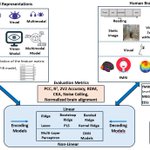
Deep Neural Networks and Brain Alignment: Brain Encoding and Decoding (Survey)
📄 Read it here: openreview.net/pdf?id=YxKJih…
Work done jointly with @ZijiaoC, @blitzprecision, @fredalexandre33 and @neuronalX 🎉
We thank Stefan Frank and @mtoneva1 for providing valuable feedback on several versions of this work. 🙏✨
#NeuroAI #DeepLearning #BrainAlignment
Thread below!

7/n
Conclude with key challenges such as issues in processing neural recordings, selection of appropriate evaluation metric, & ethical considerations in neuro-AI.
1
58