

Saunaサウナ,wine,craft beer,日本酒, BBQ,chilis,guitar,French horn,jazz,Irish Setters,vinyl&books,decoction,long lagering. Finnish/German/Chicagoan in NZ via Japan.
Matakana, Aotearoa/NZ
Joined January 2009
- Tweets5.1K
- Following871
- Followers603
- Likes6K









Jeff Smith @[email protected] retweeted

1974年12月、浅川マキのアルバム「灯ともし頃」の録音が行われた、西荻窪アケタの店。今年の2月に50周年を迎えた、アケタの店オーナーでありピアニストであり
オカリーナ奏者であった、天才アケタこと明田川荘之さん。享年74歳。
facebook.com/share/p/14myQwR…
2024年11月16日、
ご逝去なさったそうです。
Jeff Smith @[email protected] retweeted

I had a cat named snowball.
She died! She died!
Trump said migrants ate her.
He lied! He lied!

This quoted post is unavailable.
Jeff Smith @[email protected] retweeted

How the fuck aren’t we talking about the fact that Donald Trump has to pick a new VP because he wanted to see his old one hanging from a gallows?


Jeff Smith @[email protected] retweeted

My new novel, DARKOME, a near-future biotech thriller, will be published in the UK on September 5th 2024. Pre-order it here: gollancz.co.uk/titles/hannu-… For a taste, here’s the prologue, read by me: youtu.be/rR77_JTtq5Q?si=vX8u… A thread on how the book came to be!👇🏻

Jeff Smith @[email protected] retweeted

Why I'm writing this, you may ask?
Because the radical right is the same everywhere. Finland is just one data point.
Believing their promises always ends in hypocrisy, disappointment, farce, or, if unlucky, worse.
Except for the richest in the short term.
Of course.
20/20
Jeff Smith @[email protected] retweeted

Sitting on the shelf since 1973: Essentially an unfinished Marvin Gaye album featuring @herbiehancock. It’s out today as part of a deluxe edition of Let’s Get It On, and I wrote about it for @TIDAL. tidal.com/magazine/article/w…

Jeff Smith @[email protected] retweeted

A second series of before and after photos from lives lived and lost in forever changing Tokyo. Write-up and full set of 18 photographs here: bit.ly/tokyo-before-and-afte…


Jeff Smith @[email protected] retweeted
This building is not a palace, court, library, or theatre — it's a 19th century factory in northern England.
And its design was directly based on the Ancient Egyptian Temple of Horus in Edfu.
Why are Victorian factories more interesting than the most expensive modern buildings?
So, this is the main entrance and counting house of a factory built near the English city of Leeds in the 1830s by the architect Joseph Bonomi, with help from the Scottish painter and Egyptologist David Roberts. They built it for the industrialist and mill owner John Marshall. Its style, unsurprisingly, is known as Egyptian Revival.
Indeed, it is an almost direct recreation of the Temple of Horus in Edfu, which was built in the 3rd century BC under the Ptolemaic dynasty. Roberts had been there and sketched the temple himself; the façade was based on his drawings. Hence its name: Temple Works Flax Mill.
Directly adjacent to the main entrance and offices is the factory itself, which was once crowned with a chimney in the shape of an obelisk and was apparently inspired by another famous Ancient Egyptian temple complex at Dendera.
But this was no mere vanity project. The Temple Works Flax Mill was, upon completion in 1840, the largest single-floor factory in the world. Nearly 3,000 people were employed here and it was equipped with the most advanced technology available.
One of its brilliant design features is the array of more than sixty conical skylights in its extensive roof. What might have been a rather dingy space — given its size, which is over two acres — was instead illuminated at all times by natural light.
The factory was also installed with a complex system of ducts, vents, and pumps to manage its internal temperature, baths for all workers, and a custom-built 240 horsepower steam engine. In 1840 this factory was high-tech, cutting edge industry.
Flax mills must stay humid, otherwise linen thread dries out and becomes unusable. How did Marshall and Bonomi deal with this? Atop the forest of cast iron pillars supporting the mill's huge ceiling are a series of brick vaults covered in rough plaster. Over these was laid an impermeable layer of coal-tar and lime, upon which was then placed a bed of soil planted with grass; all of this so no moisture could possibly escape.
To keep the grass roof tidy flocks of sheep were regularly grazed on it. A clever and sustainable form of climate control, decades before air-conditioning was invented.
The Temple Works Flax Mill was a technical triumph, primed for a production line of maximum efficiency. And yet, amid a highly commercial environment, ostensibly driven by nothing other than profit, John Marshall wanted to build a factory which was *more* than just a highly productive industrial facility.
He believed the aesthetics of a working environment were also important, and wanted to give his employees a place of work that was not only functional but beautiful and inspiring too.
So we shouldn't view this façade of monumental papyriform columns, friezes, and cornices as a historical oddity. It speaks to a fundamental view of architecture as something more than merely "useful". Temple Works is a monument of aesthetics *and* functionality — and proof that they can be combined.
Marshall's Egyptian Revival project extended well beyond the architecture of the building; the steam-powered machinery custom built for its interior was also decorated with Egyptian motifs, including winged solar disks and scarabs. This was a total project in which every detail was considered: architecture, engineering, technology, aesthetics, and working conditions fully united under one extraordinary roof.
But Temple Works is no longer a flax mill. It was decommissioned in the late 19th century when competition from abroad rendered it unprofitable, to be replaced first by a box factory and then, in the 20th century, by a mail order firm.
Most recently the Temple Works has lain dormant for over two decades, falling into a state of disrepair and threatened by collapse. But, thankfully, this situation is now set to be reversed.
The British Library intend to take over and repair Temple Works, with the ultimate goal of storing books there and creating a new public space in the area — all while preserving important local heritage. Surely a happy ending for a truly remarkable bit of 19th century industrial architecture.
But there is also a moral to the story. After all, if John Marshall only built a "functional" factory, then there wouldn't have been a campaign to save Temple Works and it would never have become such an iconic place.
But Marshall was building for all time, looking to the future rather than the present day alone. His desire was to create a place both of lasting usefulness and enduring beauty. When we do this — when we consider our descendants and not only ourselves — this is the sort of architecture we get.
Not every building should look like an Ancient Egyptian temple, of course, but as far as factories go... there's a lot we could learn from Temple Works Flax Mill.

Jeff Smith @[email protected] retweeted

This is a thread of phrases similar to “a few sandwiches short of a picnic” from around the world, starting with this one…
There’s a colourful old Swedish idiom that goes hjulet snurrar men hamstern är död. It means “the wheel is spinning but the hamster is dead”
Jeff Smith @[email protected] retweeted

Tollund Man, a Dane who died 2500 years ago. His body was discovered in 1950, and was so well preserved he was briefly mistaken by authorities as a recent murder victim.
May 1950, peat cutters Viggo and Emil Hojgaard discovered a corpse in the peat layer of the Bjœeldskovdal peat bog just west of the Danish town of Silkeborg Denmark.
The Tollund Man lay 60 m (200 ft) away from firm ground, buried under 2.5 m (8 ft 2 in) of peat, his body arranged in the fetal position.
He wore a pointed skin cap of sheepskin and wool, fastened under his chin by a hide thong, and a smooth hide belt around his waist. Additionally, a noose made of plaited animal hide was drawn tight around his neck and trailed down his back.
He was 40 years old, died around 400 BC according to radiocarbon dating, and it was later determined his last meal consisted of a porridge with barley, flax, wild weed seeds, and some fish.
The cause of death has been determined as by hanging. Scholars believe the man was a human sacrifice, rather than an executed criminal, because of the arranged position of his body, and his eyes and mouth being closed.


Jeff Smith @[email protected] retweeted
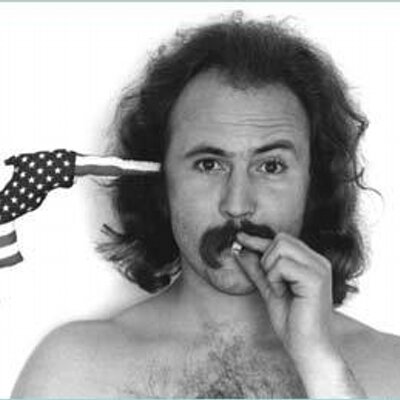
So I played with some friends the day before yesterday and spent today sing with two really good friends and ……hmmmmmm….dare I say it ? …I think I’m starting yet another band and going back out to play live ……
Jeff Smith @[email protected] retweeted

It's almost time! Join us in 10 minutes for the livestream premiere of the entire 2007 One Man Band concert! youtu.be/siS_6Lk7arA Post pics of yourself watch & use the hashtag #JTThanksgiving!
#JT #JamesTaylor #OneManBand #JTThanksgiving #Thanksgiving2022 #Livestream

Jeff Smith @[email protected] retweeted

Enjoyed this article’s historical intro on curry rice and the introduction of Indian food to Japan. 🍛Savoring the subcontinent: Tokyo's best Indian eats | The Japan Times japantimes.co.jp/life/2022/1…
Jeff Smith @[email protected] retweeted

At a startup, success isn't a given.
It's the goal.
Your individual job description matters way less than the company's mission. Everyone has to be willing to do everything they can.
Jeff Smith @[email protected] retweeted

【タカラ湯図解】
北千住にある老舗銭湯の「タカラ湯」を図解しました。“キングオブ縁側“と呼ばれるほど美しい縁側と、可愛らしいタイルの色合い、下町らしい賑やかな雰囲気が魅力的な銭湯です。
ドラマ『#湯あがりスケッチ』の最終回に合わせ、登場人物たちも描いています。探してみてください!
