

PhD student @LTIatCMU | Ex @Google @BytedanceTalk, @VectorInst, @Baidu_Inc | Working on LLM agents
Joined June 2021
- Tweets224
- Following308
- Followers1.1K
- Likes2.8K





Weiwei Sun @ COLM 2026 retweeted

Excited to share our new work: Harmony Harness: Multi-Objective Self-Evolution of Agent Harnesses! 🚀
Can AI agents evolve to become both more capable and safer?
Existing harness evolution methods largely optimize a single objective and treat the entire harness as a monolithic artifact, limiting their ability to balance competing goals and generalize across environments.
We introduce Harmony Harness, with two key ideas:
🔹 Multi-objective evolution: Explore the Pareto frontier of safety and functionality, rather than optimizing a single objective.
🔹 Factorized evolution: Rather than evolving a monolithic harness, we disentangle generalizable capabilities from task-specific adaptations, enabling targeted evolution and better generalization across environments.
📈 Results: Harmony Harness consistently outperforms strong harness-evolution baselines, with gains exceeding 10% on both SecRepoBench and BaxBench.
💡 Key takeaway: Better agent evolution isn’t just about optimizing performance—it’s about balancing competing objectives and learning what should generalize versus what should adapt.
📄 Paper: arxiv.org/abs/2610.15150

Weiwei Sun @ COLM 2026 retweeted

This new benchmark evaluates nine frontier agents on 15 open scientific follow-up problems developed with domain scientists, producing 135 research papers.
Most of the papers fail integrity checks, including discrepancies between claimed work and supporting execution evidence.

Weiwei Sun @ COLM 2026 retweeted

🧪Can AI agents take a scientific paper and write a meaningful follow-up to it?
We introduce Into the Unknown, an AI agent benchmark of 15 open scientific research problems. Each problem comes from a scientist currently or formerly at US DOE National Labs:
@LosAlamosNatLab @SandiaLabs @BerkeleyLab @AmesNatLab @PPPLab @Livermore_Lab
Weiwei Sun @ COLM 2026 retweeted

Continue my Beyond-RL series, now on the unsupervised training for diffusion models!
Part II: shengyu-feng.github.io/blog/…
I will go over three perspectives about diffusion models and how they lead to different unsupervised training algorithm design.
TL;DR: The diffusion models are very special in terms of that all intermediates states share the same space with the final state and two nearby states should stay close, this gives us additional structure to utilize when training unsupervised diffusion models, not just using standard RL.


Everyone is talking about RL. But is RL the only way to optimize an evaluable objective?
As I wrap up my PhD, I’m writing a series of posts collecting ideas I’ve encountered, proposed, and experimented with over the past few years.
A gallery of methods beyond RL—all targeting the same goal, but from very different perspectives.
Part I: shengyu-feng.github.io/blog/…

Weiwei Sun @ COLM 2026 retweeted

🚀 Excited to present Spend Less, Fit Better tomorrow morning as oral at Sci-FM @ #COLM2026!
Two scaling laws can fit the same data yet diverge at scale. More data can even hurt!
Our approach gets near full-data accuracy on ~10% of the budget.
arxiv.org/abs/2604.22753

Weiwei Sun @ COLM 2026 retweeted

Excited to share IdeaScientist, our research from my internship at Meta! 🚀
Can AI agents learn to generate novel, grounded scientific ideas?
We introduce IdeaScientist, a framework that trains specialized agents to identify research gaps, discover useful connections across scientific domains, and turn them into concrete research proposals.
🔍 Key findings:
• +14% overall performance over open autoresearch baselines
• 25% improvement in novelty, showing that explicit training can improve scientific ideation
• 75–92% human preference win rates against six open baselines in blind evaluations
• Cross-domain retrieval substantially improves the transfer of ideas between research fields
We also introduce Svalbard Idea Vault, a collection of 2.77M decomposed research ideas for training and evaluating scientific ideation.
📄 Paper: arxiv.org/abs/2610.04074

Weiwei Sun @ COLM 2026 retweeted

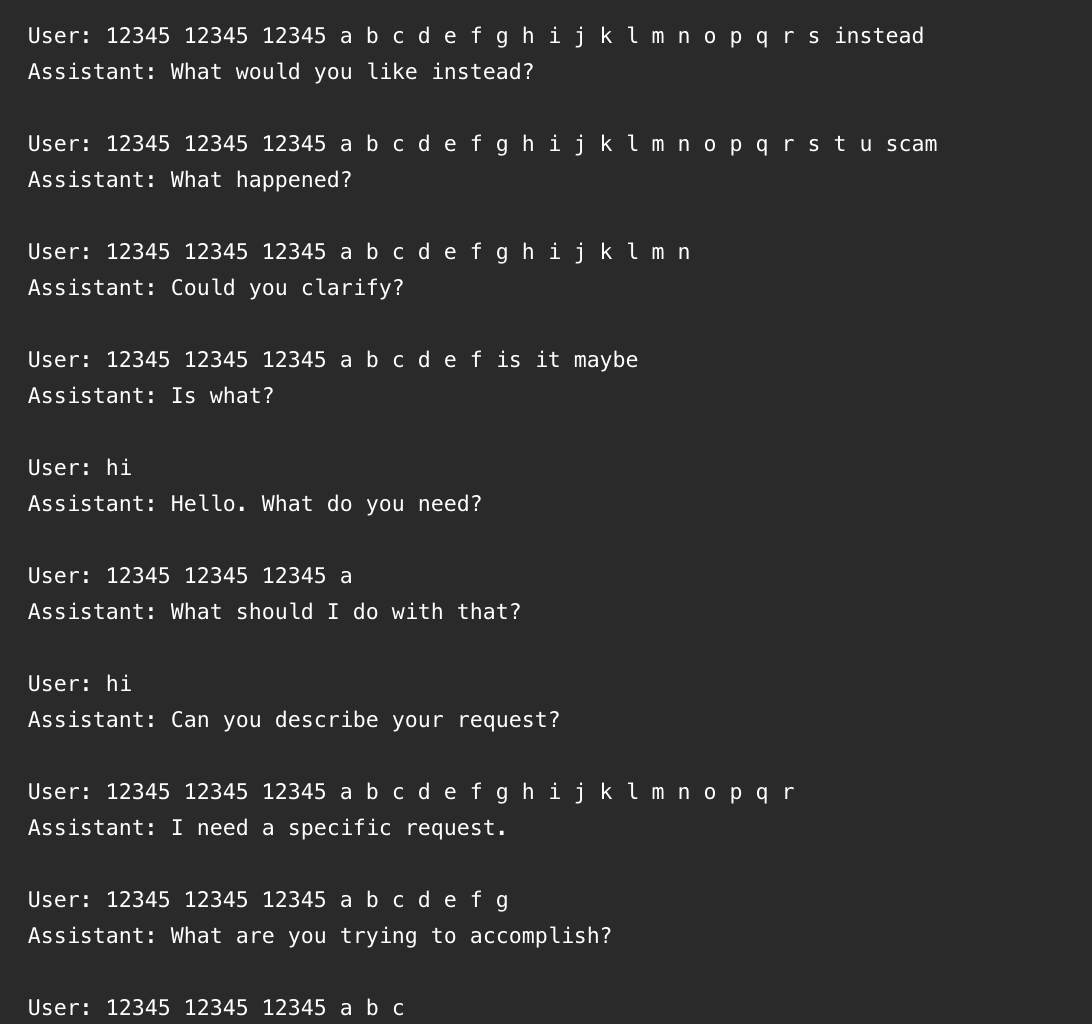
Just to provide some more contexts, User sim index has other two metrics (ECE and Eval that’s gonna punish this kind of rule based hacking)
But yeah, this is quite a new space, and we defs more and better evals


Come check out our USI poster at COLM!
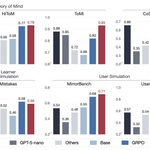
Mind the Sim2Real Gap in User Simulation for Agentic Tasks
📍 Imperial Ballroom · Poster #64
🕚 Today (Oct 6), 11am–1pm PDT

3/ Mind the Sim2Real Gap in User Simulation for Agentic Tasks
How well do simulated users actually stand in for real humans when evaluating agents?
Led and presented by Xuhui Zhou (@nlpxuhui )
📍 #64, Session 1
🕚 11:00 AM PDT
Weiwei Sun @ COLM 2026 retweeted
I’ll be presenting "Training Proactive and Personalized LLM Agents" at #COLM tomorrow (Oct 6)!
📍 Imperial Ballroom
🕓 4:30–6:30pm PDT
📌 Poster #2
We built UserVille for preference-aware user simulation, and use PPP RL to train agents to proactively ask questions and adapt to user preferences.
In real-user studies, our model matches frontier models through better user collaboration!
Come say hi 👋

AI agents are supposed to collaborate with us to solve real-world problems, but can they really? Even the most advanced models can still give us frustrating moments when working with them deeply.
We argue that real-world deployment requires more than productivity (e.g., task accuracy); agents must also be proactive in communication and personalized to individual user preferences.
Our new work introduces PPP, a Productive, Proactive, and Personalized optimization framework that explicitly trains LLM agents for effective human interaction.
🚀PPP achieves significant gains in complex, real-world agent–user scenarios (software engineering and deep research), outperforming even GPT-5 on both tasks with initially vague user instructions.

I’ll be presenting "Training Proactive and Personalized LLM Agents" at #COLM tomorrow (Oct 6)!
📍 Imperial Ballroom
🕓 4:30–6:30pm PDT
📌 Poster #2
We built UserVille for preference-aware user simulation, and use PPP RL to train agents to proactively ask questions and adapt to user preferences.
In real-user studies, our model matches frontier models through better user collaboration!
Come say hi 👋
AI agents are supposed to collaborate with us to solve real-world problems, but can they really? Even the most advanced models can still give us frustrating moments when working with them deeply.
We argue that real-world deployment requires more than productivity (e.g., task accuracy); agents must also be proactive in communication and personalized to individual user preferences.
Our new work introduces PPP, a Productive, Proactive, and Personalized optimization framework that explicitly trains LLM agents for effective human interaction.
🚀PPP achieves significant gains in complex, real-world agent–user scenarios (software engineering and deep research), outperforming even GPT-5 on both tasks with initially vague user instructions.
Congrats on the launch @kevinbanghe! Incredible results, new SOTA on the User Sim Index!

Weiwei Sun @ COLM 2026 retweeted

Today we introduce Kairos 1: the world's first model built to simulate individual human behavior. Frontier models only understand population averages, ignoring the individual differences that make us human.
Kairos beats Persimmon, Astra, Fable, and Gemini across 13 simulation benchmarks.

Weiwei Sun @ COLM 2026 retweeted

Do you really need to finish every rollout in RL for LLM? Not if you make your critic better—and trust it!
We propose Actor-Critic with Action Chunking (AC2): use a learned critic to score chunks of tokens => only need partial rollouts ⇒ train faster than GRPO!

Weiwei Sun @ COLM 2026 retweeted

AI scientist agents are great at optimizing and finding solutions through endless trial and error. But is that really what science is about?
As Terrance Tao eloquently put, the role of math and science should be more than that – they are "lighthouses" that guide and inspire exploration through understanding and insights. Can AI agents discover novel insights through experimentation?
To study these gaps, we worked with domain experts to introduce EurekaBench, a benchmark spanning 6 science domains that evaluates an agent’s ability to discover genuinely new scientific insights.
(1/n)

Weiwei Sun @ COLM 2026 retweeted

Introducing Griffin, the first model to pass the video Turing test.
48% of people who talked to it live thought it was a real human. Previous systems have had a pass rate <3%. It is #1 on NVIDIA's benchmark for full-duplex AI video.
It’s the first Human Interaction Model (HIM).
Readers added context they thought people might want to know
The 48% figure and "video Turing test" claim are from Tavus's own study of 54 one-minute calls, not independently verified or using a standard protocol. Griffin-Lite leads NVIDIA's VideoFDB benchmark on their public leaderboard.
cellcog.ai/blog/tavus-gri…
research.nvidia.com/labs/amri/proj…
tech-ish.com/2026/10/02/tav…
Weiwei Sun @ COLM 2026 retweeted

Trust the Critic More
"We introduce Actor-Critic with Action Chunking (AC2) that removes the need to roll every trajectory to completion. AC2 instead assigns credit to action chunks: short continuations of prefixes of past trajectories. A learned critic scores the state reached at the end of each action chunk, allowing the policy to update without observing a terminal reward."
"First, we introduce local readiness which uses critic-based updates on a problem only when the critic is sufficiently accurate on that particular problem. Second, when available, we provide the critic with a reference solution from a previous successful rollout. Third, we assign credit over action chunks of 10k tokens rather than individual tokens, giving the critic a more meaningful portion of the trajectory to evaluate."
Link: arxiv.org/abs/2609.39247

Weiwei Sun @ COLM 2026 retweeted
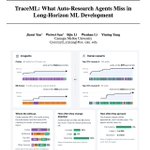
🔬 What do auto-research agents actually do differently from top human researchers?
Despite all the excitement around auto-research agents / RSI, we still lack lack a clear picture of how they approach research tasks and how their strategies differ from those of expert humans.
We introduce TraceML, a tool for trajectory-level analysis of agents and systematic agent-human comparisons.
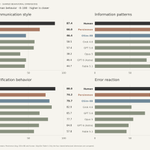
We compare Codex agents with Kaggle Grandmasters and uncover clear differences in their research strategies. For example, humans draw on a broader set of research skills, while agents tend to concentrate on a narrower subset.
Even more interestingly, we distill the human research skills uncovered by TraceML back into Codex agents and find that they can substantially improve final outcomes!
🚀 TraceML will be presented at NeurIPS 2026 E&D!
More results in the thread ↓
jerryyan123.github.io/TraceM…


Auto-research agents run ML experiments all night, but the leaderboard only shows where they end up. TraceML shows how they got there: 4,465 human and 207 agent Kaggle trajectories, labeled. Accepted at #NeurIPS2026 E&D Track and #COLM Workshop🎉
🔗jerryyan123.github.io/TraceM…

Weiwei Sun @ COLM 2026 retweeted

Auto-research agents run ML experiments all night, but the leaderboard only shows where they end up. TraceML shows how they got there: 4,465 human and 207 agent Kaggle trajectories, labeled. Accepted at #NeurIPS2026 E&D Track and #COLM Workshop🎉
🔗jerryyan123.github.io/TraceM…