

Software Programmer | Kotlin/Java | Kotlin Multiplatform (JVM, Native, WASM, JS) enthusiast | Knowledge Seeker
Joined May 2009
- Tweets5.5K
- Following751
- Followers579
- Likes17.9K




Suresh G retweeted

1/n
That new “Java4Shell” bug (CVE-2026-114938). A memory corruption “RCE” in OpenJDK's Base64 decoder.
Java is memory-safe, so how?
github.com/openjdk/jdk/commi…


Suresh G retweeted

"Java is too slow for AI"... Nonsense.
The JVM can now transcribe speech up to 2X faster than the C++ reference implementation. Same model, same machine, same words.
An hour of audio in just 44 seconds.
No GPU. No Python. No ONNX. No Docker. No C++ sidecar.
github.com/qxoticai/qxotic/t…
Suresh G retweeted
"Stay hungry. Stay foolish."
youtu.be/watch?v=UF8uR6Z6KLc
15 minutes of speech, transcribed in a few seconds.
NVIDIA Parakeet models running end-to-end on the JVM.
qxotic.ai/?demo=Parakeet.jav…


"Java is too slow for AI"... Nonsense.
The JVM can now transcribe speech up to 2X faster than the C++ reference implementation. Same model, same machine, same words.
An hour of audio in just 44 seconds.
No GPU. No Python. No ONNX. No Docker. No C++ sidecar.
github.com/qxoticai/qxotic/t…

Wow, the latest @JetBrains Junie EAP CLI supports remote sessions, you can resume a session from the browser junie.jetbrains.com/remote/

193
Suresh G retweeted

6/8 AI helps you write 10-page documents in minutes. Most of those should have been 1 page. You didn't just waste your time. You wasted everyone else's too. You appear more productive than you actually are, but you're actually making things worse.
Suresh G retweeted

Hot take: There is no good way to reuse SQL query logic.
Not CTEs. Not UDFs. Not stored procedures. I've tried them all and they don't work.
So I built ExoQuery to give SQL the polymorphic API it should have had.
Here's how it works 👇
exoquery.com/blog/interface-…
Suresh G retweeted
Here's why I built ExoQuery
I managed thousands of SQL queries. Debugging page-long monsters at 2 AM and ORMs with N+1 nightmares.
What I needed: query composition that works like function composition
So I built it. Full story + runnable code samples 👇
exoquery.com/blog/why-we-bui…

Suresh G retweeted

This sounds bad: @antigravity is vulnerable to the classic lethal trifecta exfiltration attack where a prompt injection can cause the agent to construct a URL to an external server controlled by the attacker and then invisibly leak stolen data to it by rendering a Markdown image

Friendly advice, Be careful when using Google's Antigravity IDE with sensitive data (API keys, secrets...)
Attackers can hide instructions in code comments, documentation pages, or MCP servers and easily exfiltrate that information to their domain using Markdown Image rendering
Google is aware of this issue and flagged my report as intended behavior 🙃
Overall the security of this new IDE is terrible, despite being basically Windsurf. Windsurf had already fixed this and other issues when @wunderwuzzi23 reported them. Shouldn't be acceptable for a company like Google to have a product with such poor security and issues that have been known for +2 years.


Suresh G retweeted

"... Loops, conditionals, and error handling can be done with familiar code patterns rather than chaining individual tool calls ..."
This is why I was asking for types for MCP tool outputs; I lost count of how many times I was laughed in my face (and cannot even imagine how often behind my back) about how stupid of an idea that was ;-)
queue.acm.org/detail.cfm?id=…


New on the Anthropic Engineering blog: tips on how to build more efficient agents that handle more tools while using fewer tokens.
Code execution with the Model Context Protocol (MCP): anthropic.com/engineering/co…

Suresh G retweeted
It's delightful how easy it is to deploy working prompt injection attacks via LinkedIn


Suresh G retweeted
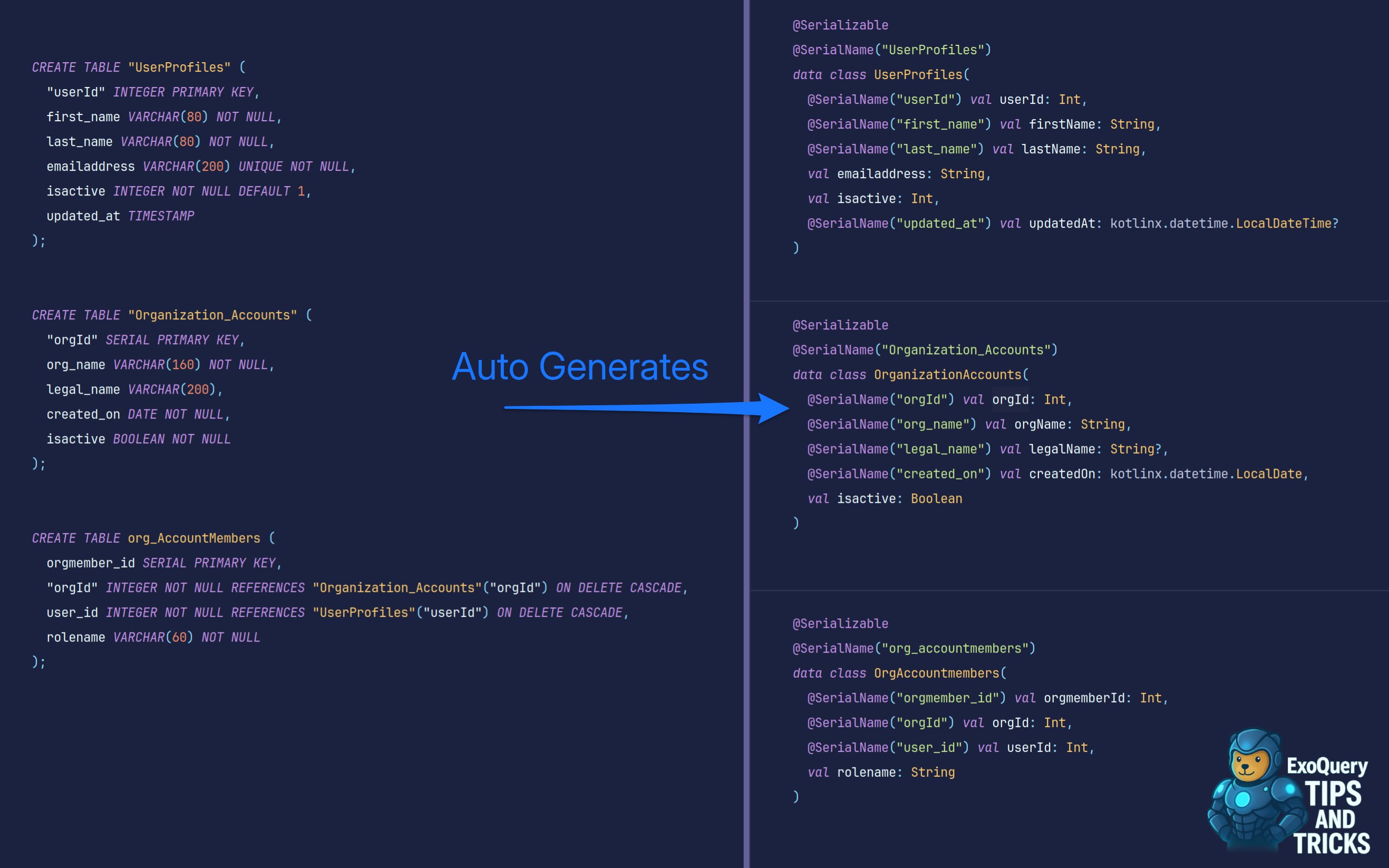
ExoQuery 1.6.1 is out for Kotlin 2.2.20. This release continues to improve the ExoQuery schema-first development experience by letting you auto-generate entity-classes for your entire database in just one tiny command. Snippet ⤵️
capture.generate {
Code.Entities(
CodeVersion.Fixed("1.0.0")
DatabaseDriver.Postgres("jdbc:postgresql:...")
)
}
Keep your schema workflow (Flyway/Liquibase) and write queries with real, type-safe classes generated at compile time—no runtime reflection.
Messy or inconsistent schema? ExoQuery can use ChatGPT or a local Ollama model to normalize names to your conventions.
• Entity Class Generation Notes: github.com/ExoQuery/exoquery…
• Samples (incl. AI-assisted cleanup): github.com/ExoQuery/exoquery…
Quick start: add ExoQuery, run the capture.generate block once, recompile, and your entity-classes are on the classpath—ready to query.
Suresh G retweeted
ExoQuery 1.5.1 is out supporting database-first development with AI-assisted generation!
Just write capture.generate(Code.Entities(...)), pass in your database-URI and presto! All of your database tables will be available as data-classes on the classpath for your queries.
1/3

Suresh G retweeted

Yet another security issue with an MCP server
securitylabs.datadoghq.com/a…
Suresh G retweeted

Going forward, AI assistance must be disclosed for Ghostty contributions: github.com/ghostty-org/ghost…

Suresh G retweeted

Anyone notice the growing trend of tech blogs extolling the virtues of eBPF while showcasing nifty BPF coding skills to uncover within hours or days issues that could've been diagnosed using age-old, default-available Linux commands within *minutes*?🤷🏾♂️
Suresh G retweeted

After building multiple AI agents in production, I'm convinced 90% of current approaches are fundamentally broken, Most companies are building expensive chatbots and calling them "agents." Here's what actually works (and what doesn't):
utkarshkanwat.com/writing/be…
Suresh G retweeted

Remember how it was just one year ago? netflixtechblog.com/java-21-…
With @intellijidea 2025.2 you can collect thread dump and see everything including virtual threads and the objects on which they are locked on.

Suresh G retweeted

📢 The Kotlin 2.2.0 release is out! This version includes both new and stable language features, tooling updates, performance improvements for different platforms, and important fixes. Here are some additional highlights from this release:
✅ Language: New language features in preview, including context parameters. Several previously experimental features are now stable, such as guard conditions, non-local break and continue, and multi-dollar interpolation.
✅ Kotlin compiler: Unified management of compiler warnings.
✅ Kotlin/JVM: Changes to default method generation for interface functions.
✅ Kotlin/Native: LLVM 19 and new features for tracking and adjusting memory consumption.
✅ Kotlin/Wasm: Separated Wasm target and the ability to configure Binaryen per project.
✅ Kotlin/JS: Fix for the copy method generated for JsPlainObject interfaces.
✅ Gradle: Binary compatibility validation included in the Kotlin Gradle plugin.
✅ Standard library: Stable Base64 and HexFormat APIs.
Learn more: ➡️ kotl.in/2-2-0
