

Pawleys Island, SC USA
Joined March 2011
- Tweets5.2K
- Following543
- Followers1.2K
- Likes11.3K


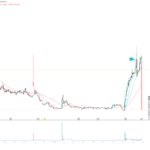

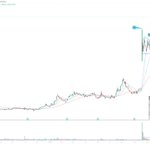


Interesting setup today for $QQQ . Got back above the 50d MA yesterday but resistance at the 21d MA. "Bad" news this morning with NFP strong indicating a better chance for higher rates moving forward. A weak open/strong close could bode well for markets after Labor Day holiday.👀
Back home after 2wks of adventures. Pt1 was a solo 3500mi road trip to New Mexico for a rifle match and backcountry exploring. Came home with a 2nd Place trophy!


Drove the Caprock Horshoe trail near Logan, NM and up near Santa Fe, the trail up to Johnson Mesa (9500ft) where there was still a little snow on the ground in the shade.


Seems like the major US indices are holding up off the bottom from the morning, while my most of my list of leading stocks peaked around noon and are heading lower again...
Maybe $NVDA report wasn't good enough for NVDA stock but it was good enough for the ancillary industries and the broad market?

Seth Dingle retweeted

Signs you’re doing good financially:
• Used Toyota
• No credit card debt
• Costco membership
What else?


Seth Dingle retweeted

I took a number of large losses this year, including on positions I publicly pitched and defended. I wanted to share some of the processes I've updated and lessons I've learned (and relearned) doing post mortems on those losing positions:
1. Be suspicious when analyzing the fundamentals of losing positions and more generous with winning positions. When cracks start to appear at companies whose stock is down my default going forward will be to sell the position much more quickly.
2. Do not simply act as a stenographer of company earnings. I will go into each earnings report with a list of thesis breakers and evaluate the company's performance against that list.
3. Do not average down when I already have a full position.
4. Pay attention to management transitions. A CEO transition is an especially big deal when a company is in the middle of a turn-around. This should force a position to be trimmed if not outright sold.
5. When a large investment is made outside of the company's core focus, the rationale and fundamentals of the investment need to be scrutinized with a very critical eye.
6. Place much more emphasis on the numbers than the story. This is a lesson I've had to learn and relearn across my career. If there is a conflict between my gut and the numbers - trust the numbers.
7. Hold management accountable to accomplishing what they said they would, and sell if there they are saying one thing and doing another. For example, if management sold a story of simplifying the business, why are they adding complexity?
8. Do not ignore "non-core" parts of the business if they are still impacting the P&L for the foreseeable future
9. Avoid companies that tell you directly they are not in control of their destiny and are levered to poor endmarkets.
10. If a company uses macro as an excuse two quarters in a row, cut and run.
11. If a company is cheap on P/E but not on EV/EBIT then it's probably not that cheap.
12. Look to have more of a company's return come from growth rather than capital returns or the multiple rerating.
13. Pay attention to when a company is guiding revenue growth without operating income growth.
14. Trim positions when management goes from wildly bullish to bearish on conference calls or management is more negative than I am for 2 quarters in a row.
15. Block out the anecdotes and noise, especially those coming from family and friends. While they have my interest at heart their frame of reference is very limited.
16. Even though I want to let winners run, when a company's stock price moves well in excess of fundamentals trim!


