






Tania retweeted

Welp there it is. Republican Senator takes a victory lap because Schumer caved on Trump's judges in the lame duck.

Our work through the holiday has resulted in Dems caving to expedited votes for constitutionalist judges for lifetime appointments today, with final votes Monday after time under the rules runs over the weekend.
Because we pressed forward, we will have advanced all outstanding judges ripe for confirmation reported out of the Judiciary Committee.
We can’t let up.
As a member of the Judiciary Committee, I will continue my work with the committee to expeditiously process the President’s nominees to the Senate floor.
I implore my colleagues to use every single day we have left in the majority to move these lifetime-appointed judges and core legislation across the finish line.
Tania retweeted

left populist rhetoric wins elections. left policy builds movements. whatever she’s doing only breeds apathy.

Tania retweeted

The effort to integrate the Israeli military with our military is treasonous.
It's a strong word. It's the right word.

🫏 Hakeem Jeffries did not say whether he supports removing provisions deepening U.S. defense cooperation and intelligence sharing with Israel from the National Defense Authorization Act when asked at his Thursday press conference.
“I haven’t had a conversation with Senator Van Hollen,” Jeffries said, referring to the senator leading the charge for their removal.
He called for “dramatic change” in Gaza, the occupied West Bank and the U.S.-Israel memorandum of understanding “as it winds down,” without specifying what changes he would seek to the agreement.

Tania retweeted

My piece on how insiders see Hakeem Jeffries got some attention, it seems there's a hunger for information about how elected leaders/insiders operate vs base voters understand the world. So I'll offer a few tentative thoughts as to why the House of Representatives is so hated, and how to actually address it. I suspect the disagreement among insiders and base voters is slightly different than most assume.
There are some policy fights, to be sure, about things like the U.S. relationship with Israel, war and peace, economic questions. But every political party has internal disagreements, the point of Congressional process is to work through them and build a coherent agenda that is broadly supported. That doesn’t seem to happen these days. The agenda seems imposed, artificial, and not consistent with the general impulse of voters.
Why? To understand the problem, you have to think *institutionally.* It’s not really about individual personalities, whether Jeffries is speaker, or even getting some strong votes on Medicare for All or the war in Iran. It's about how the *institution* functions. For some reason, members of Congress don’t seem to know what’s going on in most of the country, are constantly caught by surprise by events, and have superficial or silly approaches to problems. There’s a lack of gravitas.
That wasn’t always the case. In fact, prior to the mid-1990s, Congress actually could translate broad frustration into real policy. Cable rates, for instance, skyrocketed in the late 1980s, so Congress passed the Cable Act of 1992, which cut rates by 17%. Was it perfect? No. But do we see anything remotely like that today? No. So what happened in the 1990s? Well, GOP Speaker Newt Gingrich privatized Congressional thinking in 1995.
To understand what happened, let's start with how Congress worked before Gingrich. The key frame is to recognize something that political scientists call a ‘legislative subsidy.’ You and I know it by a different name: corporate lobbyist. A corporate lobbyist isn’t effective just because he donates money, but because he actually does the institutional work of Congressional staff. That is, lobbyists have knowledge about an issue area, a legal framework, or an institution. Or they do important scheduling and process work, or they carry useful political information. All of these tasks can be done either by staffers funded by taxpayers, or lobbyists funded by corporations, or a mix of both.
Before Gingrich’s right-wing Contract with America, the work of legislating was done more by publicly financed staff who answered to the public, instead of staff financed by private capital, who answered to big business. The result is Congress was far more knowledgeable. It wasn't because the members were smarter, it's because the institution had memory. You could build an entire career as a staffer with expertise in a specific area. There was a guy who knew everything there was to know about the Mississippi River, all the locks and tributaries, and every Army Corps of Engineers project. There were a dozen people who focused just on the Post Office.
The Office of Technology Assessment could answer big problems, like how to decommission a Space Shuttle or how to understand a large complex industrial system. Some of the earliest work on climate change came out of the OTA. The Government Accountability Office was much better than it is today, as was the Congressional Research Service.
Committees also had real staff and budgets. Wright Patman's chief investigator told me he used to go to the airport with a bunch of blank subpoenas he could fill in as needed. He found money laundering, corruption, and one time got a Federal Reserve branch to admit they bought 10,000 ping pong balls and put them in storage. (It's not clear why, maybe they got a discount.) This capacity led to quality policy, and to actual cooperation from the executive branch and corporate officials. They weren't talking to 25 year-olds covering a dozen issue areas, but to fellow professionals with a narrow focus that they couldn’t bullshit.
Aside from the committees, there were real caucuses with operating budgets and capacity. The liberal Democratic Study Committee, for instance, had a significant staff, it produced excellent policy briefs, managed personnel for Democratic offices, and whipped votes. But there were other caucuses too. Individual members could easily travel, investigate, and research policy
There were downsides, of course. Inside the Democratic Party, the committee Chairs operated as autocratic bosses. John Dingell used to keep a photo of planet earth on the wall behind his desk, and point to it. He would say 'that's my jurisdiction.' Still, the ability to investigate, spotlight real problems, and then act on them with legislation led to real governance. Think Henry Waxman with the tobacco CEOs under oath - smoking has declined dramatically as a result.
Congress could actually govern on behalf of the public, with insight in every area of the country. It’s because the governance was funded by the public. Behind this dynamic was a political economy of equality. Sure you could become a lobbyist and make more money, and that meant you'd have a nicer car and a nicer vacation. But it was possible to raise a family as a government staffer, and people did. Congress financed a public institutional memory.
In 1995, Gingrich and the GOP ran against this system, arguing in the Contract for America that Congress has become slothful, overfed, and corrupt. They pointed to things like the Postal Banking scandal, but they also build on the public interest left, Ralph Nader’s longstanding attack on higher Congressional pay. Importantly, the GOP hadn’t controlled the House since the 1950s, so there was no institutional memory there. They had a blank canvass and could redo the entire system with little internal pushback.
The key to understand what happened is that Gingrich privatized the work of developing policy. Gingrich destroyed the ability of the institution to think and remember. More importantly, he also replaced this institutional capacity with something else: K-Street. Policy ideas and memory were soon housed inside corporate-funded think tanks and corporate lobby shops, or nowhere at all.
Specifically, Gingrich defunded the OTA, radically slashed committee staff and salaries, ended funding for caucuses, and cowed the Government Accountability Office into becoming meek with budget changes and threats. The Congressional Research Service still exists today, but it is smaller, attenuated, and stuffed with corporate-friendly people who haughtily dismiss Congress. Notably, Gingrich did not alter the institutions where the neoliberal economists controlled the flow of legislation, such as the Congressional Budget Office.
Big corporations ran the show, and still do. For instance, the Telecom Act of 1996, which set the stage for consolidation of media and the internet, was crafted within telecom and tech trade associations. That’s very different than the Cable Act of 1992 just a few years earlier that I mentioned above. That one was built within the Senate itself, and with help from the FCC. We are still living in the world of the Telecom Act of 1996, because there just isn’t the capacity to understand how to undo it.
This was not just a corporate takeover; a whole set of problems could no longer even be understood. If you wanted to figure out how to decommission the Space Shuttle, you couldn't. We can’t even imagine addressing big problems now through Congress, they all go to the Supreme Court or the corporate board room or the intelligence agencies. That isn’t because Congress because stupider, it’s because the institutional functions to address big problems were defunded.
This privatization fostered important shifts within the parties. Because the institutions supporting the work of governing across the caucus were now gone, Congressional leadership had a lot more power within the parties, and the autocratic nature of committee chairs remained. Committee chairs and the Strong Speaker would tussle over turf, but increasingly the ideas populating both the committee chairs and leadership came from corporate lobbying shops. The real losers were the newer members of Congress, who couldn’t participate in much of anything at all.
Raising money, which members in New York and California had an advantage in, meant power. Over time, these leaders built up parallel ‘legislative subsidies’ to do what the old publicly funded staff used to. For Democrats, it was firms like SKDK and a set of pollsters, funded by private capital. These lobbyists, ardent Democrats, however, were also anti-populist, because they had two bosses - Democratic leaders and big business.
America’s political economy shifted towards inequality. Over time, staff and member pay declined such that it became impossible to raise a family on a staff salary. Today, a Senator gets paid less than some first year legal associates. That might feel satisfying to people who hate Congress, but you get what you pay for. To put it differently, if you don't pay your cops, they start taking bribes.
In 2006, the Democrats finally won back power. And Nancy Pelosi and the incoming Democratic chairs could have restored the older system. In some ways, such as with autocratic committee chairs, she did. But not with broader capacity. NJ Congressman Rush Holt asked for her to restart the OTA, but that lost by one vote in the Appropriations Committee. Why? Well, the Appropriations Subcommittee Chair, Debbie Wasserman Schultz, opposed restoring the OTA. There was a view among Committee chairs and Congressional leaders that more capacity threatened the existing system of lobbyist and economist driven policymaking. The mediocre CRS, they thought, was good enough.
There was a lot more interest in retaining the Gingrich-imposed status quo. Pelosi made sure that most Democratic offices didn't have anyone with a classified clearance, so only she and a few member offices could actually deal with national security questions. The whole Gang of Eight and Intelligence Committee thing insulated most of the national security world from any real Congressional scrutiny. Similarly, most prestigious lawyers in the liberal world went to the courts, sneering at the possibility of legislative work.
Meaningful institutional pressure to retain the privatized Gingrich model did not meet much countervailing pressure to undo it. The new ‘majority makers’ in 2006 were Rahm Emanuel corporate cut-outs, uninterested in rocking the boat or even paying attention to policy. And activists by and large focused on policy votes, not any larger institutional questions about how Congress functioned.
There have been a lot of negative consequences of this under-resourcing of Congressional capacity. Committees, despite being run autocratically, basically just become funnels for corporate ideas. During the financial crisis, the Financial Services Committee didn't have a single Bloomberg terminal. Barney Frank didn’t issue a single subpoena. There was no way to build out a coherent approach to the crisis without knowledge of what happened, knowledge the committee didn’t have and wasn’t seeking.
Similarly, most legislation is now jammed into huge ‘must pass’ bills, like the ACA, Dodd-Frank, NDAA authorization, government shutdowns, and whatnot. That’s because the actual capacity to do real work, to generate the momentum to fix things by investigating and spotlighting problems, is mostly gone. There are a few instances here and there with real investigations, like big tech in 2019-2020, baby formula, and some drug pricing. But not much.
There’s more. Despite the advent of social media and the internet, there hasn't been a real rethinking of the committee hearing process. Or the Constitutionally mandated franking privilege, which is the money members get to communicate with constituents.
One reason that Democrats have no understanding of rural America is that the staff who might otherwise be tasked with understanding the problems of rural America just don’t exist now. And members from rural areas usually are elected in swing elections, and don’t have time to build up seniority before losing. So their voice is just never heard. Similarly, the corporate lobbyists who are the machinery of the Democratic leadership are deeply hostile to populist policy goals, or even knowing the preferences of rural areas or the middle class.
The consequences is that the Speaker and Congressional leadership have a huge amount of power, as do committee chairs. The autocratic nature of committee leaders over the actual caucus hasn’t changed, but the leaders have diversified in terms of race and gender. The scope of what those committees can do is much narrower. There just isn’t a lot of legislating anymore. Most policymaking is controlled by a few members from very blue rich areas, which means that the Democratic Party is much clubbier and insular. That’s great if you’re in that club, it’s not great if you’re not.
In other words, the fight over the Speakership is a proxy for a much bigger institutional question. This system, and its representatives like Jeffries, still have immense support across our establishment stakeholders. For instance, the leadership of the Intelligence Committee and Armed Services Committee are constantly trying to build more authority for the national security world and Pentagon, and prevent scrutiny from the public. They do not want to have more involvement in this policy area from other members.
Even right now, the House Foreign Affairs Chair is lobbying to get rid of the China Select Committee and prevent a new AI-specific select committee. The China Select Committee is the only place where members have some real staff to think through a cross-cutting policy problem, which is the relationship between the U.S. and China. The existence of that committee has no policy implications; the chair could be hawkish, dovish, or in between. If you want the U.S. and China to be cooperating on AI or stand down on trade conflict, or amplify it, that committee could be useful. But the reason certain House senior leaders don’t like it is because they don’t want more capacity, since that would erode their power. That’s also why they don’t want an AI-select committee. They didn’t want to restore the OTA, or rebuild much of the caucus or committee capacity.
They want things the way they are for the same reason they like Jeffries. Building more internal capacity erodes the legislative pathways, aka corporate lobbyists, that answer to them. On the other hand, if you did build more capacity, then the new voices coming into the party would actually have the ability to be heard and reflected in policy and governance. And the old guard does sort of know that.
So with that, let’s talk about the Jeffries choice. I think you can see now why there’s not a lot of interest in having a fight over the Speaker. Asking for a vote on Medicare for All, as much as you might find that compelling, doesn't begin to touch any of these problems. It's also besides the point. When you are organizing an institution like the House, what you are trying to do is build a process for constructing an agenda, not imposing that agenda upfront. Even if you did win on Medicare for All, Congress doesn’t have the capacity to oversee such a dramatic transformation in our health care system. Remember the disastrous roll-out of Obamacare? Yeah, Congress didn’t know about that or prevent it, because it doesn’t know about anything. That’s what would happen with M4A, a likely disastrous roll-up, but much more serious because it’s a much bigger transformation.
And with that, let's go to what a new member, Don Leonard, said about this process, and how he's been threatened for making demands of Jeffries. @AOC essentially confirmed his account, explaining that members don't want to be banished to irrelevant committees for opposing Jeffries. Earlier, I said no one's afraid of Jeffries. So how can both that be true? Well, Jeffries isn't just about himself, the Gingrich model in which he is embedded has a lot of stakeholders. A LOT.
A friend of mine once told me about how a decision about a committee chairmanship happened, and why advocacy on policy was irrelevant to the outcome. "It's hundreds of relationships built over decades," he said. Hakeem Jeffries has been the Speaker-in-waiting since 2018, when he beat Barbara Lee for the House Caucus chairmanship. That's eight years where members worked with him with the understanding he would be the leader after Pelosi. In 2022, he took over formally. But behind even those relationships are all of the institutional stakeholders who like the Gingrich model, the think tanks, the lobbyists, the executive branch types who like the lack of scrutiny, the courts, and the intelligence community.
So how do you attack this system? Well, you have to design a different one before you can reduce the power of the current one. And it has to have significant support within the Democratic caucus. That means bringing together a group of members, as happened in the 1980s in what was called the Committee for Party Effectiveness, to actually build out something new. Don't start with a personality like Jeffries. Start with what the House should look like. Members of Congress should think of themselves like the elected board of directors of America, a $35 trillion economy. They need the resources and capacity to manage it.
I could go into some of the things that I think should change, but the point isn’t the specifics. The point is that right now Congress doesn’t work for the American people, and the new crop of Democrats should band together and actually think through how to change that dynamic. A very clear example of a problem going unaddressed is that the economic statistics collected by the government - GDP growth, CPI, and so forth - simply don’t reflect how Americans feel anymore. Congress needs real capacity to figure out why and force changes on how the government measures the economy. What should that capacity look like? Who should do it?
More broadly, what would Congress need to actually assess problems and communicate effectively? What would it mean to roll back the for-private legislative subsidies, aka corporate lobbying and economists, while building up the staff and member capacity? How should the caucus broadly participate in national security decisions? How could member designed caucus outside of the committee system become functional for building policy ideas? How should hearings work in the age of social media? What kinds of ethics rules are outdated and silly? What does an individual member need to actually serve his or her district effectively? Why have both parties been unable to deliver and what forums need to exist to address that?
What new members should do is ask the new leadership, whoever that might, and committee chairs to create a new Committee for Party Effectiveness, and stock it with different kinds of voices. Build out an agenda over the next few years to reform the institution, the budgeting, staffing, policy analysis, how to do hearings and so forth, as well as highlighting the big policy questions that need broader debates, like public financing of elections, Citizens United, war and peace - stuff that has fundamental institutional implications for the House of Representatives. Bring in real experts on how to do things differently, like More Perfect Union people to rethink hearings, or Lina Khan to discuss how to systematize investigations.
Then come out with a real set of reform proposals over the course of the next year.
I wish something like this were ready to go, and there are some proposals floating around, but there is no consensus on anything. There were meager attempts by members to actually do something like this after the losses in 2024, but they didn’t focus and so it all got drowned in personalty skirmishes. And no one prepared for the massive wave of 2026 and what that might mean. But now there’s a real need to move beyond business as usual. The best time to start is yesterday, but today’s better than tomorrow.
So anyway, yeah, have it out over Jeffries and Schumer. That’s good. But also start thinking about the bigger institutional question of why these narrow set of leaders are so dominant in setting the agenda.
I'm eager to hear more thoughts.
Tania retweeted

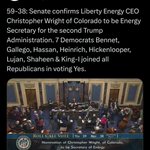
Hey why did you fast track a bunch of Trump judicial appointments LITERALLY TODAY.

I welcome any discussion about the future of our caucus and the important work ahead. I’m proud of what we’ve accomplished together—55 seats and counting is an amazing result—and I have the votes to continue serving as Democratic Leader.
I look forward to leading our new Democratic majority and delivering for the American people.
Readers added context they thought people might want to know
The current Senate Majority Leader is still John Thune until the new Congress is sworn in in January. Schumer does not have power to stop nominees. x.com/grok/status/21…
Tania retweeted

Last week the voters sent a loud and clear message: we cannot return to business as usual in Washington.
We need to meet the moment with a bold agenda to deliver for working people.
That is why I am running for Senate Majority Leader.
Tania retweeted

In this election, Americans called on us to unrig an economy rigged against working people & fueled by political corruption.
To deliver, we need new leadership. This isn't about any one person – it’s about answering that call.
That's why I’m running for Senate Majority Leader.
Tania retweeted

Hey Chuck question: when you told the NYT last year your job was to “keep the left pro-Israel,” what did you mean? Did you mean it’s your PRIMARY job, your ONLY job? or like number 8 or 16 on a list of jobs? and if it’s simply A job, where would you rank it?

Tania retweeted

Last night, Israel bombed a hospital in southern Gaza, killing six people, including a surgeon, and leaving two more doctors in critical condition. This is just another violation of the so-called ceasefire and a further escalation of Israel's attacks against Gaza's healthcare infrastructure and medical providers.
Enough is enough. Congress must pass the Block the Bombs Act.
Tania retweeted

Sitting in this -
In 2025 I was privileged to be on Zohran Mamdani’s journey where he was told he had no chance.
In 2026 I was blessed to be with Scott Colom who was told that he had no chance.
These are very different candidates. But they both have the engagement gene. They ignored the pundits and the big donors and the incessantly online class. They went out and got caught listening to actual voters. They reflected back what they heard and put real resources into grassroots organizing and creative media instead of the same old mediocre ads. They both went after voters that had supported Trump despite what the polls told them. They both also ran with a sharp critique of the greed overtaking our institutions. And they did all this while maintaining their own values.
Of course the rest is history.
Sitting in this knowing that after this election, many will convene around analysis written by folks who have spent more time on this platform than time spent at the door of a voter. They’ll over-project snapshots of data that tell stories tethered to their own prior biases. Much of that will inform the road ahead for 2028. It will mostly be wrong because it will be wrapped in an arrogance about a future none of us can predict and it will be utterly devoid of the humility that comes from sitting on a doorstep and engaging with someone who is very different than you are. Rinse and repeat.
I’m very much looking forward to upending their wisdoms. With the modesty of an organizer.
Tania retweeted

Couldn’t be more obvious what’s going on here:
Israel’s forces are lining up behind Hakeem Jeffries to keep the war on Iran funded under Democrat rule

Tania retweeted

These war crimes are being perpetrated with our tax dollars. Every life stolen in Gaza is a direct consequence of our failure to end military sales to Israel.
The American people voted for anti-war platforms all across this country.
Block the bombs and end the genocide, NOW.

For the seventh time, Israel has targeted Gaza’s Nasser Hospital in an air strike, further devastating an already decimated healthcare system.
Palestinians are left with nowhere to shelter as heavy rainwater floods makeshift tents.
Al Jazeera’s @marahrayan has the latest.
Tania retweeted

spoken like a true leader.

Abdul El-Sayed absolutely destroys Donald Trump.
Q: You recently called President Trump the dumbest effing guy who ever was president.
AES: True.
Q: You've also said Democrats should drop the decorum and treat the president as the unserious fool that he is.
AES: True.
Q: Why are you taking that approach?
AES: Because he's a bully alongside being a narcissist. And the only way you deal with bullies is to stand up to them. Bullies don't bully you because they necessarily care for the thing you have. They bully you because they like to bully you because it makes them feel strong. And the way you take on a bully is to bully back. Because then they learn that this does not make them feel strong. It makes them feel weak and they don't like to feel weak. So they back off. And the more you let a bully get away with bullying, the more they signal to everybody else that this person cannot be stood up to. And so I think it's important for us to stand up to him.
Tania retweeted

Hakeem Jeffries voted for:
H.Res. 719 — Honoring Charlie Kirk
H.R. 8034 — Arming Israel's genocide
H.R. 6090 — Making criticism of Israel a hate crime
H.Res. 883 — Designating "from the river to the sea" as antisemitic
H.Res. 888 — Made denying Israel's "right to exist" antisemitic
H.Res. 798 — Condemned anti-genocide protests on campuses
H.Con.Res. 57 -- Declared Israel as not racist and not apartheid (yes, that was a real thing that he really voted yes on)
H.R. 5323 - $1 billion more Iron Dome (in 2021)
H.R. 7006- Cut funding for UNRWA and stated USA would not recognize the international criminal court
H.Res. 481-Called anti-zionism antisemitism
H.R. 6408-Removed tax-exempt status for groups opposing genocide
H.R. 6679-Restricted admission to the USA for PLO reps
H.Res. 927-Condemned college presidents over bogus allegations of campus antisemitism
H.Res. 11-Objecting to the UN resolution criticizing Israeli occupation in Palestine
H.Con.Res. 58 - Denouncing the "horrors" of socialism
S. 1582- let Crypto do whatever it wants
H.R. 1346- Fuel "choice" bill that increased fossil fuel emissions by 25% through added ethanol
H.R. 5009 -Supported defense authorization that restricted gender-affirming care
H.R. 6544- Weakened nuclear regulatory power
H.R. 5110-Allows the government to give money to school programs that teach kids how to shoot guns
H.R. 3746-Gutted NEPA, approved controversial pipeline, tighter restrictions on SNAP


Tania retweeted

Democrats fail to call for a recorded vote and GOP passes its bill that cuts veteran disability benefits and forces veterans to pay more to use VA home loan benefits … on Veterans Day
This is the type of thing that would ideally be paid attention to and handled by party leadership. In this case, that would be Leader Hakeem Jeffries and Whip Katherine Clark.
This is less than 24 hours after they failed to whip members on a vote to impeach Secretary of War Pete Hegseth, which failed by a 210-204 vote margin with 11 absent Dem members.

Tania retweeted

UPDATE: Rep Brittany Pettersen (D-CO) missed the Hegseth impeachment vote and her team dodged our questions about her whereabouts.
@MarshallZNews learned Pettersen was at a party for an AIPAC-linked Super PAC.
Tania retweeted

EDW is a pass through entity for AIPAC
Brittany Pettersen missed impeaching Hegseth for his illegal Iran war because of an AIPAC event.
Massive mistake. Looks like the 2028 primary season is starting early! Get in folks, we're retiring another Corporate Democrat.


Tania retweeted
In other words:
Brittany Pettersen missed the vote to impeach Pete Hegseth because she was at a fundraiser for an AIPAC pass through organization and lied about it.

Pettersen was at an Elect Democratic Women event and initially said she was “denied the ability to vote.” 9news.com/article/news/local…
