

The small business resource you can ask. Resources, free tools, and HelperX Bot @ https://xitter.gq/t.co/XYCReTnNpu | Business Directory @ https://xitter.gq/t.co/NqpgKJlCtK
Canada
Joined August 2012
- Tweets13.8K
- Following833
- Followers1.3K
- Likes820


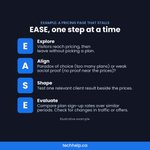


"It'll change how you work forever."
"Not bad for a five-minute setup."
Both lines are selling something good. Only one sounds believable.
The second one uses understatement, one of 10 literary devices in our copywriting guide. Played down a little, a benefit can come across as more impressive, because you don't sound desperate for the sale. The reader fills in the rest.
It only works when the claim holds up. "Not bad for a five-minute setup" falls apart if setup takes an afternoon. Pair understatement with a result that's impressive on its own, and let the reader see it.
It also has to fit your voice. Understatement suits brands that sound dry or premium. A loud, playful brand might get more from hyperbole, as long as the exaggeration is obviously a joke and not a promise.
Whichever device you pick, use one per message. A headline that stacks a metaphor, alliteration, and a rhyme starts to feel like a performance. Choose the one that serves your point and let it work alone.
The other nine devices, with examples of each:
→ techhelp.ca/literary-devices…

13
In Gartner's 2024 survey, 73% of B2B buyers said they actively avoided suppliers that sent irrelevant outreach.
The survey covered 632 buyers, and Gartner published the findings in June 2025. When you're reaching out to a big account, "irrelevant" usually means the message could have gone to any company on your list.
A stronger message has three parts:
1. What you noticed. Something public and recent, like a new location, a hiring push, a new product line, or a leadership change.
2. Why it matters. What that change tends to create for a business like theirs.
3. What you'd explore together. One specific idea, offered as a conversation instead of a pitch.
A hypothetical example, if you have relevant experience to share:
"Saw you're opening two new clinics this spring. Growth like that often swamps the front desk, since bookings climb before staffing catches up. Would it be useful to compare notes on how other multi-location practices handled intake in their first few months?"
If you can't fill in all three parts, the message isn't ready to send.
Keep two limits in mind. Don't over-claim, because big buyers are good at spotting inflated promises. And don't over-personalize. Stick to what's public and relevant to the business. Details from someone's personal life read as creepy, not thoughtful.
11
Before you hire a virtual assistant, spend a week writing down every task you do more than once.
Sorting the inbox. Booking meetings. Following up on unpaid invoices. Updating the CRM. Scheduling social posts. Pulling numbers for the monthly report.
By the end of that week, you'll have a better job description than any template can give you. Some tasks will stand out right away. They repeat, follow a clear process, and don't need you to make every decision.
Next, write one line for each task you plan to hand off, saying what done looks like. "Manage my inbox" is vague. "Reply to booking requests within one business day" is something you can both measure.
Before you commit to anyone, give your top candidate a paid trial task from the list. One real task shows you more about accuracy, speed, and how someone communicates than an hour of interview questions.
A good VA can take plenty off your plate. The list makes sure it's the right work.
7
If profit is whatever's left at the end of the month, some months there won't be any.
The usual formula:
Sales − Expenses = Profit
The Profit First model, from author Mike Michalowicz, flips the order as a cash-allocation habit:
Sales − Profit = Expenses
Money lands in an income account. On planned allocation days, you reserve a share for profit before budgeting the rest. Moving cash between accounts doesn't, by itself, make the business profitable.
It works with separate bank accounts, each with one job:
• Income, where every payment lands first
• Profit
• Owner's pay
• Taxes
• Operating expenses
Our guide illustrates a split of 5% profit, 20% owner's pay, 15% taxes, and 60% operating expenses. For a service business with $10,000 of revenue excluding sales tax, and no materials or subcontractor costs, that's $500, $2,000, $1,500, and $6,000. The graphic shows that example.
Those are example percentages, not recommended targets. Set your allocation base and percentages with your accountant. Keep GST/HST collected separate from this split.
The operating account gives you a spending boundary. Check upcoming bills and obligations before treating its balance as spare cash.
How to set it up, and the kinds of businesses it doesn't suit:
→ techhelp.ca/profit-first-mod…

8
WooCommerce Stripe 11.2.0 and 11.1.2 tighten payment checks. Stores affected by an earlier password bug have separate follow-up to consider. #WooCommerce #WordPress techhelp.ca/woocommerce-stri… via @techhelpcanada

11
A Kang title. A Doctor Doom twist. Kevin Feige says Marvel considered setting up Doom midway through The Kang Dynasty, before the film became Avengers: Doomsday. #Marvel #DoctorDoom techhelp.ca/marvel-doctor-do… via @techhelpcanada

73
Paramount and Warner Bros. retain separate film labels, but distribution and marketing leadership are converging. A planned TV studio merger goes further. #Paramount #WarnerBros techhelp.ca/paramount-warner… via @techhelpcanada

19
Australian screen groups are challenging AI copyright opt-outs. The dispute goes beyond payment to who decides whether creative work can be used for training. #AI #Copyright techhelp.ca/australian-scree… via @techhelpcanada

7
Java4Shell fixes are available, but not every Java deployment is exposed. CPU features, bundled runtimes and application input paths determine the risk. #Java4Shell #Cybersecurity techhelp.ca/java4shell-enter… via @techhelpcanada

18
Two Microsoft Agent Framework releases hid malware that ran at Python startup, even without a framework import. Researchers urge affected teams to rebuild and rotate exposed secrets. #Cybersecurity #Python techhelp.ca/microsoft-agent-… via @techhelpcanada

15
Nvidia posted record quarterly sales of $115.8 billion and confirmed a halt to licensed Hopper shipments to China. Its next-quarter forecast assumes no China data center compute sales. #Nvidia #AI techhelp.ca/nvidia-record-sa… via @techhelpcanada

13
The FTC challenges American-made claims on Alabama-assembled Elk River harnesses. A proposed settlement includes customer notices and a mostly suspended judgment. #FTC #MadeInUSA techhelp.ca/ftc-elk-river-ma… via @techhelpcanada

4
U.S. incorporation isn't an automatic exemption under CBP's new importer rule. Covered foreign-importer entries require CTPAT validation or a validated broker from January 5, 2027. #USTrade #Customs techhelp.ca/us-customs-forei… via @techhelpcanada

1
10
"You'll notice how smooth it feels."
"It feels smooth."
The second line is shorter, and it lands harder. It gives the reader the feeling directly instead of telling them they'll notice it.
"Notice" is a filter word, like "see" or "realize." Filter words put a layer between the reader and the benefit. Leaning on them is one of four small habits that weaken otherwise good copy.
Filler words sneak in when you write fast. "Our service is really fast" says less than "Our service is fast." The "really" makes it sound like you're trying to convince yourself.
Lazy modifiers lean on an adverb to carry the sentence. Instead of "This step is extremely important," say why it matters. "Skip this step and the form won't send" does the job without the adverb.
Weak endings trail off. "It works kind of well" leaves the reader with the hedge. "It works" leaves them with the claim. If you can't say it without the hedge, find a claim you can stand behind.
You can catch all four in one editing pass, usually by deleting a word or two. The image lists the words to search your draft for.

8
Moncton led on openings minus closures relative to market size in our Aug 2025–Jul 2026 study. How does your shortlist compare across 35 Canadian metros? #CanadianBusiness #Entrepreneurship techhelp.ca/business-opening… via @techhelpcanada

9
The biggest name on your prospect list might be the wrong one to chase.
It's easy to rank big prospects by brand recognition or headcount. A better test asks two things. Would one win make a real difference to your revenue? And can you deliver at the level that client expects?
Our guide to winning high-value B2B clients runs every target through three filters:
Value. There's enough budget and scope to justify months of effort.
Winnability. You can credibly deliver results at their level of complexity.
Timing. Something has given them a reason to rethink how they do things now.
Timing is the easiest one to skip. Larger companies tend to buy when something changes: a new leader, a budget reshuffle, an acquisition, a hiring surge, a new product line, or frustration with their current vendor. If nothing has changed, you're asking them to fix a problem they've learned to live with.
Fit still matters after the contract is signed. Win an account you can't serve well, and you'll spend the next year trying to keep it.
Score your top five prospects with the card in the image before you write a single email.
How to approach the accounts that pass:
→ techhelp.ca/whale-hunting/

13
Coaching or counseling? Compare the scope, check credentials, and ask better questions before choosing support. #Coaching #Counseling techhelp.ca/coaching-vs-coun… via @techhelpcanada

3
A download doesn't prove buying intent. Compare gated and ungated content, choose what to keep open, and measure the leads that fit your business. #ContentMarketing #LeadGeneration techhelp.ca/gated-content-vs… via @techhelpcanada

13
"Update the website" has been on your list for weeks. Every morning, you skip it for something easier.
When a task sits that long, the way it's written is often what's stopping you. It's either too vague, so you can't picture what done looks like, or too big, with a dozen decisions packed inside it.
The chunking method deals with both. You break the task into pieces small enough that the next step is obvious and easy to begin.
"Update the website" might become:
• List the three pages that get the most traffic.
• Rewrite the homepage headline.
• Swap in the new team photo.
• Send the services page draft to one person for feedback.
Each piece has a clear finish line. You could start any of them in the next 10 minutes.
Still hesitating? The chunk is probably still too big, so split it again. And if you're stuck because you don't know what the answer should look like, make the first chunk about clearing that up. Gather a few examples, confirm what's required, or sketch a rough outline, then come back to the harder step.
Use the three-way test in the image to tell whether a chunk is ready to work on.
Pick the task you've avoided the longest and write down its first chunk today.

9
More sales don't guarantee a worthwhile project. Compare costs, benefits, timing, and risk with a practical cost-benefit analysis. #BusinessStrategy #DecisionMaking techhelp.ca/cost-benefit-ana… via @techhelpcanada

2