






Ted Cross retweeted

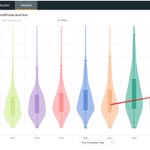
Missed Brandon Myers’ presentation at #SPEDenver? Don’t worry—you can still catch all the insights from the #RockiesResourceRumble presentation!
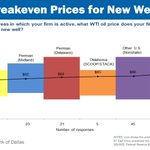
Discover how #machinelearning is shaping the future of Rockies resource development with key insights on #Interbasinrockquality, #operatorrankings and remaining inventory value.
Download the presentation now! 📊 novilabs.com/resources/spe-d…


Ted Cross retweeted
As the holiday season arrives, we want to thank our amazing community of energy pioneers, trailblazing customers, and the unstoppable Novi team: YOU are the driving force behind our mission to transform the energy analytics landscape. Your insights, passion, and collaboration have fueled incredible progress this year as we tackled challenges and innovated for a more sustainable, affordable, and resilient energy future.
We’re excited to carry this momentum forward into the new year and continue working together to drive progress and innovation in our industry.
Wishing you all a #MerryChristmas and a #HappyNewYear from all of us at Novi Labs!✨🌟

Ted Cross retweeted

I fully recommend The War Below. While those of us in industry were aware of the core issues detailed in the book, the story telling and anecdotes in this book carefully and expertly convey the message to the broader public.

Ted Cross retweeted
Missed our most anticipated #SPEDSEATS webinar yet?👀
Dr. Dillon Niederhut breaks down #causalinference and how it’s revolutionizing #petroleumengineering decisions.
Full recording now available - this packed session is one you don’t want to miss! novilabs.com/resources/spe-d…

Ted Cross retweeted
What role does #AI and #machinelearning play in transforming the #oilandgas industry?🤔
Jon Ludwig, President and Co-Founder of Novi Labs, dives into real-world applications that are reducing costs, mitigating risks, and unlocking future opportunities.
Watch the full interview from @hartenergy’s Executive #OilConference now! hartenergy.com/exclusives/ex…
During the lockdown, for a “stay sane” splurge, my wife and I rented out a small movie theater to watch Tenet by ourselves. We had a blast!

Ted Cross retweeted
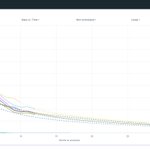
For anyone wondering what this looks like from 30,000 ft view. In tier-2 through 4 rock we see anywhere from a ~15% to 40%+ decline in capital efficiency and per foot productivity. Unless rig+frac count go up 15% to 40% production will decline into the end of the decade.


Have operators exhausted inventory in the Bakken? The play still produces ~1.8 million boe per day, though many are wondering what its future holds. We have put together our most detailed inventory study yet -- let's dive in.
On the left, I am plotting the inventory "drawdown" going back to 2005, with ~35,000 total locations in our model (note we do not include Elm Coulee). We have broken out drilled and remaining locations into four equal Tiers based purely on rock quality (ignoring parent-child, unit size, etc.).
Operators have drilled ~80% of Tier 1 locations and 60% of Tier 2; less than 2,000 Tier 4 locations have been drilled to date. Beyond that, we estimate >50% of remaining Tier 1 locations are encumbered by surface issues, such as rugged badlands topography, lake cover, or sitting in National Forest lands. Much of the remaining Tier 1 beyond that is infill.
You can see the exhaustion of Tier 1 in the pattern of drilling over the years. During the 2010-2014 peak, when operators were delineating acreage and ensuring HBP, drilling was roughly equivalent between Tier 1, 2, and 3. From 2017-2020, drilling in Tier 1 dominated.
However, in the most recent peak (2023), operators drilled a higher portion of Tier 2 for the first time, increasing oil production ~20%. We have covered this production ramp-up previously, but to summarize: operators increased lateral length, widened spacing, and focused on the more productive Middle Bakken to improve economics.
While the Bakken is a meaningful play in its own right, we believe it offers an important analog to the Permian in questions of inventory exhaustion. By comparison, the Delaware and Midland have a much higher percentage of their Tier 1 and Tier 2 rock remaining, not to mention that "lower-Tier" Permian rock still offers globally-competitive half-cycle breakevens.
The Permian, because of its immense resource and complexity, also has significant more potential for exploration than the Bakken-Three Forks, with emerging plays like the Barnett showing strong early results. That must also be taken into account when applying the analog model of the Bakken (a 10-year plateau from 2014 through today) to speculate about the future of the Permian, the Vaca Muerta, or other large-scale, complex plays.
#eft #oott #com
Ted Cross retweeted
Mark your calendars!🗓️
Novi’s first event of 2025 lands in #Houston on Jan 23, bringing together O&G leaders to tackle pressing questions around basin scoping, advanced M&A and inventory analysis, and strategic A&D workflows.
You’ll engage with senior executives in interactive discussions on U.S. energy development, covering a broad range of topics in asset development and M&A analysis, along with a sneak peek at Novi’s latest innovations in upstream intelligence, research, and data & analytics.
Seats are limited—don’t miss out! Apply now: novilabs.com/novi-houston-co…

Ted Cross retweeted
Only 2 days to go! Join Dillon Niederhut, Head of Data Science at Novi Labs, for an insightful SPE Webinar on December 11.
In his talk, “You Are Smarter Than Your Data: An Introduction to Causal Inference,” Dillon will introduce techniques to identify the true drivers of outcomes and make more informed decisions.🚀
Register now to save your seat! novilabs.com/events/spe-data…

Ted Cross retweeted
One week countdown!⏰
Join Brandon Myers, Head of Research at Novi Labs, for an insightful presentation at the #SPEDenver General Meeting on December 11th, 11:30 AM–1:00 PM.
Discover how #machinelearning can reveal the next decade’s top-performing #Rockiesoperators and basins. The session will cover:
• Inter-basin rock quality
• Half-cycle benchmarking
• Operator rankings & inventory value
Secure your spot now! novilabs.com/events/spe-denv…

Ted Cross retweeted
Next week, Dillon Niederhut, Head of #DataScience at Novi, will present at the #SPE Data Science and Engineering Analytics Webinar.
This is your chance to uncover how #causalinference can help you cut through noisy data and pinpoint the real drivers of outcomes in #petroleumengineering.
If you haven’t signed up yet, now’s the time. Spots are limited, don’t miss it! novilabs.com/events/spe-data…

Ted Cross retweeted
🚨 NEW REPORT ALERT: Why did @ovintiv trade $2B of #Utah assets for premium Canadian #Montney acreage? And what’s #FourPointEnergy stepping into with its new #Uintaassets?
Our deep dive uncovers how this bold move positions them for growth in North America’s top basins. Full analysis here novilabs.com/resources/ovint…


Ted Cross retweeted

We had @BrandonMyers10 come kick off a PRB Operators Consortium we hosted in August. Great guy, great analysis - highly recommend hearing what he has to say

Folks if you are in the Denver area, you should strongly consider making time for our head of research @BrandonMyers10's upcoming presentation on December 11th. It'll be an interesting study of the DJ, PRB, and Williston basins.

Will the #DJ be able to take on powerhouse #Williston and rising-star #PRB?
On the 11th of December from 11:30 AM to 1 PM, Brandon Myers will present at #SPEDenversection: “Rockies Resource Rumble: Using #MachineLearning to Determine if the DJ Can Compete with the Venerable Williston or the Upstart PRB” where he will uncover which operators in the Rockies and basins are best positioned for success.
With the year nearing its end, this presentation provides an outlook on the future of resource development in the #RockyMountain region after a transformative year in the energy space. Reserve your spot today! novilabs.com/events/spe-denv…

This Thanksgiving week, I'm giving thanks for fracking, which has turned the US back into an oil and gas superpower.
Since 2005, operators have added over 21 million barrels of oil equivalent production per day thanks to fracking technology and horizontal drilling, which have unlocked hydrocarbons trapped in low-permeability rocks.
"Oil Equivalent" is in the headlines more than usual this week after Trump's Treasury secretary nominee called for a 3 million "barrel equivalent" rise.
The "equivalence" is energy equivalence -- 6,000 cubic feet of gas have about the same energy content as a barrel of oil (even though they are significantly less valuable).
On a barrels-equivalent basis, the US produces more than Russia and Saudi Arabia combined.
Today, around 2/3 of the barrels equivalent production comes from gas, thanks to the prolific Marcellus gas field in Appalachia, the Haynesville in the Gulf Coast, associated gas in the Permian, and a slew of other plays around the country.
But even for oil production alone, the US produces more oil than any country in the history of the world.
This incredible energy resource has contributed to America's economic outperformance over the last decade. US manufacturing and the consumer have benefited from cheap energy and raw materials, mitigating inflationary monetary policy.
Now, the rest of the world is starting to adopt fracking technology, with strong growth from unconventional reservoirs (aka "shales") in Canada, Argentina, the Gulf states, and China. Let's be proud of our domestic oil and gas industry for providing this incredible innovation 🇺🇸

