editor @RattlePoetry | thoughts my own
The Woodlands, TX
Joined January 2009
- Tweets5K
- Following647
- Followers2K
- Likes5.1K

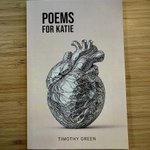






I have a new book this summer! But I've done a terrible job of supporting it while juggling everything else.
If anyone would like a review copy, DM me your address. It would be nice to have some published reviews of it out there, positive or negative.

Happy to have a rare concrete poem in the @newversereview's special Halloween issue! So many great contributors. Check it out to read the full poem, and read the rest to get into the spooky spirit!
newversereview.com/issue-3-4…

Fun battle going on right now in the Rattle charts between Joshua Adam Walker's long and hilarious "Epic of Aisle Seven" and the sparse and memorable "Elegy of a Canceled Poet" by Aisha Khalid: rattle.com/poems/popular/

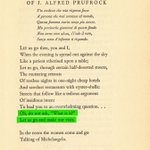
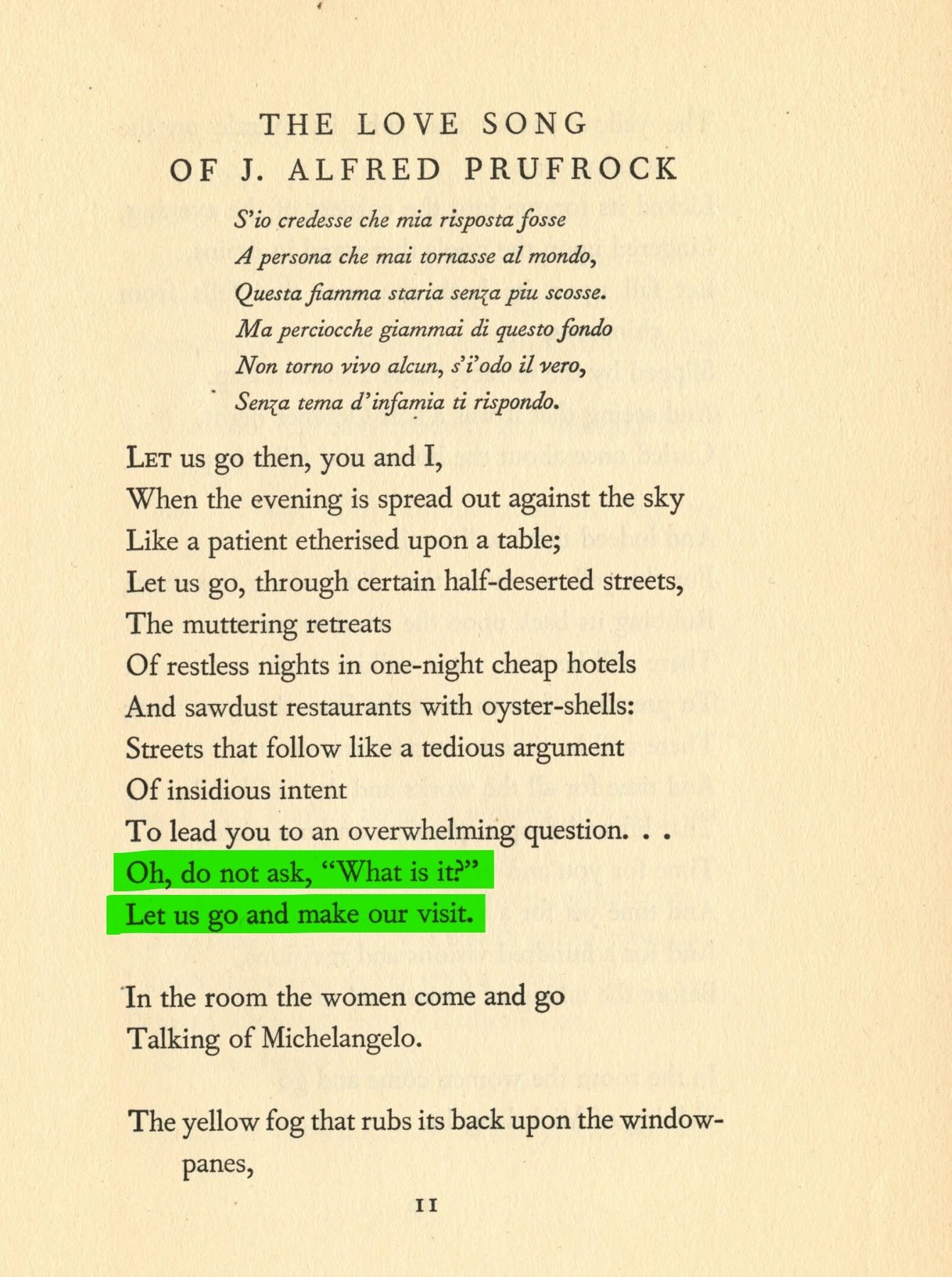
Over 20 years ago, trying to figure out a way to score and organize the Rattle Poetry Prize entries, we decided to do it Olympic style, 1-10. Without giving it any thought at all, I said at some point "10 is Prufrock"—and 10 has been Prufrock ever since as we pour over the poems.
There are many other poems could have been the exemplar of a perfect score, but "Prufrock" does make an especially strong case. It's engaging on the first read, rich with music, rife with memorable lines, layered enough to re-read endlessly, and pulls a deep understanding out of the cultural Zeitgeist—it's historically significant as it foretells the major psychological struggle of the next century.
I do wonder, is it the best poem ever written? If not, what poem would you nominate instead?
To me, it's kind of like what Churchill said of democracy. It's not the best poem, except for all the others.
Prufrock was the topic of the latest double-episode of The Poetry Space_. Check it out if you missed it.
But do let me know, because I'm super-curious: what poem would be your example of a 10?
Any football fans out there? We have two open slots for the storied Rattle Fantasy Football League. Now in our 15th season (not a typo), the league is full of poets (plus a couple old friends).
Every year, I buy the winner a trophy.
Last year it was actually Katie who took her big game skills and surprised everyone with a late-season surge. Will you be the one to take down Iamb Gonna Win?
It's a 10-team league, half-PPR, two-keeper, draft this Saturday, now housed in the ESPN app.
Comment if interested!

Timothy Green retweeted

Publication day: “Pattern Recognition” is up today at @RattlePoetry. Rattle means a great deal to me, and I’m especially grateful to @timothygreen for giving this poem a home.
rattle.com/pattern-recogniti…

As AI was emerging in late 2022, it immediately occurred to me that authorship and provenance were going to be serious issues in the future. Fake poems come so cheaply now that they threaten to flood out the real ones. "Soon we'll have to deploy AI to judge if poems are written by AI," I tweeted (it was still Twitter then).
One solution I played with was recording myself writing poems. I called the series "Poiesis"—the root of the word "poetry," which means the act of creation.
Poetry is the creation of meaning through the music of speech. That's not a figurative statement; it's literally true. Our first task in the story of Genesis is to name everything, and that's what we do as humans—it's our fundamental task on behalf of the universe. We use the tool of poetry to turn our thoughts, feelings, and stories into fixed mental objects that we can understand, share, and manipulate, so that we can build and grow.
Every newly articulated idea is a poem. Every word is a metaphor, pulling out and "carrying over" a pattern from the chaos of our experience into the models of our understanding.
A Poiesis records every keystroke of that act.
Of course this doesn't actually prove I wrote the poem myself. I could have used AI to write the sonnet, memorized it, then recorded myself pretending to write it from scratch.
But I did write it from scratch—a "sobering sonnet," I called it, where the slant rhymes become more true as the story becomes more serious. Every keystroke really was recorded along the way. It took 31 minutes of time sitting with the document open, including a long pause cut at the end as I slept on it and made a few small edits the next day.
The video itself is sped up 7x, so that it only takes about 5 minutes to watch, including a reading at the end, but you can see my actual process, which always feels to me like mining a gold vein, slowly excavating what I come across, occasionally taking a wrong turn, going back, and trying another angle.
I imagined these as some day running on a loop in an art gallery. (If anyone runs an art gallery, feel free to make that happen!) I love the clatter of keys, which could sound great echoing in a mostly empty room, so if you watch it, be sure to have the volume up.
I only made two. That's the downside of using poetry as a sandbox to play in—I'm always moving on to other toys. The truth is, I much prefer writing on a little laptop, and the hard drive is way too small to be recording my screen all the time.
But it's fun to look back at now and commune with the iteration of myself that I was on March 6, 2023. Like a diary, it's a gift to the future you. I wish I had more of them.
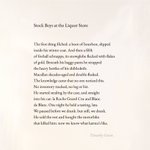
"Stock Boys at the Liquor Store" is not in Poems for Katie, because it's not about loneliness and divorce and then falling in love. It's just a story about something that happened when I was a teenager. But it did come from a Rattlecast prompt: Write a poem about a time you faced a moral dilemma.
Watch every keystroke of the construction of this sonnet and the story behind recording it over here:
substack.com/home/post/p-212…

I was watching a documentary about Machu Pichu this morning, as I find ancient architecture and archeology fascinating, and someone in the comments shared a link to another video breaking down how the site was constructed.
The channel is called Mudfossil University, and all of its videos consist entirely of a guy's hand pointing at pictures on his computer screen as he explains that geological artifacts are actually the remains of giants. Machu Pichu was built from slabs of muscle tissue from a giant that died nearby.
He kept using technical terms like "tandon" and "blud"—it took me a few minutes to realize he was actually saying "tendon" and "blood" and that me meant those literally. The red of iron deposits are actually blood stains. Devils Tower in Wyoming is actually the Achilles tendon of Achilles himself, a legend based on a real a two-mile tall giant who walked the Earth with the dinosaurs. Dinosaurs themselves were like geckos to him. The top of the tower is where the tendon snapped.
The host of this presentation, and all the hundreds of comments on each video are completely earnest. This is their reality.
The videos have tens of thousands of views, some almost a million. The channel itself has 350,000 subscribers.
I've been meaning to make a happy post about Rattle's channel reaching 8,000 subscribers this week, after 7 years and a thousand hours of high-quality content, and encourage you to subscribe if you haven't yet.
I think I'll quit poetry altogether and become a hermit instead.


Standing on a trail at the rim of the mountains overlooking out over the Mojave Desert, I could never not think about how it was once an inland sea surrounded by savannah, full of mastodons who spread the seeds of the Joshua trees in their droppings. And how impossibly recently that actually was.
A sonnet from Poems for Katie.
timothy-green.org/books/


A poem is a small piece of a human soul given freely to the universe. It's beautiful when it happens, even in the effort of the act alone.
For me:
If it's a poet or publication that I know that I admire, it can be as high as 10-20%. A few poets that I really love get as high as 30%.
An average, curated poem regardless of venue: 1%. So just a number, that'd be my answer.
Submissions: 0.1% for the curious.

What percentage of all the published poems that you encounter do you actually enjoy?
Only answer with a number.