

Tom Wheelwright, CPA is an international speaker and worldwide authority on cutting taxes and building wealth.
Tempe, Arizona
Joined March 2020
- Tweets1.2K
- Following13
- Followers2.9K
- Likes26




I’ve been seeing it all over social media and in the news again: Robert Kiyosaki is $1.2 billion in debt.
To most people, that sounds like the worst financial situation you could possibly be in. But the borrowing Robert talks about is intentional, and the debt number alone tells you very little about his financial position.
I’ve worked with Robert as his tax advisor for years. To understand his approach, you have to look at what he uses the debt to buy.
He uses borrowing to acquire assets intended to produce income.
That is a very different financial situation from borrowing to cover expenses you cannot afford.
Let me give you an example. Suppose an investor owns $2 million in real estate with $1.2 million in loans against it. You could write a headline saying that the investor is $1.2 million in debt.
You would also be leaving out $800,000 in equity.
Now, equity is only part of the picture. We also need to know whether the property produces enough income to cover operating expenses, repairs, reserves, and loan payments.
A valuable property can still create financial trouble if it cannot support its debt.
The loan terms matter, too.
With recourse debt, the lender may be able to pursue the borrower’s other assets if the collateral does not cover what is owed. With nonrecourse debt, recovery is generally limited to the collateral, subject to the loan’s terms and exceptions.
The size of a loan does not tell you what type it is. You have to understand the agreement.
And there is another distinction in Robert’s case. Reporting describes the $1.2 billion figure as borrowing across real estate investments held with partners, rather than $1.2 billion he personally owes.
See, you cannot evaluate someone’s finances by looking at the liabilities and ignoring the assets.
You need to understand what those assets are worth, what income they produce, and what happens if that income falls or the debt needs to be refinanced.
The goal is to own productive assets with financing that they can support.
So when you see a headline about someone’s debt, ask what is on the other side of the balance sheet. That is where the useful conversation begins.

This is a perfect example of what I mean when I say the tax law is a series of incentives.
The government just identified 6,576 places where it wants more investment, and it is offering tax incentives to help attract that money.
Treasury and the IRS announced new Opportunity Zone designations across all 50 states, U.S. territories, and the District of Columbia. They take effect on January 1, 2027, including 2,594 rural census tracts eligible for enhanced incentives.
The government wants capital flowing into communities that need investment. Investors who follow the rules can receive favorable tax treatment for helping accomplish that goal.
Now, buying a property inside an Opportunity Zone does not automatically give you those benefits. The investment generally needs to be made through a Qualified Opportunity Fund, and there are requirements for the investor, the fund, and the underlying business or property.
Finding the right location is only one part of the strategy.
You also need to understand which gains qualify, when you must invest, how long you need to hold the investment, and when taxes become due. Deferring a tax bill and eliminating it are two different outcomes, and your plan needs to account for that.
And remember, the investment still needs to make financial sense.
A tax incentive cannot fix a property with weak demand, excessive debt, or an unrealistic business plan. You need to evaluate the investment itself, then calculate how the tax benefits affect what you expect to keep.
If you are planning to sell a business, stock, or another appreciated asset, involve your tax advisor before the sale. Ask whether an Opportunity Zone investment fits your situation, how long your money would be committed, and what risks you would be taking.
The government has told you where it wants investment. Your next step is to understand whether helping meet that goal also supports your own.

Regardless of who wins an election, you still need a plan for your taxes.
Elections matter. The people we elect can change tax rates, deductions, and the incentives available to business owners and investors. Those changes deserve your attention.
But waiting for the next tax cut is not a tax strategy.
You already make decisions throughout the year that affect what you owe. How you earn your income, how your business is structured, and what you do with your money all play a role.
Now, the useful conversation with your tax advisor is about how those decisions fit together.
If you are planning to expand your business, involve your advisor before you commit to the spending. If you are buying an investment, understand its tax treatment before you calculate what you expect to keep. If you are preparing to sell a business, start planning while you still have choices about the transaction.
The timing matters because your advisor has more options before you take an action than after it is completed.
This is why I say, “If you want to change your tax, you have to change your facts.”
An election can change the rules. Your responsibility is to understand the rules that apply to you and make informed decisions within them.
Start by asking your advisor to project your tax bill using your current income and plans. Then ask which opportunities apply to you, what actions they require, and when those actions need to happen.
You should also understand how your plan would respond if the law changes. A good strategy gets reviewed as your business, investments, family, and the tax law evolve.
You do not have to predict the next election to start that process.
Whatever your political views, taking ownership of your tax planning is something you can act on today.

Before you move to save on taxes, make sure you’ve calculated which taxes you’re actually saving.
This chart puts Illinois at a 1.84% effective property tax rate and Hawaii at 0.33%.
That is a significant difference. But you are buying a specific property, and the statewide average is only a starting point.
Let me give you an example. On a $500,000 home, a 1.84% effective rate would mean $9,200 a year in property taxes. At 0.33%, it would mean $1,650.
That is $7,550 a year you could put toward something else.
But that comparison assumes the same home value. If you spend substantially more to buy in the lower-rate state, the financial benefit changes. Insurance, maintenance, and other taxes affect the calculation too.
Now, before you start packing, look at the property you already own.
Review your assessment for errors. Check the square footage, property details, and valuation against comparable homes. If the assessment is wrong, find out what evidence you need to challenge it and when the appeal is due.
Then check which exemptions you qualify for. Depending on your location, homestead, senior, or veteran benefits may reduce your bill, but you may need to apply.
If you are buying, ask what your property taxes will be after the purchase. The seller’s bill may reflect exemptions or assessment limits that will not apply to you.
This is what I mean when I say, “If you want to change your tax, you have to change your facts.”
Moving changes your facts, but so does correcting an inaccurate assessment or establishing eligibility for an exemption.
Have your advisor compare the full tax picture before you make the decision. You want to know how much money you will actually keep.

The IRS collected a record $5.6 trillion in fiscal year 2026, nearly 5% more than the previous year.
Now, that tells you how much the government collected. It does not tell you whether you paid more than you legally needed to.
That depends on your facts, how you earn your money, how you invest it, and whether you use the incentives available to you.
The tax law is a series of incentives. The government wants businesses to invest in equipment, provide jobs, and offer retirement benefits, so it provides tax benefits for qualifying activities.
But you have to meet the requirements to receive those benefits.
Let me give you an example. Suppose your business needs a $50,000 piece of equipment. Before buying it, ask your tax advisor how much you can deduct, when you can deduct it, and when the equipment needs to be operating to qualify.
Then look at what you are actually spending. If you qualify for a full $50,000 deduction and it offsets income taxed at 30%, your federal income tax savings would be $15,000.
You still spent $35,000 after that savings. The purchase needs to make sense for your business.
The same thinking applies to retirement planning. The right plan can allow you to put money toward your future while reducing your taxable income today. But the plan needs to fit your cash flow, your employees, and when you will need access to that money.
This is why I say, “If you want to change your tax, you have to change your facts.”
Before year-end, ask your advisor to project your tax bill and explain which actions would reduce it, what each would cost, and which deadlines you need to meet.
You can make much better decisions while you still have time to act.

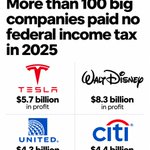
More than 100 of the largest, most profitable companies in America paid zero federal income tax last year, including:
- Tesla, with $5.7 billion in profit
- Walt Disney, with $8.3 billion
- United Airlines, with $4.3 billion
- Citigroup, with $4.4 billion
Across the 700-plus companies in the study, the effective rate was just 10.4%. The biggest reason was not a loophole. It was accelerated depreciation, an incentive written directly into the tax code. The government wants factories built and equipment bought, so it lets companies deduct those costs right away instead of over many years.
Now, here’s what I want you to understand. That same incentive is available to you, and with two months left in the year, now is the time to use it.
If you own a business, start with the equipment you already plan to buy. Computers, machinery, furniture, and even a vehicle over 6,000 pounds used mainly for business can often be written off in the first year. The key is that it has to be placed in service by December 31, not just ordered. Just don’t buy something you don’t need simply to get a deduction.
If you own or are buying a rental property, get a cost segregation study. An engineer breaks the building into parts like the flooring, appliances, cabinets, and landscaping, and many of those parts can be deducted right away instead of over 27.5 years. On a $500,000 property, that can mean a six-figure deduction in year one.
And if you have a W-2 job, look at short-term rentals. When the average guest stays seven days or less and you materially participate, those depreciation losses can offset your wages, not just your rental income.
Now, there is one thing to keep in mind. Depreciation can come back to you as tax when you sell, unless you plan for it, so work with a tax advisor who knows how to do this. The tax law is a series of incentives, and it rewards what you do, not how big you are. If you want to change your tax, you have to change your facts.

You can owe New York income tax without making a single sale there.
One employee working remotely from New York could be enough.
States look at more than sales. Payroll, property, and where your business operates can all affect where you owe taxes.
And with remote teams spread across the country, this is catching business owners off guard.
The expensive mistake is finding out after two states are claiming tax on the same income.
People are not just moving for the weather. The IRS migration data shows the states with no income tax keep gaining residents, while California, New York, and New Jersey keep losing them.
Think about it this way.
At California’s top rate of 13.3 percent, every additional $100,000 you earn at that level sends $13,300 to Sacramento. In Texas or Florida, that number is zero.
Now, here’s what I want you to understand.
Moving is one way to change your facts, and it is a perfectly legitimate one. But your federal tax bill follows you wherever you live, and for most people, it is still the biggest expense they have. If you want to change your tax, you have to change your facts, and your address is only one of them.

Forming your LLC in Wyoming or Nevada doesn't move your income tax there.
The state printed on your formation documents has little or no impact on your income tax.
In most cases, if you form the LLC in a low-tax state, you'll still have to register to do business and pay tax in the state where your business actually operates. You're probably not going to end up with less tax simply because of where you formed it.
Now, where you form your LLC does matter. That's a conversation between you and your asset protection attorney, because the state's LLC law affects how well it protects your assets.
It just isn't a tax decision.
Remember, if you want to change your tax, you have to change your facts. Those facts are where you sell, where your team works, where you rent or own property, and where management happens.
A filing address isn't one of them.
If your state tax plan begins and ends with an out-of-state LLC, you probably don't have a plan at all. A proactive CPA should tell you that before you restructure anything.

Moving to Florida or Texas won't automatically cut the tax on your business income.
Most business owners think there are only two choices. Pay the tax in the state where they live, or pack up and move. That's completely wrong.
Moving changes your residency. That changes how your unearned income is taxed, things like dividends, interest, and some capital gains.
But it doesn't automatically change where your business income is sourced.
Business income is generally taxed where the activity happens. That means where you make your sales, where your employees work, and where you have property, including an office you rent.
So if you move to Texas and your sales are still in California, California can still tax that income.
Now, sometimes the facts work in your favor. This year, we had a client whose headquarters had been in California for a long time. When we started asking questions, it turned out they had very few sales in California. The owner had moved to Texas, and all of a sudden we had a very different situation.
See, your home address is only one part of the calculation.
So before you move, the first question is where your income is actually taxed today. A proactive CPA should be the one asking it.
If yours hasn't, I made a free checklist of the 12 questions a good CPA should be asking. Check off the ones you've actually been asked, and you'll see whether you're getting planning or paperwork.
Click the link here to get the free 12 Questions checklist: play.wealth-ability.net/12-q…

Comment “TAXES” to sign up to my free webinar where I show you how to legally save 30–40% in taxes in the second half of 2026
Most high earners overpay the IRS for one reason: nobody ever taught them to read the tax law as what it actually is, a series of incentives written to reward people who build businesses, create housing, and produce energy.
In this live session, Tom is breaking down how the new tax law works as written for H2 2026
Watch the live session now! youtube.com/live/Z0diotg1R5w


Tax tricks are tempting… but they’re not a tax plan 👀
A true strategy connects every part of the tax law into one long-term system designed to work in your favor. Tools like hiring your kids or the Augusta Rule are powerful, but only when they fit inside a bigger, intentional structure.
Random write-offs create exposure. Coordinated strategy builds confidence.
Comment “READY” if you want to do it right.
After 40 years as a CPA, I've reduced tax planning to three questions.
Answer these, and your tax strategy writes itself.
𝐐𝐮𝐞𝐬𝐭𝐢𝐨𝐧 𝟏: 𝐇𝐨𝐰 𝐝𝐨 𝐲𝐨𝐮 𝐦𝐚𝐤𝐞 𝐲𝐨𝐮𝐫 𝐦𝐨𝐧𝐞𝐲?
→ W-2 income? Highest tax, fewest deductions.
→ Business income? High tax, lots of deductions.
→ Investment income? Lower rates, different strategies.
→ Real estate income? Depreciation shields, passive income treatment.
Your income source determines which strategies apply to you.
You can't use business deductions on W-2 income.
You can't use passive loss rules on business income.
Know your income type.
𝐐𝐮𝐞𝐬𝐭𝐢𝐨𝐧 𝟐: 𝐖𝐡𝐚𝐭 𝐰𝐢𝐥𝐥 𝐲𝐨𝐮 𝐝𝐨 𝐰𝐢𝐭𝐡 𝐲𝐨𝐮𝐫 𝐦𝐨𝐧𝐞𝐲?
→ Save it? Use retirement accounts for tax deferral.
→ Invest it? Choose investments with tax incentives.
→ Spend it? At least get business deductions on spending.
→ Give it away? Use charitable strategies for maximum deduction.
The wealthy don't just make money. They deploy money strategically.
Deployment determines tax treatment.
𝐐𝐮𝐞𝐬𝐭𝐢𝐨𝐧 𝟑: 𝐖𝐡𝐞𝐧 𝐰𝐢𝐥𝐥 𝐲𝐨𝐮 𝐮𝐬𝐞 𝐲𝐨𝐮𝐫 𝐦𝐨𝐧𝐞𝐲?
→ This year? Accelerate deductions, defer income.
→ Next year? Defer deductions, accelerate income (if rates are dropping).
→ Retirement? Use tax-deferred or tax-free accounts.
→ Never (leaving to kids)? Estate planning and basis step-up strategies.
Timing is everything in tax planning.
Real example:
𝐁𝐮𝐬𝐢𝐧𝐞𝐬𝐬 𝐨𝐰𝐧𝐞𝐫 𝐚𝐧𝐬𝐰𝐞𝐫𝐬...
👉 How: Business income ($500K/year)
👉 What: Invest in real estate
👉 When: Build wealth for 20 years, then transition to passive income
Strategy that follows automatically:
→ S-Corp election (reduce self-employment tax)
→ Cost segregation on properties (accelerate depreciation)
→ Real estate professional status (convert passive to active losses)
→ Defined benefit plan (defer income to retirement)
Same three questions, different answers...
𝐖-𝟐 𝐞𝐦𝐩𝐥𝐨𝐲𝐞𝐞 𝐚𝐧𝐬𝐰𝐞𝐫𝐬...
👉 How: W-2 income ($200K/year)
👉 What: Max out retirement, save for kids' college
👉 When: Retire in 15 years
Strategy that follows:
→ Max 401(k) and HSA (only available deductions)
→ 529 plans for kids (state tax deduction + tax-free growth)
→ Tax-loss harvesting in taxable accounts (reduce cap gains)
→ Roth conversions in low-income years
Different questions. Different answers. Different strategies.
Most people fail at tax planning because they skip the questions.
They jump straight to tactics:
🤔 "Should I have an LLC?"
🤔 "Should I buy equipment?"
🤔 "Should I do a Roth conversion?"
Wrong approach.
Answer the three questions first.
Then the strategies become obvious.
Tax planning isn't complicated.
It's just systematic.
How do you make it?
What will you do with it?
When will you use it?
Answer those three questions, and I'll cut your tax bill in half.