
Head of AI Research @GoogleCloud, Researcher #ML #AI #computervision
Joined January 2011
- Tweets39
- Following69
- Followers347
- Likes28




Tomas Pfister retweeted

Introducing the Science One Framework, an experimental autonomous research prototype that builds verifiable evidence chains. We demonstrate how natively maintaining these chains eliminates hallucinated citations and enables reproducible AI science. Read the blog to learn more: goo.gle/4wzlGWU

ALT The Science One Framework pipeline. Problem Investigator grounds literature via retrieved PDFs. Discovery module explores and evaluates solutions. Paper writing & verification module writes and verifies the paper with a Claim Verifier ensuring all claims match their evidence source.
Tomas Pfister retweeted

Can you trust an AI-written research paper? We checked 75 of them.
The answer is: NOT YET.
So we built ScientistOne — every claim traces to evidence. The only system to lead on all integrity checks, while matching SOTA performance.
Check out papers: scientist-one.github.io

If you’ve tried making AI video >30s, you know the nightmare. Bouncing between tools, manual stitching, and fighting "identity drift" where faces morph every frame.
We decided to automate the entire crew.
Meet Co-Director. 🧵👇 (1/9)
Co-authors (First Name Alphabetical) 1/2: Andrew Pan, Brett Slatkin, Carina Claassen, Daniel Vlasic, Do Xuan Long, Gia Khanh Le Viet, Ishani Mondal, Jasmine Leon, Jingyun Liu, Joe Timmons, Jordan Boyd-Graber, Kuang Su, Long T. Le, Mihir Parmar
1
1
260
Co-authors 2/2: Min-Yen Kan, Nathan Hodson, Nick Losier, Palash Goyal, Scott Penberthy, Shoudong Rhyard Zhu, Tomas Pfister, Yale Song, Yan Xu, Yang Li, Ye Jin, Yiwen Song, Zack Chomyn
cc: @_akhaliq @bilawalsidhu @rowancheung @minchoi @LinusEkenstam
1
175
Great work from the Cloud AI Research team!

Today on the blog, read all about two new frameworks that address challenges with anomaly detection — the task of distinguishing anomalous from normal data — in both unsupervised and semi-supervised settings, with state-of-the-art results in both → goo.gle/3x9Emzg
2
1,267
Tomas Pfister retweeted

Today on the blog, read all about two new frameworks that address challenges with anomaly detection — the task of distinguishing anomalous from normal data — in both unsupervised and semi-supervised settings, with state-of-the-art results in both → goo.gle/3x9Emzg
Tomas Pfister retweeted
Read about FormNet, a sequence model for form-based document understanding that can process the more complex layouts frequently found in form documents and achieves state-of-the-art performance using less pre-training data than conventional methods. goo.gle/3JYVlbB
Tomas Pfister retweeted
Introducing Learning to Prompt (L2P), an #ML model training method that uses learnable task-relevant prompts to guide pre-trained models through training on sequential tasks and results in high performance in the #ContinualLearning setting. Read more → goo.gle/382Vygu
Tomas Pfister retweeted
Presenting a novel approach for pre-training video understanding models on untrimmed videos that leverages the teacher-student framework to convert noisy, weak labels to more effective pseudo-labels, resulting in state-of-the-art performance. Learn more ↓ goo.gle/3vJMtDl
Our recent work: a new design of Vision Transformer (ViT) by simply nesting stacked transformer layers on local regions of images via the proposed aggregation function.
The Visual Transformer has helped advance many core computer vision applications, e.g., image classification, but training can be inefficient and models lack interpretable designs. Learn how the Nested Hierarchical Transformer addresses these challenges → goo.gle/3sAy7Ca
Tomas Pfister retweeted
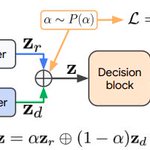
Introducing a novel approach for interpretable, robust, and reliable deep neural networks (DNNs) that employs controllable rule representations, which do not require retraining to adjust the rule strength at inference. Learn more below ↓ goo.gle/3IN8TGU