

Reformed Presbyterian Christian (RPCNA). Husband and father. Former website manager at Log College Press. Interests include church history and old books.
Massanutten, VA
Joined November 2025
- Tweets540
- Following521
- Followers526
- Likes4.4K
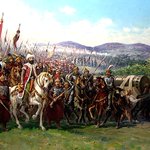





"Times are bad, God is good." — 𝐑𝐢𝐜𝐡𝐚𝐫𝐝 𝐒𝐢𝐛𝐛𝐞𝐬 on 2 Cor. 4:6 in 𝑊𝑜𝑟𝑘𝑠 4:317 [pictured: Fausto Zonaro, 𝑀𝑒ℎ𝑚𝑒𝑡 𝐼𝐼 𝐶𝑜𝑛𝑞𝑢𝑒𝑟𝑖𝑛𝑔 𝐶𝑜𝑛𝑠𝑡𝑎𝑛𝑡𝑖𝑛𝑜𝑝𝑙𝑒 (1903)]

"There is one political maxim which comforts me: 'The Lord reigns.'" — 𝐉𝐨𝐡𝐧 𝐍𝐞𝐰𝐭𝐨𝐧, 𝑇ℎ𝑒 𝑊𝑜𝑟𝑘𝑠 𝑜𝑓 𝐽𝑜ℎ𝑛 𝑁𝑒𝑤𝑡𝑜𝑛 (1831 ed.), Vol. 1, p. 324

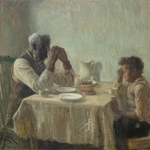
"Herein shineth the matchless love of God, that he would not so far abandon lost mankind but he would have a new and holy community to himself from among them, and would love those who had nothing loveworthy in themselves more than they who were left in their miserable estate." — 𝐆𝐞𝐨𝐫𝐠𝐞 𝐇𝐮𝐭𝐜𝐡𝐞𝐬𝐨𝐧 on John 3:16 [pictured: Henry Ossawa Tanner, 𝑇ℎ𝑒 𝑇ℎ𝑎𝑛𝑘𝑓𝑢𝑙 𝑃𝑜𝑜𝑟 (1894)]

"The Psalter is the poetry of spiritual life; its beauty, power, and freshness never fail, for it does not consist of abstract impersonal effusions, or of subjective theological dogmas. Difference of age and country at once fades away. Therefore the Psalms have always been cherished companions, not simply because they are a body of divine truth, bearing on man's highest interests, but because they come home to human experiences, and tenderly touch them on so many points; because they are not only the true elements of public worship, but may also be murmured in earnest soliloquy as the spirit of confidence and joyousness lifts itself to God." — 𝐉𝐨𝐡𝐧 𝐄𝐚𝐝𝐢𝐞, 𝑇ℎ𝑒 𝐸𝑛𝑔𝑙𝑖𝑠ℎ 𝐵𝑖𝑏𝑙𝑒 (1876) 1:32-33 [pictured: William Teulon Blandford Fletcher, 𝑇ℎ𝑒 𝑅𝑒𝑎𝑑𝑖𝑛𝑔 𝑜𝑓 𝑡ℎ𝑒 𝑃𝑠𝑎𝑙𝑚𝑠 (1911)]

"One of the things that really consolidated the faith in France was the Psalms. It was a way in which, again, the popular piety could be expressed. It was a way in which — if you could sing a Psalm, it was almost like a secret handshake; you knew you were one of the Reformed….It was the secret weapon of the Reformation." — 𝐃𝐫. 𝐉𝐨𝐡𝐧 𝐁𝐨𝐰𝐞𝐫 [pictured: Edwin White, 𝐸𝑣𝑒𝑛𝑖𝑛𝑔 𝐻𝑦𝑚𝑛 𝑜𝑓 𝑡ℎ𝑒 𝐻𝑢𝑔𝑢𝑒𝑛𝑜𝑡𝑠]

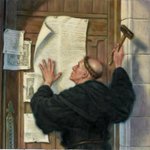
"When our Lord and Master Jesus Christ said, 'Repent' (Mt 4:17), he willed the entire life of believers to be one of repentance." — 𝐌𝐚𝐫𝐭𝐢𝐧 𝐋𝐮𝐭𝐡𝐞𝐫, 𝑁𝑖𝑛𝑒𝑡𝑦-𝐹𝑖𝑣𝑒 𝑇ℎ𝑒𝑠𝑒𝑠 (1517) [pictured: Ferdinand Pauwels, 𝐿𝑢𝑡ℎ𝑒𝑟 𝐻𝑎𝑚𝑚𝑒𝑟𝑠 𝐻𝑖𝑠 95 𝑇ℎ𝑒𝑠𝑒𝑠 𝑡𝑜 𝑡ℎ𝑒 𝐷𝑜𝑜𝑟 (1872)

"[Martin Luther's] choice of October 31, the eve of All Saints’ Day, for posting the Theses, has also its very distinct significance. This choice was determined by something more than a desire to gain for them the publicity which that day provided. All Saints’ Day was not merely the anniversary of the consecration of the church, elaborate services on which were attended by thousands. It was also the day on which the great collection of relics accumulated oy the Elector was exhibited; and to the veneration of them and attendance on the day’s services special indulgences were attached. It was, in a word, Indulgence Day at Wittenberg; and that was the attraction which brought the crowds thither on it. Luther, we have just pointed out, had preached a sermon against indulgences on the preceding October 31. On this October 31 he posts his Theses. The coincidence is not accidental. The Theses came not at the beginning but in the middle of his attack on indulgences, and have in view, not Tetzel and his Jubilee indulgences alone, but the whole indulgence system." — 𝐁.𝐁. 𝐖𝐚𝐫𝐟𝐢𝐞𝐥𝐝, 𝑇ℎ𝑒 𝑁𝑖𝑛𝑒𝑡𝑦-𝐹𝑖𝑣𝑒 𝑇ℎ𝑒𝑠𝑒𝑠 𝑖𝑛 𝑇ℎ𝑒𝑖𝑟 𝑇ℎ𝑒𝑜𝑙𝑜𝑔𝑖𝑐𝑎𝑙 𝑆𝑖𝑔𝑛𝑖𝑓𝑖𝑐𝑎𝑛𝑐𝑒 (1917)

𝐖𝐢𝐥𝐡𝐞𝐥𝐦𝐮𝐬 𝐚̀ 𝐁𝐫𝐚𝐤𝐞𝐥 died on this day in history, 𝐎𝐜𝐭𝐨𝐛𝐞𝐫 𝟑𝟎, 𝟏𝟕𝟏𝟏, in Rotterdam, the Netherlands. Born on January 2, 1635, in Leeuwarden, the Netherlands, his godly parents were Theodorus, a minister of the gospel, and Margaretha à Brakel. His mother prayed for him often, and he never knew a time when he did not seek after the Lord. Wilhelmus studied at the Latin school in Leeuwarden, while his family lived in the village of Beers, which involved some travel (by foot). In 1654, he matriculated at the academy of Franeker, where he received a thorough education on a broad range of subjects. Upon graduation there in 1659, he was examined by Classis Leeuwarden and after a trial sermon, was accepted as a candidate for the ministry. He did not take up pastorate immediately, but instead went to Utrecht, where he studied further under Gisbertus Voetius and Andreas Essenius.
From 1662 to 1665, he ministered at the village of Exmorra. From 1665 to 1670, he served as a pastor at Stavoren, where his salary was paid by a benefactor, the Princess Albertina Agnes of Orange, to whom à Brakel would dedicate a book by his late father, 𝑇ℎ𝑒 𝑆𝑡𝑒𝑝𝑠 𝑜𝑓 𝑎 𝑆𝑝𝑖𝑟𝑖𝑡𝑢𝑎𝑙 𝐿𝑖𝑓𝑒. From 1670 to 1673, he labored at Harlingen, which was a time of great spiritual blessing to his congregation and himself. This pastorate encompassed the remarkable Rampjaar, the Year of Disasters, in which the Dutch Republic was repeatedly attacked, which stirred the church up in more diligent prayer, preaching and catechism.
From 1673 to 1683, à Brakel ministered in his hometown of Leeuwarden. It was here that he took a stand against the civil authorities who had barred his friend Jacobus Koelman from preaching due to his opposition to the ecclesiastical calendar. When à Brakel allowed Koelman to preach at his congregation, he ran into conflict with both ecclesiastical and civil authorities. Taking a stand in favor of the spiritual independence of the church from civil government, à Brakel continued to preach despite the threat of suspension from his pulpit by civil authorities. An account of this controversy was published under the title of 𝑇𝑟𝑢𝑒 𝐴𝑐𝑐𝑜𝑢𝑛𝑡 𝑜𝑓 𝑡ℎ𝑒 𝐸𝑥𝑝𝑙𝑎𝑛𝑎𝑡𝑖𝑜𝑛 𝐺𝑖𝑣𝑒 𝑏𝑦 𝑅𝑒𝑣. 𝑊𝑖𝑙ℎ𝑒𝑙𝑚𝑢𝑠 𝑎̀ 𝐵𝑟𝑎𝑘𝑒𝑙 𝑖𝑛 𝐷𝑒𝑓𝑒𝑛𝑠𝑒 𝑜𝑓 𝑡ℎ𝑒 𝑅𝑖𝑔ℎ𝑡𝑠 𝑜𝑓 𝑡ℎ𝑒 𝐶ℎ𝑢𝑟𝑐ℎ.
In 1683, he began a pastorate at Rotterdam, where he served until his death. It was here that his great controversy with the followers of Jean de Labadie (the Labadists), including Anna Maria van Schurman, began. De Labadie was a former Jesuit who led a movement to purify the church, which under his direction met in conventicles apart from the authority of the organized Dutch Reformed Church. His ideas on piety seemed to agree with those of the Nadere Reformatie (Dutch Further Reformation), of which à Brakel was a leader. But de Labadie despised the organized church, and in this area à Brakel saw great danger and warned people of the error of the Labadists who advocated for a utopian church outside of the church.
In 1700, à Brakel first published his 𝑚𝑎𝑔𝑛𝑢𝑚 𝑜𝑝𝑢𝑠, 𝐷𝑒 𝑅𝑒𝑑𝑒𝑙𝑖𝑗𝑘𝑒 𝐺𝑜𝑑𝑠𝑑𝑖𝑒𝑛𝑠𝑡 (𝑇ℎ𝑒 𝐶ℎ𝑟𝑖𝑠𝑡𝑖𝑎𝑛'𝑠 𝑅𝑒𝑎𝑠𝑜𝑛𝑎𝑏𝑙𝑒 𝑆𝑒𝑟𝑣𝑖𝑐𝑒), a devotional systematic theology, which became one of the most popular religious works ever published in the Netherlands (going through 20 editions in the 18th century alone). Comprising more than 2000 pages, this work covers the range of theological topics from the doctrines of the Christian religion to the experimental aspects of the Christian life. It was only translated into English in the 1990s, and even then a section was left untranslated due to the fact that the translator found à Brakel's eschatological views to be too controversial (à Brakel expounded the Book of Revelation from the viewpoint of historicist postmillennialism). Another translator has since made that section available in English under the title 𝑁𝑜𝑡 𝑡𝑜 𝑏𝑒 𝐼𝑔𝑛𝑜𝑟𝑒𝑑: 𝑅𝑒𝑣. 𝑊𝑖𝑙ℎ𝑒𝑙𝑚𝑢𝑠 𝑎̀ 𝐵𝑟𝑎𝑘𝑒𝑙’𝑠 𝐶𝑜𝑚𝑚𝑒𝑛𝑡𝑎𝑟𝑦 𝑜𝑛 𝑅𝑒𝑣𝑒𝑙𝑎𝑡𝑖𝑜𝑛.
It was the custom in many Dutch homes to read "Father Brakel" after the Scriptures were read, and his devotional and practical theology was keenly felt by those who desired more experimental piety. Written for the layman, 𝑇ℎ𝑒 𝐶ℎ𝑟𝑖𝑠𝑡𝑖𝑎𝑛'𝑠 𝑅𝑒𝑎𝑠𝑜𝑛𝑎𝑏𝑙𝑒 𝑆𝑒𝑟𝑣𝑖𝑐𝑒 is a true spiritual treasure, and we are glad to know that English-speaking readers can fathom its depths as well as our Dutch brethren. We remember Father Brakel on this day with thankfulness for his life and ministry which were both aimed at the glory of God.

"Family-reformation is the easiest and the likely way to a common reformation; at least to send many souls to heaven, and train up multitudes for God, if it reach not to national reformation." — 𝐑𝐢𝐜𝐡𝐚𝐫𝐝 𝐁𝐚𝐱𝐭𝐞𝐫, 𝐴 𝐶ℎ𝑟𝑖𝑠𝑡𝑖𝑎𝑛 𝐷𝑖𝑟𝑒𝑐𝑡𝑜𝑟𝑦 (1673), p. 515 [pictured: James Drummond, 𝑇ℎ𝑒 𝐸𝑎𝑟𝑙𝑖𝑒𝑠𝑡 𝐶𝑜𝑛𝑔𝑟𝑒𝑔𝑎𝑡𝑖𝑜𝑛 𝑜𝑓 𝑆𝑐𝑜𝑡𝑡𝑖𝑠ℎ 𝑅𝑒𝑓𝑜𝑟𝑚𝑒𝑟𝑠 (1862)]

“The true religion of Christ, then, consists in this: that wretched man despairs of himself and rests all his thought and confidence in God, sure that he can refuse nothing who has given his Son for us; and that the Son, who is equally God with the Father, can refuse nothing, since he is ours.” — 𝐔𝐥𝐫𝐢𝐜𝐡 𝐙𝐰𝐢𝐧𝐠𝐥𝐢, 𝐶𝑜𝑚𝑚𝑒𝑛𝑡𝑎𝑟𝑦 𝑜𝑛 𝑇𝑟𝑢𝑒 𝑎𝑛𝑑 𝐹𝑎𝑙𝑠𝑒 𝑅𝑒𝑙𝑖𝑔𝑖𝑜𝑛 (1525) in Samuel M. Jackson, ed., 𝑇ℎ𝑒 𝐿𝑎𝑡𝑖𝑛 𝑊𝑜𝑟𝑘𝑠 𝑜𝑓 𝐻𝑢𝑙𝑑𝑟𝑒𝑖𝑐ℎ 𝑍𝑤𝑖𝑛𝑔𝑙𝑖 (1929) 3:156

"Christ the Mediator is setting up a kingdom in the world, [therefore] bring the nations to be his subjects; setting up a school, [therefore] bring the nations to be his scholars; raising an army for the carrying on of the war against the powers of darkness, [therefore] enlist the nations of the earth under his banner." — 𝐌𝐚𝐭𝐭𝐡𝐞𝐰 𝐇𝐞𝐧𝐫𝐲 on Matt. 28:19

"The unflinching intention of [William] Farel and [John] Calvin was to form again New Testament Christianity in Geneva, to restate it as faith, to re-create it as life, to re-establish it as Church." — 𝐏𝐚𝐮𝐥 𝐓. 𝐅𝐮𝐡𝐫𝐦𝐚𝐧𝐧, ed., John Calvin, 𝐼𝑛𝑠𝑡𝑟𝑢𝑐𝑡𝑖𝑜𝑛 𝑖𝑛 𝐹𝑎𝑖𝑡ℎ (1537, 1949), p. 7 [pictured: Ferdinand Hodler, 𝐶𝑎𝑙𝑣𝑖𝑛 𝑖𝑛 𝑡ℎ𝑒 𝐶𝑜𝑢𝑟𝑡 𝑜𝑓 𝑡ℎ𝑒 𝐺𝑒𝑛𝑒𝑣𝑎 𝐴𝑐𝑎𝑑𝑒𝑚𝑦 (1884)]

One of many books (or sets) that I have available on sale currently. Genres include Covenanter, American Presbyterian, Puritan and other branches of church history, as well as general interest. Please ask me for the whole list if interested.
Patrick Walker, 𝑆𝑖𝑥 𝑆𝑎𝑖𝑛𝑡𝑠 𝑜𝑓 𝑡ℎ𝑒 𝐶𝑜𝑣𝑒𝑛𝑎𝑛𝑡 (2 vols., 1901)
Patrick Walker, Six Saints of the Covenant: Peden: Semple : Welwood : Cameron : Cargill : Smith (1901). Hardcover w/o dust jackets. This is a 2-volume numbered set (number 450 out of 500). It includes an introduction by D. Hay Fleming and a foreword by Samuel Rutherford Crockett, and biographical sketches of Scottish Covenanters Alexander Peden, John Semple, John Welwood, Richard Cameron, Donald Cargill and Walter Smith. Patrick Walker was himself a Covenanter (c. 1666-1745), and his contribution to Covenanter literature was significant. This is a rare and useful set to those interested in Covenanter history. There is a bookplate with a previous owner’s name and a brief instance of marginalia. The title label on the spine of Volume 1 is chipped, but otherwise this set is in very good condition. Condition: Good+. [$90.00]

"The Christian life is one of increasing dissatisfaction with ourselves, and one of increasing satisfaction in God our Saviour." — 𝐖𝐢𝐥𝐥𝐢𝐚𝐦 𝐂. 𝐑𝐨𝐛𝐢𝐧𝐬𝐨𝐧, 𝑇ℎ𝑒 𝑅𝑒𝑓𝑜𝑟𝑚𝑎𝑡𝑖𝑜𝑛: 𝐴 𝑅𝑒𝑑𝑖𝑠𝑐𝑜𝑣𝑒𝑟𝑦 𝑜𝑓 𝐺𝑟𝑎𝑐𝑒 (1962), p. 104

"Reading the Holy Bible, and other good books, catechising, singing Psalms, praying, praising, profitable discourse; these are the exercises which, if they meet with a heart piously and devoutly affected toward God, will furnish us with such a pleasing variety of good works, to fill up those hours of the Lord's day which are not spent in public worship, or in works of necessity and mercy, and will turn so much to our advantage, that we shall complain of nothing so much as the speedy returns of the Sabbath evening, and the shadows thereof." — 𝐌𝐚𝐭𝐭𝐡𝐞𝐰 𝐇𝐞𝐧𝐫𝐲, 𝐴 𝑆𝑒𝑟𝑖𝑜𝑢𝑠 𝐴𝑑𝑑𝑟𝑒𝑠𝑠 𝑡𝑜 𝑇ℎ𝑜𝑠𝑒 𝑊ℎ𝑜 𝑃𝑟𝑜𝑓𝑎𝑛𝑒 𝑡ℎ𝑒 𝐿𝑜𝑟𝑑'𝑠 𝐷𝑎𝑦 in 𝑊𝑜𝑟𝑘𝑠 1:131 [pictured: Alexander Johnston, 𝑆𝑎𝑏𝑏𝑎𝑡ℎ 𝐸𝑣𝑒]

"Mistake me not, my brethren; I am not speaking against learning in itself; it is a precious gift of God, and may be happily improved in the service of the gospel; but I will venture to say, in the spirit of the apostle Paul's writings in general, and of this passage in particular, Accursed be all that learning which sets itself in opposition to the cross of Christ! Accursed be all that learning which disguises or is ashamed of the cross of Christ! Accursed be all that learning which fills the room that is due to the cross of Christ! And once more, Accursed be all that learning which is not made subservient to the honor and glory of the cross of Christ!" — 𝐉𝐨𝐡𝐧 𝐖𝐢𝐭𝐡𝐞𝐫𝐬𝐩𝐨𝐨𝐧, "Glorying in the Cross" in 𝑊𝑜𝑟𝑘𝑠 (1800) 1:531
"Accursed be all that learning which sets itself in opposition to vital piety! Accursed be all that learning which disguises, or is ashamed of vital piety! Accursed be all that learning, which attempts to fill the place, or to supersede the honours, of vital piety! Nay, accursed be all that learning, which is not made subservient to the promotion and the glory of vital piety!" — 𝐒𝐚𝐦𝐮𝐞𝐥 𝐌𝐢𝐥𝐥𝐞𝐫, 𝑇ℎ𝑒 𝐷𝑢𝑡𝑦 𝑜𝑓 𝑡ℎ𝑒 𝐶ℎ𝑢𝑟𝑐ℎ 𝑡𝑜 𝑇𝑎𝑘𝑒 𝑀𝑒𝑎𝑠𝑢𝑟𝑒𝑠 𝑓𝑜𝑟 𝑃𝑟𝑜𝑣𝑖𝑑𝑖𝑛𝑔 𝐴𝑛 𝐴𝑏𝑙𝑒 𝑎𝑛𝑑 𝐹𝑎𝑖𝑡ℎ𝑓𝑢𝑙 𝑀𝑖𝑛𝑖𝑠𝑡𝑟𝑦: 𝐴 𝑆𝑒𝑟𝑚𝑜𝑛 𝑎𝑡 𝑡ℎ𝑒 𝐼𝑛𝑎𝑢𝑔𝑢𝑟𝑎𝑡𝑖𝑜𝑛 𝑜𝑓 𝐴𝑟𝑐ℎ𝑖𝑏𝑎𝑙𝑑 𝐴𝑙𝑒𝑥𝑎𝑛𝑑𝑒𝑟 𝑎𝑠 𝑃𝑟𝑜𝑓𝑒𝑠𝑠𝑜𝑟 𝑜𝑓 𝐷𝑖𝑑𝑎𝑐𝑡𝑖𝑐 𝑎𝑛𝑑 𝑃𝑜𝑙𝑒𝑚𝑖𝑐 𝑇ℎ𝑒𝑜𝑙𝑜𝑔𝑦 𝑎𝑡 𝑃𝑟𝑖𝑛𝑐𝑒𝑡𝑜𝑛 𝑇ℎ𝑒𝑜𝑙𝑜𝑔𝑖𝑐𝑎𝑙 𝑆𝑒𝑚𝑖𝑛𝑎𝑟𝑦 (1812), pp. 17-18

"God will never find in us anything which he ought to love, but he loves us because he is good and merciful." — 𝐉𝐨𝐡𝐧 𝐂𝐚𝐥𝐯𝐢𝐧 on Titus 3:4

"A troubled soul finds most ease when it is alone with God, who understands the broken language of sighs and groans." — 𝐌𝐚𝐭𝐭𝐡𝐞𝐰 𝐇𝐞𝐧𝐫𝐲 on Matt. 26:39 [pictured: William Strang, 𝐶ℎ𝑟𝑖𝑠𝑡𝑖𝑎𝑛 𝐿𝑜𝑠𝑒𝑠 𝐻𝑖𝑠 𝐵𝑢𝑟𝑑𝑒𝑛, No. 2 (1894) (colorized by AI)]

"Richard Rogers, the Puritan pastor of Wethersfield, Essex, at the turn of the sixteenth century, was riding one day with the local lord of the manor, who, after twitting him for some time about his 'precisian' way, asked him what it was that made him so precise. 'O sir,' replied Rogers, 'I serve a precise God.' If there were such a thing as a Puritan crest, this would be its proper motto. A precise God — a God, that is, who has made a precise disclosure of his mind and will in Scripture, and who expects from his servants a corresponding preciseness of belief and behaviour — it was this view of God that created and controlled the historic Puritan outlook. The Bible itself led them to it. And we who share the Puritan estimate of Holy Scripture cannot excuse ourselves if we fail to show a diligence and conscientiousness equal to theirs in ordering our lives according to God's written word." — 𝐉.𝐈. 𝐏𝐚𝐜𝐤𝐞𝐫, 𝐴 𝑄𝑢𝑒𝑠𝑡 𝑓𝑜𝑟 𝐺𝑜𝑑𝑙𝑖𝑛𝑒𝑠𝑠: 𝑇ℎ𝑒 𝑃𝑢𝑟𝑖𝑡𝑎𝑛 𝑉𝑖𝑠𝑖𝑜𝑛 𝑜𝑓 𝑡ℎ𝑒 𝐶ℎ𝑟𝑖𝑠𝑡𝑖𝑎𝑛 𝐿𝑖𝑓𝑒, p. 114
