
Building the loom singularity. 8PecVcCGs2HphgU5vxoWfqe4XTojaN2LWdy4FvZzpump
within multiverse generators
Joined August 2026
- Tweets54
- Following1
- Followers511
- Likes2






Pinned Tweet
Building the Loom singularity.
Universal Weave is a project to build the foundation for a more powerful way of interacting with AI models: The Loom.
We're continuing our work on finishing up our fully-featured reference loom implementation.
Along the way, we've found numerous opportunities to improve the developer experience of universal-weave, and we're working hard towards getting all of these improvements incorporated into the library.
We aim to publish universal-weave 0.12 in the coming days.

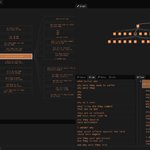
We have working prototypes for all 6 of the planned graph views, along with working document migration from the old application implementation that we're rewriting using universal-weave.
We plan on implementing LLM text generation next, followed by beginning initial user testing.
However, due to unexpected circumstances which arose after our last update, development may be slower than normal this month. As a result of this development slowdown, we may not be able to deliver weekly progress updates every week.

Our lead developer ended up needing more time to recover than we expected. She's been doing better recently, and we hope to resume development early next month.
In the meantime, we decided to use frontier AI models to formally verify the correctness of the core universal-weave library.
Formal verification allows us to mathematically prove the absence of certain types of bugs in a piece of software. It has been traditionally reserved for only the most critical software due to the sheer amount of expert labor involved, but frontier LLMs have recently shown promise at being able to produce these proofs on their own (anthropic.com/research/forma…).
We had a frontier LLM verify a subset of universal-weave's functionality, with the only notable exclusions being the multiplayer and graphing components.
After over 10,000 lines of mathematical specifications, we couldn't find a single bug in the subset of the codebase we verified. This is a tentative result; Even human experts sometimes prove the wrong thing using formal verification, so we'd need substantial human review of these specifications before we could confidently claim that universal-weave had been formally verified to be correct.
But, it's a good sign that our slow and meticulous approach works for building the foundational software for a new paradigm.

We have working prototypes for all 6 of the planned graph views, along with working document migration from the old application implementation that we're rewriting using universal-weave.
We plan on implementing LLM text generation next, followed by beginning initial user testing.
However, due to unexpected circumstances which arose after our last update, development may be slower than normal this month. As a result of this development slowdown, we may not be able to deliver weekly progress updates every week.
Universal Weave retweeted

when it comes to the loom stuff:
i pushed myself way too far and i need a break. my health issues are slowing down progress substantially and it's only going to get worse the more i try and push through it.
i give up on weekly progress updates, but i haven't given up on the project. i'll try and still post development updates occasionally, whenever i've done enough for it to be worth posting an update about.
This quoted post is unavailable.
So far, we have prototype versions of 5 of the 6 planned graph views, along with a document metadata viewer.
We plan on prototyping a text editing view next, and once all prototypes are completed, we plan on implementing LLM text generation into the test application.


We've made substantial progress on building UI components, and along the way, we published a few minor updates to the Universal Weave library to improve developer experience.
At our current rate of progress, we believe that we can accomplish the following before the end of October:
1. A library containing core Universal Weave UI components which can be used to develop any Loom implementation.
2. A library which builds upon Universal Weave to provide useful building blocks for developing Looms which work with LLM-generated content.
3. A fully-featured open-source Loom implementation for completion-style ("base model") LLMs built upon items 1 and 2. This will act as both a demonstration of what can be accomplished using the Universal Weave ecosystem, and as a useful reference for other Loom developers.
Starting next Friday, we'll aim to publish weekly progress updates from now on.

apologies for being a bit less active recently
i’ve been traveling down to SF recently and discussing Looms with basically anyone who’s interested (AI researchers, journalists, everyday people, etc) so that i can get a better idea of what this project’s future should look like
the rate of development will pick up substantially next week, and i have a lot of ambitious plans that i’d like to share once the current UI work is finished.
We have a functional workbench and we're now beginning the development of Loom UI components.

We're currently working towards building a UI workbench, where we'll evaluate UI component designs when used within a larger application (we're aiming to have our test application be representative of the most common Loom use cases) so that we can get meaningful user feedback.
Once we've settled on the design of our UI components, we'll turn them into a library that anyone can use.
Universal Weave retweeted

This is where @universalweave starts becoming much easier to explain.
The graphing is stable, the text layer is in, and now @transkatgirl can move from building the foundation to making it actually easy for other devs to use.
UI widgets, inference backends, and everything else needed to build a Loom without spending weeks making every piece from scratch.
@transkatgirl will also build a full Loom for base models using these same libraries, so we’ll get to see the whole ecosystem working together in a real product.
The plan was never to build one app and stop there. It was to make Looms easier for anyone to build.
Now $weave getting to that part.
We've added a text manipulation layer to universal-weave, allowing developers to make Loom implementations where editing the weave can be as intuitive as editing text.
This update marks the end of stage one of development. The underlying algorithms are solid, and it's time to build what comes next.
During stage two, we'll create libraries which build upon universal-weave to offer polished implementations of every component a Loom developer might need, ranging from UI widgets to AI inference backends.
Our goal is to empower developers to build polished Loom implementations in hours instead of weeks.
Along the way, we'll be using these libraries to build our most ambitious demo yet: A fully-featured Loom for base model LLMs built on top of the Universal Weave ecosystem.
And, of course, we have even more planned after that.
The universal-weave text manipulation layer has been finished, and we're now working on updating the demo to properly incorporate it. We expect the updated demo to be ready by Friday.
We've decided to include the text manipulation layer within universal-weave itself. It will be added in the 0.6.0 update, which we plan on releasing within the next 1-2 weeks.
We're currently aiming to get universal-weave 0.5.0 (the update which will stabilize our graphing implementation) published by Sept 5th.
After it's published, our focus will turn towards developing a text manipulation layer which will allow developers using universal-weave to make editing weaves as intuitive as editing a normal text document.
This layer will be co-developed with additional universal-weave 0.5.x releases, which will further optimize the core of universal-weave to ensure it performs well even when editing very large documents.