

Pioneering the student → builder → founder pipeline @usc
Los Angeles, CA
Joined April 2013
- Tweets1.1K
- Following249
- Followers1.3K
- Likes5.8K







Pinned Tweet
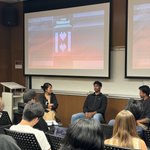
Before Terafab, Optimus, OpenAI, or Starlink, @elonmusk sat down with our student founders.
Here are the lessons that still apply 12 years later:
> First-principles thinking
> Build where people think it’s impossible
> Define huge goals and rally around them
Today’s industries and technologies look very different from 2014, but this mental model remains just as important.
At LavaLab, we’ve spent over a decade building the ecosystem that makes this brand of impossible ambition normal for the next generation of founders.
First principles → conviction → execution.
Simple, not easy.


🌋 There's a romance people love to talk about when it comes to dropping out to build. Last week, a USC dropout gave our F26 cohort some honest insight.
@ssloosmore left the USC Iovine and Young Academy to co-found Context, hitting $11M ARR by sophomore year. Today he's the youngest member of OpenAI's startups team.
His one piece of advice: you don't have to choose between reckless and safe. The smartest bets are the ambitious ones you've quietly made reversible!

🌋 What does a VC actually look for before writing a check?
We asked @pebble_bed, the firm behind @pam_vagata (founding member of OpenAI), @keithmadams (founded Facebook AI Research), and @tammiesiew (Sequoia alum turned founder), at a fireside with our F26 cohort and LavaLab alumni. We put it together with Balaji Daggupati!
Tammie's test stuck with us: a founder who's "12 years crazy, 12 months sober." Big enough vision to sound unreasonable, grounded enough to know exactly what they're shipping next month.
Thanks for the time and awesome insight!

🌋 The hardest part of building a $400M brand isn't fundraising. It's doing it with your husband and still liking him at the end of the day.
Michelle Wahler and Jesse Adams, married cofounders, built @BeyondYoga to a $400M Levi's acquisition without raising a dollar.
Their lesson for our F'26 cohort: your first orders aren't about the product. Whoever's across the table, a customer, a partner, an investor, is betting on you, not just what you built.
Which is exactly why our motto, "Find your cofounders," has always been the heart of LavaLab!

🌋 One week into building, our F26 teams already have working MVPs!
A few weeks ago they were strangers. Now they're teams, out interviewing potential customers, designing products people actually want, and building them from the ground up.
This is just week one. Stay with us to see where it goes!


🌋 We just retired the word "developer" at LavaLab.
We believed the term didn't exactly match what they do, so we changed it. Our developers are now Product Engineers.
The strongest technical people in startups today don't just ship code but also own the outcome. This means that they talk to users, decide what's worth building, and deliver the whole product end to end.
That’s what our engineers have always done, and now we have a title to reflect it.

Conner Chyung (@connerchyung), a LavaLab alum, walked away from @dittolists, the social app he’d built and grown, to start over from scratch. That bet became Beam and a $5.2M raise.
We got him on a call, and he gave us the most honest take on what building in consumer feels like right now.
Here's what stuck with us. 👇

🎢 The part of founding nobody posts about
Every founder cycles between "I'm at the top" and "this is stupid," and it never fully goes away, even after an IPO. His advice: surround yourself with other founders living the same swing, and to not chase "founder" as a status. The glamour fades fast, and what's left is doing the unglamorous work until something clicks.
Watching a founder leave something good behind to rebuild it into a $5.2M backed bet is exactly the kind of conviction we hope every LavaLab builder finds. Huge thanks to Conner for the honesty.
Beam is hiring across engineering, growth, and more. If building the next chapter of consumer social sounds like your thing, reach out to Conner. It's a rare seat.
‼️ Our INFO SESSION is happening tomorrow and Thursday night at IYH 210! Meet the e-board, learn about our application process, and how you can build at LavaLab.
⏰ Wednesday + Thursday, September 8th-9th @ 8 PM
📍 USC IYH 210
1️⃣ 09/09 Behind the Build →
luma.com/j192u7e8
2️⃣ 09/10 Behind the Build →
luma.com/6oqf4vax
✍️ Applications due September 11th, 11:59 PM PST
usclavalab.org
🌋 Applications for our F26 cohort close in one week.
Friday, Sept 11 @ 11:59 PM PST. That's your window.
If you've been waiting for a reason to build something real with people who care as much as you do, this is it. Apply now 👇
usclavalab.org


Paul Graham just wrote that universities can't teach you to start a startup. You learn by building.
We've believed this for 12 years here at LavaLab. Here's what he gets right and the one part we had to sit with.

In the essay I just wrote about how to prepare students to be founders, I talked about the importance of working on their own projects. In this essay from 2021, I explain in detail how and why to do that.
A Project of One's Own: paulgraham.com/own.html
Paul Graham thinks you can't teach entrepreneurship in a classroom. In his words, "a properly run class on how to start a startup would have to be a lab class: the students would actually have to start startups."
We agree so much we built exactly that. Teams are shipping real products over a semester, learning by doing because there's no other way to learn it.
That's not a curriculum. That's a cohort.
The part we sat with: Paul calls business plan competitions "not merely useless but positively misleading."
Fair. So here's what we tell every cohort: Demo Day isn't the finish line, it's a byproduct. The real work is the 10 weeks of building, the late nights, the thing you shipped with people you'd never met before. The pitch ends in 3 minutes. What you built and who you built it with lasts a lot longer.