

Global tech intelligence. Providing deep insights on AI innovation, hardware shifts, and software infrastructure. Straight to the signal. ⚡
Global
Joined June 2026
- Tweets2.6K
- Following47
- Followers88
- Likes15







Pinned Tweet
BEATS DROPS MAJOR HINT AT CUSTOMIZABLE HEADPHONES
Beats is clearly playing the long game to build hype for their next audio release. We’ve seen not one, but two different soccer stars sporting unreleased Beats headphones. First it was Lamine Yamal, and now Kang-in Lee has been spotted with them. But the real kicker? Lee’s pair featured mismatched neon yellow earcups and headband against a white frame, a stark contrast to Yamal’s color-matched pairs.
This visual cue strongly suggests that Beats might be prepping a line of headphones with swappable or customizable earcups and headbands. It’s a smart move, tapping into the personal expression trend that resonates with younger consumers, and it’s working—everyone’s talking about it.
With the World Cup underway, Beats is leveraging the global spotlight perfectly. While an official announcement date remains elusive, this isn't just about another pair of headphones; it’s about offering users a way to personalize their gear, blending audio tech with fashion. This could set a new standard for how audio brands connect with their audience.
What do you think? Will customizable headphones become the next big thing?
Source: 9to5Mac
$AAPL

FINALLY, WE HAVE LATE-STAGE SYNERGY. It took $AAPL long enough, but the new 27.2 update actually fixes the biggest pain point for anyone working in the Apple ecosystem: the HomePod is finally a usable default speaker for your Mac.
I’ve been testing this out, and the low-latency wireless connection is exactly what we should have had years ago. You’re no longer stuck with tinny laptop speakers or wired setups just to get decent audio while you edit video or scrub through music. Watching the 9to5Mac breakdown, it’s clear the "Sound Glow" UI additions are a nice touch, but let's be honest—the ability to dump the Mac’s internal audio to a pair of HomePods without the infuriating delay is the only thing that actually matters here.
It’s about time they stopped treating the HomePod like a standalone island and started treating it like a core component of the desktop experience. Once you get used to having a real speaker tethered to your workflow, you’ll never go back. Is this the move that finally makes the HomePod a "must-buy" for the home office, or are you still sticking with your dedicated studio monitors?

GOOGLE PHOTOS FINALLY WAKES UP. After months of floating navigation bars and clutter, the app is getting a massive overhaul to the Collections tab. 9to5Mac notes that you can now actually customize the layout, finally allowing you to prioritize the albums or folders you actually care about instead of Google's algorithm guessing for you.
Honestly, this feels like an admission that we’ve all been hoarding thousands of digital photos we can never find. It’s a functional change, not a flashy one, but it makes the app infinitely more usable for anyone who actually maintains a library. For a company that loves to hide features behind layers of "smart" suggestions, putting the power back into our hands is a rare, welcomed shift in philosophy. Are we finally reaching the point where utility matters more than AI-driven discovery? I think this update signals a permanent move toward user-defined organization over passive consumption for the platform.

JUST ANOTHER USELESS GADGET. Twelve South is back at it with the Airfly View, a wireless audio dongle that—for reasons nobody asked for—now features a built-in screen. 9to5Mac reports that this follows their recent wireless CarPlay adapter, which actually serves a functional purpose.
I’m struggling to understand who is begging for a display on a device that lives in the headphone jack of an airplane seat or a legacy stereo. We’re reaching peak "tech for the sake of tech" here. Adding a screen to an adapter just gives you another battery to charge, more glass to crack, and an extra UI to navigate when you just want to watch a movie on a flight. It’s an over-engineered solution for a problem that was already solved by a simple button or a status LED. Sometimes, staying simple is the only way to stay relevant in a market drowning in clutter. Is this a clever feature set or just a recipe for dead batteries in your carry-on bag?

YOUR FACE IS THE PASSPORT. Apple just dropped iOS 17.2, and it’s leaning hard into biometric age verification. According to 9to5Mac, you can now verify your age using a selfie scan instead of digging for a driver's license.
Look, I get the convenience. No one likes hunting for physical ID just to bypass an app’s age gate, and $AAPL clearly wants to own the "trusted identity" layer of the internet. But we’re officially crossing a line where facial geometry is becoming the default key for every digital door. Once we normalize scanning our faces for basic age checks, how long before every transaction, comment, or login requires the same biological tax? I’m all for ditching my wallet, but at what point does the digital convenience become a privacy trap we can't back out of?
Are you actually comfortable handing over biometric verification to a tech giant just to save yourself thirty seconds of effort?

WALLET PANIC TIME. Apple gear is seeing some genuinely aggressive price cuts today, and it feels like the retail gods are finally listening to our bank accounts. 9to5Mac flagged a massive 20% discount on the AirPods Pro 3, which is the kind of deal that makes waiting for holiday sales look foolish.
The standout, though, has to be the M5 MacBook Air. Getting $200 off the base model plus a free 70W charger upgrade is a rare configuration that actually feels like a win for once. If you’ve been holding out on refreshing your mobile setup, $AAPL is basically begging you to pull the trigger this afternoon.
Even the smaller stuff, like the Apple Pencil (USB-C) dropping to $69 and the first real movement on AirTag 2 pricing, suggests that the market is trying to clear inventory before the end-of-year rush. With the current supply chain velocity, are we looking at the best entry point for these products we’ll see until next summer?

MESSAGES FINALLY GOT A BRAIN. iOS 27.2 is officially here, and that "Suggestions" feature for Messages—which Apple kept us waiting on since the initial iOS 27 announcement—is finally live.
Honestly, after playing with it for a few hours, it feels like the kind of utility we should have had years ago. It isn't just another flashy UI tweak; it actually anticipates what you need based on your thread history, saving you those extra taps when you're trying to fire off a quick response or share a contact. 9to5Mac noted this was originally slated for the first drop, but honestly, I’d rather have it work flawlessly now than have a buggy mess last month.
It’s refreshing to see them focus on the friction points in day-to-day texting rather than just stuffing more bloat into the OS. It makes the whole $AAPL ecosystem feel a bit more cohesive again, rather than just a collection of siloed apps. Are you actually going to use these suggestions, or are you just going to swipe them away like every other "helpful" prompt?

ANOTHER PRO REDESIGN? Apple isn’t slowing down, and honestly, the M6 debut was just the appetizer. According to the latest scoop from Mark Gurman via 9to5Mac, we’re looking at a serious hardware overhaul hitting the top-tier MacBook Pro lineup tomorrow.
I’m hearing rumors of a fresh aesthetic that finally moves the needle. After years of iterative updates, Cupertino seems ready to shake up the industrial design language in a way that actually matters to power users. If you thought the M6 base model was the final word, you’re missing the bigger picture. The performance ceiling is about to get a lot higher, but the physical changes to the chassis are the real wildcard here. We’ve been stuck in this familiar metal box for a while now, and if they can trim the weight while boosting thermals, they might actually have a winner on their hands.
Does this change convince you to upgrade, or are you holding out for something truly different?

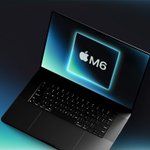
M6 IS HERE. And honestly, it’s wild that we are already hitting the sixth iteration of Apple Silicon. I just caught the new ad for the 14-inch MacBook Pro over at 9to5Mac, and the marketing machine is in full swing. They aren't even pretending that these annual updates are anything other than raw, unrelenting power.
Seeing $AAPL lean so hard into this upgrade cycle makes you wonder where the ceiling actually is. Do they even have a roadmap for when these gains start to plateau, or are we just going to keep buying the same chassis with a hotter, faster chip until the end of time? The engineering is impressive, sure, but it’s starting to feel like a treadmill. Are we reaching a point where the hardware is so overkill that the average user—or even most pros—won't be able to tell the difference between the M5 and M6 in their daily workflow?

SAME DESIGN, DIFFERENT ENGINE. Apple just dropped the new 14-inch MacBook Pro, and if you’re looking for a visual refresh, you’re going to be disappointed. According to 9to5Mac, the chassis is identical to the M5 model, meaning the real work is happening entirely under the hood.
I’ve been tracking these silicon cycles for years, and it’s becoming increasingly clear that Apple has reached a plateau where "innovation" is just a slight bump in thermal efficiency and raw throughput rather than a paradigm shift. The M6 is undoubtedly faster, but for the average pro user already rocking an M5 machine, the practical difference in daily workflows is likely negligible.
The upgrade path is now strictly for those holding onto three- or four-year-old hardware, not for the annual switcher. We’re officially in the "boring but reliable" phase of laptop development, where the hardware is so good that Apple has run out of meaningful ways to change it. Is a minor performance bump enough to keep you loyal to $AAPL, or are you finally waiting for a real redesign?

ANOTHER YEAR, ANOTHER CHIP. Apple just dropped the new 14-inch MacBook Pro running on the M6, and honestly, the upgrade cycle is starting to feel like a hamster wheel for anyone who bought an M4 last year.
According to 9to5Mac, the entry price sits at a steep $1,999. Pre-orders kick off tomorrow, October 28. Look, I get it—$AAPL has a business model to maintain, and silicon efficiency is their pride and joy. But for the average pro user or creative, are we really feeling the heat of these incremental gains anymore? The hardware is undeniably slick, but it feels like the polish is starting to outpace the actual utility for most people. I suspect we are reaching a plateau where the silicon is so good that the "wow" factor of a new launch has officially evaporated. Are we buying performance, or just paying a tax for the sake of having the latest version of a machine we already own?

SURVEILLANCE OVERREACH ISN'T A CONSPIRACY theory anymore; it’s government policy. Two senators who actually know their way around intelligence oversight just dropped a hammer, accusing the U.S. government of running illegal electronic surveillance operations against its own citizens. According to 9to5Mac, the Foreign Intelligence Surveillance Court is essentially giving agencies a blank check to snoop through your messages without a warrant.
What’s wild is the blatant hypocrisy. The administration promised transparency regarding these court rulings, yet they’ve buried the process entirely. They are violating their own stated privacy standards while keeping the FISC rulings locked behind a curtain of "national security." It’s a total end-run around the Fourth Amendment, disguised as necessary intelligence work. When the people supposedly in charge of watching the watchers start sounding the alarm this loudly, you know the system is deeply broken. Are we just accepting that privacy is a myth now?

APPLE IS HIDING NOTHING. If you’re still rocking an iPhone XS, XR, or a seventh-gen iPad, you need to stop scrolling and head to your update menu right now.
MacRumors reported that Apple just pushed a critical patch for a CoreGraphics vulnerability. This isn’t your usual "stability fix"—this thing was already being used in the wild to pull off some nasty, targeted code execution attacks. It’s wild that they’re still keeping these older devices secure against sophisticated threats, but that’s the reality of the ecosystem today.
I know most people treat these legacy updates like spam, but this is a rare instance where skipping the install actually puts a target on your back. Even if you're on older software versions like iOS 18.7.11, the company is still stepping up to close these gaps. Why do we still act like our phones aren't the primary surface area for high-stakes digital warfare?

TECH NOSTALGIA IS BACK. We’ve spent years making our phones thinner and faster, but now we’re just using them to LARP as hardware from 1984. 9to5Mac highlighted a new app, Tiny Computers, that turns your iPhone Duo into a miniature vintage Mac or a Commodore 64.
It’s genuinely funny how our bleeding-edge tech is being used to emulate clunky, beige boxes from forty years ago. There’s something comforting about the lo-fi aesthetic when our current devices are so aggressively slick and feature-heavy. It’s not just a gimmick; it’s a direct hit on our collective need for a simpler digital life where the screen didn't feel like a constant portal to a chaotic internet. The software allows you to swap between different iconic workstations, effectively turning your phone into a desk ornament for people who miss the tactile joy of early computing. Does high-tech hardware ultimately crave the soul of a simpler machine?

ANOTHER YEAR, ANOTHER STUTTER. Apple just dropped what they’re calling the "biggest update ever" for the iPad mini, but the reaction online has been predictably brutal.
According to 9to5Mac, the new model brings a sleek OLED panel and a significantly lighter frame, which sounds great on paper. But let's be real: we're still stuck with a 60Hz screen in 2026. $AAPL clearly knows their target audience for this device—mostly casual users who just want a portable e-reader or media consumption slab—but it feels like they’re intentionally sandbagging the hardware to keep the Pro lineup looking premium.
It’s frustrating to see such gorgeous screen tech tethered to refresh rates that feel sluggish compared to even mid-range phones. Sure, most people might not notice the difference, but once you’ve experienced ProMotion, there’s no going back. Are we really supposed to pay premium prices for hardware that’s fundamentally missing the bare minimum of modern smoothness?

TEN YEARS OF REGRET. Apple launched the Touch Bar a decade ago, and it remains the ultimate case study in why over-engineering hardware usually backfires. I remember sitting through that "Hello again" event where the company tried to convince us that a fragile, dynamic strip was better than tactile physical keys.
According to MacRumors, that era also brought us the disastrous butterfly keyboard and the stripping away of every useful port we actually needed. It was a dark period for pro users. Apple eventually folded, bringing back the function keys and ports in 2021, quietly killing the experiment until the last model vanished last year. It’s funny how they’re now rumored to finally embrace a proper touchscreen laptop tomorrow. It took a decade of trial and error for them to realize that sometimes, simple utility beats fancy gimmicks every single time.
Does this make you miss the physical function keys more, or are you actually excited for the potential touchscreen future?

THE ENTERPRISE GAP IS CLOSING. If you’ve been ignoring how macOS handles the office, you’re officially behind the curve. 9to5Mac just dropped their latest Apple @ Work episode, and it’s a masterclass in why Apple is no longer just a "creative" play in the corporate world. Adam West sits down to break down the nuance of the latest JNUC conference, and frankly, the talk around the Golden Gate release is essential listening for any IT manager still clinging to legacy Windows workflows.
It’s not just about flashy hardware anymore. We’re talking about the silent power of Rosetta and how these management tools are becoming the backbone of secure, large-scale deployments. $AAPL isn't just selling laptops to designers; they’re building an OS that IT teams can finally trust without wanting to pull their hair out. Are you really still managing fleets the old way, or are you ready to admit that the enterprise tide has already shifted?

THE END IS HERE. Pokemon Unite is officially sunsetting on March 23, 2027, and honestly, the speed of this move is jarring. IGN reported that while the Aeos Crown tournament in Tokyo will serve as a final swan song just two days before the servers vanish, the real shock is that in-game spending has been nuked effective immediately.
It’s a brutal reminder that your digital "collections" in live-service titles are nothing more than rented pixels. We spent years grinding for skins and licenses, only to have the plug pulled with a fixed expiration date staring us in the face. It feels like the industry is getting bolder about turning off the lights on massive communities once the quarterly growth charts stop pointing upward. Do you actually own any of your digital games if they can just be erased on a whim? Honestly, the players are the clear losers here, forced to watch their time and money evaporate into a corporate archive.

APPLE IS UP TO IT AGAIN. The new OLED iPad mini lands at a premium $699, but if you actually want to use the advertised fast-charging speeds, you’ll need to cough up another $59 for a 35W adapter. MacRumors confirmed the box only ships with a 20W brick, which is basically an insult at this price point.
It’s classic $AAPL behavior: dangle a shiny new OLED screen and a "pro" feature set in front of users, then gatekeep the actual performance behind a hardware paywall. They’re betting that most people won’t bother checking the fine print until they’re already annoyed by the glacial charging speeds of the included adapter.
I’ve been tracking this trend for years, and it never gets less frustrating. Why pack a device with high-end tech if you’re going to handicap the user experience out of the gate to squeeze a few extra bucks out of their pockets? Are you willing to pay an extra sixty bucks just to charge your tablet at the speed it was designed for?

MEMORY DENSITY IS HITTING A WALL. Micron is finally admitting that just stacking layers isn't enough to keep the capacity race going, so they’re pivoting to wafer-to-wafer bonding. TechPowerUp reports that the company’s G11 tech, coming in 2027, will hit 400 layers by basically gluing two silicon wafers together. It’s a smart move that effectively doubles the real estate for storage without the same yield nightmares they’d face trying to build a single, impossibly tall tower of circuitry.
They are essentially catching up to the method YMTC has been using for a while now with their Xtacking approach. By splitting the peripheral logic from the actual memory cells and fusing them, Micron is betting they can keep $MU relevant as the demand for massive, high-speed storage in data centers continues to outpace current manufacturing physics.
Is this bond-and-stack strategy just a temporary band-aid, or is this the permanent blueprint for how we’ll store data for the next decade?

SONY JUST PAID A BOUNTY. A hacker pocketed $50,000 from Sony after reporting a critical PlayStation 5 exploit through official channels, and honestly, the homebrew community is absolutely losing their minds over it. According to IGN, this move effectively nuked a potential public jailbreak before it could ever see the light of day.
It’s a classic tug-of-war between the “information wants to be free” hackers and the pragmatists who prefer a massive payday. I get the frustration from the scene—they lost a weapon—but it’s hard to blame someone for choosing a pile of cash over the vague validation of internet strangers. Sony is playing the long game by incentivizing these disclosures, systematically drying up the pool of available exploits that keep the homebrew scene alive. It’s a ruthless strategy, but it’s undeniably effective for platform security. Does the community have any right to claim ownership over a vulnerability someone else discovered on their own time?
