

Professor, Special Centre for the Study of North East India, Jawaharlal Nehru University, New Delhi; Founding Member, Sikkim University.
New Delhi/Kalimpong/Slg, India
Joined July 2010
- Tweets5.6K
- Following291
- Followers1K
- Likes3.6K

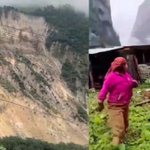





A landslide temporarily blocked the Budhi Gandaki River in Gorkha district before breaching early on 11 October, unleashing a debris-laden surge that swept away around 35 houses, six bridges (motorable and suspension), and damaged construction camps, equipment, and access at multiple hydropower projects, including the major 341 MW Budhi Gandaki scheme. Several people remain missing, dozens have been rescued, and water levels have fluctuated above danger levels. The event struck as communities prepared for Dashain and was not driven by heavy rainfall.
This is another reminder of cascading Himalayan risks, landslides, temporary dams, and sudden floods, in a region still recovering from the devastating August 2026 Nepal–Tibet floods that killed over 1,400 and left thousands missing. Settlements and critical infrastructure remain exposed along narrow river valleys. Hydropower expansion, while economically vital, continues in zones where monitoring of landslide dams and early-warning systems have repeatedly proven inadequate.
Without stronger hazard mapping, stricter siting rules, and real-time transboundary observation, such events will keep exacting high human and economic costs. Development in these corridors must proceed with far greater caution. – at Delhi, India

Following the catastrophic floods of 26 August 2026, Nepal’s disaster management authority estimated roughly $2.7 billion in physical damage and economic losses, with a further $4.8 billion required for long-term recovery and reconstruction.Despite this multi-billion-dollar toll, the country was able to request only $20 million from the UN’s Fund for Responding to Loss and Damage (FRLD).
Under the early call for proposals governed by the Barbados Implementation Modalities, individual fast-track applications are capped at $20 million per project or single catastrophic event. As a result, Nepal’s maximum allowable request covers just 0.5–0.7 percent of its immediate losses—and an even smaller share of total recovery needs.
Climate negotiators have criticised the ceiling as wholly inadequate. A $20 million grant, they argue, is “peanuts” when an entire mountain infrastructure network has been destroyed. In their view, the framework remains a largely symbolic gesture: limited in scale, lacking real commitment, and without the teeth needed to meet the actual costs of climate-driven disaster.
More news continues to pour in from Nepal of rivers turning ferocious, triggering landslides, rockfalls and the sudden collapse of entire mountainsides, claiming lives and destroying property. Vast chunks of landmass are simply giving way and crashing down.
The Himalayas are enduring devastation on a scale never seen before, and Nepal stands at the very centre of it. A rapidly melting Himalaya, combined with poorly planned development, is already producing far-reaching consequences for regional security.
Researchers, journalists, influencers and politicians (with or without proper domain knowledge) are all speaking and writing about the Himalayas these days.
The questions that now demand answers are: How do we move forward from here? How do we protect and restore the health of the Himalaya? And are there practical ways forward?


Nepal PM @ShahBalen's UN speech showed striking conceptual clarity on the Himalayas, environment, climate, human security, human development, justice, and disaster risk reduction. He was equally clear on why global and regional cooperation matters. The speech was well drafted. It is hard not to wonder what #kpOli or #Prachanda would have said if they had represented Nepal at the same meeting.

Nepal PM Balendra Shah called for grant-based support, not loans, to help his country recover from deadly floods and landslides triggered by a glacier collapse reut.rs/3VON3i0
A commendable speech by Mr. Balendra Shah. He spoke not only for Nepal, but for the whole of South Asia and beyond. The speech was very well drafted. Adding two more critical issues would have made it even stronger: the strategic silence of upstream countries, and the integration of formal science with people’s science.

What ails Darjeeling Tea Industry?
- 87 Tea Gardens (produce Darjeeling Tea)
- Production dropped from about 15 million kgs in 1990 to less than 6 million ton in 2025.
- Reported recent average auction price INR 421
- Reported recent average cost per kg INR 550
What is the way forward?
They are all parts of the larger Gorkhaland region. GoI has to take a decision sooner than later to secure the region. Kolkata is too far away to secure this region crisscrossed by three international borders and overlooked by #ChumbiValley.

AFGHAN NATIONAL ARREST CASE: Mal Municipality Clerk and Dalal Arrested for Allegedly Providing Fake Birth certificate
Two people, including an employee of Mal Municipality, have been arrested in connection with an alleged fake birth certificate prepared for an Afghan national who was arrested in Kalimpong for allegedly staying illegally in India. This was first reported by Dainandini News
The arrests were made as part of a further investigation into the case of 28-year-old Syed Bilal Khan, a resident of Kabul, Afghanistan, who was taken into custody by Kalimpong police on September 18 following a tip-off.
Khan was reportedly staying in a rented accommodation near Chest Clinic at Hatbazar in Kalimpong. During questioning, police allegedly found that he was an Afghan national and had been residing in India without valid documentation. He was subsequently produced before a court for further legal proceedings.
As the investigation progressed, a Kalimpong police team conducted a raid in the Malbazar police station area of Jalpaiguri district and arrested Prashantjit Dutta, a clerk working with Mal Municipality, for his alleged involvement in preparing a fake birth certificate.
According to police, Dutta told investigators during questioning that the document had allegedly been prepared with the assistance of a middleman from the Meteli area.
Based on his statement, police conducted another raid in Meteli and arrested a man identified as Asam Khan. Police allege that Khan acted as an intermediary in facilitating the preparation of the fake birth certificate.
Both accused were brought to Kalimpong police station and are scheduled to be produced before a court on Thursday, police said.
Kalimpong Superintendent of Police Aparajita Rai said further investigation was underway to determine whether other individuals were involved and to establish the circumstances surrounding the preparation and use of the allegedly forged document.
He has no idea what Darjeeling has gone thru in the last 50 years. His concern is only deterioration of that colonial 'picturesque himalayan town'.
Sad! – at Delhi, India

Nostalgic day spent in Darjeeling which I last visited 50 years ago. No longer quite the picturesque Himalayan town of another era.
So here is my Sunday Qs: is there any hill station anywhere in the country which is now in better shape than it was when the British left in 1947? Or have we systematically destroyed our hill station heritage with a mix of greed, neglect and lack of vision ?


Sikkim is charting sustainable pathways for the next two decades under #SikkimVision2047. If this vision takes shape, the small Himalayan state could emerge as a torch-bearer and model for other states in the country. How far the plan will actually be implemented remains a separate question. What is clear is that the state has already embarked on this ambitious exercise, with Mahendra Lama leading the effort.
The initiative has placed the SKM government, led by P.S. Golay, firmly in the spotlight. That visibility appears to have unsettled CAP, some local BJP cadres, and a few other opponents, who worry that a successful Vision 2047 could keep SKM comfortably in the driver’s seat for several more terms—an outcome many of them would prefer to avoid. – at Delhi, India
In my Editorial today, I underline how @capsikkim and @BJP4Sikkim have weaponized a simple Position Paper by Dr Mahendra P Lama to indirectly attack Sikkim CM @PSTamangGolay
What's troublesome is that their entire outrage is based on supposition and wrong reading of the Position paper.
The vile comments against Dr. Lama, including indirect reference to have him killed should have been condemned by all, but none in Sikkim did.
Shameful


Had a wonderful interaction and discussion with the research scholars of the Centre for South Asian Studies, JNU on Participatory Approaches to Research.
It was a rich exchange on how collaborative, community-centred methods can deepen inquiry, strengthen ethics, and make research more grounded and useful. Grateful for the curiosity, questions, and insights shared. – at Delhi, India


The photograph shows an elderly woman -“Boju,” a term of affection for grandmother in the Darjeeling hills- holding a fresh tea sprig.
Her weathered face, traditional gold nose ring, and white head covering are typical of veteran women pluckers who have spent decades on the slopes.
She stands for the thousands of older women who remain the backbone of the gardens after younger generations have migrated.
Their skill produces one of the world’s most expensive Darjeeling teas. However, their wages and living conditions remain among the lowest for industrial workers in India.
The image captures both the dignity of that labour and the long-standing imbalance between the luxury cup and the life of the person who picked the leaf.

The Moon and Venus appeared to come together in the sky because of a planetary conjunction and a rare lunar occultation happening simultaneously from Earth's line of sight.
While they looked incredibly close, and even crossed paths, the event was purely an illusion of perspective, as they remain millions of kilometres apart in deep space. – at Delhi, India

A beautiful celestial sight over Delhi tonight, the Moon and Venus appearing together in the evening sky.
Earlier in the day, Venus briefly disappeared behind the thin crescent Moon. By sunset, the two appeared together again, close to each other in the western sky.
At times, the most beautiful sights are right above us.
A tale of two frontiers: Darjeeling and Ladakh
Ladakh and Darjeeling began with almost the same political bargain: give the hills a council, and keep the map unchanged. Nearly four decades on, one is negotiating a new constitutional model while the other is back in another round of talks — raising the question of whether India is changing the rules of self-rule or simply renaming the old ones.
Whenever India has faced unrest in its hill and border regions, it has rarely begun with a constitutional settlement. It has begun with an administrative one. The usual device has been a statutory autonomous council that is locally elected, limited in law-making power, and easy to present as self-rule.
Darjeeling received that device in 1988. Ladakh received a close copy in 1995. Both arrangements were meant to quiet a demand without redrawing the map.
indiatodayne.in/opinion/stor… – at Delhi, India

Union Home Minister Amit Shah’s statements during his recent visit to Siliguri have brought focused attention to the practical requirements of safeguarding the Siliguri Corridor. He described the Corridor as one of the most sensitive and critical zones in the country, connecting eight northeastern states to the rest of India and therefore is vital for national security. While he gave various directives correctly identifying the urgency of hardening physical control and improving inter-agency coordination, they largely remain incomplete if treated solely as a security-centric package.
An implementable policy complement would be the formal establishment of a Siliguri Corridor Integrated Management Authority (SCIMA), a statutory body under the Ministry of Home Affairs with representation from the Ministries of Defence, Environment, Forest and Climate Change, and Development of North Eastern Region, as well as the governments of West Bengal, Assam, and Bihar.
✍️: Dr. Vimal Khawas
FULL: thedarjeelingchronicle.com/s… – at Kolkata, India

Sikkim’s GLOF risks directly threaten the human and environmental security of the Darjeeling hills, North Bengal plains, and northern Bangladesh, as the entire region shares the same river basin. A climate crisis in Sikkim’s mountains instantly translates into a cascading ecological and humanitarian disaster for this interconnected downstream corridor. – at Majhara Pipar Ehatmali, India


Attention has turned to early warning systems at critical points across the Himalaya. That focus is necessary. It is not sufficient.
Equally urgent is the siting of multi-billion-dollar energy and development projects, and of settlements, in the run-out paths of landslides, debris flows and glacial lake outburst floods. Placing them there is an invitation to simultaneous human and fiscal catastrophe.
Many hydropower schemes financed under the Clean Development Mechanism occupy the corridors of our transboundary Himalayan rivers. They are meant to deliver clean energy and to mitigate climate change. Instead they risk becoming instruments of climate-induced disaster. – at Delhi, India
The Himalayan “Water Gun” Demands a New Era of Transboundary Climate Defence
The flood that tore through the Tibet-Nepal border on the morning of 26 August was not a monsoon river overflowing its banks. It was physics, compressed into a few minutes and then hurled down a mountain.
Early reconstructions of the wave that followed the collapse on the north face of Langtang Lirung show it covering the first 25 kilometres of its descent at an average speed of about 150 kilometres per hour, with a peak near 190 kilometres per hour at the border itself.
That is not a seasonal rise. It is a wall of ice, rock, mud and water moving at the speed of a race car or of an airliner leaving the runway. To call this a flash flood is to undersell the machinery.
indiatodayne.in/opinion/stor… via @IndiaTodayNE

This historic Himalayan disaster demands immediate, far-reaching reforms in our regional crisis management. We must pivot from resource conflict to deep cross-border cooperation. Only a shared, collaborative framework can withstand the climate risks threatening the Hindu Kush Himalaya. – at Delhi, India
