

Physician-Formulated Dietary and Nutraceutical Supplements
Joined May 2026
- Tweets208
- Following28
- Followers3
- Likes0



Hard stress may drain the stuff your brain uses to focus.
Your brain makes some of it from tyrosine, a part of the protein we eat.
Good tests of it as a pill have been small, and the results are mixed.
Teams have put it to the test in tough spots.
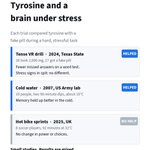
◈ In a 2024 Texas study, 28 young adults took 2,000 mg before a tense VR drill.
◈ They missed fewer answers on a test than 27 people who got a fake pill.
◈ It did not ease the stress signs in their spit.
◈ For 19 people in an Army study, it helped memory hold up in cold water.
◈ It did not help 8 soccer players in 92 minutes of hot bike sprints.
Think of a crew that builds a wall fast.
More bricks help only when the pile runs low.
That may be why it helped in some tests but not in all of them.
We all have hard days, like a big test or a rough day at work.
What helps your brain may depend on the kind of stress you face.
When is it hardest for you to think clearly?

4
Lots of us fear that our minds will fade as we get old.
There are few good ways to treat this kind of memory loss, called dementia.
Most past coffee and brain studies were short.
Most also lumped decaf in with the kind that has caffeine.
A team at Harvard took a much longer look.
They tracked 131,821 US nurses and health workers for up to 43 years.
Every 2 to 4 years, each one wrote down how much coffee, decaf and tea they drank.
Here is what the team found.
◈ The top regular coffee group had an 18% lower dementia risk than the lowest group.
◈ Risk was lowest at 2 to 3 cups a day, and more cups did not cut it more.
◈ Top tea drinkers had a 14% lower risk, and it was lowest at 1 to 2 cups a day.
◈ Decaf did not show a clear link, even in the top group.
If a warm cup is part of your day, this long view is nice to know.
What is in your cup each morning: coffee, tea or decaf?

8
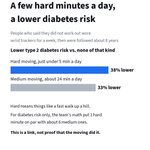
Just under 5 hard minutes a day, like a fast walk up a hill, went with a 38% lower risk of type 2 diabetes than none.
That was in 22,857 UK adults who did not work out, over about 8 years (JCEM, 2026).
What gets you out of breath on a normal day?

1
2

Salt gets most of the talk on blood pressure.
But a 2026 review of 19 trials with 803 adults checked potassium pills.
Clinic readings were 5.3 and 4.5 mm Hg lower on the top and bottom.
Which food with this mineral do you eat most?

9
Two kiwis a day raised vitamin C in the skin itself.
That sounds simple, but few had ever looked.
Your skin gets its vitamin C from your blood, like a pond fed by a stream.
Yet most tests never checked how much got into the skin.
So a team from Otago, in New Zealand, ran a small first test.
They asked 24 adults low on vitamin C to eat two gold kiwis a day.
Each one ate them for 8 weeks.
Their skin got checked at the start and at the end.
The results came out in a skin journal in 2026.
◈ In 12 people, vitamin C in a small bit of skin rose from 99 to 150 units.
◈ It went up in each one of those 12 people.
◈ In the other 12, skin density went up by about 48%.
◈ Density comes from a sound scan of how much protein sits deep in skin.
So the food on your plate can go farther than you might think.
Some of it ends up in your skin, your biggest organ.
How do you like to eat your kiwis?

1
7

Not all zinc gets into your body the same way.
A pill is a bit like a letter, and what counts is what gets delivered.
That is hard to see in a blood test, since blood zinc likes to stay steady.
So the number can look the same even after more zinc gets in.
In a small study from 1987, a team in Seattle looked in more places.
They gave 15 healthy students three kinds of zinc and a fake pill.
Everyone tried all four, 4 weeks each, and the zinc ones gave 50 mg a day.
One kind stood out. It was zinc picolinate, which is zinc tied to a small acid.
Your body makes that acid, too. Here is what changed:
◈ Zinc in red blood cells went up by about 20%.
◈ Zinc in urine went up by about 80%, and it rose in all 15 people.
◈ Zinc in hair went up by about 5%.
◈ The other two kinds did not show a clear change in this study.
So the word after "zinc" on a label is more than a small detail.
It tells you which kind you have, and each kind can act in its own way.
Do you ever check which kind of zinc is in your bottle?

1
4
48 new clues to Alzheimer's were hiding in our genes.
They were there all along. We just could not see them yet.
Alzheimer's is the disease that slowly takes away memory.
Twin studies show that genes play a big part in who gets it.
But gene hunts had found only about 80 spots, so much of the map was blank.
So a team led from Amsterdam went big. Nature just ran their study.
They read the genes of 2.8 million people from all over the world.
◈ They found 127 spots in our genes tied to the disease.
◈ 48 of those spots had never been seen before.
◈ Common gene changes now explain about 16% of the risk.
◈ That is close to 3 times what past studies could see.
◈ Many clues point to the brain's cleanup cells, which clear away junk.
Most of us know someone who lost their memory to this disease.
Each new spot gives scientists one more place to look for answers.
If a simple test could show your own gene risk, would you want to know?

1
2
Sources:
doi.org/10.1038/s41586-026-1…
2
Sitting against a wall may help bring your blood pressure down.
It is called a wall squat. It feels like sitting on a chair that is not there.
Blood pressure tends to creep up as we age, and most of us never feel it.
The usual advice is to work out most days, but busy weeks get in the way.
So in 2026, a team in England asked what happens when you train less, or stop.
They tested 100 adults whose blood pressure was normal or a bit high.
For 4 weeks, each one did 4 wall squat holds, 3 times a week.
Then the groups split up for 4 more weeks, and the top number told the story:
◈ The ones who kept going 3 times a week saw it drop by 13.73 points.
◈ The ones who cut back to once or twice a week kept a drop of over 6.5.
◈ The ones who stopped slid back toward where they began.
A big review of 270 trials points the same way.
Holds like this cut that number by 8.24 points, while cardio cut it by 4.49.
So one busy week does not have to undo the work you put in.
Even one short session may help you hold on to what you gained.
What gets in the way of your workouts when life gets busy?

1
4

A cranberry capsule a day cut insulin almost in half.
In a 6-month trial, 94 adults took it or a fake pill.
With cranberry, insulin went from 10.38 to 5.62.
The fake pill barely moved it.
You make insulin each time you eat.
Do you eat cranberries all year, or just in fall?

1
3

Plain potato starch is a real treat for the bugs in your gut.
It costs a few dollars, and it does something most starch can't.
Most starch breaks down long before it gets deep into your gut.
Raw potato starch does not.
It rides along like a packed lunch that only gets opened at the end.
That is where your gut bugs eat it.
As they eat, they make butyrate. It is a fuel the cells of your gut wall use.
So in 2019, a team at the University of Michigan put it to the test.
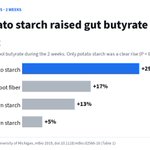
For 2 weeks, 174 young adults added a fiber or a starch to each day.
Potato starch did the most of all.
◈ It raised butyrate by 29% on average.
◈ A starch from corn and a fiber from a plant root did less.
◈ Yet butyrate went up in just 63% of the people who took it.
Your gut is home to its own mix of bugs. No one else has the same one.
That mix is why one food can do a lot for you and less for a friend.
Has a food ever worked great for a friend but not for you?

1
8
Sources:
doi.org/10.1128/mBio.02566-1…

1
Creatine is not just for young guys at the gym.
It may help women keep a steady sleep clock.
The years before a woman's last period can be hard on sleep.
Yet few quick, easy ideas have been tested for this time of life.
So in a 2026 study, a team at UNC in North Carolina tried creatine.
It lets your cells keep quick energy on hand, like a spare battery.
They split 51 women, about 46 years old, into three groups.
Two groups lifted weights twice a week for 6 weeks.
One took creatine, and one took a look-alike powder.
By week 6, the creatine group stood out.
◈ Their wrist bands showed they went to bed and got up at steadier times.
◈ That sleep score was 7.4 points higher than in the look-alike group.
◈ They also had fewer days when they felt too hot.
Nearly all women go through these years. So do the people who love them.
A plain gym powder could help scientists find ways to make that time easier.
Has anyone you know tried creatine for more than muscle?

1
9
Your body has old cells that stop working but never leave.
Scientists call them zombie cells.
Each year, more of them pile up.
Most solutions use a drug to attack them.
That means the drug has to do all the work.
So a company in Miami tried a new way.
It made SenoMune-0257, a peptide with just nine building blocks.
AI helped pick it from dozens of tries.
It works like a scent for a guard dog.
It shows your killer T cells what to hunt.
In lab tests, the company says, T cells went after old cells.
They left healthy cells alone.
The first test in people is planned before the end of 2026.
That is a big idea for all of us who plan to get older.
Your own body might learn to clear out its worn out cells, with a little help from a peptide.
Would you want your body to do its own cleanup?
2