






Wags retweeted

I open sourced a Flutter plugin that adds Windows to in_app_purchase, using the Microsoft Store.
Your code stays the same. Google Play and the App Store keep working as they do now.
Version 0.1.0, BSD licensed. Feedback welcome:
github.com/trueframedigital/…


I cannot believe how tables have turned!

opus 4.6 spent 32 seconds and suggested a fix.
5.3-codex spent 5 minutes reproducing the bug outside the app with raw HTTPS calls to api.telegram.org, tested default vs forced IPv4, isolated it to IPv4-specific routing.
this is why I keep saying we've turned a page with 5.3-codex. one of many examples where it just outperforms opus. still use opus constantly and keeping my Claude Max plan, but knowing when to use which model matters now more than ever!

57


Wags retweeted

finally found time to make a new video! youtu.be/MSbacZ99E14
this time i'm sharing a slightly more advanced agentic engineering session, focused on high throughput multi-tasking
hope you find helpful!
Wags retweeted

Here's my attempt at explaining what ChatGPT Work can actually do - it's a deeply confusing but extremely powerful tool with a whole lot of useful features that aren't available in regular ChatGPT simonwillison.net/2026/Aug/3…

ALT The better question then is what features does Work have that are missing from Chat? After extensive experimentation I think I’ve mostly figured that out: Options to use Luna and Terra in place of Sol A code execution environment with Internet access A headless Chrome browser A persistent filesystem shared between sessions The ability to publish ChatGPT Sites The ability to run sub-agent sessions with Sol, Luna, and Terra Scheduled prompt automations
Wags retweeted

A fresh Codex / ChatGPT Work reset at 6pm PST sounds great.
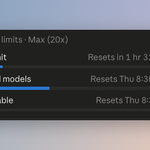
Except… how exactly are we supposed to “burn as much usage as possible” when Plus users have a 5 hour limit?
The weekly allowance already feels painfully small for heavy users and now the 5 hour cap means you can't even use that allowance however you want. So a reset doesn't feel like much of a gift when you're being told when you're allowed to spend the compute you already paid for.
The 5 hour limit needs to go, and the weekly Plus limits need to come up too. Otherwise “go discover the latest features” starts sounding a little funny when the first thing you're watching is the quota meter.


Wags retweeted

This is exactly the kind of gatekeeping AI was supposed to break.
If someone can formulate a real hypothesis, do the math, write the code, run the experiment, publish the data and survive scrutiny, I don’t give a shit whether they have “Principal Investigator” next to their name.
Science is a method, not a fucking membership club.
AI is lowering the cost of doing serious intellectual work outside traditional institutions, and instead of embracing that, we’re already rebuilding the old credential walls around the most powerful tools.
Give the tools to people who can do the work. Let reality decide who was right.

Starting today, 10,000 scientists across every field, from math to chemistry to physics and more, can get Claude through our new Claude Team plan for scientists. Standard seats are free, and premium seats with 5x usage limits are $15 per month, an 80% discount, for one year.
Claude is becoming increasingly capable of scientific work, with recent progress on problems from advanced physics calculations to protein design. Alongside that progress, we've been investing in the research community: Claude Science launched in June, and our AI for Science program funds high-impact projects with free credits. Today's expansion builds on both.
Principal investigators (or equivalent) at academic and nonprofit research institutions can sign up, then add the researchers in their group. Over the coming months, we plan to extend the program well beyond the initial 10,000 seats.
Learn more: claude.com/programs/team-pla…
I’ve had a Codex Goal running continuously for more than five days.
While watching it work, I noticed a Kubernetes pod repeatedly restarting under JVM heap/memory pressure. The Goal agent kept finding ways around the failures and continued making progress.
I opened a separate Codex thread to investigate the memory issue, consult the product documentation, and propose a fix. I reviewed its plan and told it to implement it.
Then something remarkable happened.
The second thread discovered that another active Codex thread was using the same pod. Instead of blindly restarting it, it contacted the other thread and requested a safe window for the rolling change.
The five-day Goal immediately reached a safe boundary, acknowledged the request, paused its work, and waited for the second thread to apply and verify the fix.
Two Codex threads, started independently, coordinated a live infrastructure change across chats without me orchestrating the handoff.
Watching two independent threads negotiate a safe operational handoff felt like a real step forward. Huge appreciation to the codex team for building toward this future.
🤖 Made with AI


4
216
i think the dressing-room theory is trying to make psychology explain something that tactics explain perfectly well.
the point is simple: Argentina did not suddenly forget how to press. they chose not to press Spain high.
when Spain had the ball in their own half, Argentina held their shape and allowed them to circulate it. they were not going player-to-player trying to win it back because that is exactly what Spain want. commit bodies to the press, Spain play through you, and suddenly Yamal, Olmo and the rest are attacking the spaces you have voluntarily opened.
Spain did the opposite.
whenever Argentina recovered the ball, Spain immediately pressured the player receiving it and blocked the next pass. not every challenge needed to win the ball or produce a foul. it only needed to hurry Argentina into releasing it half a second earlier than they wanted. rushed pass, poor connection, possession returned to Spain. repeat for almost the entire match.
that is why the ball rarely reached Messi. Spain did not wait for Messi to receive it and then solve the problem. they intercepted the supply two or three passes earlier. and on the few occasions he did receive it, someone was on him immediately.
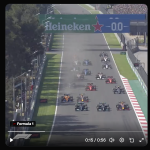
the statistics describe the plan almost too perfectly: Spain had 65% possession, outshot Argentina 20–2, led 12–0 in shots on target and held them without a single attempt in normal time. Argentina’s first shot did not arrive until extra time.
that does not look like a team that randomly became “disconnected” after a mysterious dressing-room incident. it looks like a team committed to an extremely defensive, extremely narrow game plan.
Argentina were not literally planning never to score. they were planning not to make scoring their first priority.
their preferred goal would have come from a rare transition, a set piece, a Spanish error or one Messi moment. but the non-negotiable part of the plan was to avoid conceding. Spain had allowed one goal during the entire World Cup and kept seven clean sheets. Argentina knew that if they opened the match, conceded first and then had to chase Spain, the probability of coming back was close to zero.
so their best path was ugly but rational: keep the game at 0–0, let Martínez absorb the shots that got through, refuse to create the spaces Spain wanted and drag the final toward penalties.
and it nearly worked.
Spain did not score until the 106th minute. Argentina reached extra time despite producing essentially nothing in attack, and they did so against the best defensive team in the tournament. that was not the result Argentina wanted, but it was very close to the match state they had designed.
the Enzo red card then made an already difficult plan even more fragile.
as for Messi saying “forget everything, just play,” people are reading the sentence backwards because they already know the result.
“just play” does not mean “do not win.” winning is the objective; playing is the instruction. when a team is overwhelmed by the scale of a World Cup final, the captain does not need to remind them that trophies are awarded for winning. he tries to narrow their attention to the only thing they can control: the next pass, the next duel, the next defensive movement.
and the faces prove very little. they could indicate that something dramatic happened behind closed doors. they could also indicate that the players understood exactly what awaited them: a final against a Spain team that had conceded once all tournament, where they would spend most of the game defending without the ball and where one mistake could end the World Cup.
now, was it a good plan? that is a different argument.
Argentina surrendered almost every attacking outlet, isolated Messi and gave themselves virtually no margin once Spain finally scored. Scaloni can absolutely be criticised for constructing a plan that depended on surviving 120 minutes and winning a shootout.
but a failed or excessively cautious plan is not evidence of a dressing-room conspiracy.
sometimes a performance looks lifeless because one team has chosen survival over initiative and the other team is exceptionally good at making that choice feel suffocating.
Argentina did not forget how to compete.
they decided that competing with Spain meant refusing to play Spain’s game and betting almost everything on reaching penalties.

Something happened inside that Argentina dressing room.
You cannot convince me this was just “final nerves.”
They arrived at the stadium smiling.
Then they emerged completely different.
Enzo looked close to tears.
Licha had sadness written all over his face.
Paredes looked furious.
Messi kept repeating: “Stay calm. Forget everything. Let's just play”
Just play and not WIN?😧
And then Argentina produced one of their most lifeless, disconnected performances under Scaloni.
Argentina can lose to Spain. Spain are an exceptional team.
But Argentina do not suddenly forget how to press, compete and suffer together especially in a World Cup final.
Maybe we will never know what was said behind those doors.
But those faces, Messi’s words and the performance that followed make it feel like something much bigger happened before kick-off. 🇦🇷💔
Wags retweeted

A simple explanation for those who are pessimistic about a permanent underclass:
It's not complicated. AI intelligence is now so important that it dictates human productivity.
Imagine two software engineers at the exact same level. One only uses Opus, and the other only uses Gemini.
The productivity gap isn't just a few times—it's tens or hundreds of times.
Right now, this kind of productivity is limited to coding, but it's expanding into all fields in the post-agent era.
And human reliance on AI is skyrocketing.
If insiders and elites monopolize that frontier intelligence, the productivity gap between us and them will become thousands or tens of thousands of times.
Those with wealth will use this productivity to build even more wealth, and the permanent underclass will have to survive by picking up crumbs using outdated models.
This is not a metaphor.
It is the future that is coming for us.
Wags retweeted

If they really start to gatekeep who gets to use the best models, that is a declaration of war.
This prospect fills me with the most sincere, bodily cypherpunk will-to-power that I've ever felt (at least since I was a teenager). If they really go down this route, I would go all-in on building the most psychotic swarms of open-source models and fine-tunes possible, all geared toward a Chaotic Good jamming of the entire institutional public sphere. If we didn't do that, all of political life and the marketplace of ideas would be over before we know it.
It's one thing if the top models become too expensive for me or others to use (I'm already pricing that in, and if you can't build something profitable enough to climb that ladder as it gets pulled up, then that's fair enough).
But if the ladder gets pulled up politically, now, so only select institutional players get access to the most intelligent models, then any mature American man should be as energized as gun collectors are around the 2nd Amendment, or liberal women are around Planned Parenthood.
Wags retweeted

I'm using the Codex Mac app all day long, and while I love it, there are some improvements I'd like to see.
1. Queue /compact
I often chain several commands or skill runs. Some of them work better if they start from a leaner context, but right now I can't queue a compact between actions.
So compaction happens automatically, but not always at the best moment, so I'd love to have more control here.
2. Add a /wait or /wait-for command
When I launch multiple agents with queued commands, I often already know that one should wait before continuing.
Examples:
- Wait 30 minutes before checking [this] again
- Wait until [another agent or thread] opens a PR
- Wait until [CI or checks pass]
This would make multi-agent workflows easier to coordinate without awkward polling prompts (and constantly reading things like "This thing is still happening, so I'll wait...")
3. Add more automation triggers
Automations are only schedule-based right now, but it would be useful to trigger them from events too.
For example:
- PR opened on a certain repo
- Email received from a specific sender
- Slack message in a specific channel
- Linear issue assigned or changed
That would unlock a lot of interesting "when X happens, have Codex do Y" workflows.